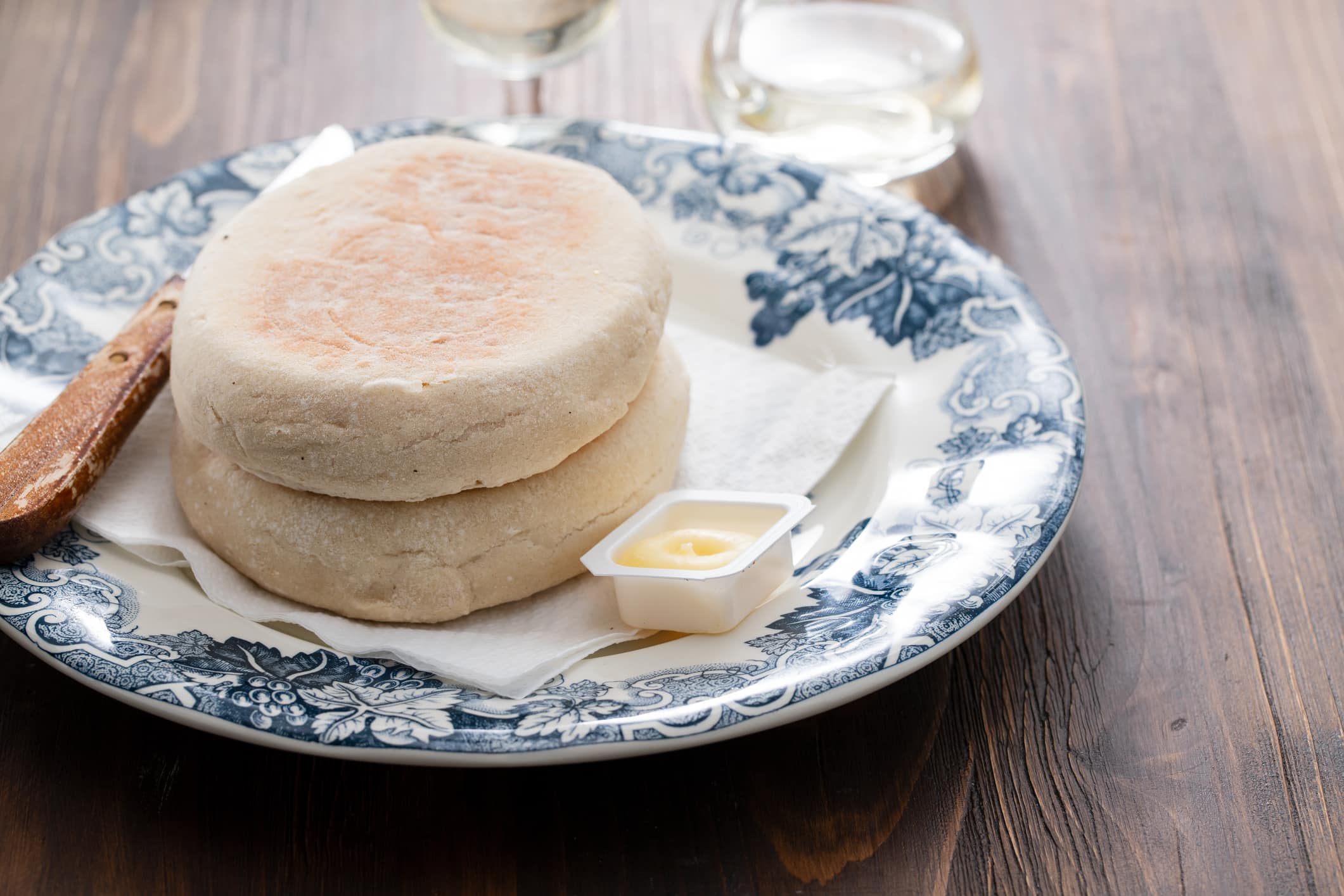
- Bolo do caco is a Madeiran flatbread made with wheat flour and sweet potato, traditionally baked on a basalt slab called a caco.
- Taste: slightly sweet, with a crisp crust and a soft inside. The classic way to serve it is warm, with garlic butter and parsley.
- Its history goes back to the 15th century. The bread didn’t need an oven, so even the poorest families could bake it.
- An island rivalry: on Madeira the dough rises twice, on Porto Santo three times.
- Where to eat it: bolo do caco is everywhere in Madeira. In this guide I recommend, among others, the Why not restaurant in Funchal.
Almost as flat as a pitta, slightly sweet and golden like a naan. Served still warm, with garlic butter and herbs. Bolo do caco isn’t just a culinary symbol of Madeira – it’s a bread with its own history, its own traditions and… a local dispute over who makes it best.
Want to taste it on the spot? Compare Madeira wine tastings and food tours in Funchal on GetYourGuide.
What is bolo do caco?
Bolo do caco is a traditional Madeiran flatbread made with wheat flour, sweet potato, yeast, water and salt. It’s round and flat (think thick pitta or a small focaccia), with a thin, crisp crust and a soft, fluffy inside.
The name comes from the way it’s baked – traditionally on a flat basalt slab called a “caco”, laid directly on glowing embers. “Bolo” means “cake” in Portuguese, although in practice it’s a bread roll.
The history of bolo do caco – from enslaved people’s tradition to a symbol of Madeira
The origins of bolo do caco go back to the 15th century and the early days of Madeira’s settlement (the island was discovered in 1419). According to historical sources, the recipe for this simple bread was brought by enslaved people from North Africa. Baking flatbreads on hot stones is typical of the Maghreb – to this day you can see similarities between bolo do caco and North African breads such as “khobs” or “kesra”.
Why this method? In the 16th century, royal edicts banned private ovens – people had to pay to have their bread baked in ovens owned by the king, the great lords or religious orders. Bolo do caco didn’t need an oven, so everyone could make it, even in the poorest homes. With no baking fee to pay, this way of making bread became widespread.
Why is the bread made with sweet potato?
Madeira has very little flat land – wheat fields were rare and wheat flour was a luxury. The island suffered recurring grain shortages. The answer turned out to be sweet potatoes, which thrived in Madeira’s volcanic soil. Bakers began adding mashed roast sweet potato to their bread dough. The result is a bread with a unique, slightly sweet flavour and an unusually moist, springy texture.
IMPORTANT: Traditional Madeiran bolo do caco is made with white (yellow) sweet potatoes, not orange ones. In Portugal the variety used is Batata Doce de Aljezur – with yellow flesh and a flavour reminiscent of chestnuts.
A local rivalry: Madeira vs Porto Santo
The people of Madeira and the neighbouring island of Porto Santo argue about who has the better recipe for this traditional bread. The difference? Small in theory, but in practice it affects the texture. On Madeira the dough is left to rise twice, on Porto Santo three times.
Plenty of Madeirans admit (off the record) that bolo do caco from Porto Santo is better. Some, though, put it down to the fact that Madeirans go on holiday to Porto Santo – and “holidays are the best seasoning in the world”.
How is bolo do caco served?
Traditionally, bolo do caco is served warm, spread with garlic butter and parsley.
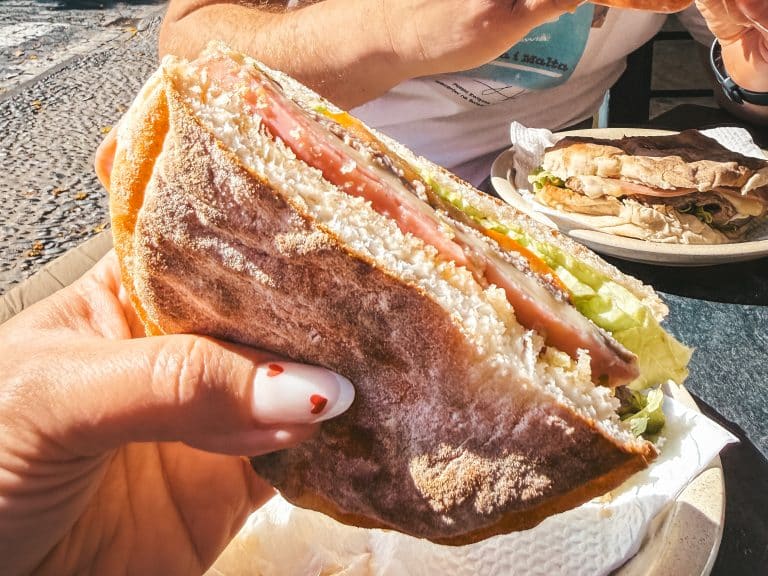
These days it’s also the base for sandwiches and burgers, and it’s served with grilled meat (espetada), tuna steak or black scabbardfish. Some restaurants serve it on the side with every dish.
Where to try it
Bolo do caco is absolutely everywhere in Madeira. You’ll find it at street stalls and in fine-dining restaurants alike. A few places recommended in guidebooks:
- Casa do Bolo do Caco (R. Fernão de Ornelas, 26, Funchal) – a bakery in the heart of Funchal and a local legend, serving it warm with traditional fillings
- Taberna Madeira (Funchal) – a rustic feel, specialising in authentic regional dishes
- Bolo do Caco Bar & Grill – described in guidebooks as a place serving “typical Madeiran food in a new way”
Bolo do Caco – why not?!
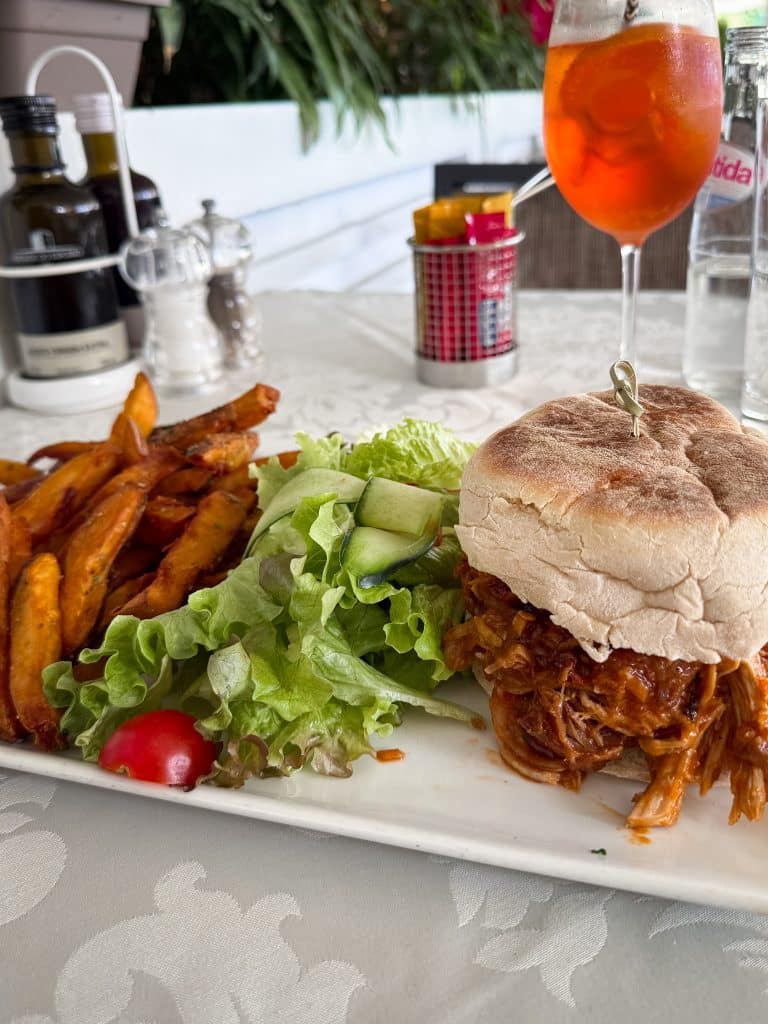
Personally, though, the best bolo do caco I’ve had was at the Why not restaurant in Funchal. The first time, I stumbled on it while walking back from a concert at the Mamma Art Museum – I ordered pulled pork in bolo do caco. Juicy, slow-cooked meat in BBQ sauce, tucked into a slightly sweet, fluffy, soft bread. With sweet potato fries and a fresh salad on the side.
The contrast of textures was brilliant. The gentle sweetness of the sweet potato in the bread went perfectly with the BBQ sauce.
On my way back from another concert I ordered a traditional bolo do caco with garlic butter and herbs to take away – a true classic. I meant to take it back to the apartment for dinner, but well… I couldn’t wait. I sat down in nearby St Catarina Park and ate the still-warm, fragrant bread looking out over the island and the ocean. Sometimes simple wins, especially when you’re eating it under the palm trees in a park, watching Funchal in the evening.
Bolo do caco recipe
Ingredients (makes 6–8):
- 500 g sweet potatoes (ideally white/yellow)
- 500 g wheat flour
- 10 g fresh yeast
- 1 teaspoon fine salt
- 1 tablespoon sugar
- about 150–200 ml warm water
- extra flour for dusting
To serve:
- butter
- garlic (2–3 cloves)
- flat-leaf parsley
- salt
Method:
- Sweet potatoes: Heat the oven to 180°C. Wrap the unpeeled sweet potatoes in foil and bake for about an hour. Once baked, peel them and mash to a purée.
- Dough: Dissolve the yeast in warm water with the tablespoon of sugar. Put the flour and salt in a bowl, pour in the yeast mixture and add 150 g of the sweet potato purée (warm or lukewarm, not hot). Gradually add warm water and knead for about 10 minutes, until the dough is elastic and slightly sticky.
- Rising: Cover with a tea towel and leave somewhere warm until doubled in size (about an hour).
- Shaping: Turn the dough out onto a floured surface. Divide into 6–8 equal pieces. Shape each piece into a ball, then flatten into a round about 1.5–2 cm thick. Cover and leave for another 20–30 minutes.
- Baking: Cook the breads in a dry, well-heated heavy-based frying pan (cast iron is best) over a medium heat, with a lid on. About 12–15 minutes on each side, until golden brown.
- Garlic butter: Blend soft butter with finely chopped garlic, parsley and a pinch of salt.
- Serving: Cut the still-warm bolo do caco in half horizontally (like a baguette) and spread with garlic butter. Serve straight away.
Practical tips
Sweet potatoes: Orange sweet potatoes are often the easiest to find. Bolo do caco made with them will taste a little different (sweeter), but the recipe still works. If you spot white/yellow sweet potatoes, grab them without hesitation.
Baking: The key is a well-heated, heavy pan and a medium heat. Too hot and it burns on the outside while staying raw inside. Too cool and it dries out instead of browning.
Storing: Best eaten fresh. If you have leftovers, reheat them in the microwave or toaster (careful they don’t dry out) or in a covered frying pan.
Freezing: Many supermarkets in Madeira (and mainland Portugal) sell frozen bolo do caco – just heat and eat.
Bolo do caco isn’t just bread – it’s a piece of Madeiran history: a story of adapting to life on an island, of ingenuity in the face of scarcity, of different cultural influences. And above all, it’s an incredibly tasty bake that goes perfectly with any meal in Madeira.
Looking for a plan for the day? Dolphin-watching cruises, jeep tours and sunrise on Pico do Arieiro, many with hotel pickup. Compare offers and reviews on GetYourGuide.