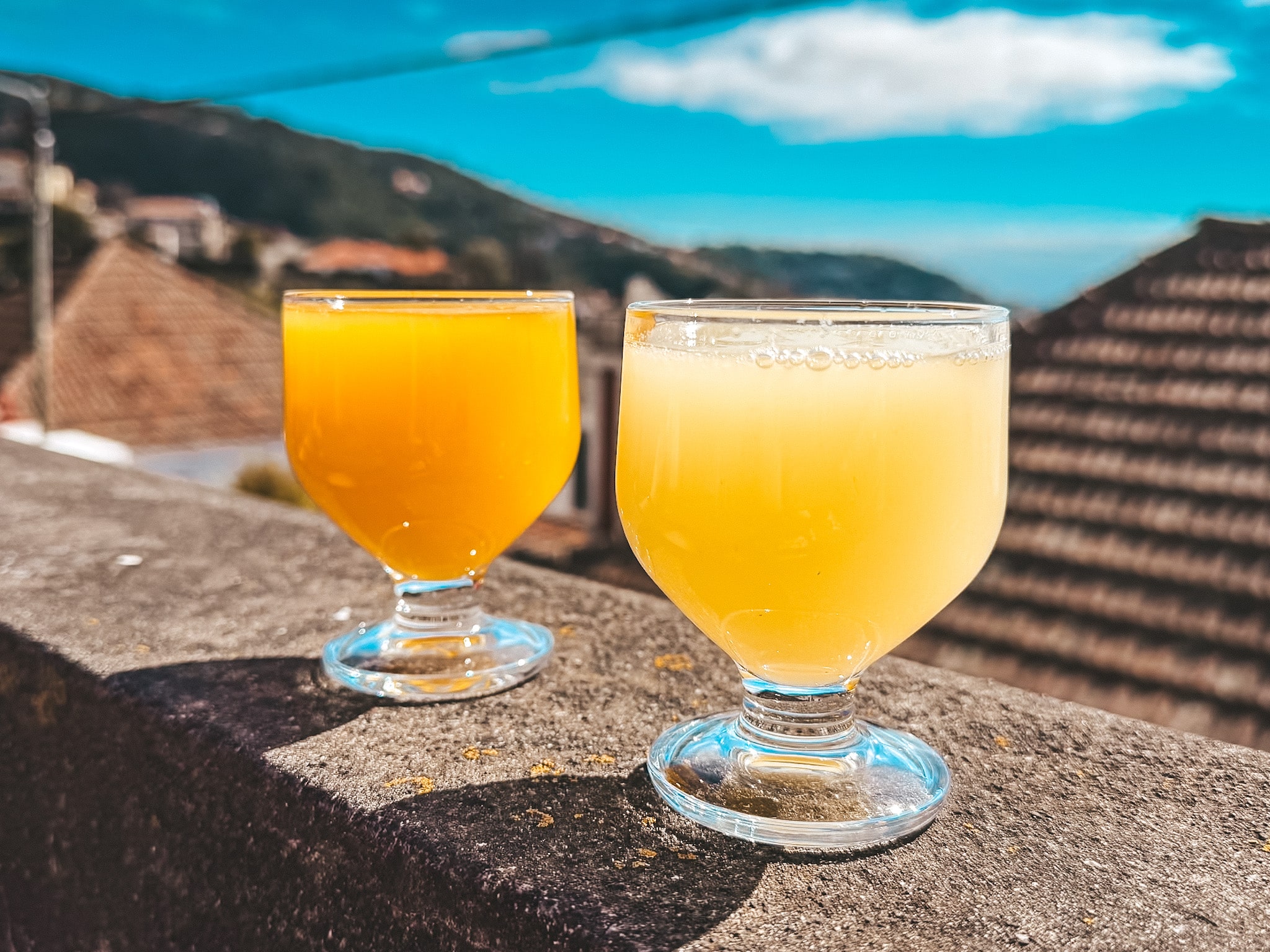
- Poncha is Madeira’s signature drink: aguardente de cana (rum made from sugar cane juice), lemon or orange juice and honey, whisked with a wooden stick called a caralhinho.
- It’s around 20–25% alcohol, and the sweet citrus makes it very easy to forget that.
- Types: the most traditional is poncha pescador (the fisherman’s version, no orange); the most popular is poncha regional, with orange. There are fruit versions too, e.g. with passion fruit.
- Where to drink it: in Câmara de Lobos, the birthplace of poncha, at Taberna da Poncha in Serra d’Água and in the bars of the Zona Velha (Old Town) in Funchal.
- In this guide you’ll also find a recipe for traditional poncha for 2.
Visiting Madeira without trying poncha is like touring Italy without eating pizza. This local drink, made from a unique sugar cane rum, honey and citrus, has been warming people up since the 18th century. And its treacherous sweetness makes the second and third glass disappear dangerously fast.
Want to taste it on the spot? Compare Madeira wine tastings and food tours in Funchal on GetYourGuide.
What is poncha?
Poncha is a traditional alcoholic drink from Madeira. Its base is aguardente de cana – a spirit distilled from sugar cane juice and produced on the island. Fresh citrus juice (lemon or orange) goes into the cane rum, along with honey or sugar. Everything is mixed vigorously with a traditional wooden whisk called a caralhinho.
The finished drink has around 20–25% alcohol, which puts it on a par with strong cocktails. The catch? The sweetness and freshness of the fruit mask how strong it is. Hence the local saying:
The first poncha goes down easily, the second makes you happy, and after the third… you start speaking Portuguese.
Since 2000, poncha has had protected geographical status (Poncha da Madeira PGI). This means that only a drink made with local Madeiran rum can officially carry the name.
The history of the fishermen’s drink
Poncha’s roots reach further than Madeira. It was inspired by the Indian drink “panch” (Hindi for five), made from five ingredients: alcohol, sugar, lemon, water and tea or spices. British sailors discovered it on voyages to India in the 18th century and brought the recipe to Madeira.
On the island, the drink evolved. Instead of tea – the citrus fruit Madeira has in abundance. Instead of Asian spices – local honey. And most importantly: aguardente de cana, a rum made from sugar cane, which has been grown on the island since 1425.
Poncha became the drink of the fishermen of Câmara de Lobos – a small fishing village in the south-west of the island. They drank it before heading out to sea, as a cold remedy (vitamin C from the citrus + honey + alcohol) and a source of energy on chilly mornings. Over time, the drink spread across the whole of Madeira and became one of the island’s symbols.
Types of poncha – from classics to experiments
Poncha à Pescador (the fisherman’s poncha)
The most traditional version, true to the fishermen’s original recipe:
- Aguardente de cana (40–50% ABV)
- Fresh lemon juice
- Honey or sugar
This is the simplest and strongest version. Without sweet orange to soften the sharpness of the lemon, poncha pescador leaves you in no doubt that you’re drinking alcohol. I’ll admit it’s my favourite.
Poncha Regional
The most popular version, the one you’ll find in most bars:
- Aguardente de cana
- Lemon juice + orange juice
- Honey
The orange makes the drink friendlier – sweeter, less sour, easier to drink. And this is the version most often to “blame” for getting tipsy far too quickly.
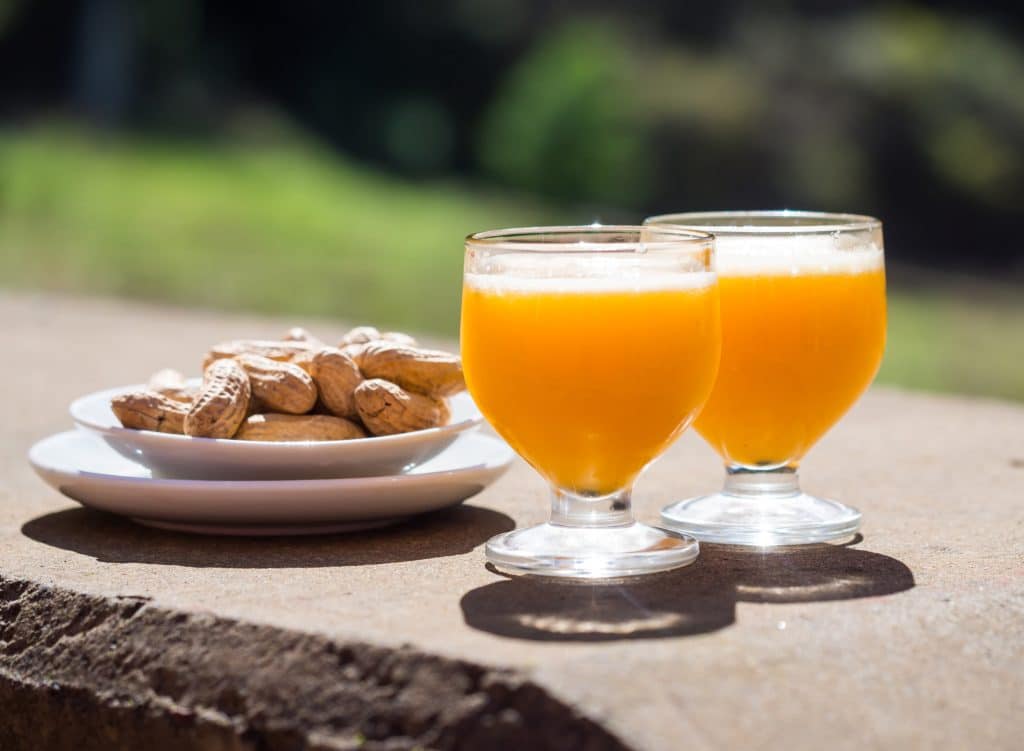
Fruit poncha
Modern variations made with other fruit juices:
- Maracujá – with passion fruit
- Tangerina – with tangerine
- Less often: strawberry, kiwi, tomato
NOTE: In many touristy bars, “fruit poncha” is made with vodka instead of aguardente de cana. That isn’t authentic Madeiran poncha – if tradition matters to you, ask whether they use aguardente.
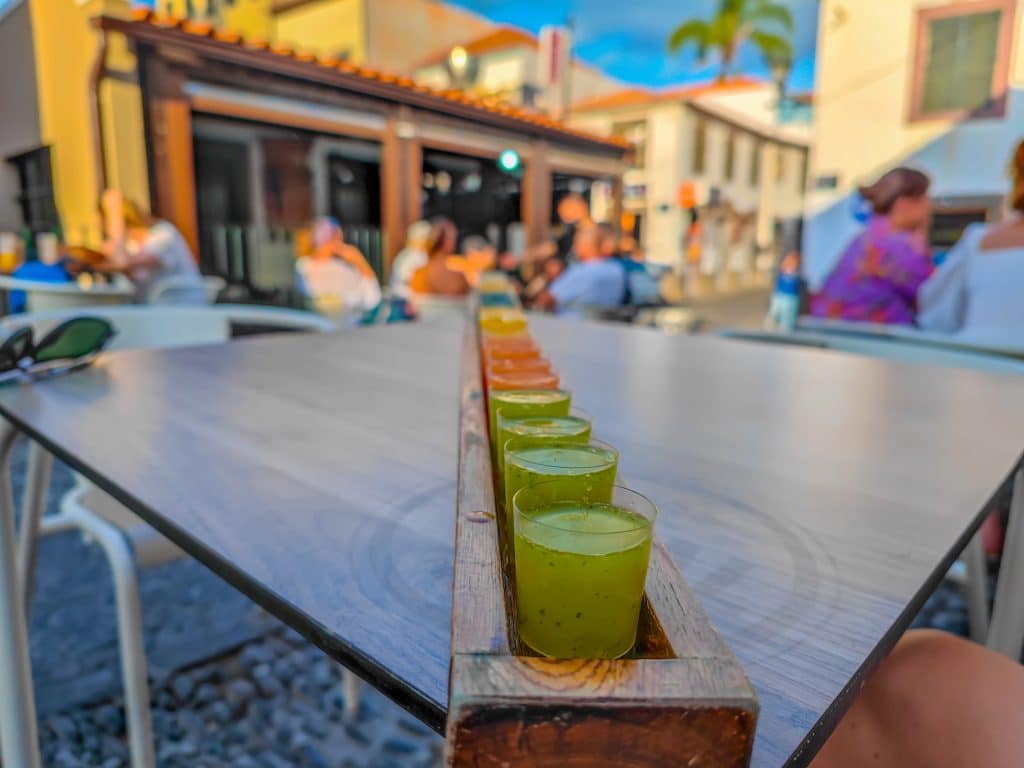
Caralhinho – the tool that makes the difference
Traditional poncha isn’t simply “shaken” in a cocktail shaker. The ingredients are whisked vigorously with a wooden tool called a caralhinho (literally, and rather rudely, “little penis”) or, more politely, a mexelote.
It’s a cylindrical wooden whisk with notched edges at the bottom, a bit like a miniature pestle. You spin it energetically between your palms, which swirls and emulsifies the ingredients. It’s thanks to the caralhinho that the honey – which doesn’t dissolve easily in alcohol – blends smoothly with the juice and the rum.
According to the locals, not even a Thermomix can match a caralhinho. And they’re right: mixing by hand creates a distinctive foam on top that you simply can’t get with a machine.
Where to drink poncha in Madeira
Legendary places
Taberna da Poncha – Serra d’Água
The island’s best-known poncha tavern, with more than 70 years of tradition.
Location: ER104 n°375, Serra d’Água (in the valley between Ribeira Brava and Encumeada)
Atmosphere:
- Walls covered in business cards, football scarves and souvenirs from all over the world
- Peanut shells on the floor (it’s tradition!)
- Poncha made right in front of you with a caralhinho
- A terrace with mountain views
What’s on offer:
- Poncha Regional, Pescador, Maracujá, Tangerina
- Free amendoins (peanuts) and tremoços (lupin beans)
- Bottles to take away
Note: Popularity comes at a price – in high season it can get very crowded. Some local regulars grumble that the tavern has lost its authenticity, but the poncha is still very good.
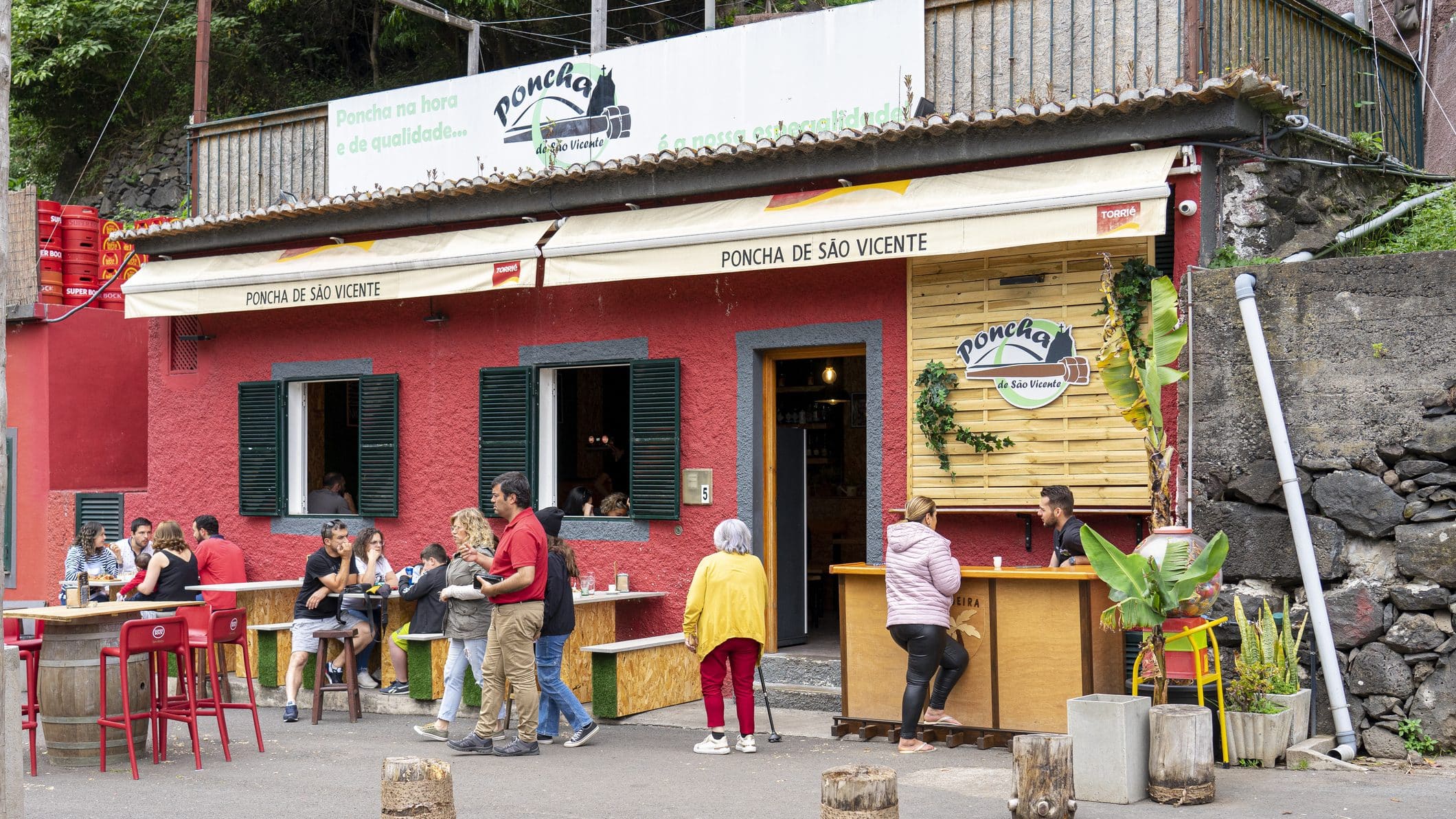
Poncha de São Vicente
An excellent alternative in the north of the island – a local bar serving fresh poncha with views of green hills.
Location: Estrada João Abel de Freitas, São Vicente (by the main roundabout as you enter the town from Ribeira Brava – a red building with a big car park)
Atmosphere:
- Traditional feel
- A large outdoor terrace with a mountain panorama
- Jeep safari tours often stop here
I’ve compared these jeep tours, to the east and the west of the island, in my guide to tours and excursions in Madeira.
What’s on offer:
- Fresh poncha made on the spot (not from a bottle!)
- Various flavours: classic, kiwi (highly recommended!), passion fruit, tangerine
- Nikita (a pineapple drink with ice cream and beer)
- Tapas, burgers, tábuas (sharing boards)
- Price: around €2 per poncha (as of 2024)
NOTE: Cash only – they don’t take cards!
Practical tips:
- Service is usually quick, but at peak times there can be a queue
- About 580 m further on are the São Vicente caves, but they have been closed since March 2020 with no reopening date (more about the caves)
- Large, free car park
Câmara de Lobos – the birthplace of poncha
This fishing village in the south-west of the island is where poncha was born. It was here that 18th-century fishermen adapted the recipe that became a symbol of Madeira. Today, along the waterfront and in the narrow lanes, you’ll find dozens of small bars and taverns serving poncha.
The tell-tale sign of an authentic bar: peanut shells on the floor. Local tradition says it means the poncha is good – people stay longer, eat peanuts and order another glass.
Well-known places:
- N.º 2 É Prá Poncha
- Venda do Sócio
Funchal – Zona Velha
Funchal’s Old Town has several bars that specialise in poncha. Some, like Venda Velha, mix tradition with a modern vibe – music, DJs and “metres of poncha” served on trays full of little glasses.
It’s a good option if you want to combine a tasting with a night out, but the atmosphere is more club than authentically Madeiran.
- Venda Velha
- Bar Number Two
Porto da Cruz – a rum distillery
In the north-east of the island you’ll find Engenhos do Norte – the last working rum distillery in Madeira that still uses a century-old steam engine. This is where you can see how aguardente de cana, the base of poncha, is made.
Huge steam-driven rollers crush the sugar cane to extract the juice, which is then fermented and distilled. After the visit you can, of course, do a tasting – of both the rum and the poncha.
How to spot a good poncha bar
- Poncha made fresh – not from a bottle, not from a ready-made mix
- Made with aguardente de cana – ask straight out; some places cheat with vodka
- A traditional caralhinho – they should mix it in front of you with the wooden whisk
- Local customers – if all you see is tour coaches, the quality has probably slipped
- Peanut shells on the floor – paradoxically, the bigger the mess, the better the poncha
How to drink poncha (without overdoing it)
Poncha is served in small glasses without ice – although tourist bars will often ask how you like it. The traditional way is “neat”: no ice, at room temperature or lightly chilled.
It comes with peanuts or tremoços (lupin beans in brine) – the salty snacks balance the sweetness of the drink.
Prices
- In authentic local taverns: €1.50–3 a glass
- In restaurants and bars in central Funchal: €3–5. In hotels: €6+
Careful not to overdo it!
Poncha slips down easily – especially the orange or fruit versions. The sweetness and freshness of the fruit mask the 20–25% alcohol. Seasoned drinkers sip slowly, savouring it, and make one glass last half an hour.
Beginners often make the mistake of drinking too fast. And then that “third poncha” hits harder than you expected.
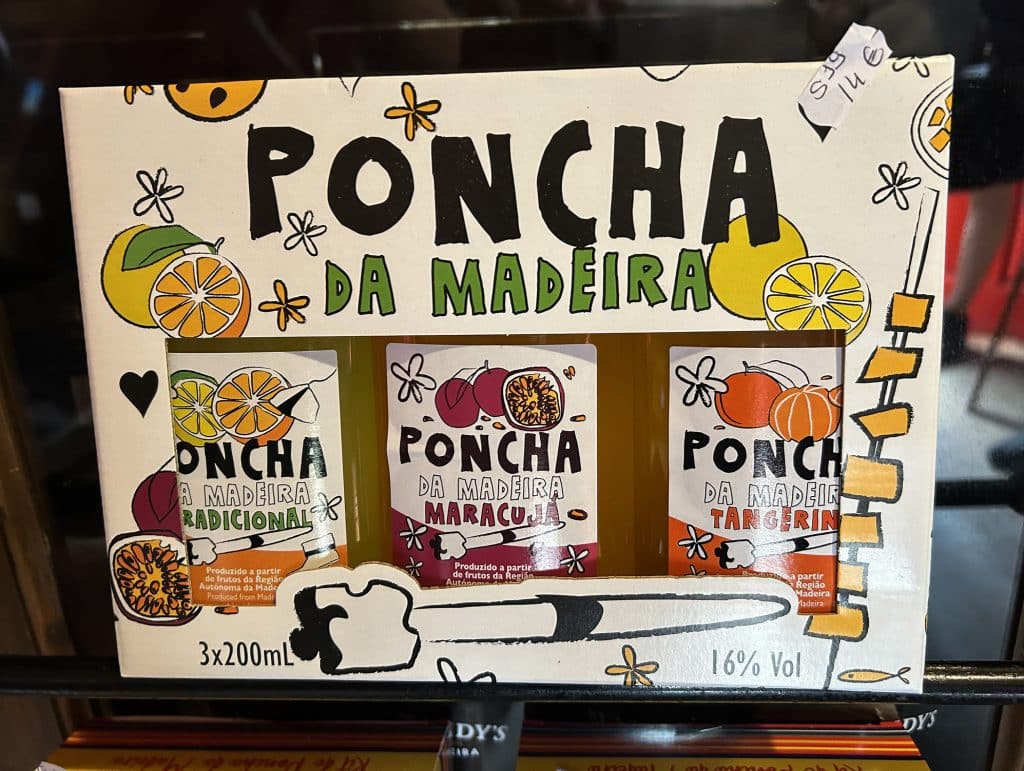
Bottled poncha – is it worth it?
In shops around Madeira (the airport, Mercado dos Lavradores, souvenir shops) you can buy bottled poncha from various producers. Prices range from €8 to €20 for a 0.7 l bottle.
The truth is, bottled poncha is no match for freshly made. It’s usually too sweet, has an artificial aftertaste and lacks the freshness of the citrus. It’s basically a sweet liqueur that resembles poncha without actually being poncha.
If you want to take “a piece of Madeira” home, you’re better off buying:
- A bottle of aguardente de cana (available in any bigger shop)
- Local Madeiran honey
- Maybe a caralhinho as a souvenir
And make your own poncha at home with fresh ingredients.
Traditional poncha recipe (serves 2)
As a food blogger (among other things), I can’t leave you without a recipe!
Ingredients
- 100 ml aguardente de cana*
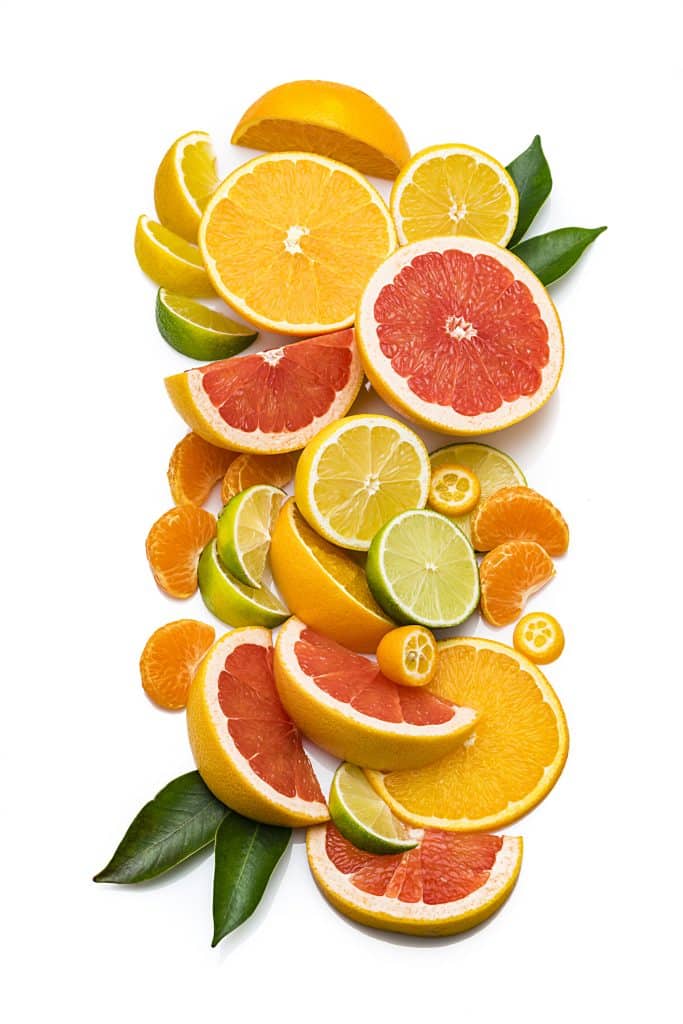
- 50 ml freshly squeezed lemon juice (about 1.5 lemons)
- 50 ml freshly squeezed orange juice (about 1 orange)
- 2–3 tablespoons honey (to taste)
- Lemon zest (optional)
- Sugar (optional, if you like it sweeter)
*If you can’t get aguardente de cana, use white rhum agricole (made from sugar cane juice). It won’t be 100% authentic Madeiran poncha, but it’s the closest you can get without the real thing.
Method
- Prepare the juice: Squeeze fresh lemon and orange juice. If you want more aroma, grate a little lemon zest into the drink (the yellow part only).
- Dissolve the honey: Put the honey in a tall glass or a small jug. Add about half of the citrus juice and stir vigorously with a wooden spoon or – if you have one – a caralhinho. The honey must dissolve completely and blend with the juice.
- Add the rest of the juice: Pour in the remaining lemon and orange juice. Keep stirring vigorously.
- Add the alcohol: Pour in the aguardente in two batches, stirring hard each time. The traditional technique: hold the wooden whisk (or spoon) upright in the jug and spin it quickly between your palms, as if you were lighting a fire with a stick – this swirls and emulsifies the ingredients.
- Adjust to taste: Have a sip. Too sour? Add more honey or a pinch of sugar. Too sweet? A drop of lemon juice. Too strong? You can dilute it with a little mineral water (although traditionalists will wince at the idea).
- Serve: Strain into small glasses. It’s traditionally served without ice, but you can chill it in the fridge for 10 minutes before serving.
A delicate foam should form on top – the sign of properly whisked poncha.
Pescador (fisherman’s) variation: Leave out the orange juice and use lemon only. Swap the honey for sugar (2 teaspoons). This is a sharper, more “fiery” version.
Fruit variation: Replace some or all of the lemon and orange juice with passion fruit, tangerine or another fruit juice. Keep the alcohol to juice ratio at about 2:1.
Poncha trivia
- The name “poncha” is the Portuguese take on the English “punch”, which in turn comes from the Hindi “panch” (five ingredients)
- Poncha inspired Brazil’s famous caipirinha
- Caralhinho literally means “little penis” – named after the shape of the wooden whisk
- Madeira’s aguardente de cana is really a rhum agricole – rum made from sugar cane juice rather than molasses (like most rums)
- Madeirans still believe that poncha cures a cold – hence the saying “poncha a qualquer hora” (poncha at any hour)
- The name has been legally protected since the 2000s: only a drink made with local rum can be called “Poncha da Madeira PGI”
Poncha isn’t just a drink – it’s a piece of Madeiran identity, a ritual handed down from generation to generation. It’s at its best in local taverns, where they mix it with a caralhinho, serve it with peanuts whose shells end up on the floor, and where you hear Portuguese more often than English.
If you find an authentic place, order a poncha regional with fresh juice – the sweet spot between tradition and drinkability. Drink it slowly and savour every sip. And remember: bottled poncha from the airport is only a pale copy – the real magic happens fresh, to the rhythm of the caralhinho in the bartender’s quivering hands.
And if you get caught in the rain on a mountain hike in Madeira and feel a cold coming on? The locals know exactly what to do: poncha à pescador, no messing about.
Looking for a plan for the day? Dolphin-watching cruises, jeep tours and sunrise on Pico do Arieiro, many with hotel pickup. Compare offers and reviews on GetYourGuide.