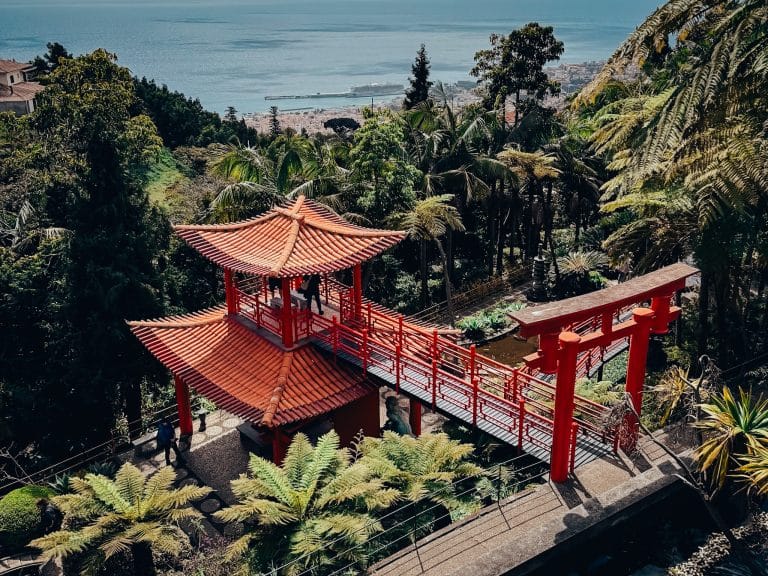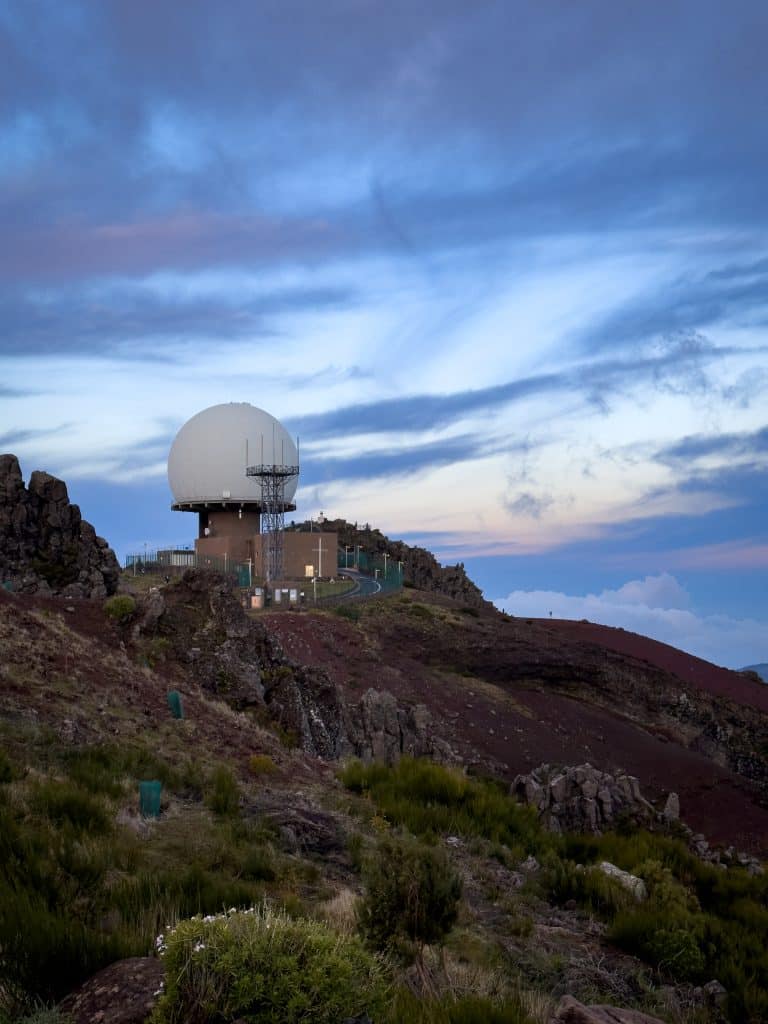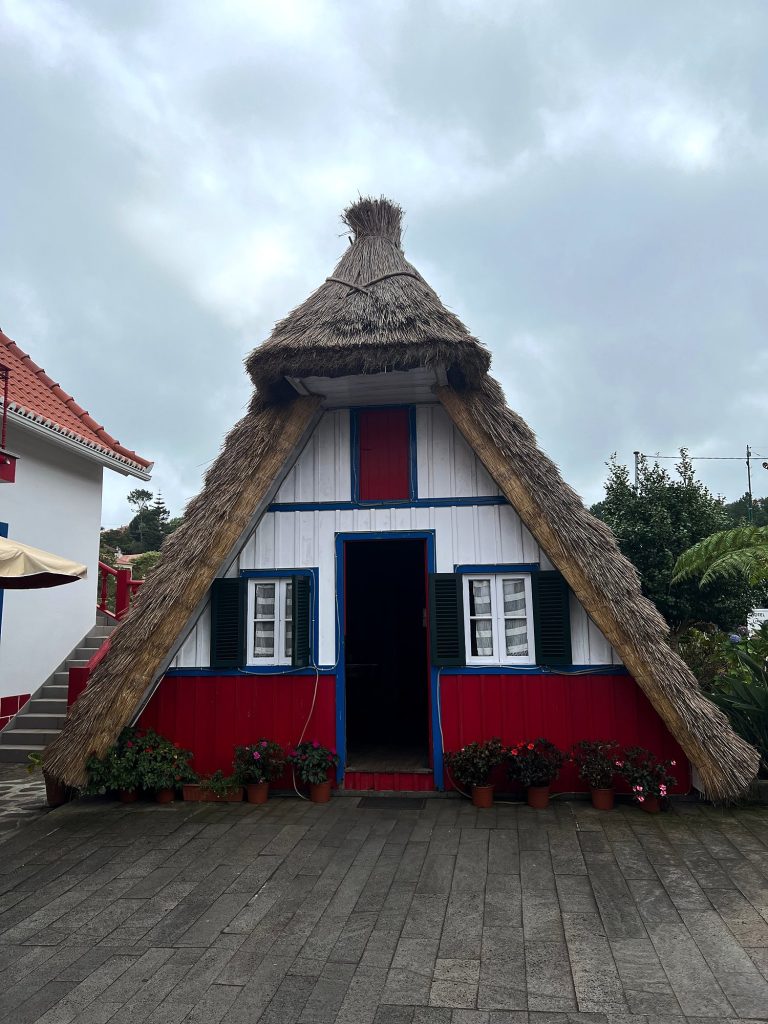
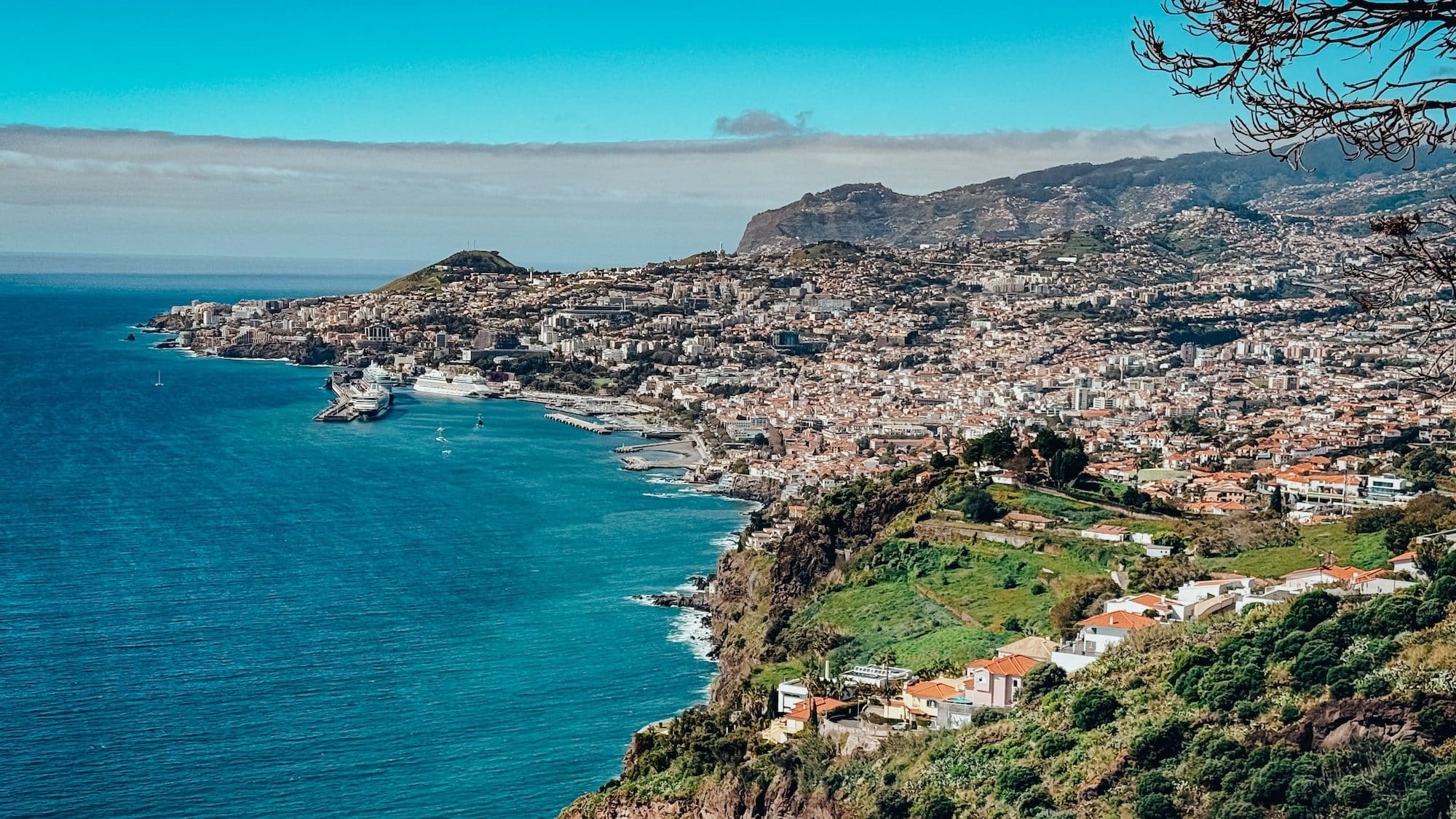
Funchal is the capital of Madeira – a city of more than 100,000 people, home to almost half of the island’s population. Founded in 1421 by João Gonçalves Zarco, it rises like an amphitheatre up the slopes above the bay, from sea level to about 1200 m. The city combines a 15th-century cathedral with a Mudéjar ceiling, tropical gardens (Monte Palace – €18, Jardim Botânico), an Art Deco market with azulejos (painted tiles), historic wine lodges and some surprising Polish traces – a statue of John Paul II and a bust of Piłsudski. You can explore the centre on foot, although the steep streets can catch you out. Give Funchal at least two full days. You can reach most sights within the city by city bus (€2.05 from the driver, €1.45 with a GIRO card) or by taxi/Bolt.
Funchal is the heart and capital of Madeira, yet most visitors treat it only as a base for levada walks. The city itself deserves at least two full days of exploring. From the 15th-century cathedral and tropical gardens to some surprising Polish historical traces – here is what’s really worth seeing in Madeira’s capital.
Like almost every visitor, I’ve stayed around the Lido in Funchal, but I’ve also lived for more than three weeks in an apartment right in the centre, next to the English Church. And I’ll be honest: only when I was living in the centre, rather than just “sightseeing” there, did I begin to… understand Funchal. Let me say it straight away: this is not a place for one afternoon between hikes. It’s a city you need to feel – in the morning, as it wakes up, and in the evening, when the waterfront takes on a completely different character.
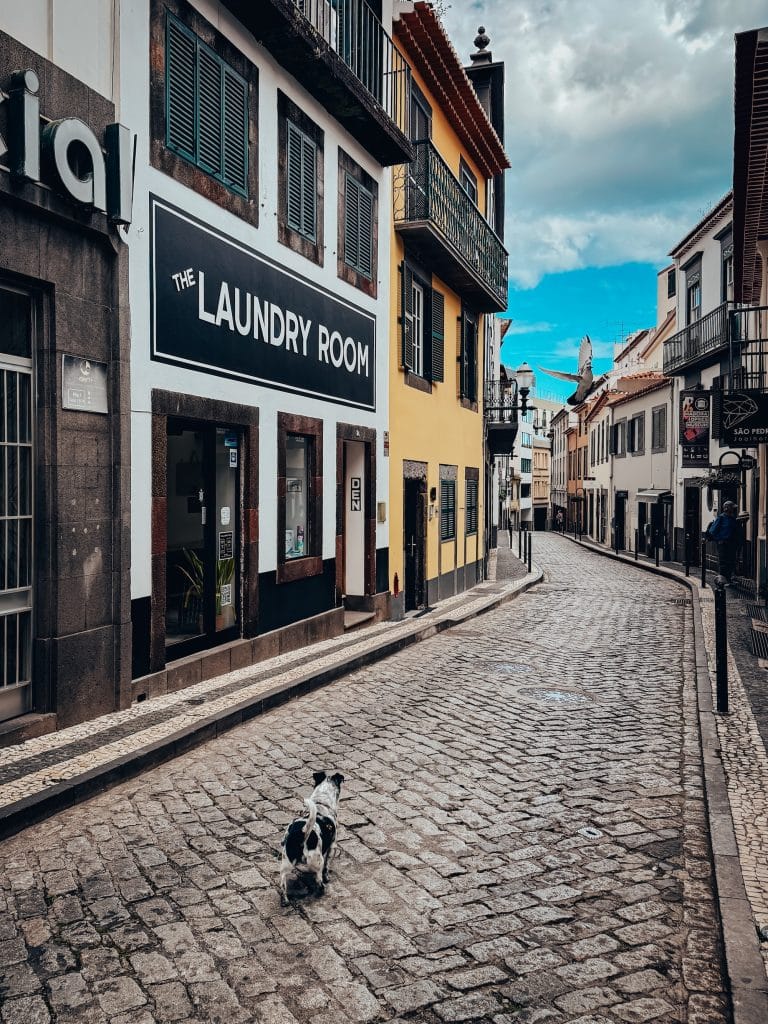
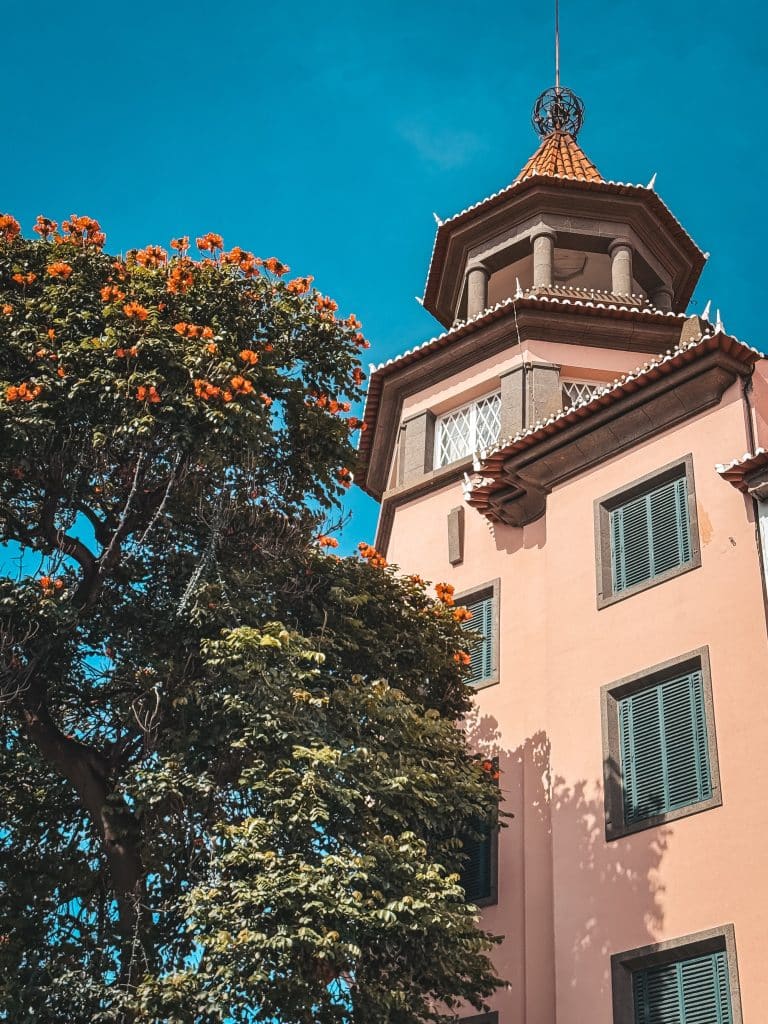
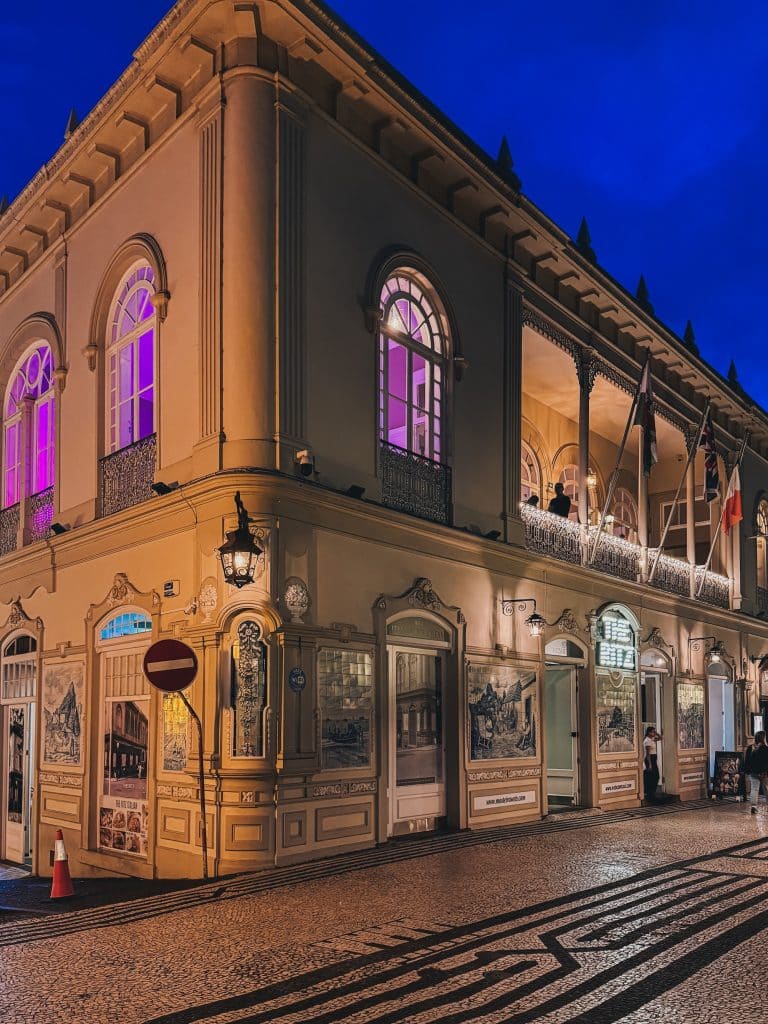
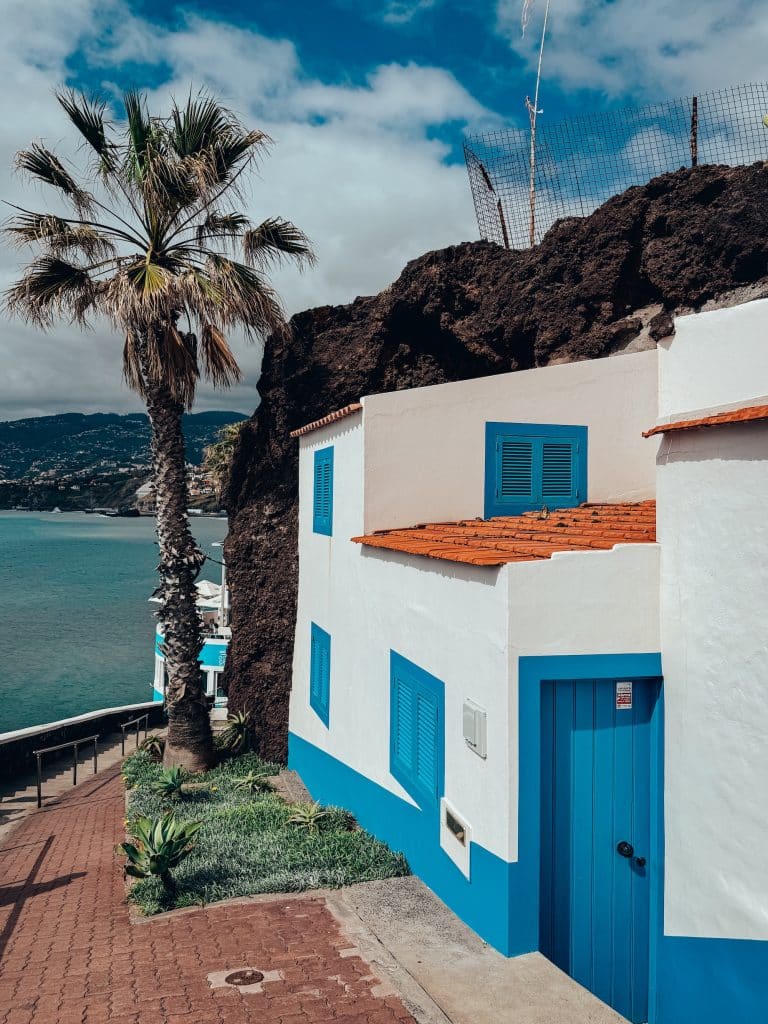
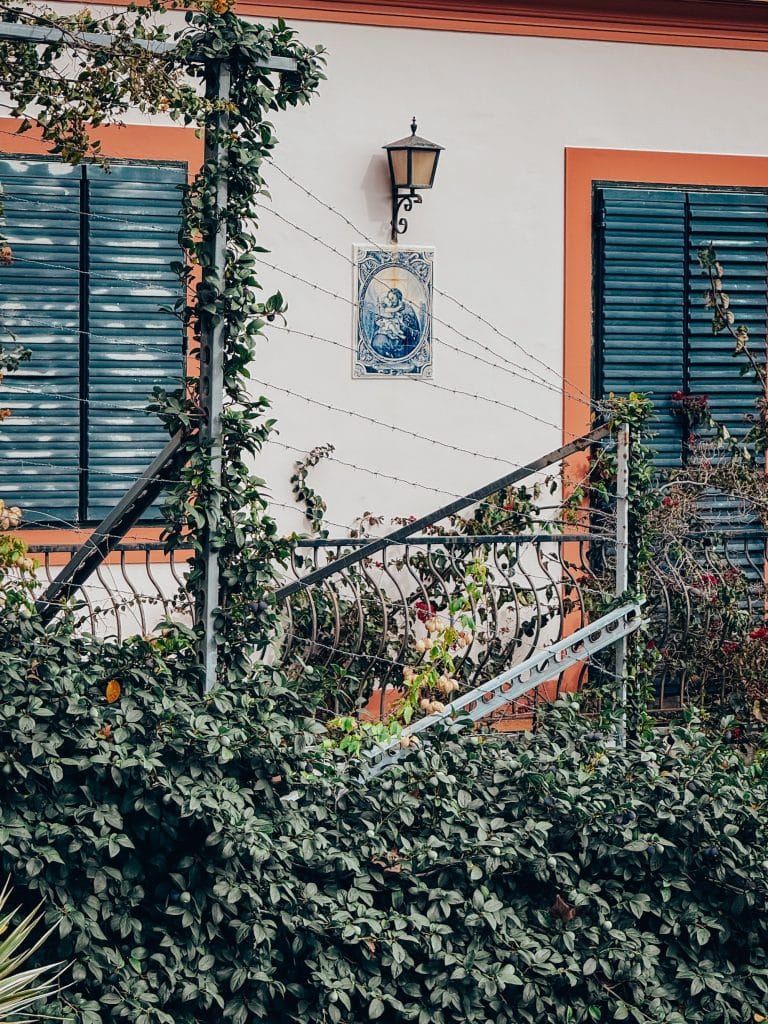
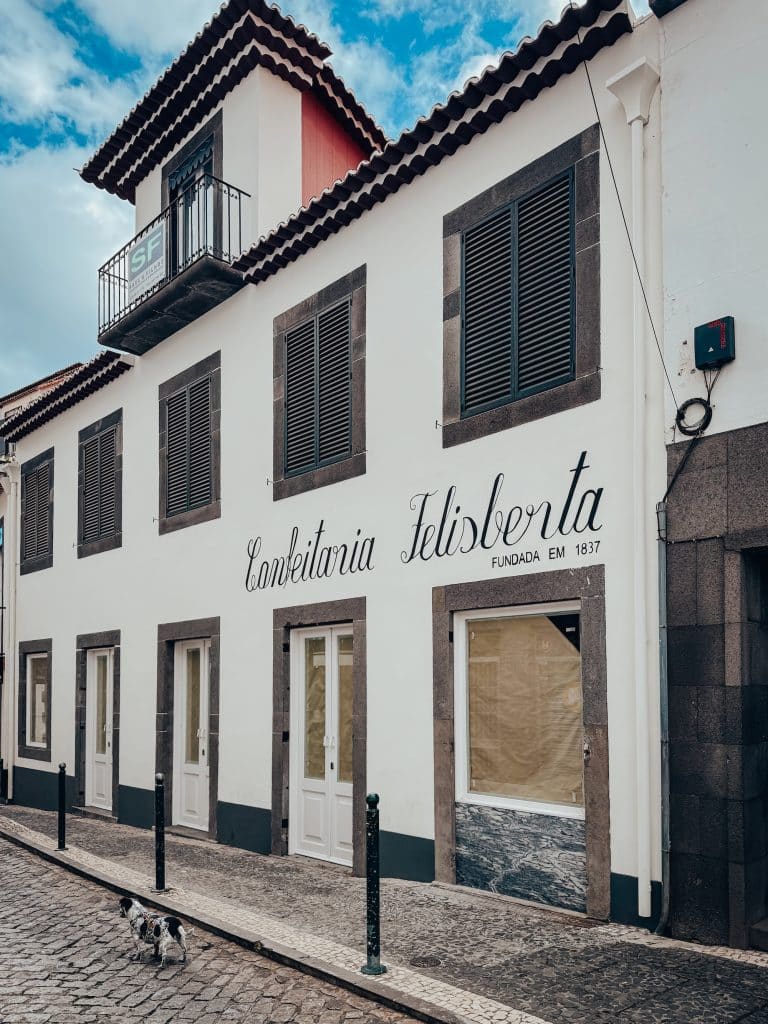
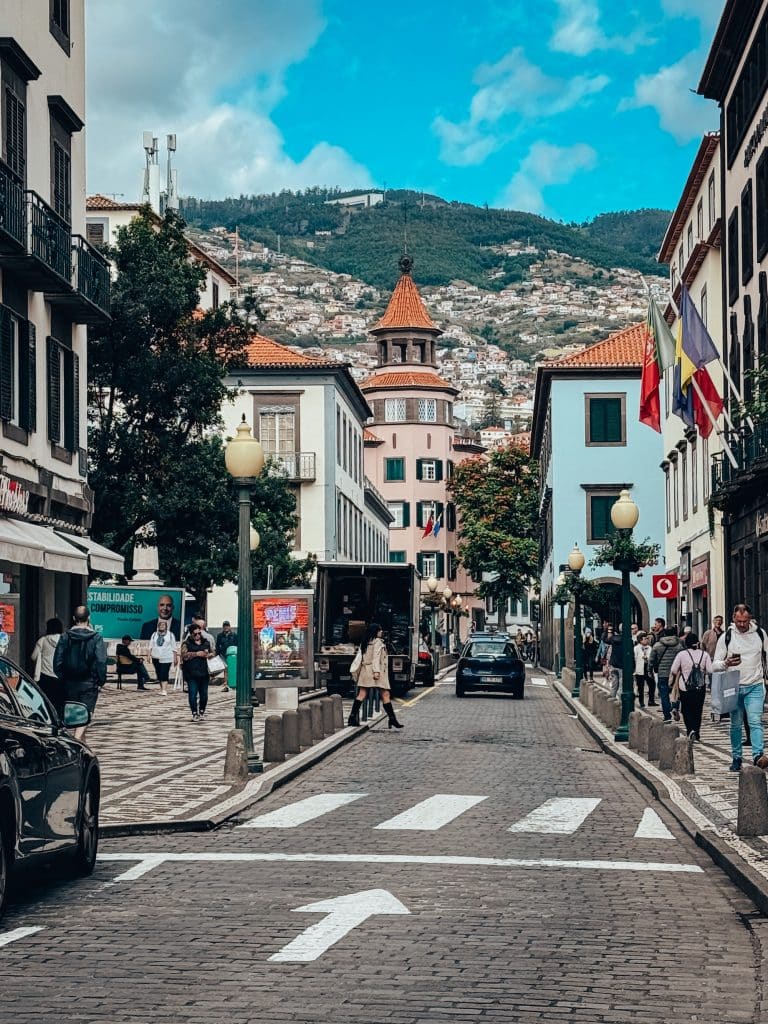
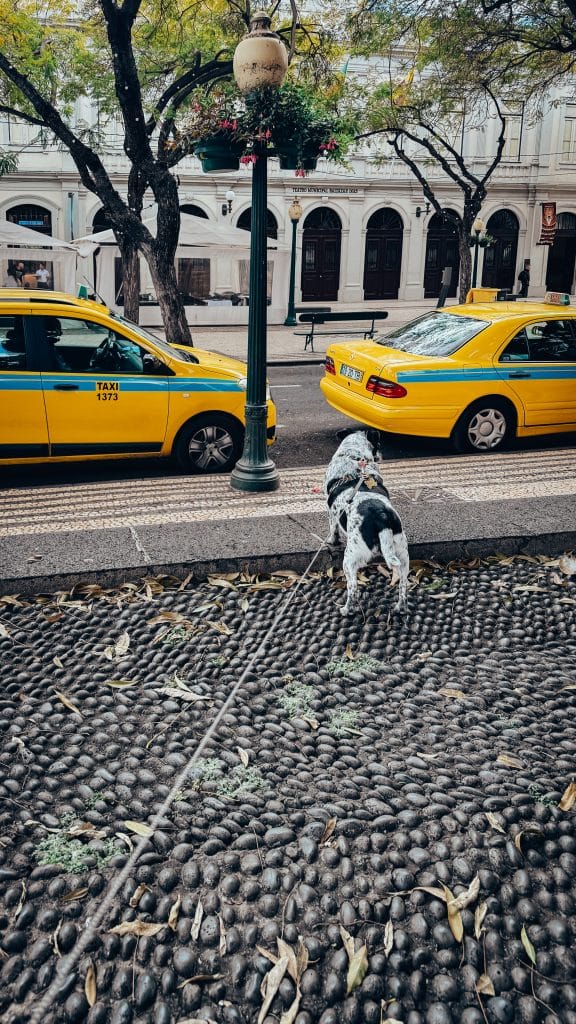
1: Funchal, 2: Funchal, 3: Funchal, 4: Funchal. Photos: Ewelina Podrez-Siama
Looking for a place to stay in Madeira? Compare hotels, apartments and houses across the island on Booking.com, with reviews and free cancellation on many offers.
What to see in Funchal: a 2-day plan for the city
Funchal is pretty steep and full of climbs (it’s the first thing you’ll notice, and after a few days you’ll get used to it), but you can explore the centre on foot. The best time for sightseeing in Funchal? The morning, when the locals are just heading off to work and there are fewer cruise passengers around – ships usually dock between 8:00 and 18:00, and once they arrive, around midday, the centre gets noticeably busier. If you only have two days, below is the plan of sights I recommend.
If tiredness catches up with you on day two, I recommend this particular tuk-tuk tour, which takes you to the most beautiful viewpoints in Funchal (quite hard to reach on foot). I was very happy with it.
Things to do in Funchal
Let’s get down to specifics – here is my subjective but complete list of things to see in Funchal. They’re all worth a visit, and on the way you’ll discover more, less touristy places too. Some of them are in the 2-day plan, and some… are an invitation to stay in Funchal a little longer.
Tuk-tuk, dolphin-watching cruise and the Monte toboggan – I’ve collected prices and my impressions in my guide to tours and excursions in Madeira.
Map of Funchal’s sights
Funchal’s city parks
In Funchal you’ll find at least 10 parks and gardens open to the public. Below are my favourites.
Parque de Santa Catarina (St Catherine’s Park)
A large city park between the Hotel Zone and the centre, with a sweeping lawn where Madeirans and visitors relax during the day, and a gorgeous view of the harbour and the ocean. Exotic trees, palms, a small lake – Santa Catarina is a good place for a morning walk or a breather between sights.
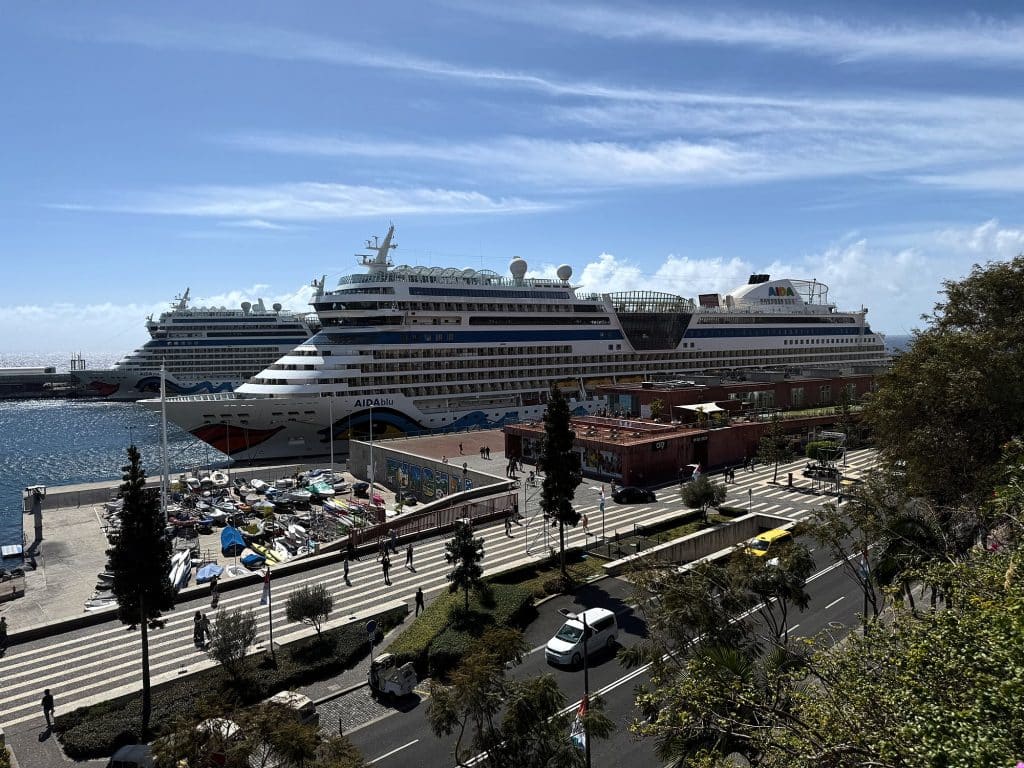
I came here almost every day with Tesla. The park is dog-friendly and spacious, with shady paths under the trees. From the upper part there’s a view of the harbour where the cruise ships dock – you can see the scale of tourism on the island from here.
Jardim Municipal (Municipal Garden)
The Municipal Garden, also known as Queen Amélia’s Garden (Dona Amélia), covers 8300 m² right in the centre, north of Avenida Arriaga. The São Francisco convent once stood here – you can still see the so-called Pedra de Armas (coat-of-arms stone) on one of the lawns. The garden has plants from Madeira and many other corners of the world (the most important species are labelled). There is a pond with fish and birds, sculptures and an amphitheatre used for cultural events.
It’s another of my regular spots in the city – often calmer than Santa Catarina and more intimate. It sits right on the main promenade, Avenida Arriaga, so it’s easy to pop in for a moment.
Quinta Magnólia
Quinta Magnólia is one of those places in Funchal that typical guidebooks don’t mention – which is a shame. This 19th-century estate of about 35,000 m², once part of the British Country Club, was taken over by the government in 1980 and is now a public park open to everyone.
The grounds are full of exotic trees and plants from all over the world – they make the most of Funchal’s subtropical climate and flower all year round. But Quinta Magnólia is more than a garden. After a recent makeover there are tennis courts, a squash court, three padel courts, a children’s playground, a jogging path along the stream valley and even an exhibition room in the estate’s main building (the so-called “mother house”, open Tue–Sat 9:00–15:30). There’s also a reasonably priced restaurant and bar. In summer Quinta Magnólia hosts the Funchal Jazz Festival.
Quinta Magnólia lies near the Lido hotel zone, away from the usual tourist trail in the centre – which is exactly why it’s quieter here than in Santa Catarina or the Jardim Municipal. It’s a great place for a break from sightseeing or for a more active afternoon on one of the courts.
P.S. If you’re staying in the hotel zone on Estrada Monumental, you also have the Jardim Panorâmico close by – a free garden with cacti and an ocean view.
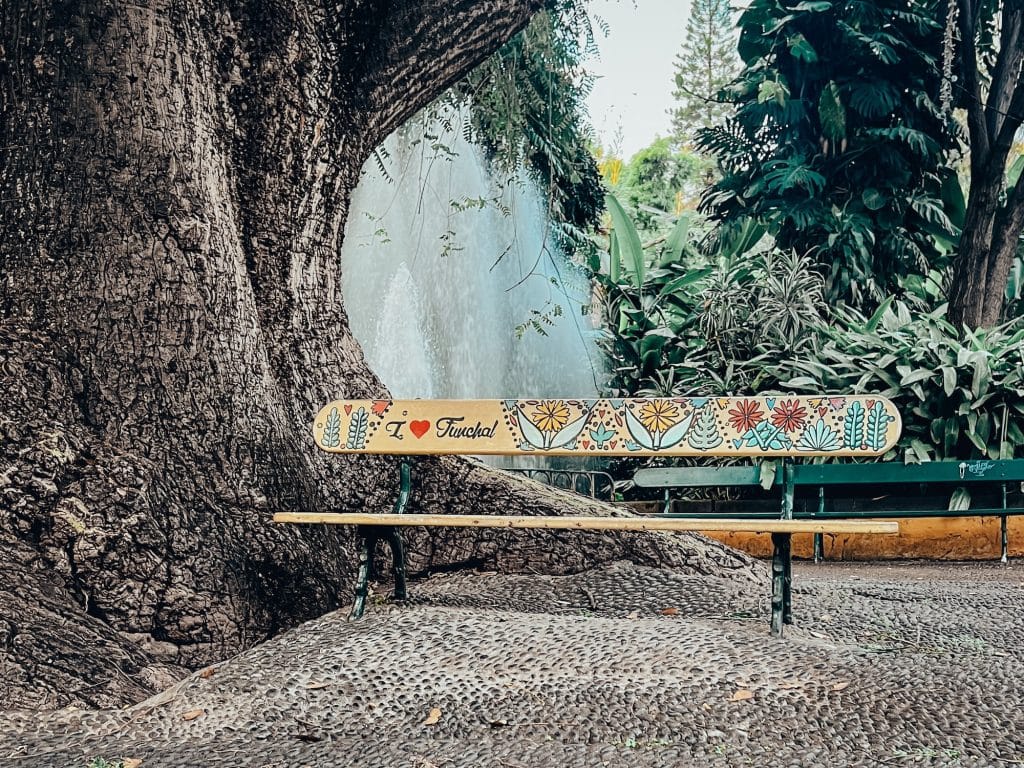
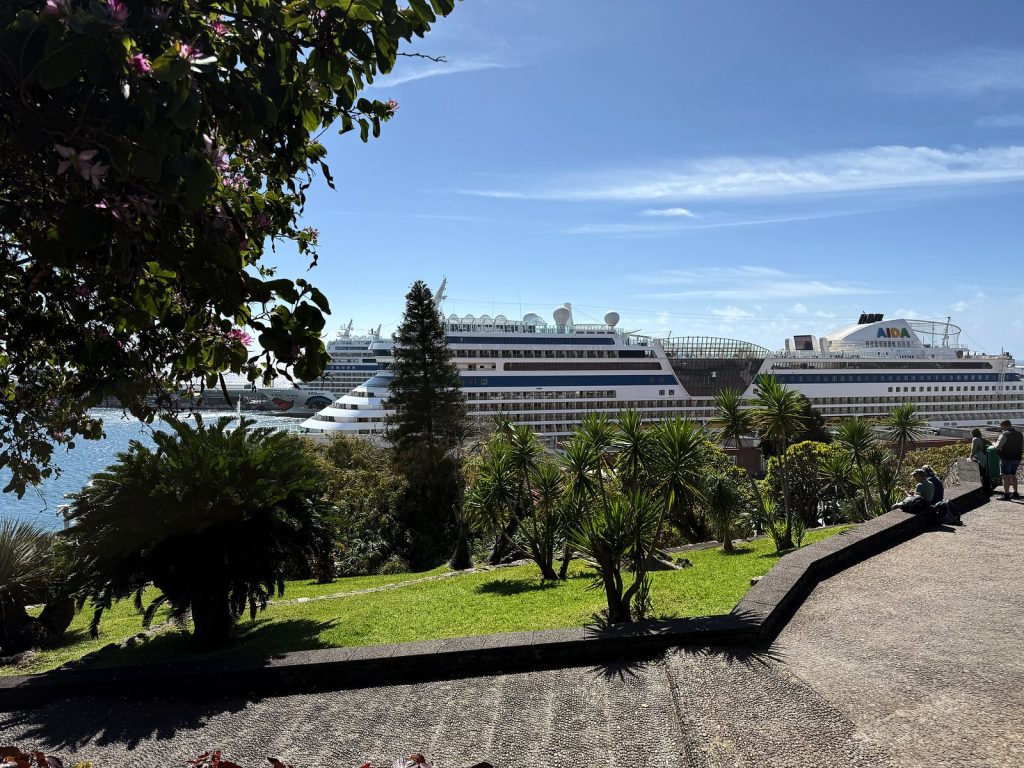
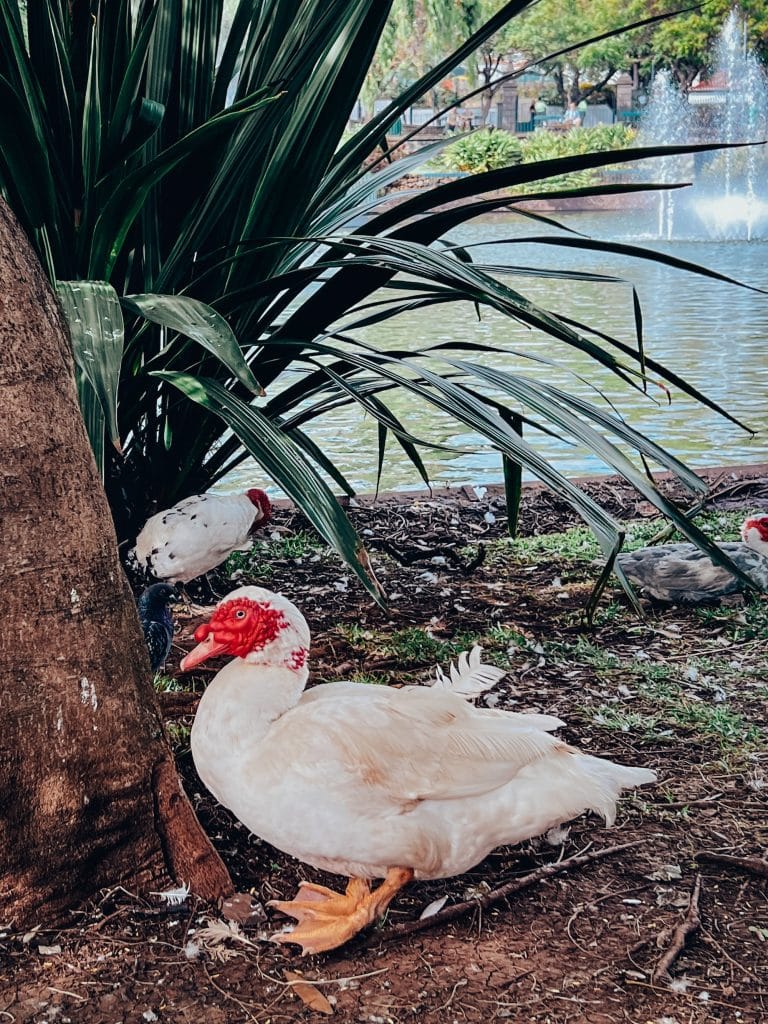
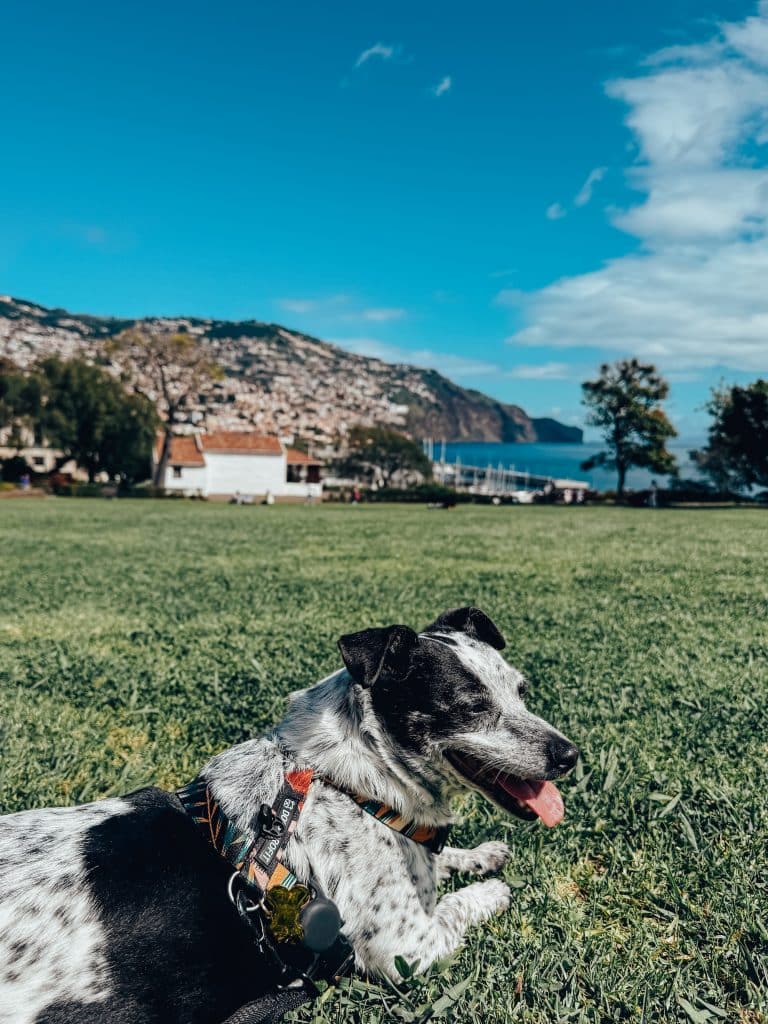
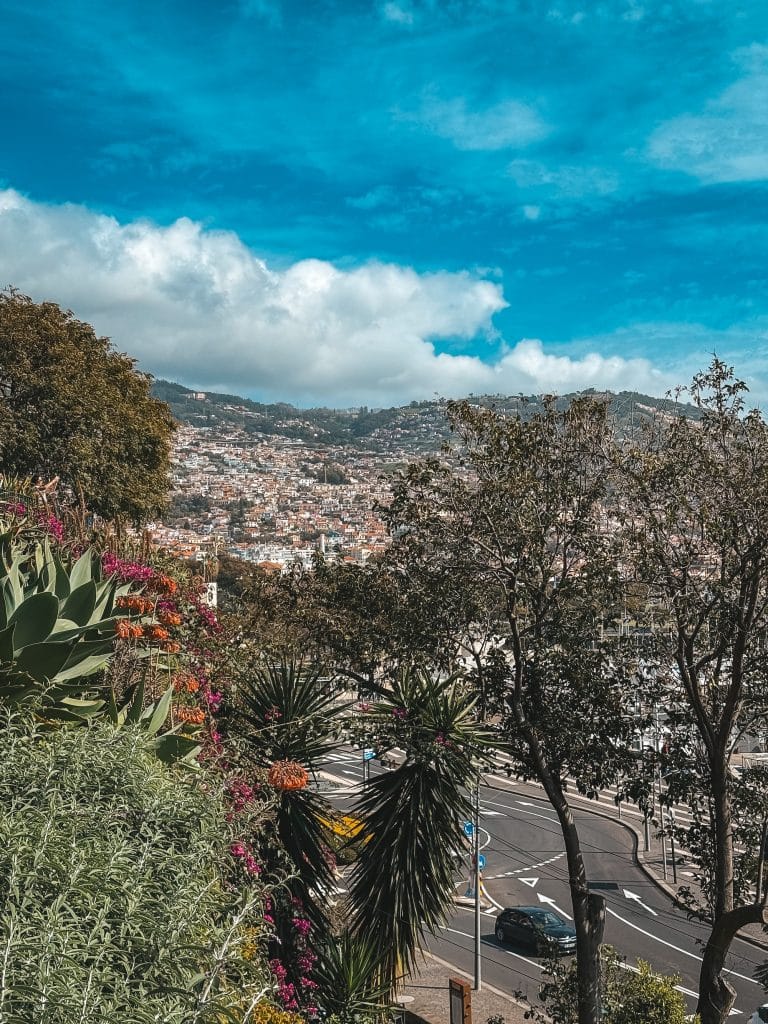
1: The Municipal Garden, photo: Ewelina Podrez-Siama, February 2026, 2: View from Santa Catarina park of the cruise ships in the harbour, March 2025, photo: Ewelina Podrez-Siama, 3: Santa Catarina park, photo: Ewelina Podrez-Siama, March 2025, 4: View from Santa Catarina park, photo: Ewelina Podrez-Siama, March 2025, 5: Entrance to Santa Catarina park, photo: Ewelina Podrez-Siama, February 2026, 6: View from Santa Catarina park, photo: Ewelina Podrez-Siama, February 2026
Sé do Funchal cathedral
The Cathedral of Our Lady of the Assumption (Sé Catedral de Nossa Senhora da Assunção) is one of the oldest and most precious monuments in Funchal, built at the turn of the 15th and 16th centuries on the orders of King Manuel I. Construction began in 1493 and the cathedral was consecrated on 18 October 1517. It was designed by Pêro Anes, the royal court architect. It has been a national monument since 1910.
A historical highlight: once Pope Leo X established the Diocese of Funchal, it was the largest Catholic diocese in the world – it covered all the territories discovered by the Portuguese, from Brazil to Japan.
The architecture combines Gothic, Manueline and Moorish (Mudéjar) elements. The façade of black basalt and white limestone is austere, but adorned with a Gothic portal with eight pointed archivolts. Inside, the eye is drawn above all to the wooden Mudéjar ceiling, made of Madeiran cedar inlaid with ivory – one of the most precious ceilings of its kind in Portugal. It shows scenes referring to the great age of discovery. Also look out for the polychrome Flemish-style high altar, the choir stalls in the main chapel and the silver tabernacle.
The interior is decorated with azulejos – colourful ceramic tiles typical of the Portuguese decorative tradition.
The Old Town (Zona Velha) and Rua de Santa Maria
Funchal is divided into three main districts: the Hotel Zone (Zona Hotelera) in the west, the Centre (Centro) and the Old Town (Zona Velha) in the east.
The Old Town is the most atmospheric part of Funchal – narrow lanes, restored town houses and nightlife. After dark the Zona Velha comes alive and draws both locals and visitors looking for bars with live music.
Rua de Santa Maria is the Old Town’s main street and one of the oldest streets in Funchal. It’s known for the “Art of Open Doors” project (Projecto Arte Portas Abertas), in which local artists painted the doors of the houses with colourful murals. Every door is a work of art in its own right – from abstract designs to scenes of everyday life. The street runs close to the Mercado dos Lavradores, so it’s easy to fit into your first day of sightseeing in Funchal.
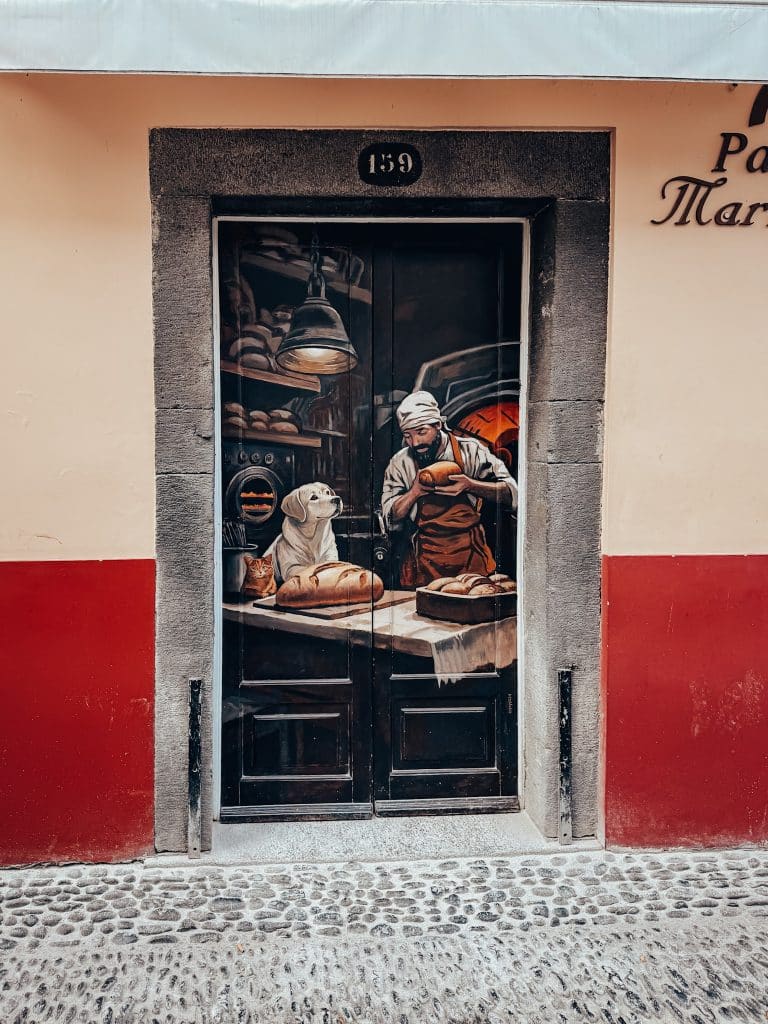
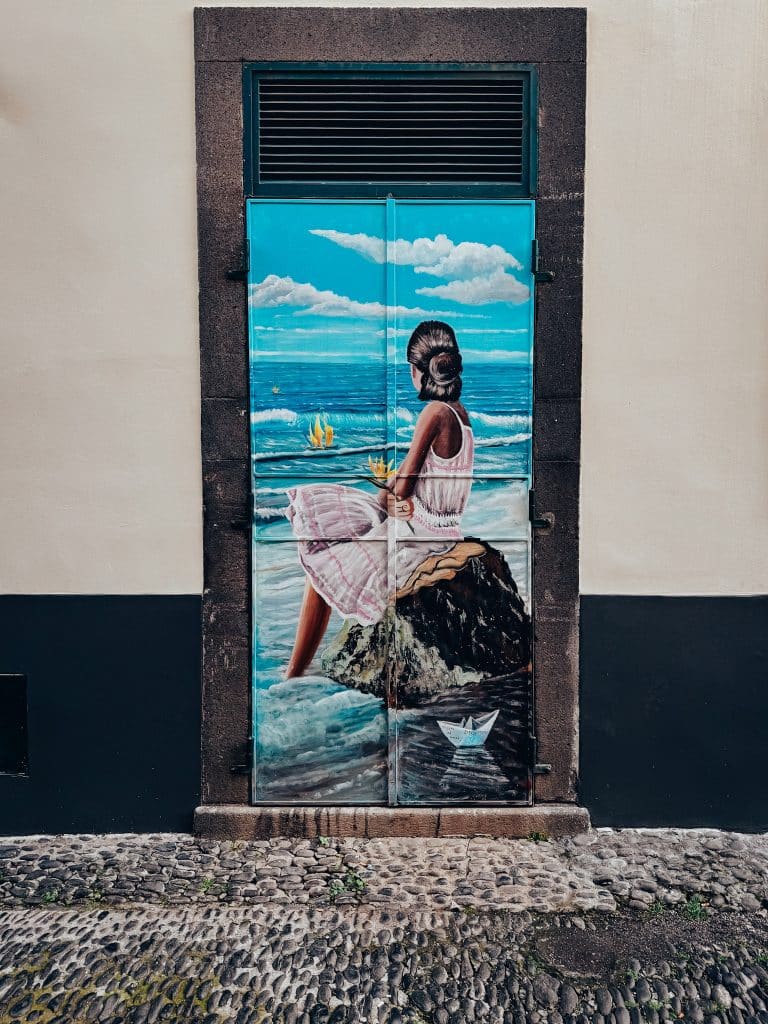
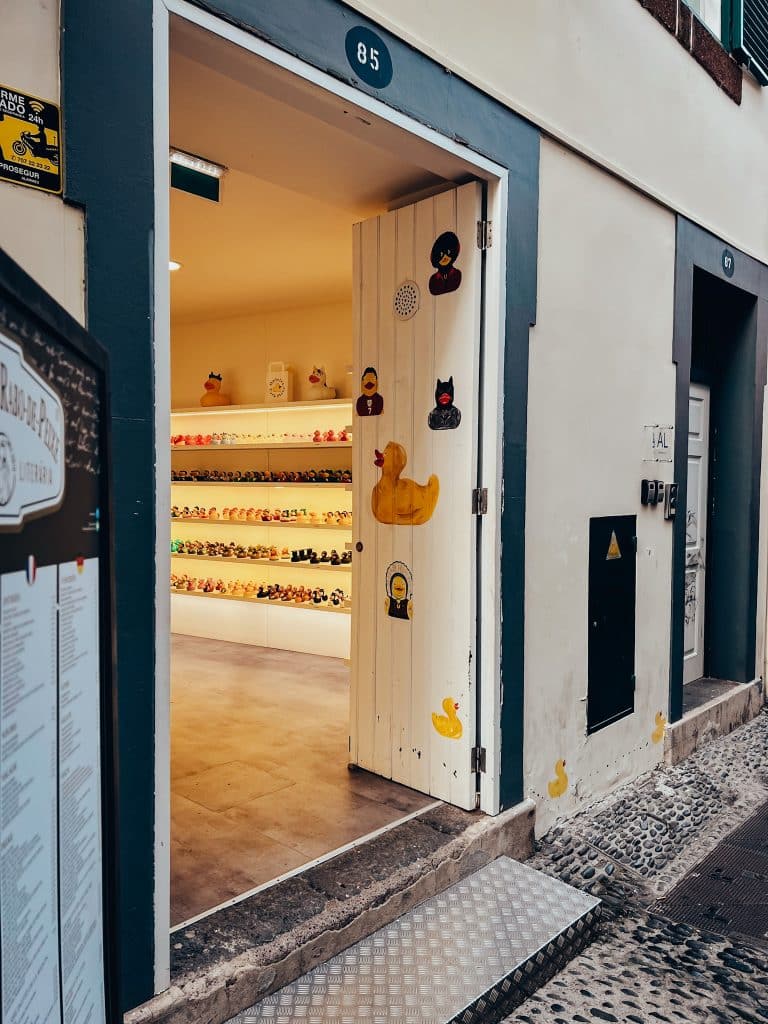
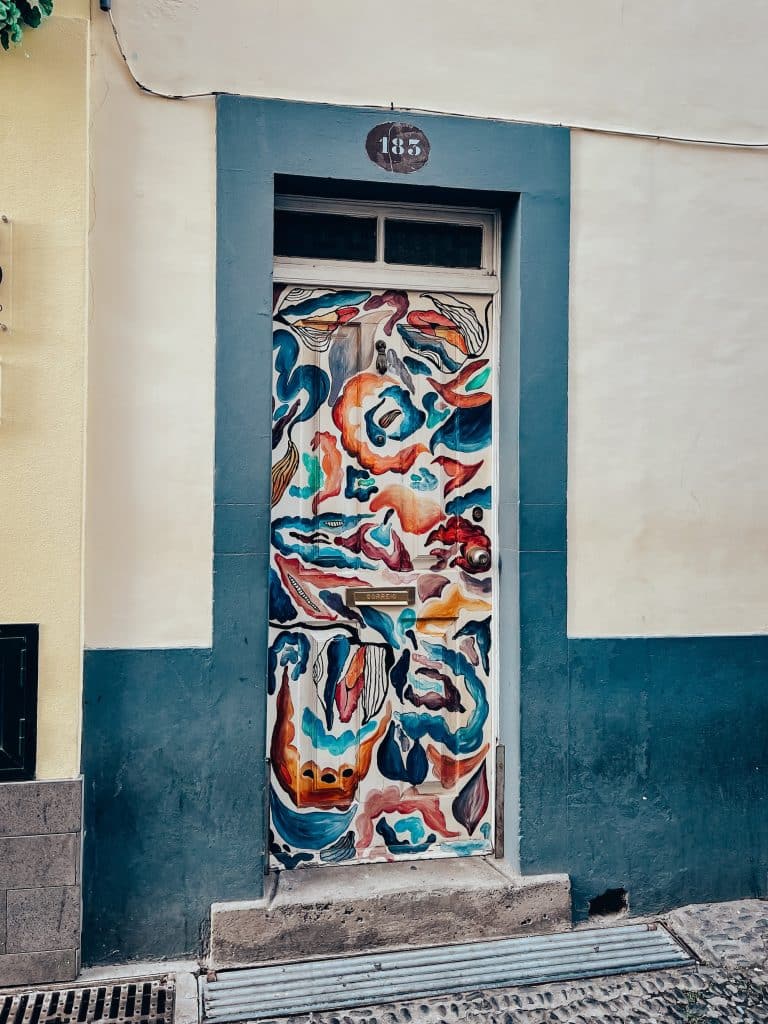
1: A door on Rua de Santa Maria, 2: A door on Rua de Santa Maria, 3: A door on Rua de Santa Maria, 4: A door on Rua de Santa Maria. Photos: Ewelina Podrez-Siama
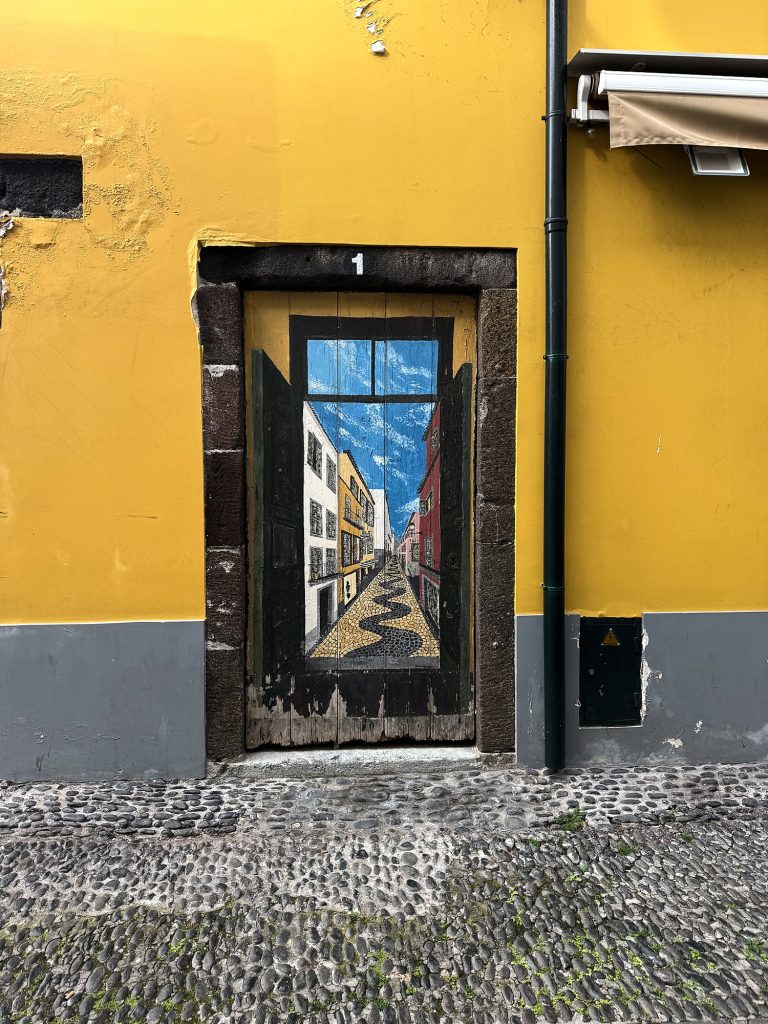
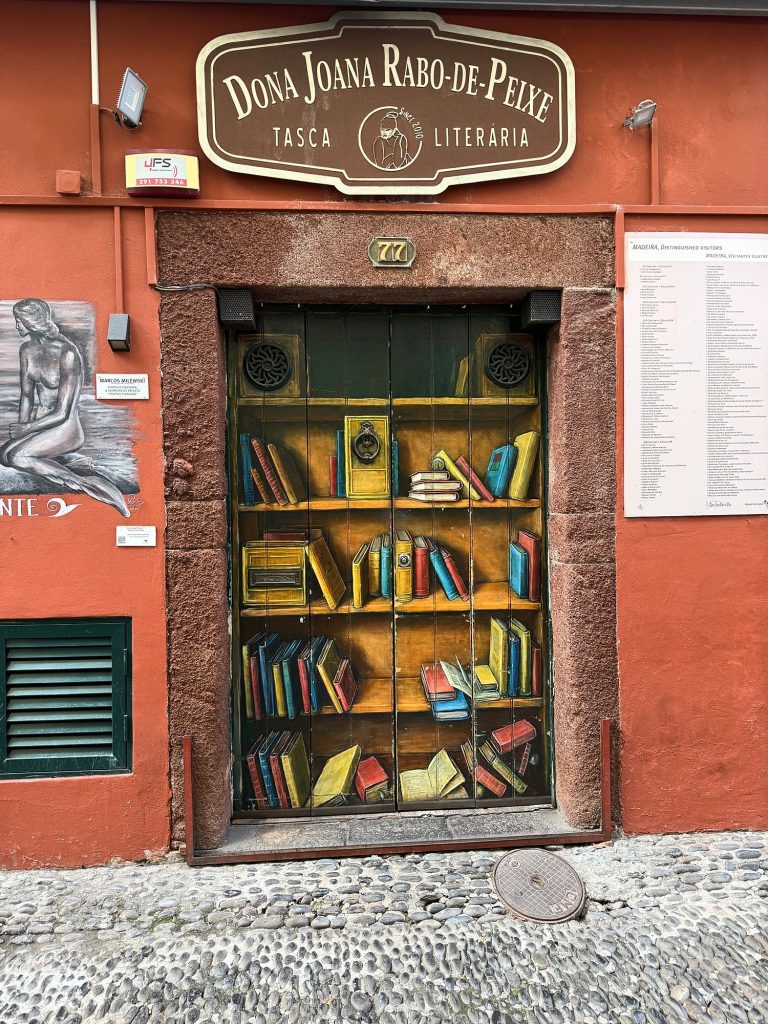
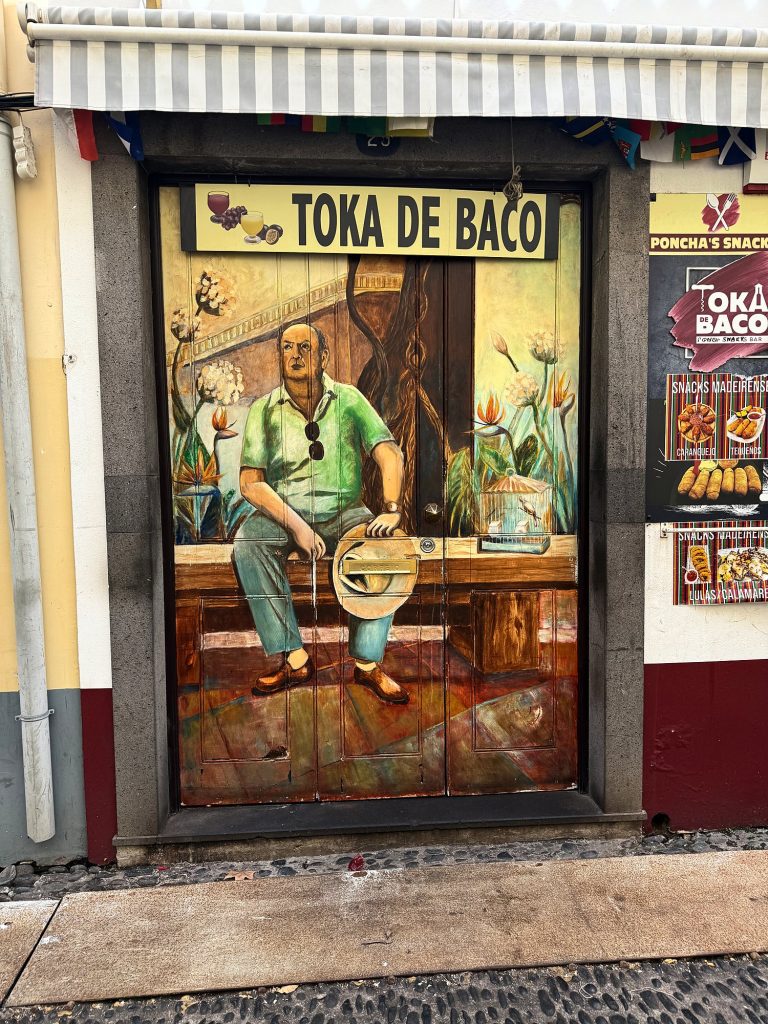
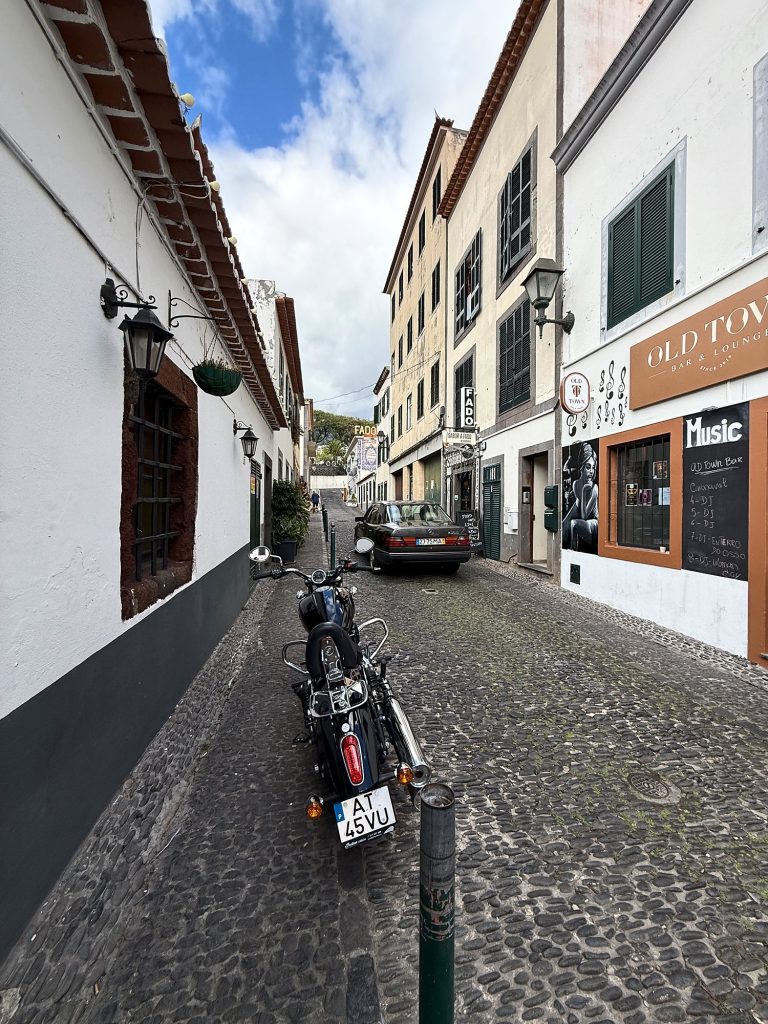
1: A painted door in the Zona Velha, 2: A painted door in the Zona Velha, 3: The Toka de Baco door in the Zona Velha, 4: A lane in the Zona Velha. Photos: Ewelina Podrez-Siama 2025
Polish traces in Funchal
Funchal hides some unexpected Polish traces – monuments to two important Poles, standing in the city centre not far from each other. Both are right in the heart of Funchal, so they’re hard to miss if you know what to look for.
As monuments go, they’re only moderately impressive. But the historical context behind them is genuinely interesting.
The John Paul II statue
Pope John Paul II visited Madeira on 12 May 1991. He celebrated a solemn mass at the dos Barreiros stadium in front of a crowd of 70,000. Along his route the popemobile was showered with flowers, and the streets were laid with carpets of fresh flowers. It was the only papal visit to Madeira. The statue stands right next to the entrance to the Sé cathedral – it was unveiled in 1995.
Fun fact: the church of St John the Baptist in the Atouguia district holds first-class relics – three grey hairs of the Pope, placed under the altar and donated in 2012.
The bust of Józef Piłsudski
On Rua António José de Almeida, which runs from the cathedral towards the seafront boulevard, opposite the Regional Parliament building (Assembleia Regional), stands a bust of Marshal Józef Piłsudski.
Why Piłsudski on Madeira? The Marshal spent his longest holiday here – from 21 December 1930 to about 23 March 1931. Worn out by the political situation and suffering from heart and liver problems, he chose Madeira on his doctors’ advice because of its mild climate. He stayed at the Quinta Bettencourt villa on the outskirts of Funchal, at Caminho do Pilar 20. A plaque on the villa commemorates his stay.
The bust, by local sculptor Ricardo Velosa, was unveiled on 28 October 2009 by Bronisław Komorowski, then Speaker (Marshal) of the Polish Sejm. Locals call the monument “Marechal” (the Marshal). Interestingly, the same sculptor made the bronze statue of Cristiano Ronaldo on the promenade.
Funchal also has a roundabout named after Piłsudski – Rotunda de Józef Piłsudski, on Caminho do Esmeraldo.
Fun fact: in 1931, for the Marshal’s name day (19 March), Poles organised a mass campaign of greetings. More than a million postcards were sent from all over the country, which was quite a challenge for the local post office. The cards were delivered by the Polish destroyer ORP “Wicher”, freshly completed in France.
Fortaleza de São João Baptista do Pico
Pico Fort (Fortaleza do Pico) is one of Funchal’s three main fortresses, set on a hill above the centre. It is the highest of Funchal’s fortifications, with a sweeping panorama of the city, the harbour and the ocean.
The views from the fortress? Spectacular. The climb is tough – it’s a fortress on a hill, after all – but worth it. I walked up with my dog Tesla and we made it. The area is quiet, a little away from the tourist bustle of the centre – the perfect breather from the crowds.
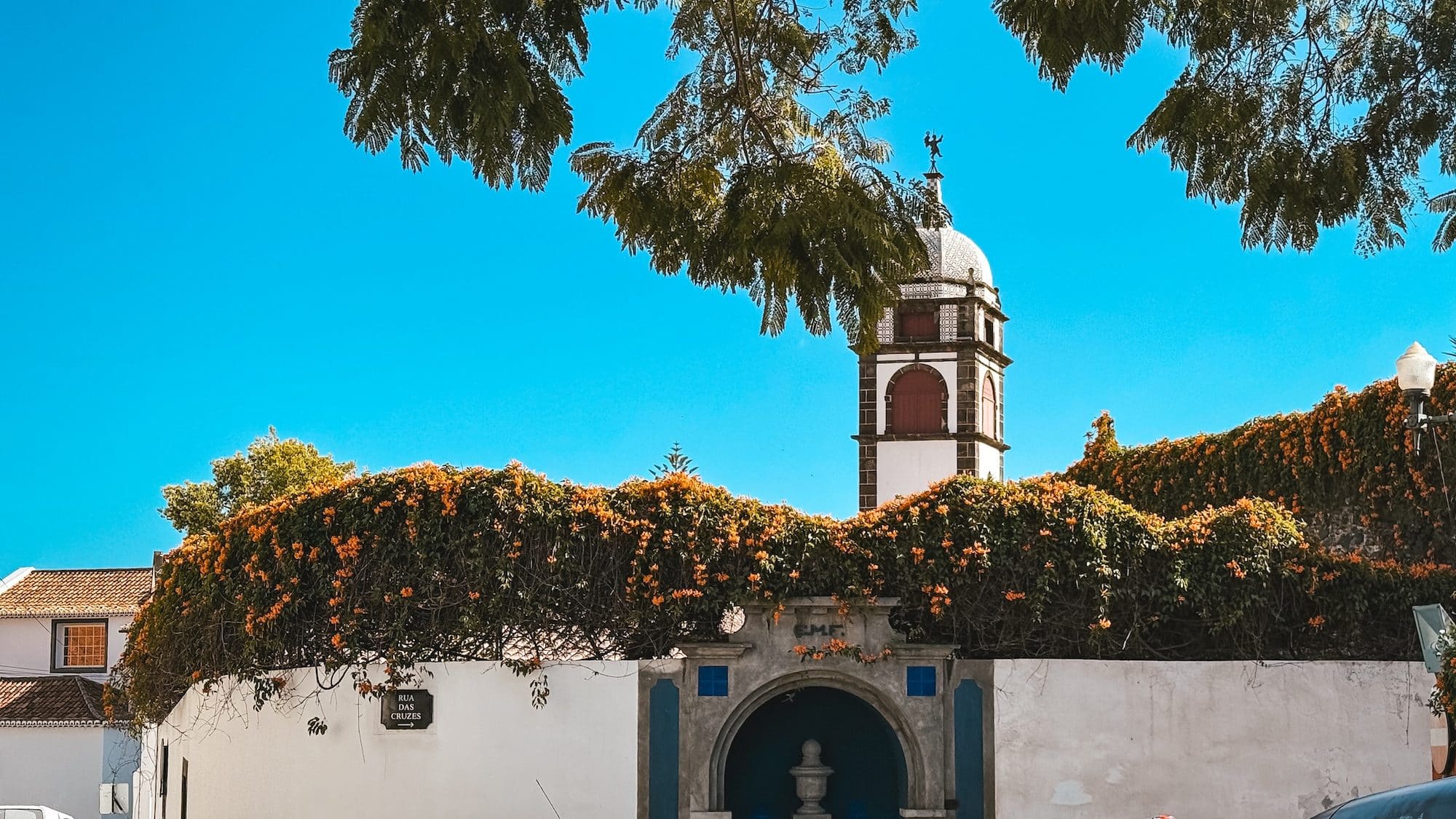
Nearby, on Calçada do Pico, is the Quinta das Cruzes Museum – a baroque estate I’ll come to in a moment.
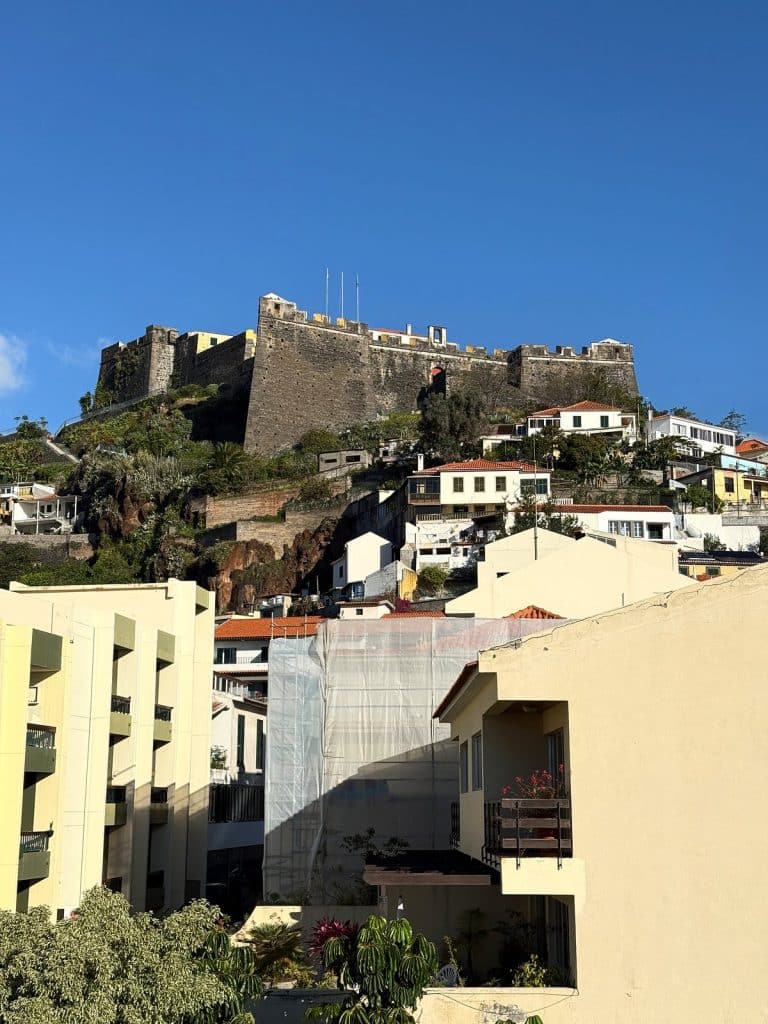
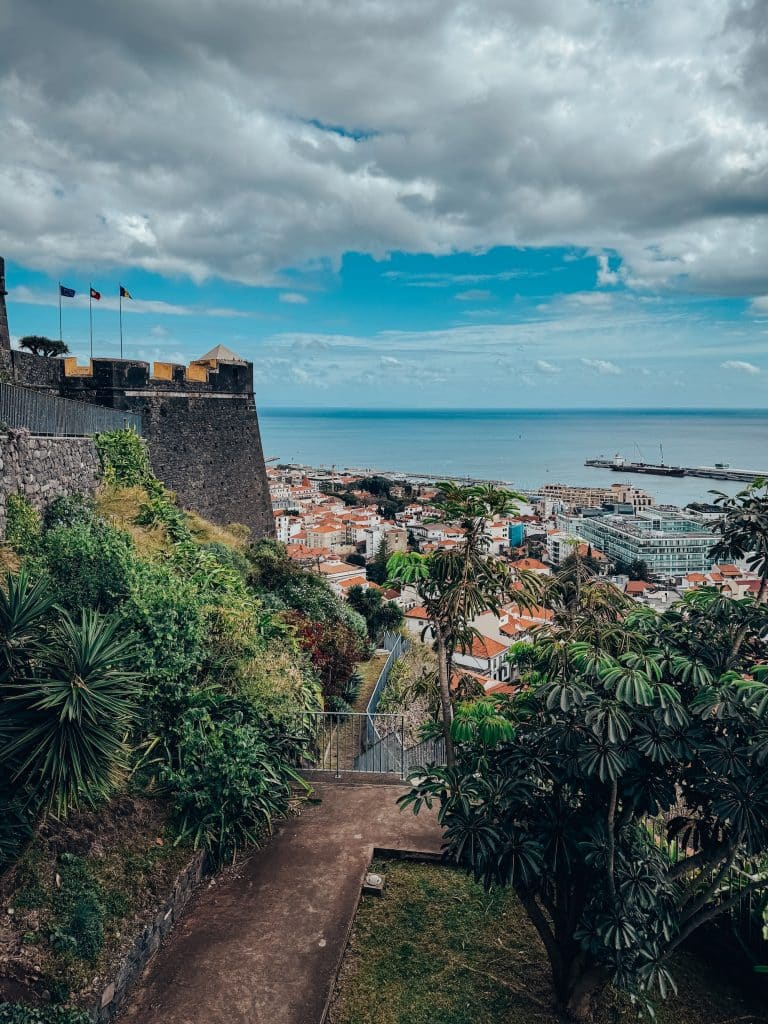
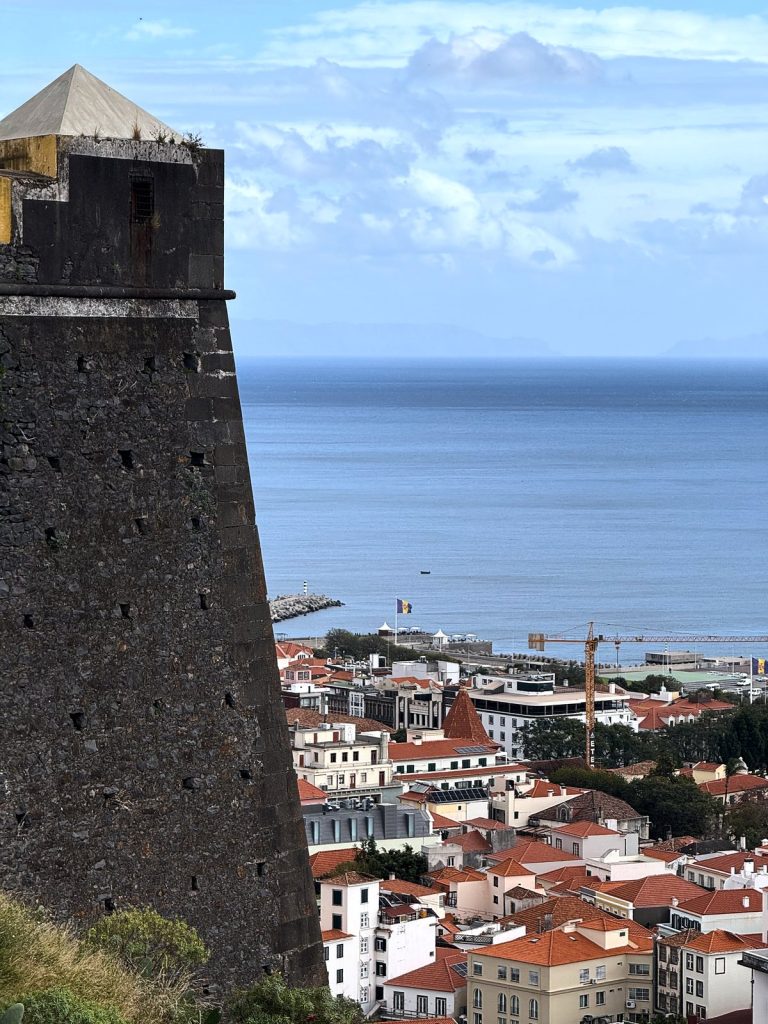
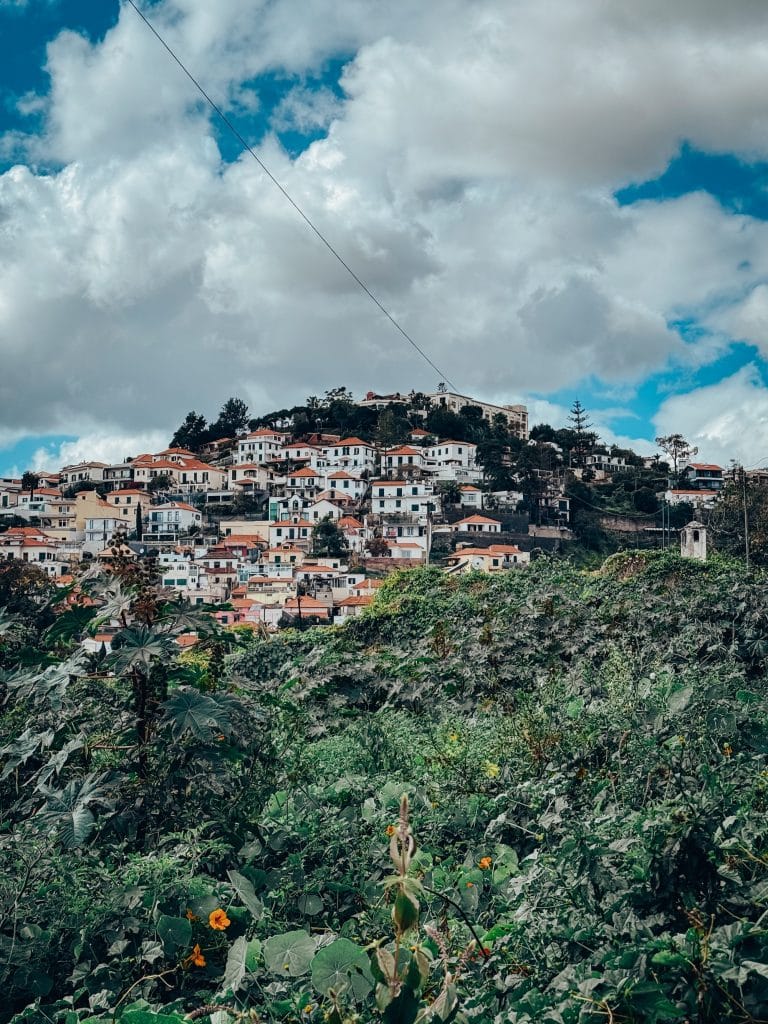
1: Fortaleza do Pico above central Funchal, February 2025, photo: Ewelina Podrez-Siama, 2: Views from Fortaleza de São João Baptista do Pico, photo: Ewelina Podrez-Siama, March 2025, 3: A Fortaleza do Pico watchtower and the view of the harbour, March 2025, photo: Ewelina Podrez-Siama, 4: Views from Fortaleza de São João Baptista do Pico, photo: Ewelina Podrez-Siama, March 2025
English Church (Igreja Inglesa)
The Anglican church in central Funchal bears witness to the strong British presence on the island – from the 17th century onwards the British had a huge influence on the development of the wine trade and tourism on Madeira.
And here’s what may surprise you: the English Church is now one of the best places for a concert in Funchal. I’ve been several times and it was worth it every time. Concerts take place almost every day, at different times – mostly classical music, but there are also hits in classical arrangements. The Rock Quartet was brilliant – imagine rock hits by Queen, AC/DC or Pink Floyd played on classical instruments in an intimate church with beautiful acoustics.
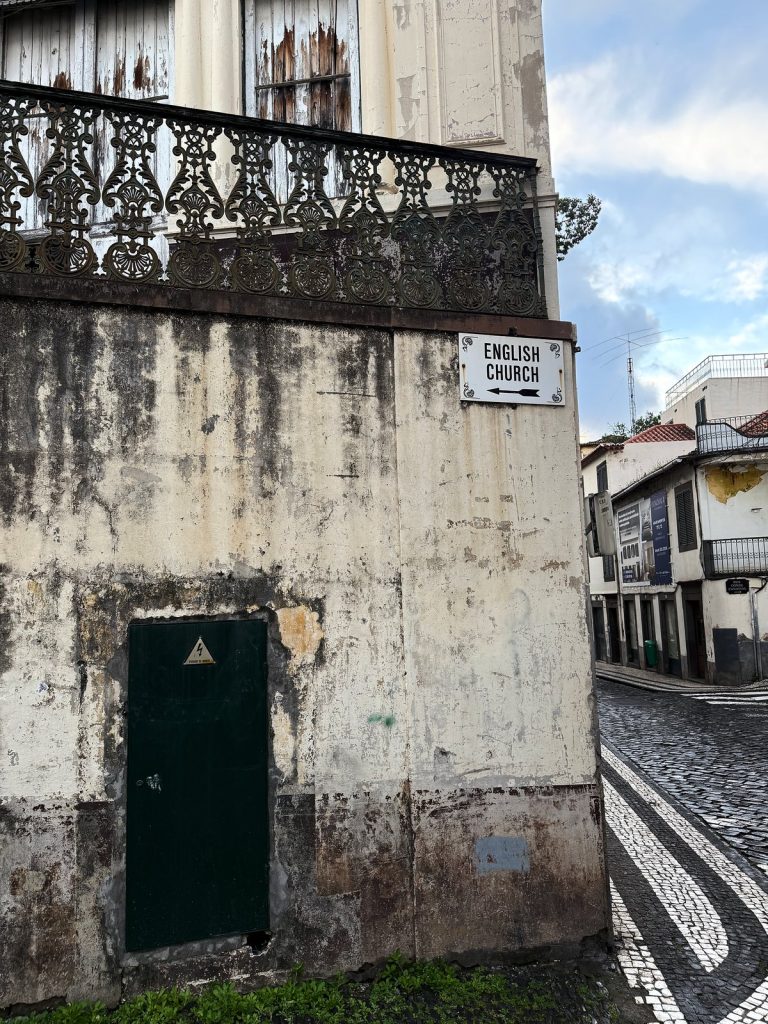
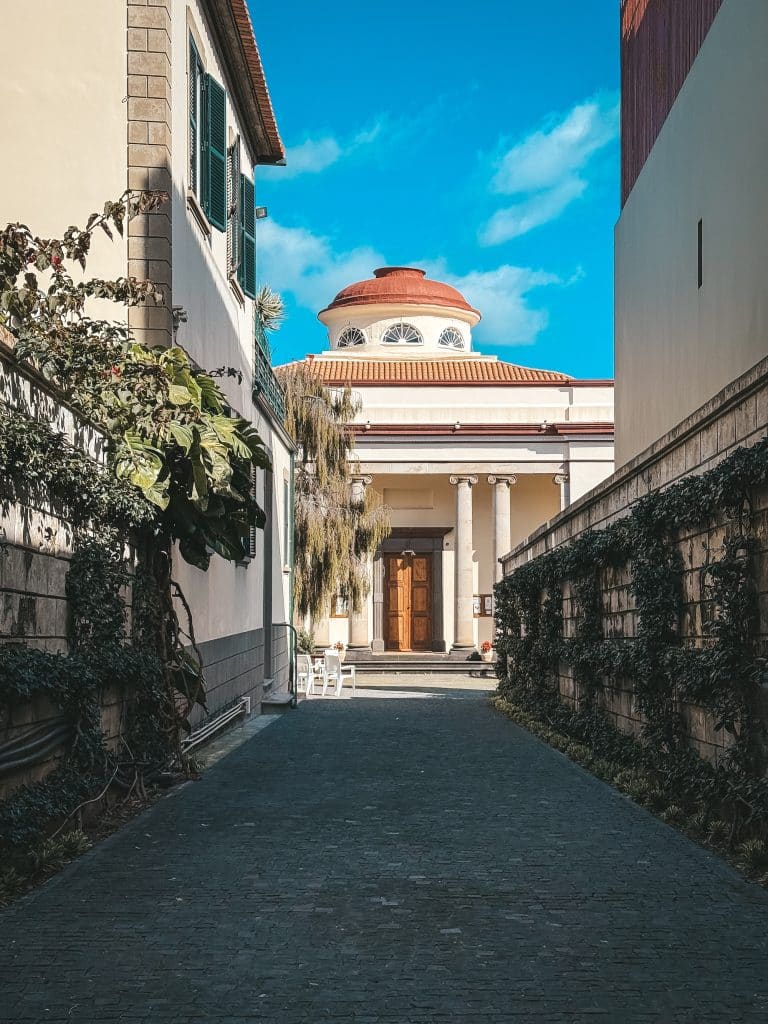
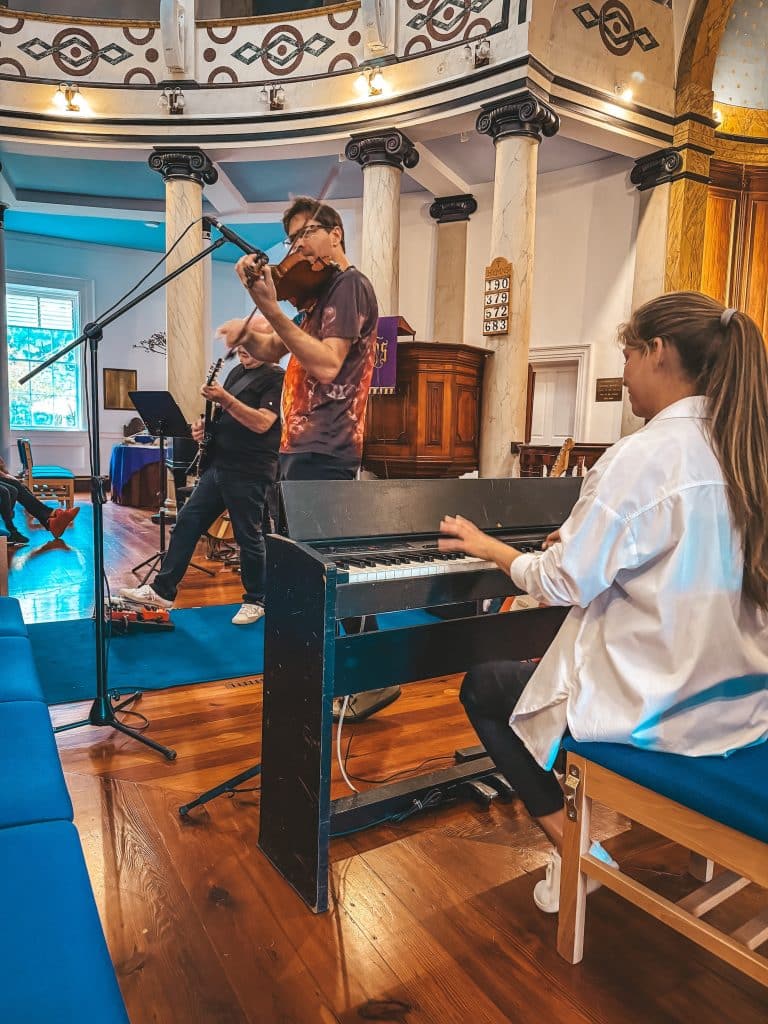
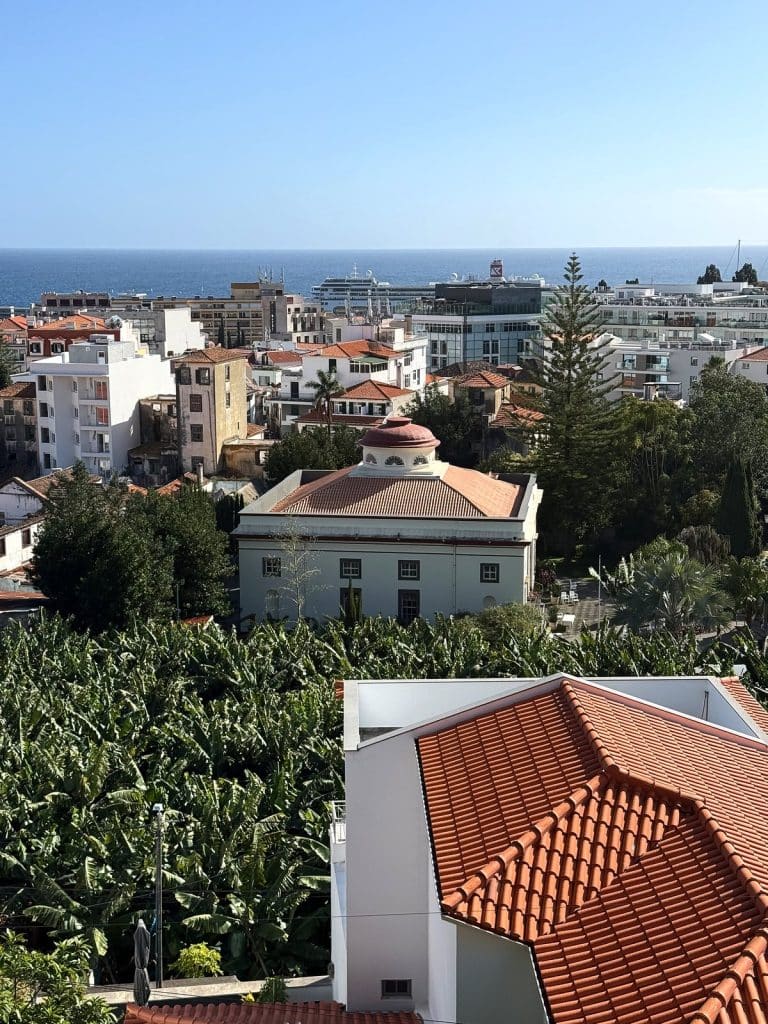
1: A sign to the English Church on an old town house, March 2025, photo: Ewelina Podrez-Siama, 2: English Church, photo: Ewelina Podrez-Siama, February 2025, 3: Rock Quartet concert in the English Church, photo: Ewelina Podrez-Siama, February 2025, 4: The English Church among Funchal’s rooftops, February 2026, photo: Ewelina Podrez-Siama
Miradouro da Quinta das Cruzes
A viewpoint you can walk to from around the English Church. Lovely views of the city, and on the way azulejos – ceramic tile panels decorating the walls. It’s worth combining with Fortaleza do Pico and the Quinta das Cruzes Museum – together they make a natural scenic route through upper Funchal.
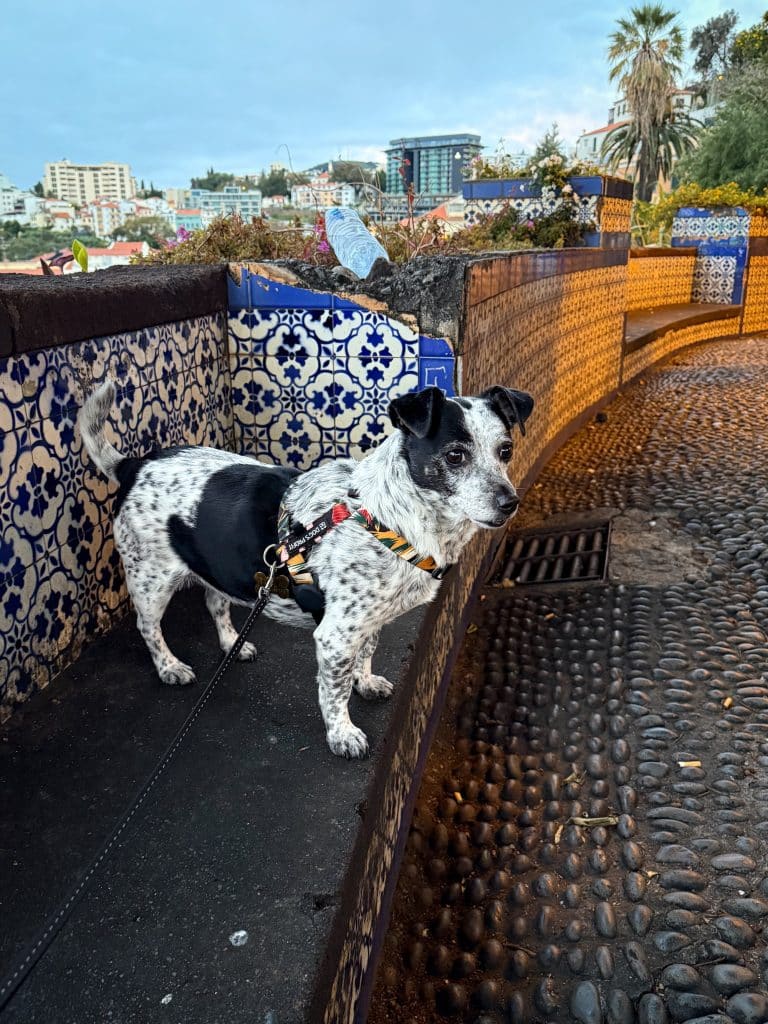
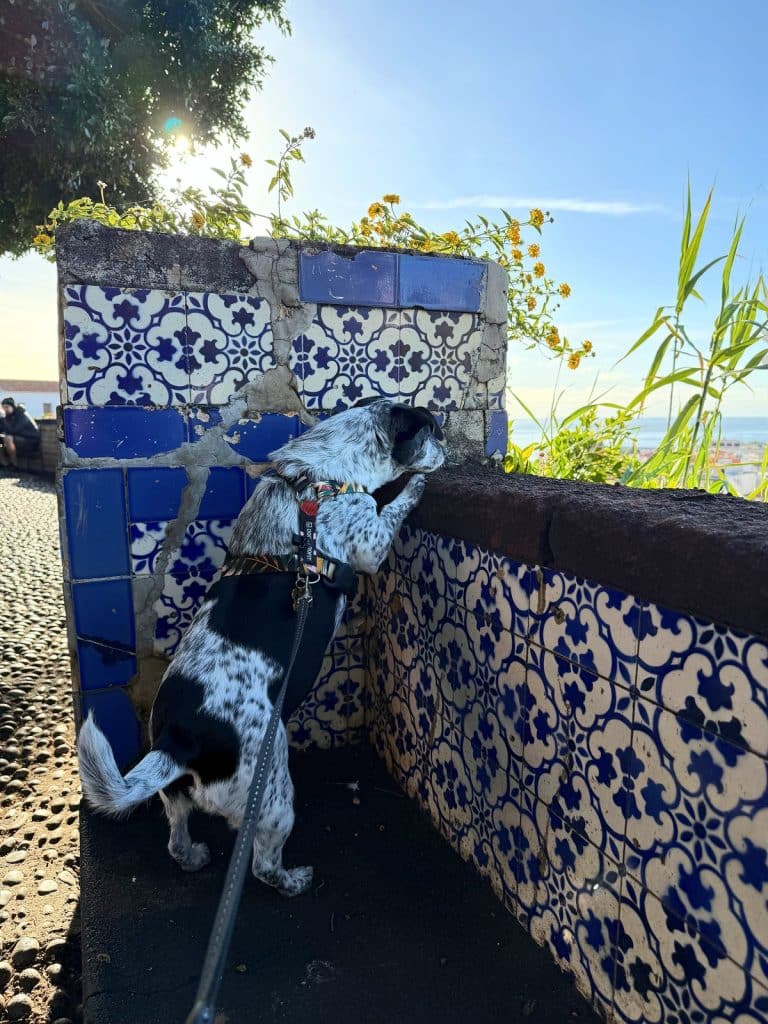
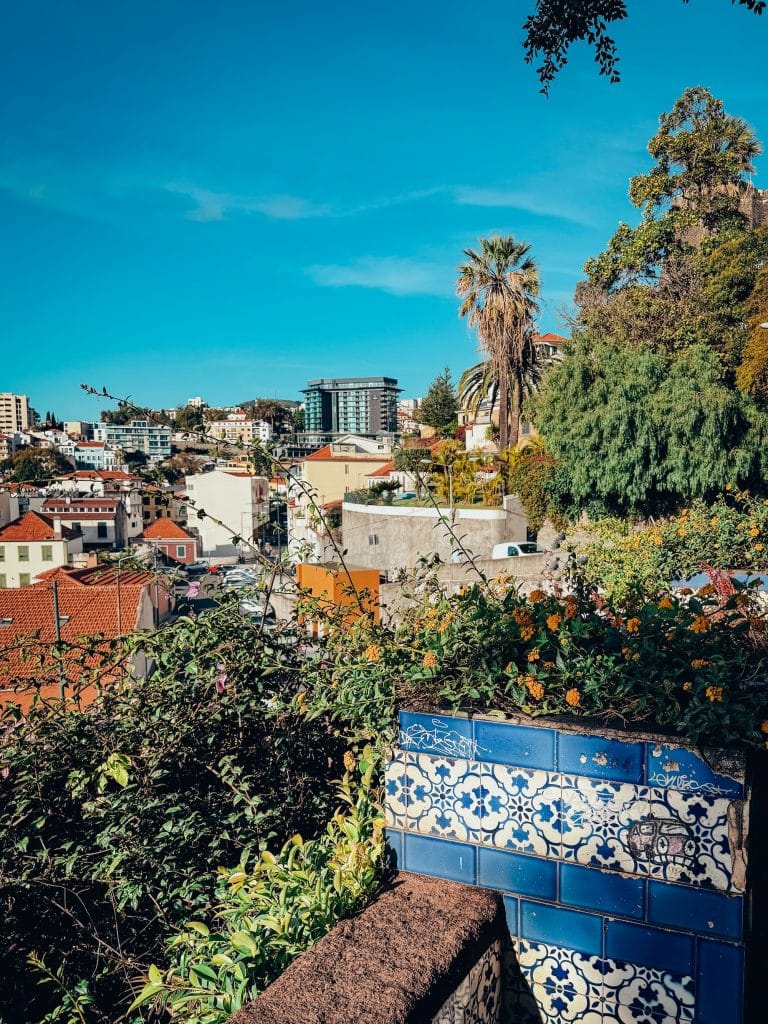
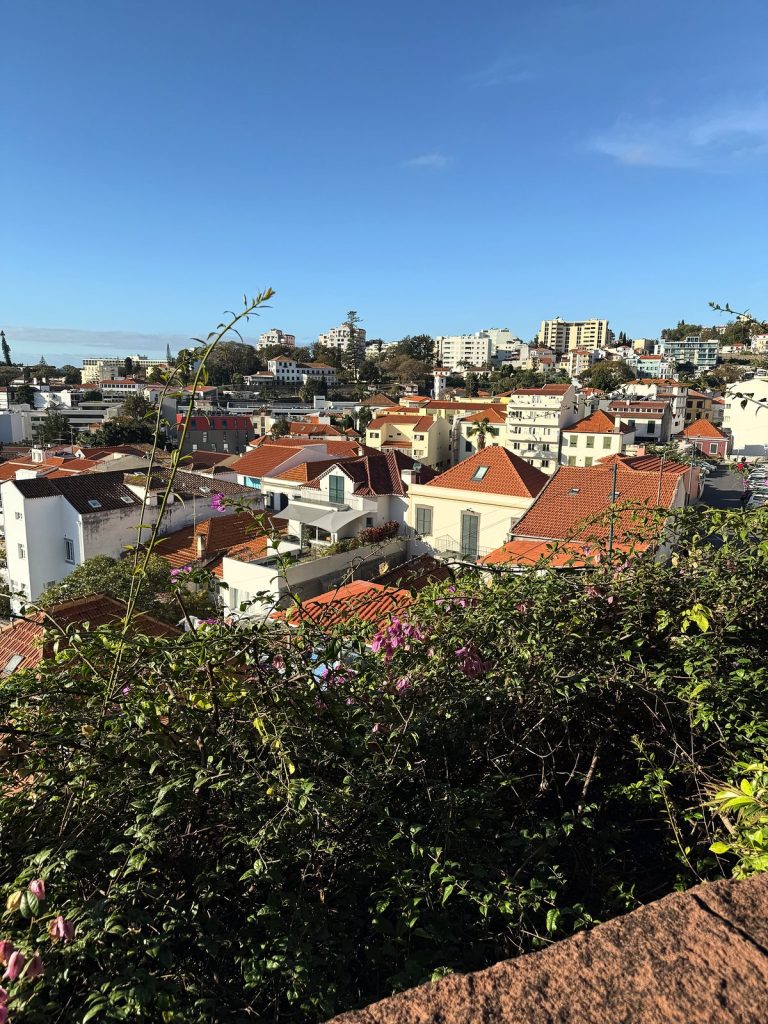
1: Miradouro da Quinta das Cruzes, photo: Ewelina Podrez-Siama, March 2025, 2: Tesla by the azulejo wall at Miradouro da Quinta das Cruzes, February 2025, photo: Ewelina Podrez-Siama, 3: View of Funchal, photo: Ewelina Podrez-Siama, 4: View from Miradouro da Quinta das Cruzes over Funchal’s rooftops, February 2025, photo: Ewelina Podrez-Siama
Quinta das Cruzes Museum (Museu Quinta das Cruzes)
Quinta das Cruzes is one of the most important historic estates in Funchal – and one of the places visitors most often skip, focusing on the gardens and viewpoints instead. Which is a shame, because this is a museum with real history underfoot.
The estate belonged to the family of João Gonçalves Zarco, the discoverer of Madeira. Zarco himself built the first house around 1425, and it was extended by his son João Gonçalves da Câmara – the same man who founded the Santa Clara Convent across the street.
Over the centuries the quinta changed hands many times – from the Lomelino family of Italian sugar merchants to the Carvalhal family in the 18th century. In 1946 the state took it over, and in 1953 it opened as a museum.
Inside: a collection of decorative arts that surprises with its variety. Portuguese and English furniture from the 16th–19th centuries (including Chippendale and Hepplewhite pieces – a legacy of the centuries-long British presence on Madeira), European and Oriental porcelain (including Qing dynasty pieces), Portuguese faience, ivory objects, Flemish and Portuguese sculptures from the 15th–18th centuries and even nativity scenes from the 18th–19th centuries. Look out for the Flemish altarpiece from Brussels from the late 15th century. But Quinta das Cruzes is about more than its interiors.
The museum garden is an attraction in its own right – quiet stone paths, fountains, endemic and exotic plants, cats lounging in the sun, and a collection of architectural fragments from different eras: Manueline windows, stone coats of arms and crosses (hence the name “Quinta das Cruzes” – the Estate of the Crosses).
You can visit the garden separately from the museum, and for free. There’s also a café with a terrace (Bistrô Quinta das Cruzes) – a pleasant spot for a break after the steep climb from the centre. Quinta das Cruzes is right next to Fortaleza do Pico and the Miradouro da Quinta das Cruzes – these three sights make a natural route through upper Funchal, away from the cruise-ship crowds.
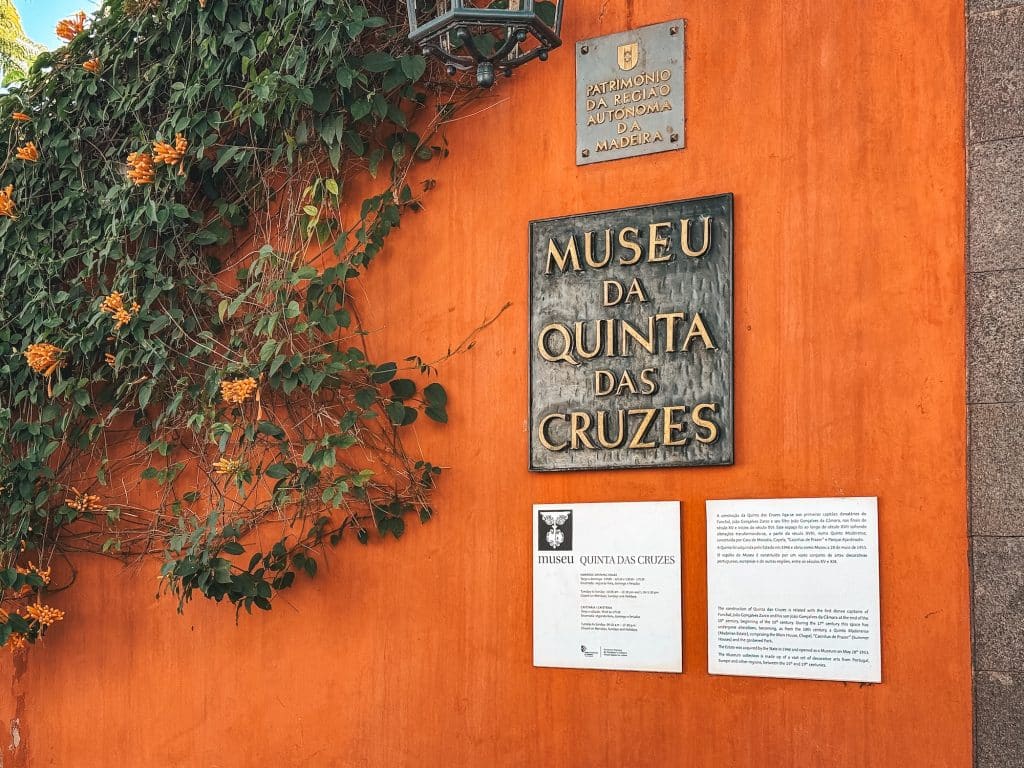
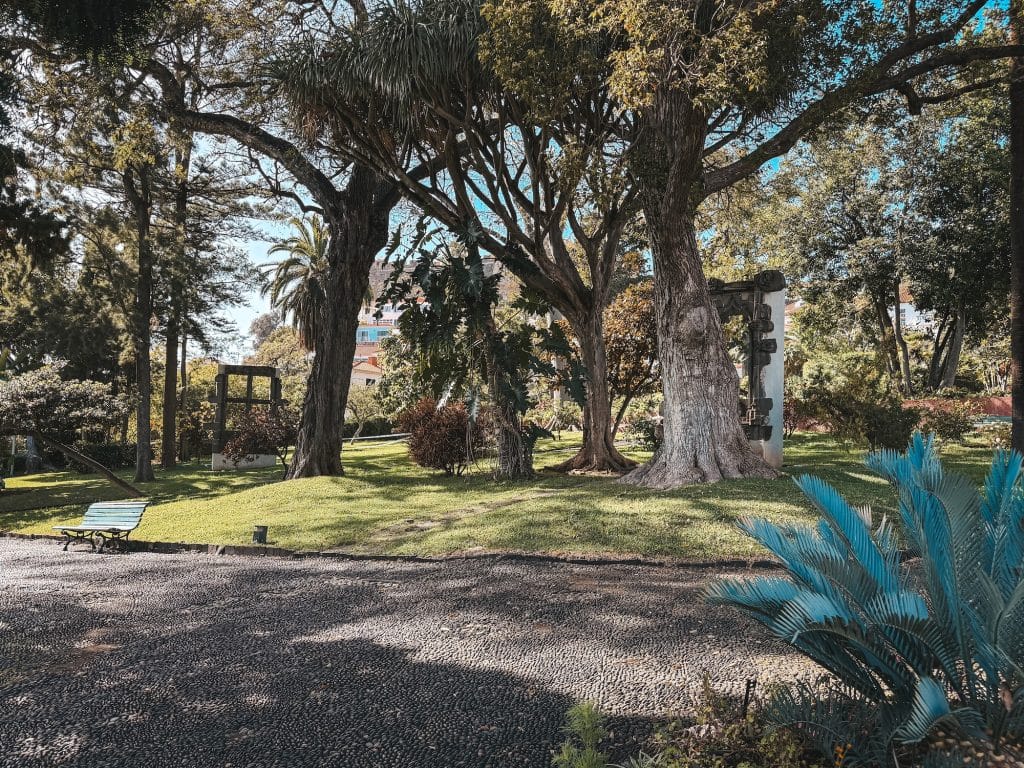
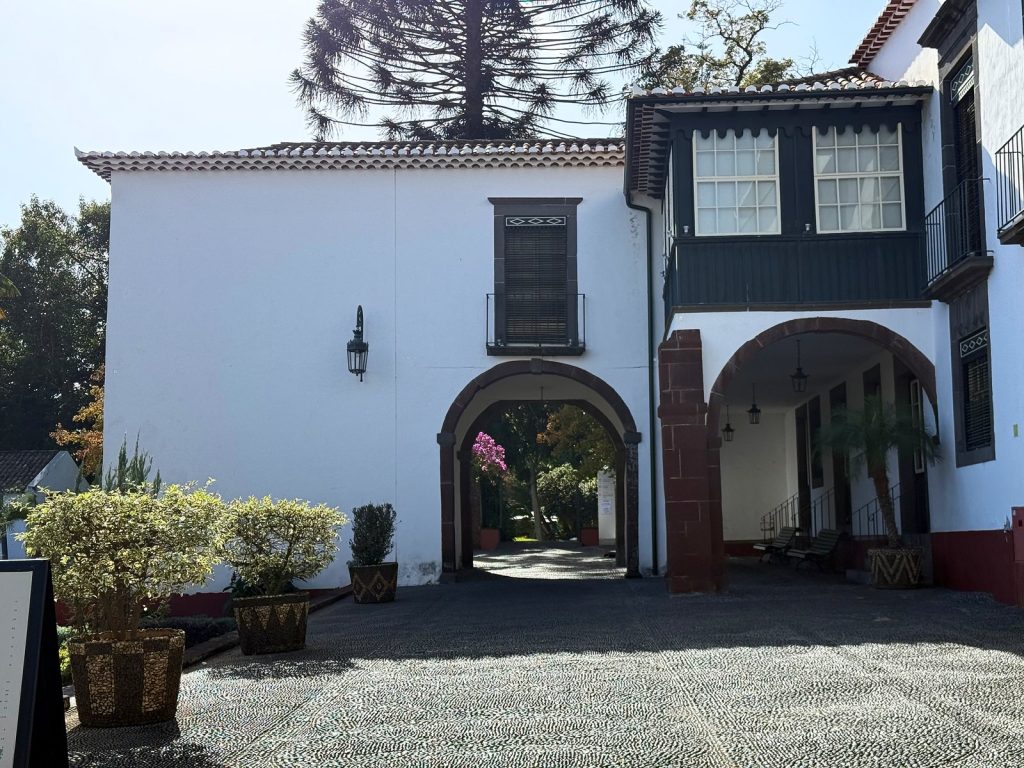
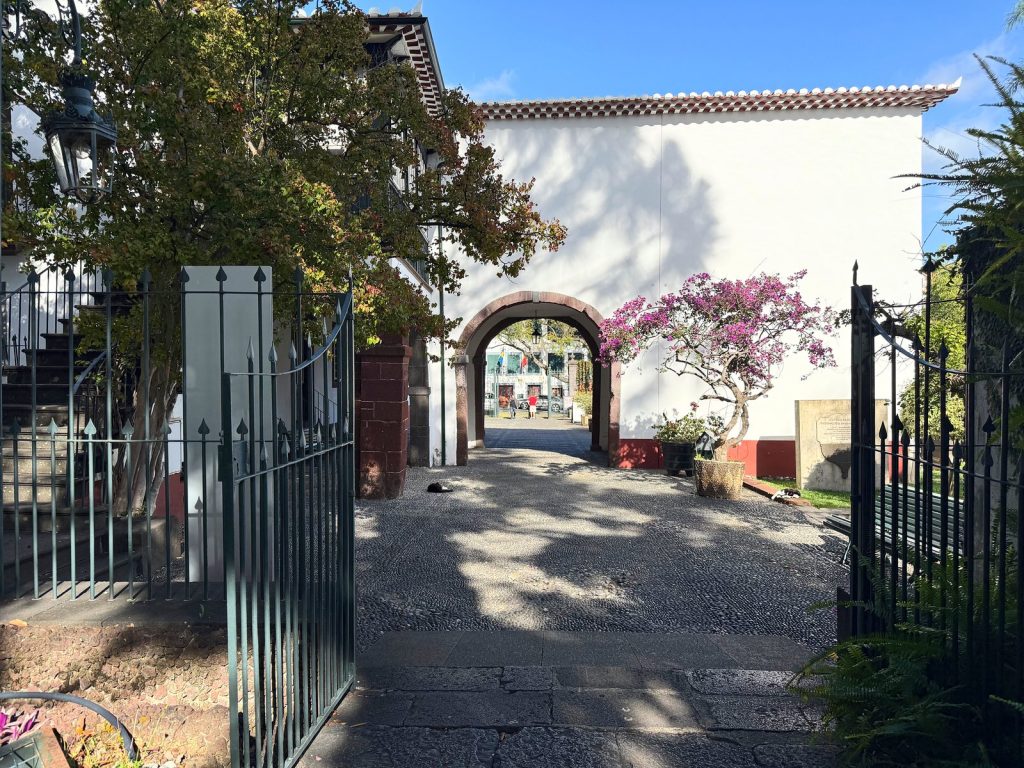
1: Quinta das Cruzes Museum (2026), 2: The garden at the Quinta das Cruzes Museum (2026), 3: The Quinta das Cruzes manor house, February 2026, 4: A gate in the grounds of Quinta das Cruzes, February 2026. Photos: Ewelina Podrez-Siama
Monte Palace Tropical Garden (Jardim Tropical Monte Palace)
Monte Palace Tropical Garden is a garden created by José Berardo, who bought the estate in 1987. It’s one of Funchal’s flagship attractions. It sits on the hill of Monte, at about 550–600 m above sea level, and covers 70,000 m². Plants from all over the world grow here – azaleas, heathers, ferns, redwoods from North America and olive trees. The garden has a collection of cycads (Encephalartos), regarded as living fossils – more than 500 plants from 30 of the roughly 65 known species. There is also a section of Madeira’s endemic flora, including the endangered Pittosporum coriaceum (mocan), and a recreation of the Laurissilva laurel forest (a UNESCO World Heritage Site).
In the garden you’ll see oriental Japanese gardens, pavilions, ponds with koi carp, flamingos and peacocks. The grounds also house the Monte Palace Museum with two collections: minerals (mainly from Brazil, Portugal, Peru and North America) and contemporary sculpture from Zimbabwe (works by Tengenenge artists from the 1950s and 1960s). The garden even has a mobile app with an interactive map (available on iOS and Android).
Monte Palace is my absolute favourite of Funchal’s gardens. You need 2–3 hours to see it – and that’s no exaggeration, the garden is really extensive. Oriental pavilions, a view over Funchal Bay, ceramic panels, exotic plants – it’s the kind of place where you stop for a photo every few steps. And note: Monte Palace is dog-friendly – Tesla came with me and there was no problem.
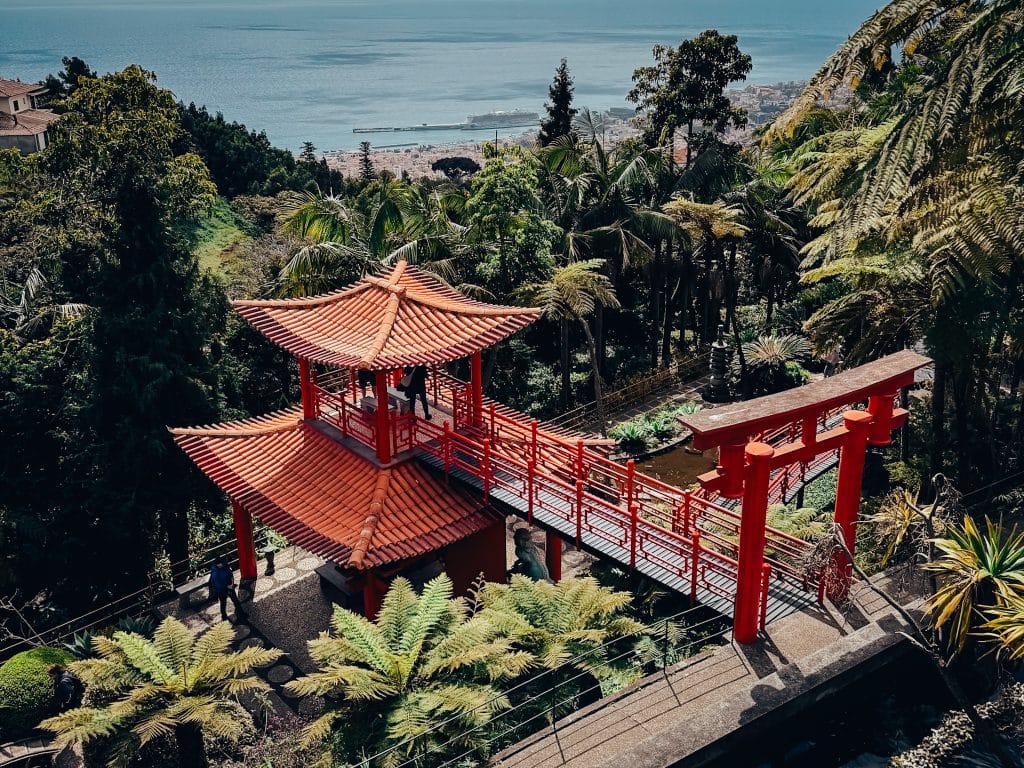
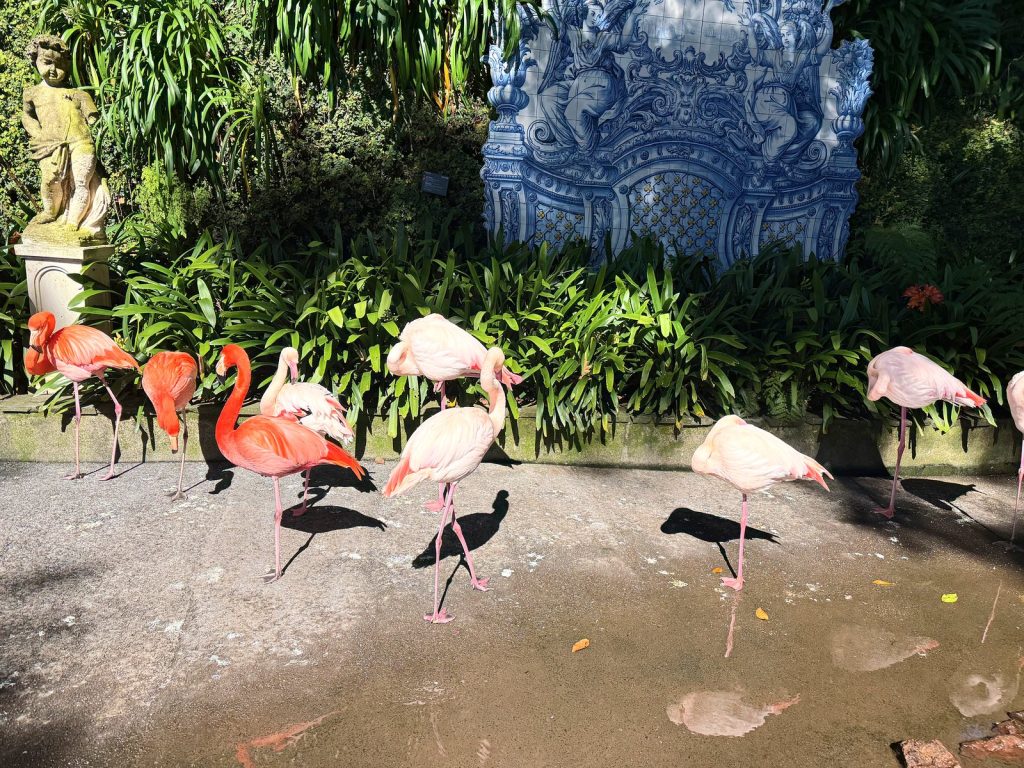
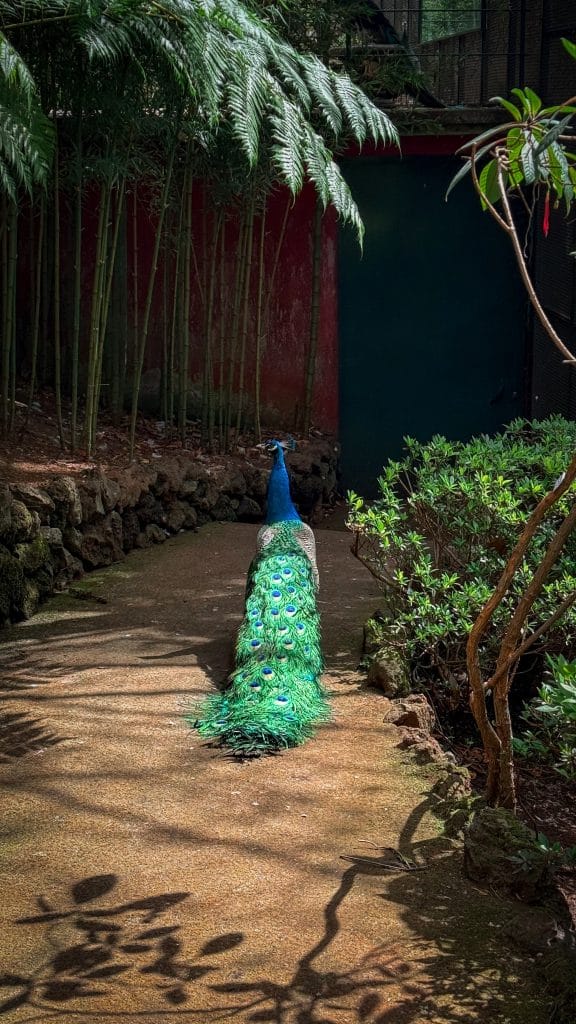
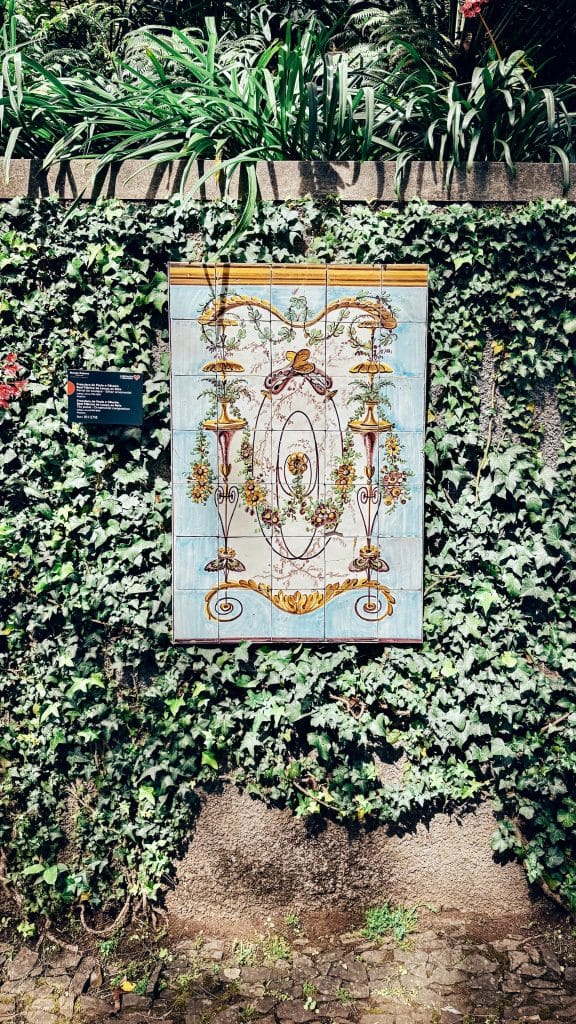
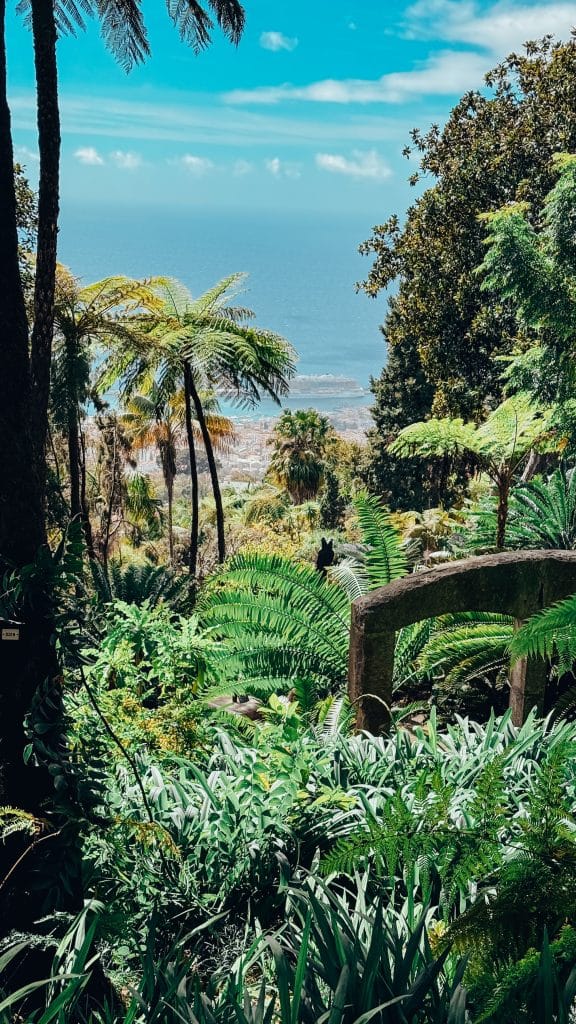
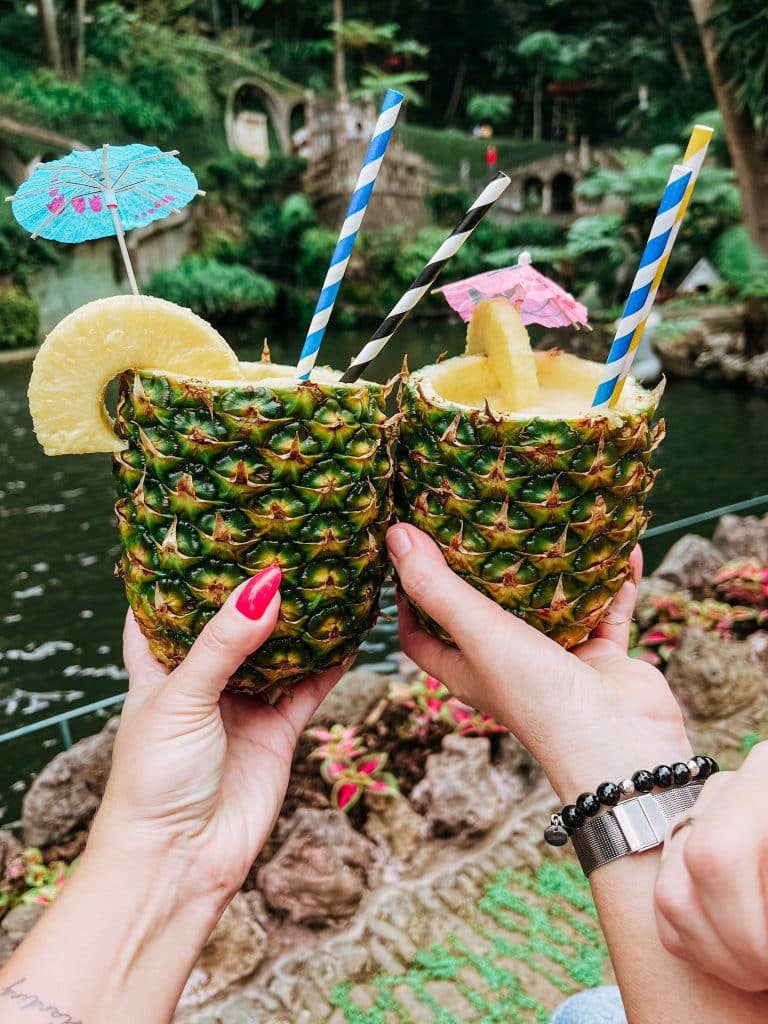
1: Monte Palace, photo: Ewelina Podrez-Siama, March 2025, 2: Flamingos in front of an azulejo panel at Monte Palace, February 2026, photo: Ewelina Podrez-Siama, 3: A peacock with its tail fanned out on a path in the Monte Palace garden, clumps of bamboo and the red wall of a pavilion behind, photo: Ewelina Podrez-Siama, March 2025, 4: A panel of traditional Portuguese azulejos with a floral pattern, set into an ivy-covered wall at Monte Palace, photo: Ewelina Podrez-Siama 2025, 5: Tropical vegetation at Monte Palace – tree ferns, palms and bird-of-paradise flowers with a view of Funchal and the ocean below, photo: Ewelina Podrez-Siama 2025, 6: Piña Colada at Monte Palace, photo: Ewelina Podrez-Siama, November 2023
Getting to Monte
- Funchal–Monte cable car – an average 18-minute ride on a 3.2 km route (lower station: Rua Dom Carlos I in the Zona Velha). Daily 8:45–17:45. One-way ticket €16, return €22.
- City bus – lines 020, 021 and 022 from central Funchal and 048 from the hotel zone (Lido). About 30 minutes, ticket €2.05 from the driver or €1.45 with a GIRO card.
- Botanical Garden cable car – links the Jardim Botânico with Babosas (Monte) in about 9 minutes (the route is about 1.6 km). One-way ticket €11, return €16 (children 7–14: €6 and €9). You can also buy a combined ticket with entry to the Botanical Garden (€19 one way, €24 return).
The Monte toboggans
After visiting Monte Palace you can head back towards Funchal in a traditional wicker toboggan – a two-kilometre run from Monte to Livramento, steered by two “carreiros” in traditional dress. The ride takes about 10 minutes. From the finish you can walk to the Botanical Garden or back to Funchal on foot (about 30 minutes, but be warned: steep descents on tarmac), or take a taxi or a Bolt. I did it once: it was fun, but it’s a one-off.
An interesting experience, but to be honest, I wouldn’t do it again. It’s now very clearly aimed at tourists: the ride itself is over in a flash, people ask for tips here, try to sell you photos of your ride there. Worth doing once – for the experience. But don’t expect anything truly authentic.
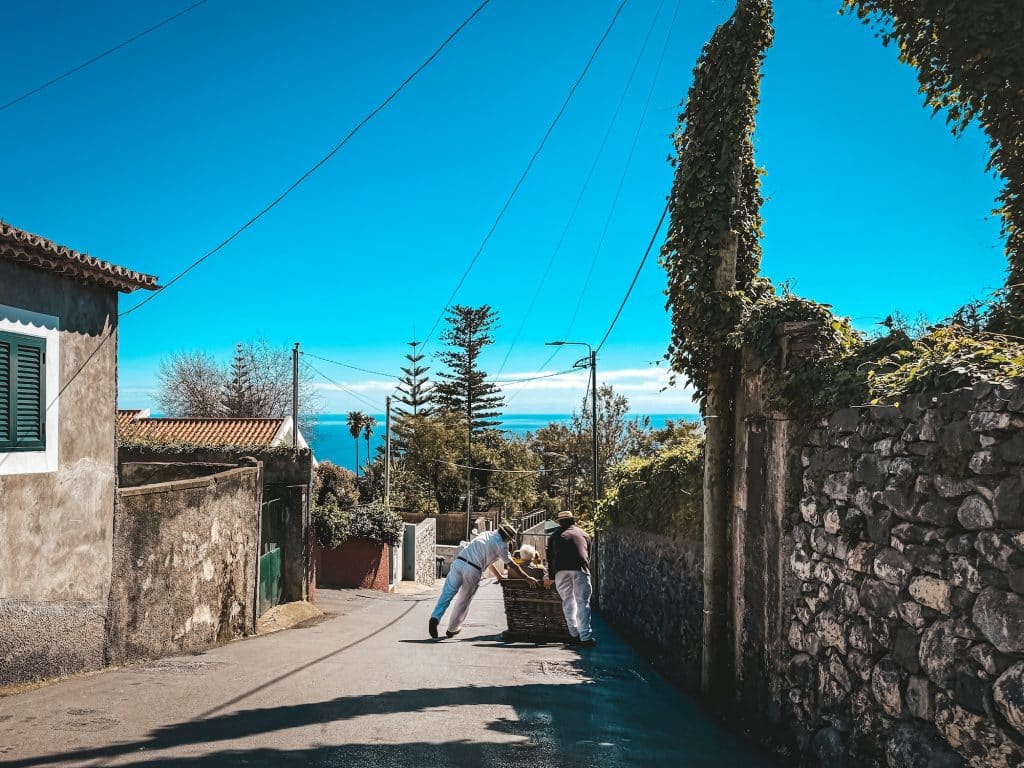
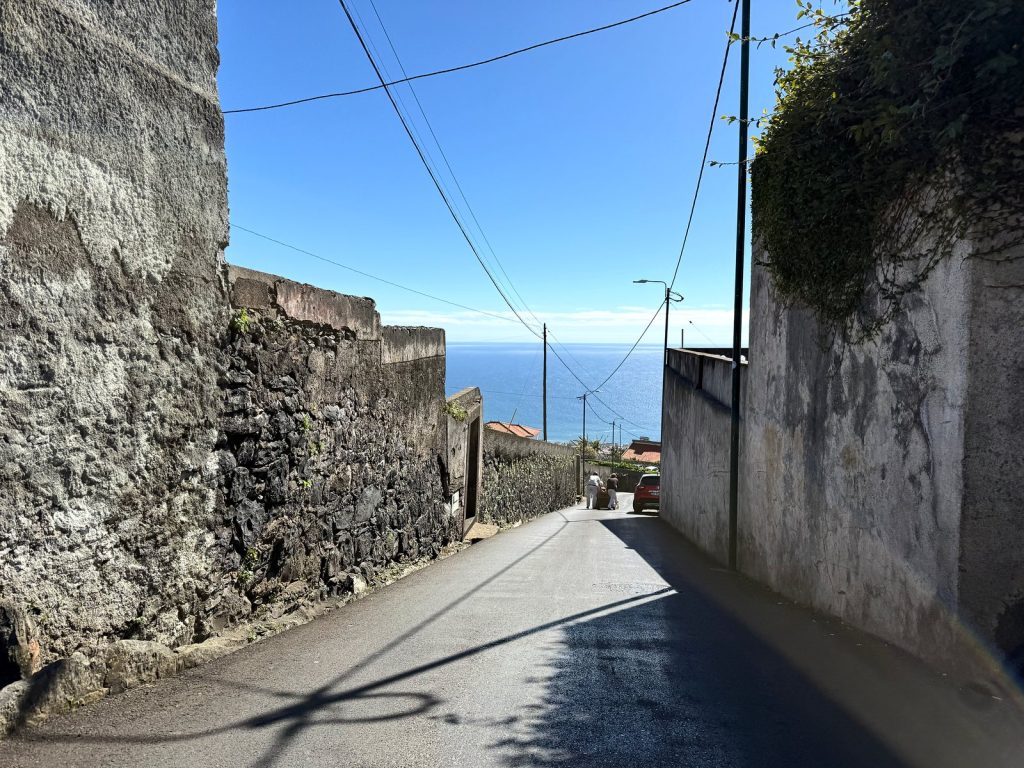
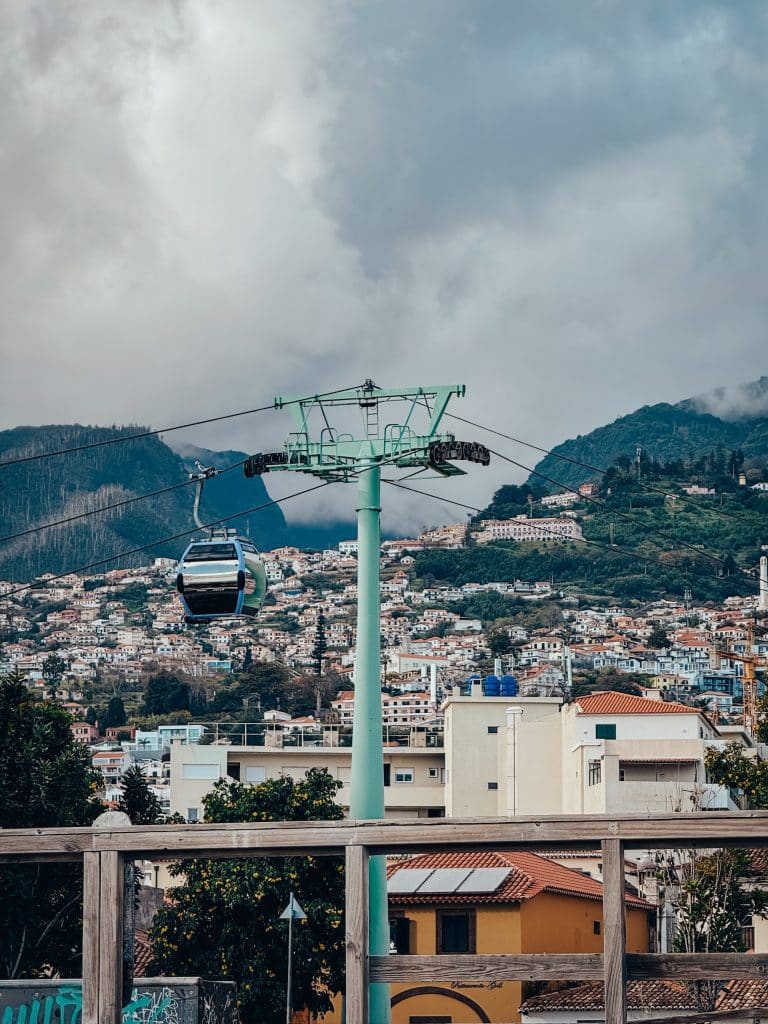
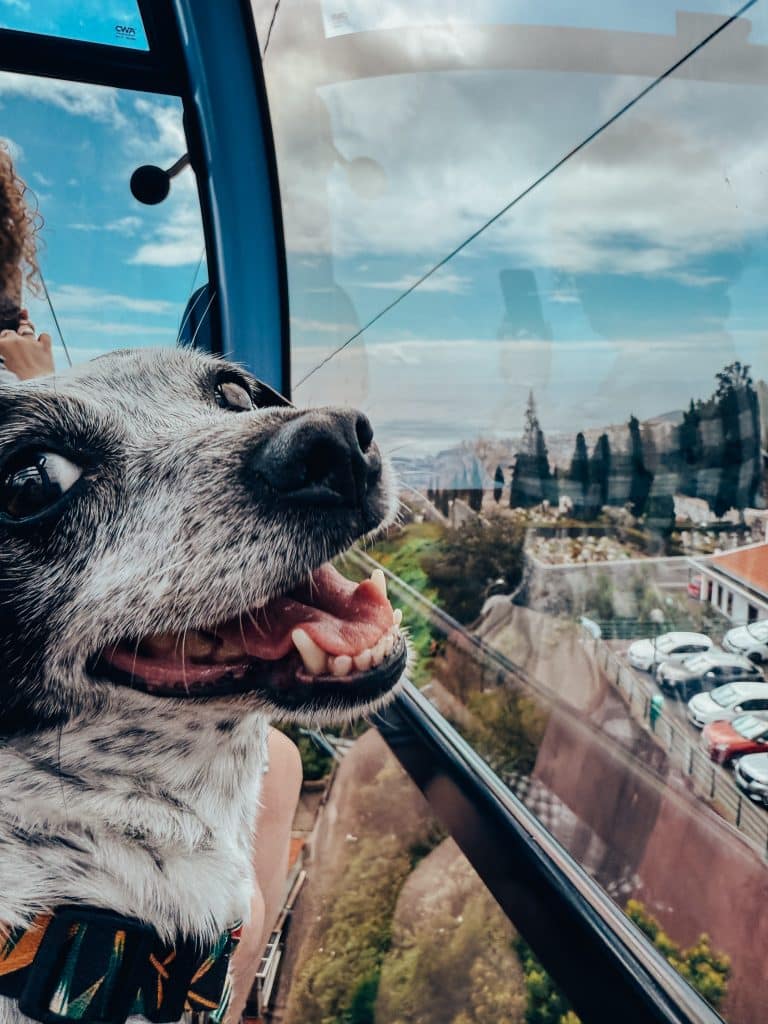
1: Monte toboggans, photo: Ewelina Podrez-Siama 2026, 2: The street the Monte toboggans run down, February 2026, photo: Ewelina Podrez-Siama, 3: The Monte cable car, photo: Ewelina Podrez-Siama, March 2025, 4: On the Monte cable car with a dog, photo: Ewelina Podrez-Siama, March 2025
Botanical Garden (Jardim Botânico da Madeira – Eng.º Rui Vieira)
Madeira’s Botanical Garden is a separate attraction from Monte Palace – worth remembering, because visitors often mix the two up or assume they’re the same place. In fact, the two experiences aren’t even similar.
The garden covers about 8 ha (5 ha of it landscaped) on the grounds of the former Quinta do Bom Sucesso – the private estate of the Reid family (the same family that founded the famous Reid’s Palace hotel overlooking Funchal). It opened to the public in 1960, and since 2009 it has borne the name of engineer Rui Vieira – the agronomist who created it and devoted his life to it.
The garden brings together more than 2000 species of exotic plants from all over the world – from succulents and cacti, through palms and ferns, to plants endemic to Madeira and other Atlantic islands (the Azores, the Canary Islands, Cape Verde). The plants are labelled with their scientific and common names and their origin. There’s also an amphitheatre, restored ponds and – since 2017 – a garden of Portuguese camellias.
The grounds are home to the Natural History Museum (included in the ticket price). Several viewpoints offer a panorama of Funchal and the ocean.
Getting there: bus 031 (stops right by the garden), 029 (continues to Curral dos Romeiros) or 131 (to the cable car station by the garden) from central Funchal, a taxi, or the cable car from Monte (Teleférico do Jardim Botânico, about a 9-minute ride). The garden is 3 km from the centre, between 150 and 300 m above sea level.
Note: the paths in the garden can be steep, with steps – they are not wheelchair accessible. Allow about 1–2 hours for your visit.
Important: dogs are not allowed (except guide dogs). That’s a key difference from Monte Palace, which is dog-friendly.
 Read nextFunchal Botanical Garden2026 tickets, opening hours, buses 031, 029 and 131, and the cable car from Monte.
If you have time for both gardens, start with Monte Palace (the more spectacular of the two), then take the cable car down to the Botanical Garden. If you only have time for one – Monte Palace, no question. But if you’re more interested in botany than in garden design, the Jardim Botânico, with its scientific approach and collection of endemic plants, may surprise you.
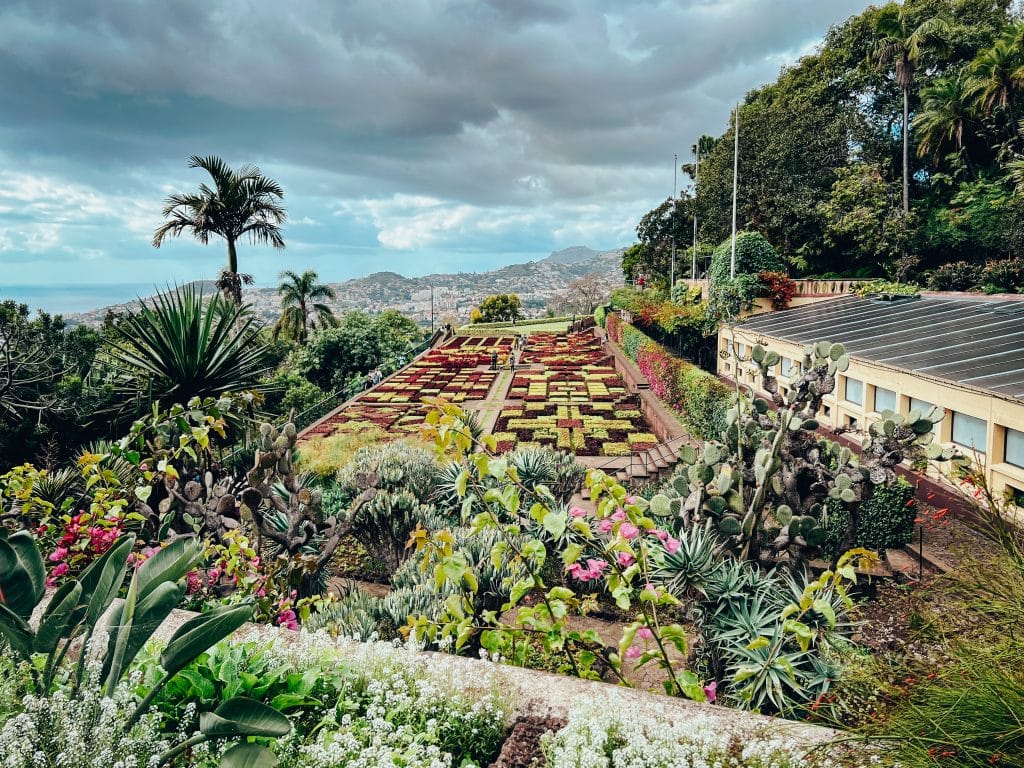
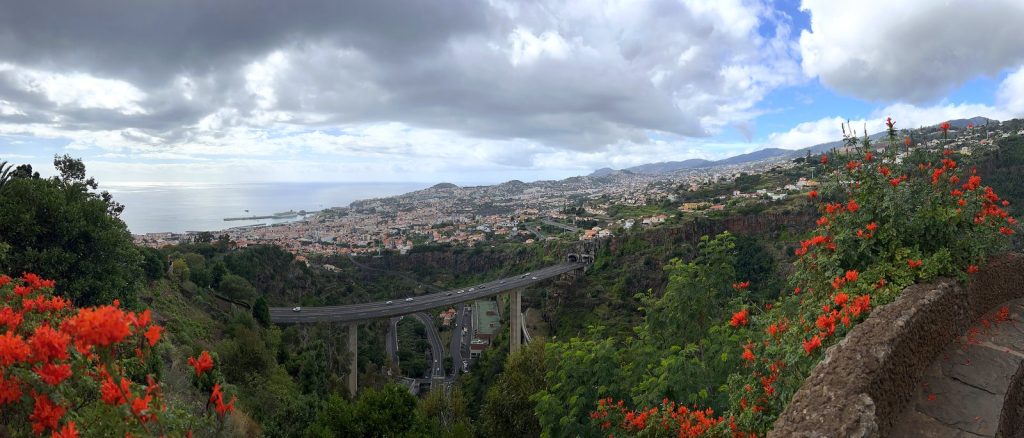
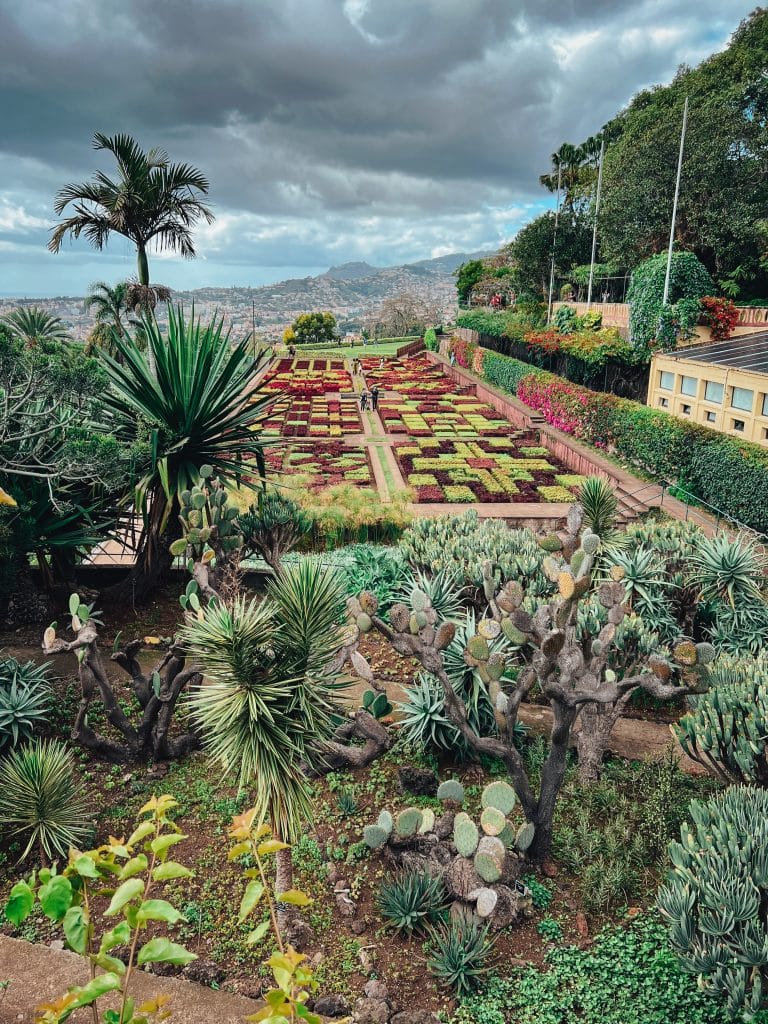
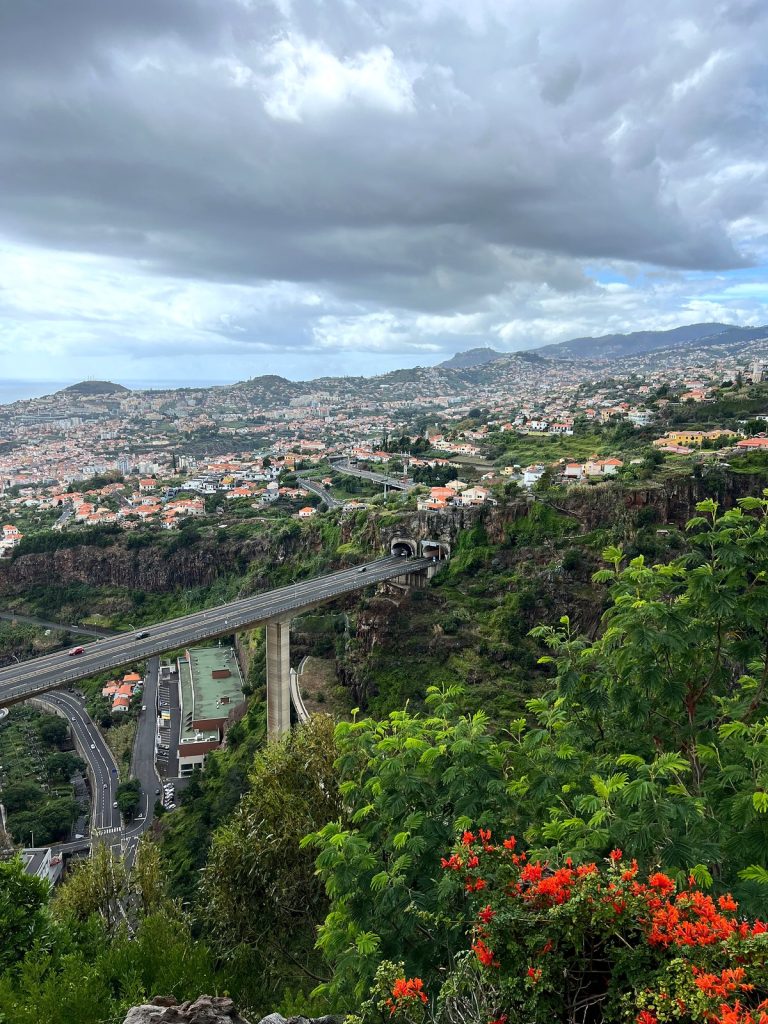
1: Jardim Botânico – the botanical garden in Funchal (2023), 2: Panorama from the Botanical Garden, November 2023, 3: Jardim Botânico – the botanical garden in Funchal (2023), 4: View of Funchal from the Botanical Garden, November 2023. Photos: Ewelina Podrez-Siama
Mercado dos Lavradores (Farmers’ Market)
The Farmers’ Market is a Funchal icon – built in the 1930s in the Estado Novo style, which blends Art Deco with modernism. The main entrance is decorated with azulejo panels, and there are more inside – made by the Fábrica Battistini workshop (Maria de Portugal) and painted in 1940 by João Rodrigues. The market sits right in the heart of the city, close to the historic Santa Maria district.
On the ground and first floors: tropical fruit, vegetables, flowers (bird-of-paradise flowers, orchids, proteas, roses, anthuriums, camellias) and spices. Flower sellers in traditional regional dress are a permanent part of the scene.
On the lower level: fish and meat – here you’ll see huge tuna being cut up with machetes and the black espada (espada preta), one of Madeira’s most distinctive fish.
I treat the Mercado as a place to look rather than to shop. Fruit and flowers cost noticeably more here than in the local shops, which are often literally next door. Go for the atmosphere, the azulejos and the colours – but do your shopping elsewhere.
Tip: the fruit sellers can be quite pushy – they offer you pieces of fruit to taste, but then expect you to buy. Don’t be shy about politely saying no.
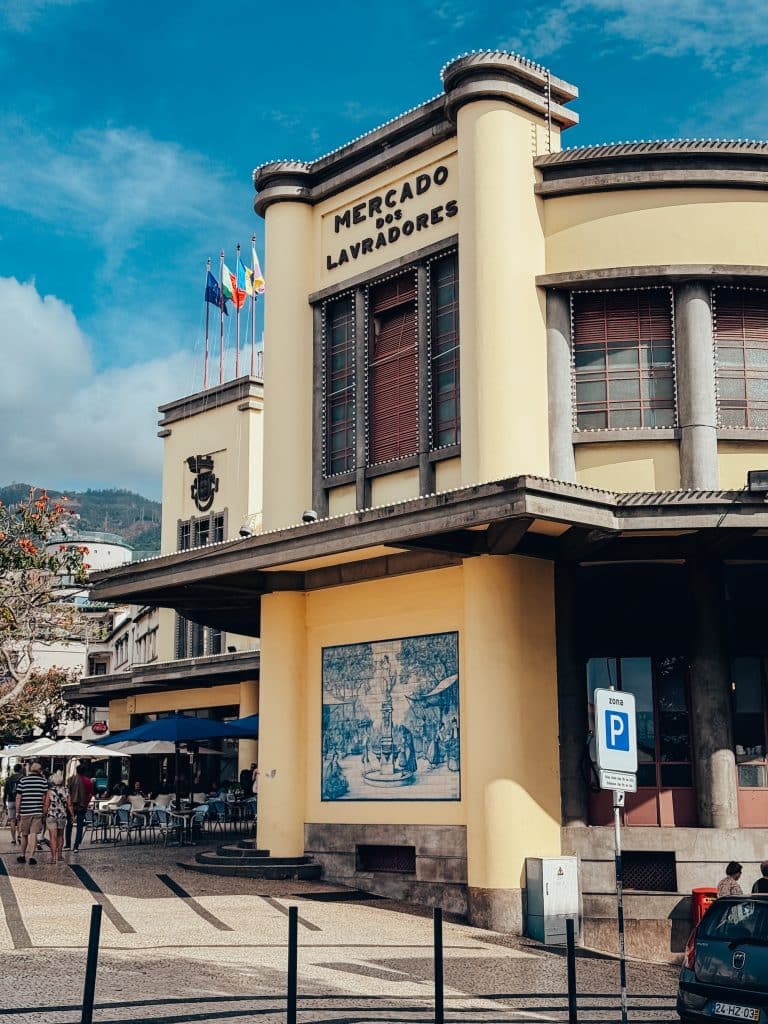
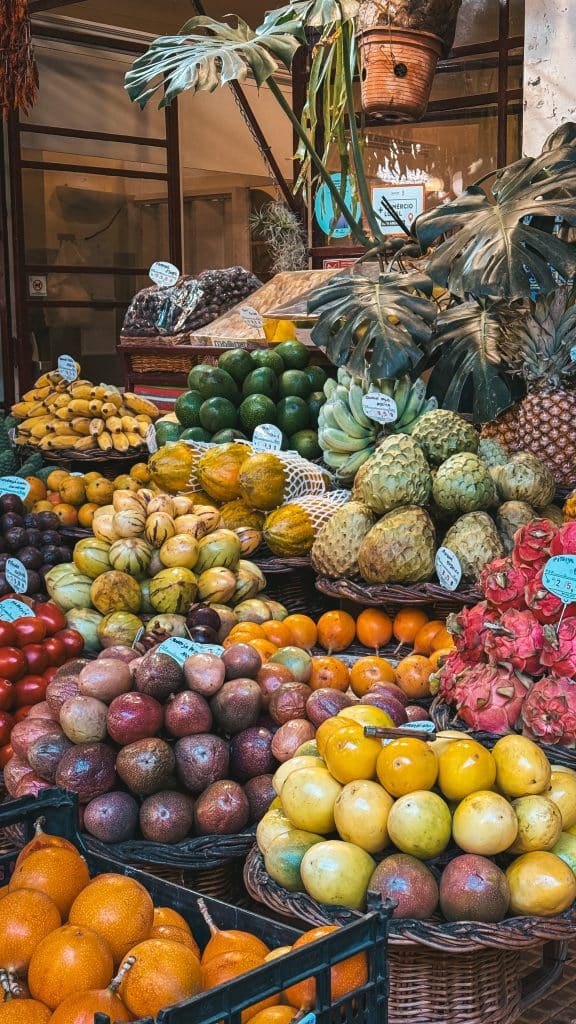
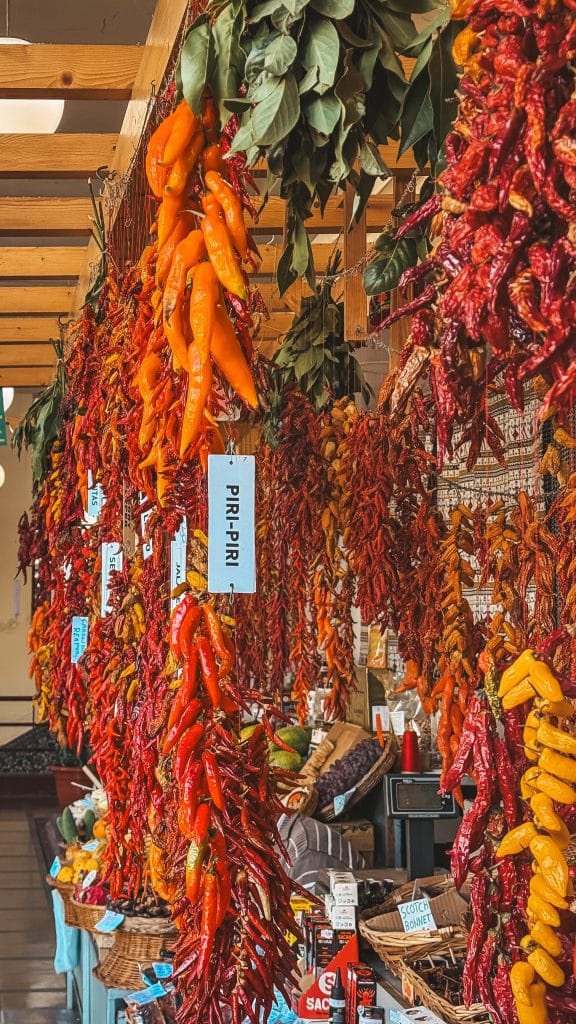
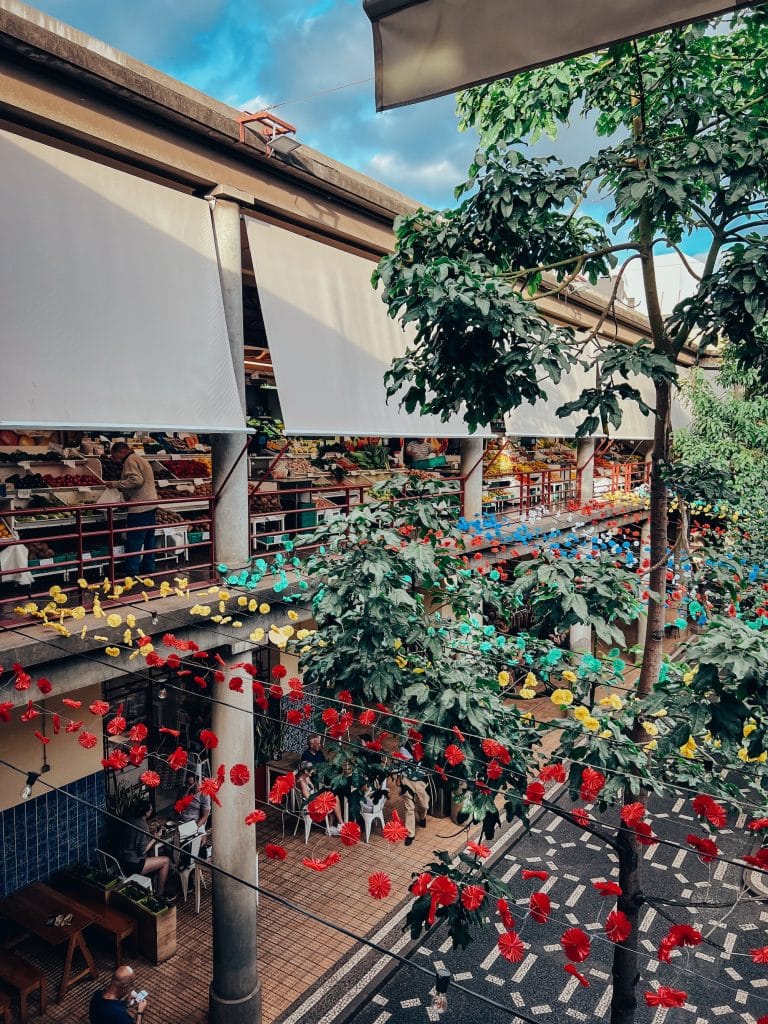
1: The Mercado, photo: Ewelina Podrez-Siama, February 2026, 2: The Mercado, photo: Ewelina Podrez-Siama, February 2026, 3: The Mercado, photo: Ewelina Podrez-Siama, February 2026, 4: The Mercado, photo: Ewelina Podrez-Siama, November 2023
MAMMA – Museum of Modern Art of Madeira
MAMMA (Museu de Arte Moderna da Madeira) is a private contemporary art museum that opened in July 2021. It covers 800 m² and shows about 300 works – paintings and installations – by the Madeiran artist Rui Sá, created over 15 years. The exhibition is divided into 14 themed zones based on five elements: water, air, earth, fire and spirit.
But MAMMA is above all about concerts. The museum regularly hosts music evenings of all kinds in its Multi-event Auditorium – from classical music and jazz to tribute bands.
I’ve been to MAMMA several times and came away impressed every time. The concerts are phenomenal – an intimate hall, good acoustics, the musicians almost within arm’s reach. I especially recommend the ABBA evenings and “From Phantom of the Opera to Bohemian Rhapsody” – great energy and professional musicians. Check the current programme before you go.
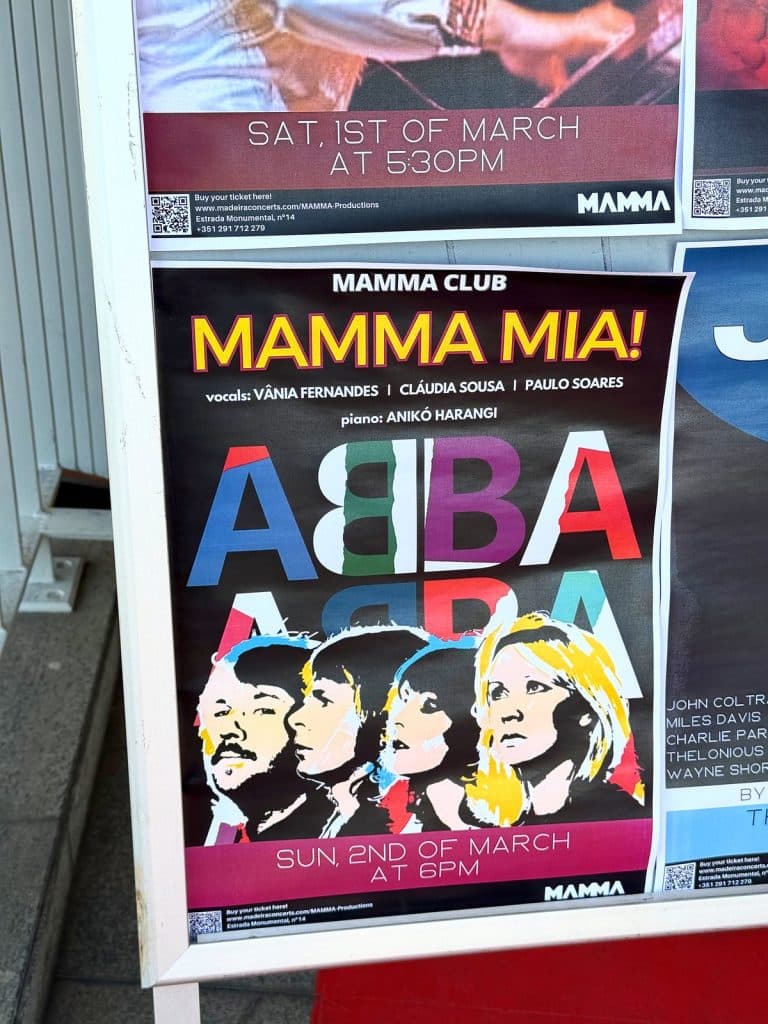
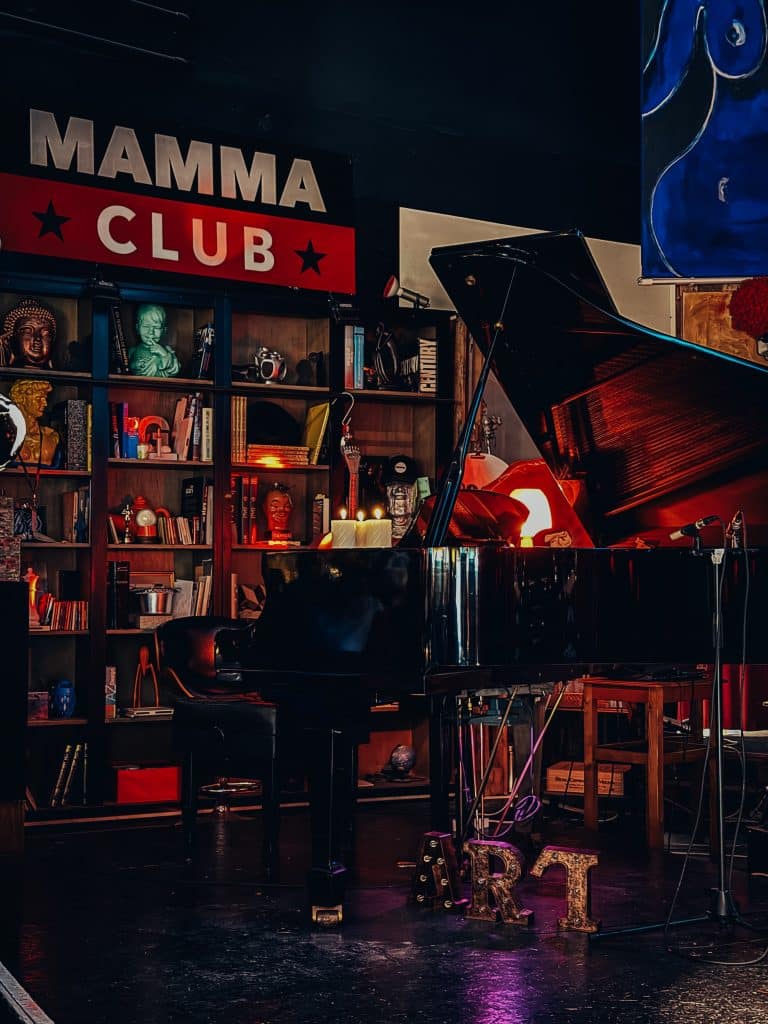
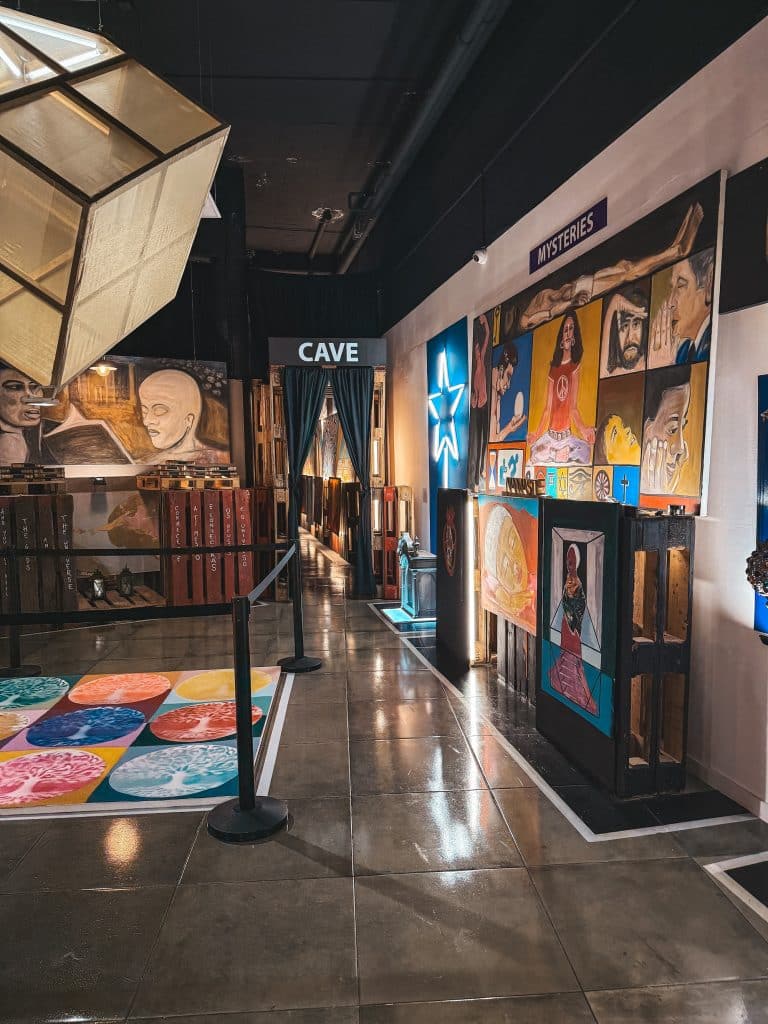
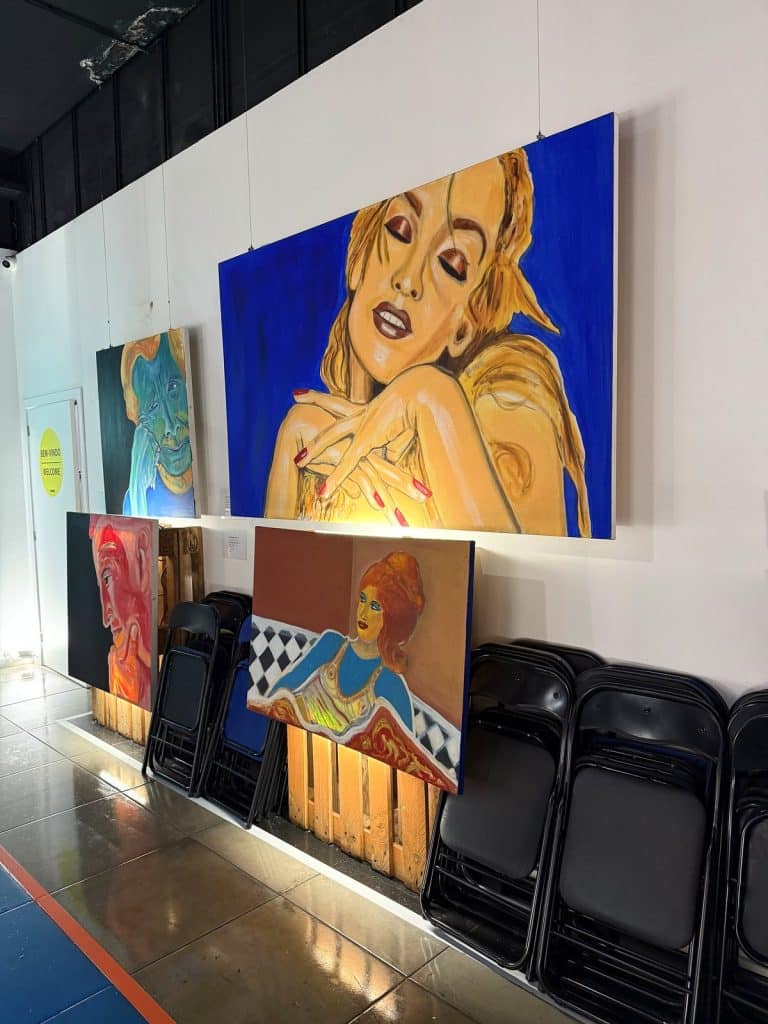
1: A “Mamma Mia!” concert poster at the MAMMA museum, March 2025, photo: Ewelina Podrez-Siama, 2: The MAMMA museum, photo: Ewelina Podrez-Siama, February 2025, 3: The MAMMA museum, photo: Ewelina Podrez-Siama, February 2025, 4: Paintings in a corridor of the MAMMA museum, March 2025, photo: Ewelina Podrez-Siama
The Cristiano Ronaldo (CR7) museum and statue
Cristiano Ronaldo was born in Funchal, in the Santo António district. He is Madeira’s most famous son – the island’s airport is officially named after him (Aeroporto Internacional da Madeira – Cristiano Ronaldo).
The CR7 Museum
The Museu CR7 opened in 2013, and in 2016 it moved to a new, bigger home on Praça CR7 (formerly Praça do Mar), below the Pestana CR7 hotel. Inside are more than 150 trophies – including 5 Ballon d’Or awards and 4 Golden Shoes. There’s also a life-size wax figure, films and photos of his career highlights, and augmented-reality features.
The Ronaldo statue
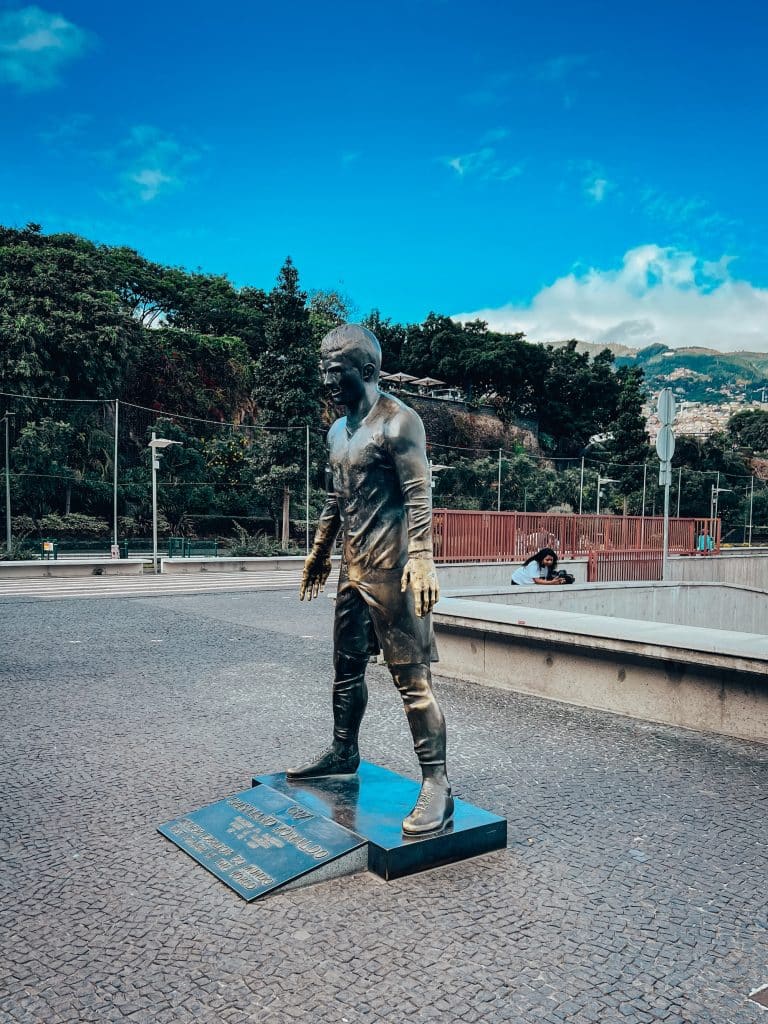
In front of the museum stands a bronze statue of Ronaldo by the sculptor Ricardo Velosa – the same artist who made the bust of Piłsudski. A nice bit of trivia linking the two.
I haven’t been inside the museum myself – football isn’t really my thing. But if you’re a Ronaldo fan, it’s definitely a must. The statue on the promenade, on the other hand, is hard to miss – it stands on the main walkway along the harbour, rubbed shiny by tourists’ hands in some telling places.
The seafront promenade and Avenida Arriaga
Avenida Arriaga is Funchal’s main boulevard – the Flower Festival parade passes along it, and it’s lined with florists, Madeira embroidery shops and wine lodges. The avenue of jacaranda trees, which burst into purple bloom in May and June, is one of the most photographed parts of the city.
The promenade (Avenida do Mar) runs along the harbour – from the marina to the Old Town. Along it you’ll find the Museu CR7, the Columbus monument and cafés with ocean views. It’s a natural walking route linking the main sights of the seafront part of the city.
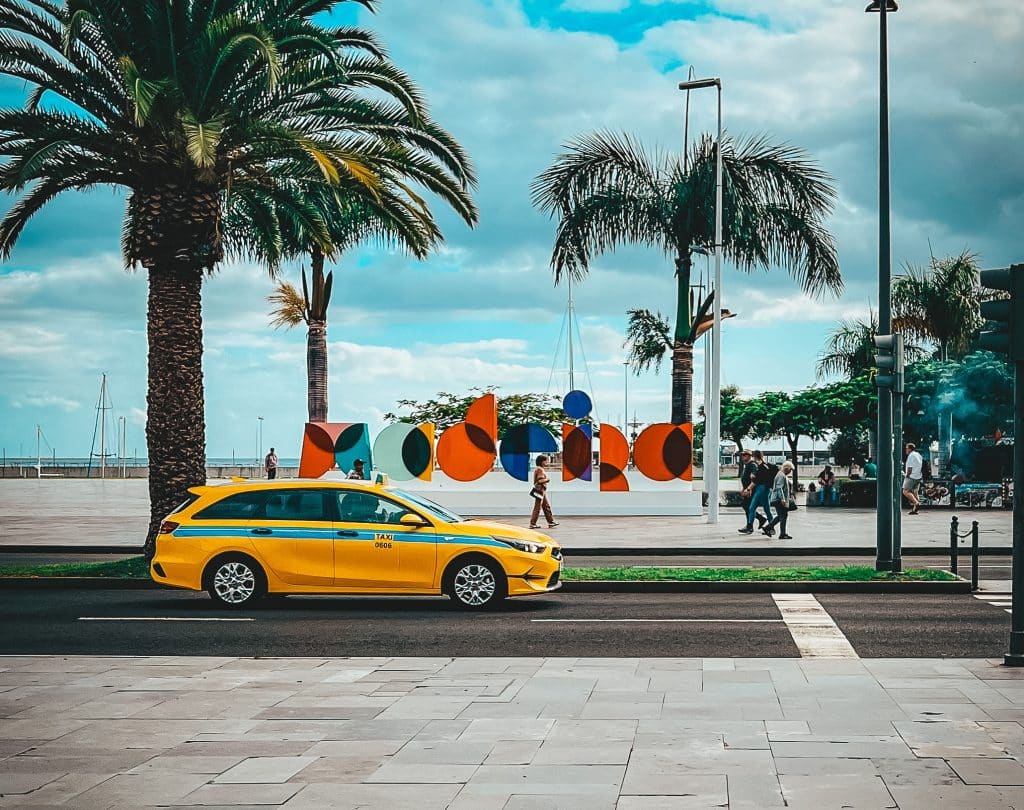
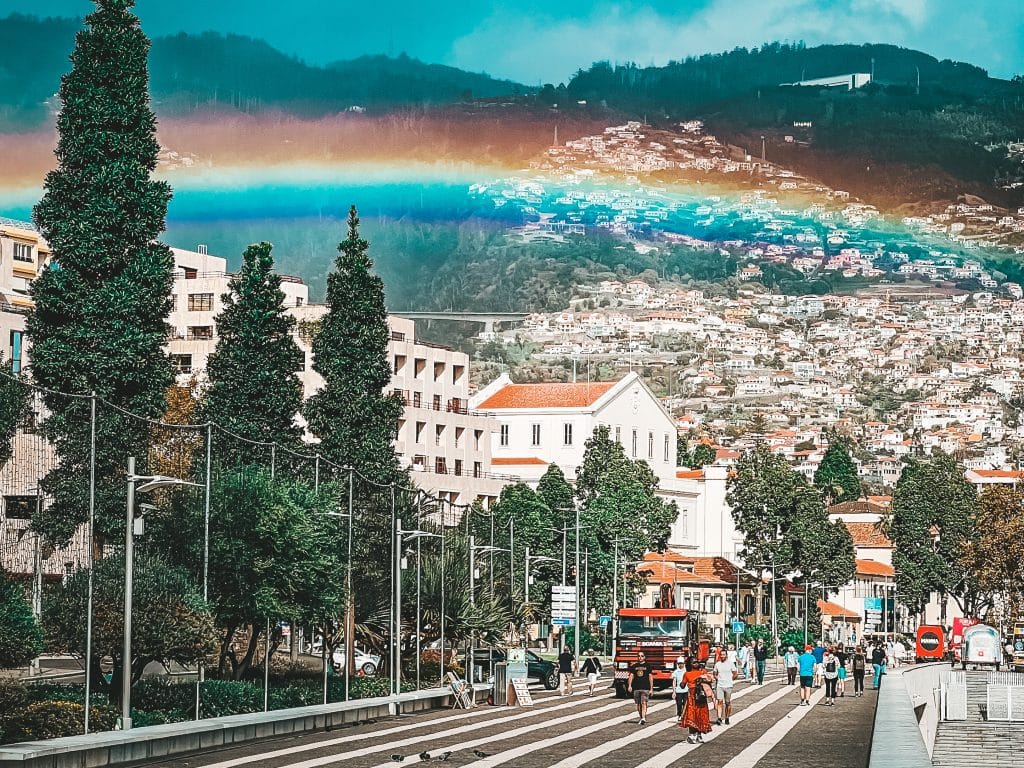
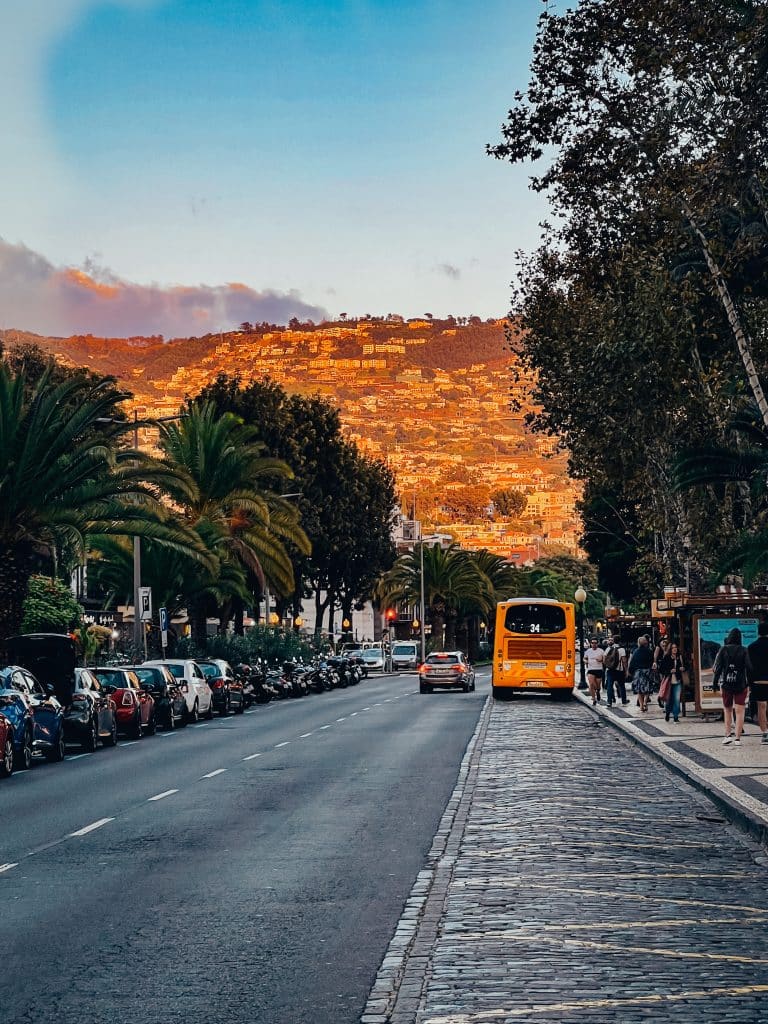
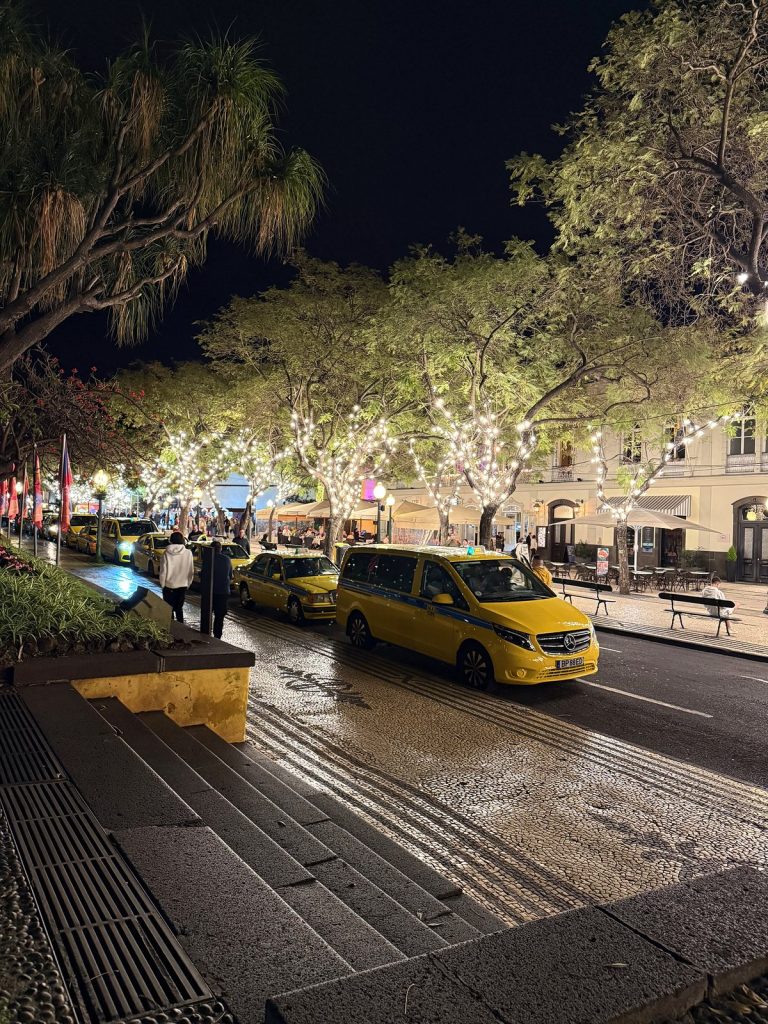
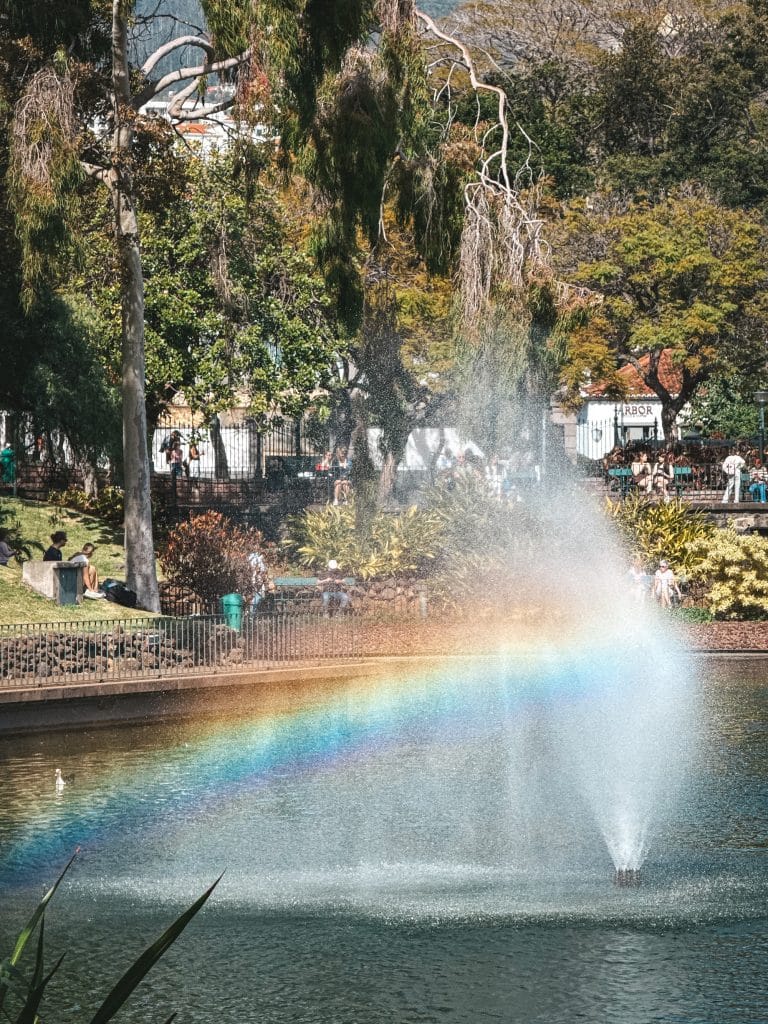
1: The promenade in Funchal, photo: Ewelina Podrez-Siama, November 2023, 2: A rainbow over Funchal, photo: Ewelina Podrez-Siama 2023, 3: Funchal, photo: Ewelina Podrez-Siama, November 2023, 4: Avenida Arriaga in the evening, February 2025, photo: Ewelina Podrez-Siama
Blandy’s Wine Lodge
The oldest Madeira wine lodge, officially Adegas de São Francisco. Inside there’s a museum with historical documents, letters from famous figures, a 17th-century wine press and historic machinery. Guided tours in several languages, tastings and wine sales.
I went to a tasting – and I’ll admit I’m not a huge fan of Madeira wine. But the place itself is full of atmosphere, and for lovers of fortified wine it’s a must. It’s worth popping in just to see the historic cellars and hear the story of the Blandy family, who have been making wine on Madeira for generations.
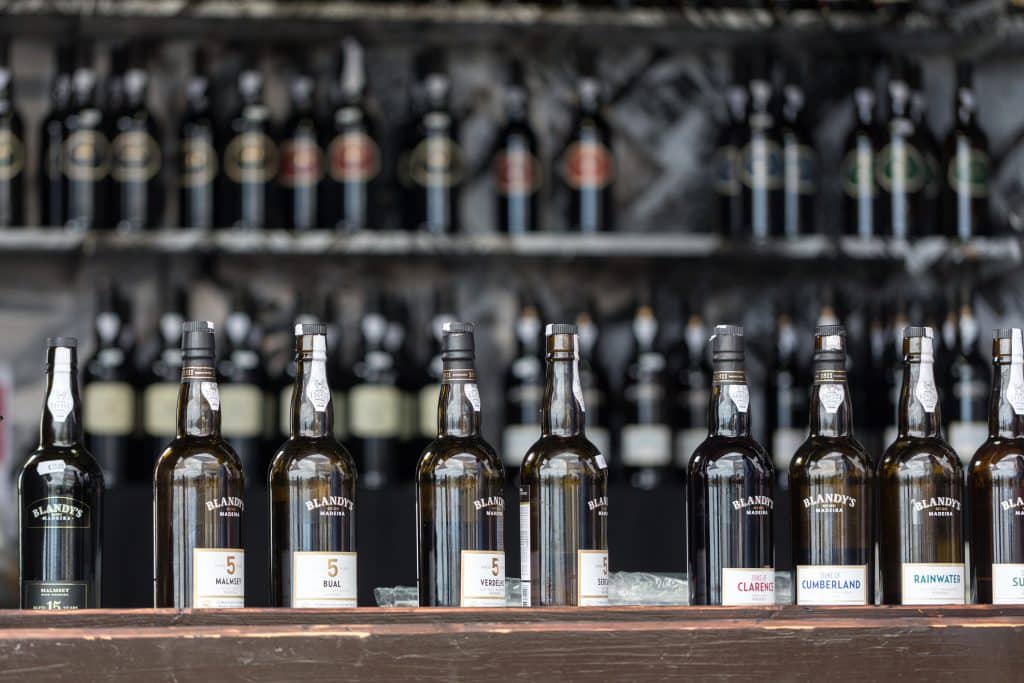
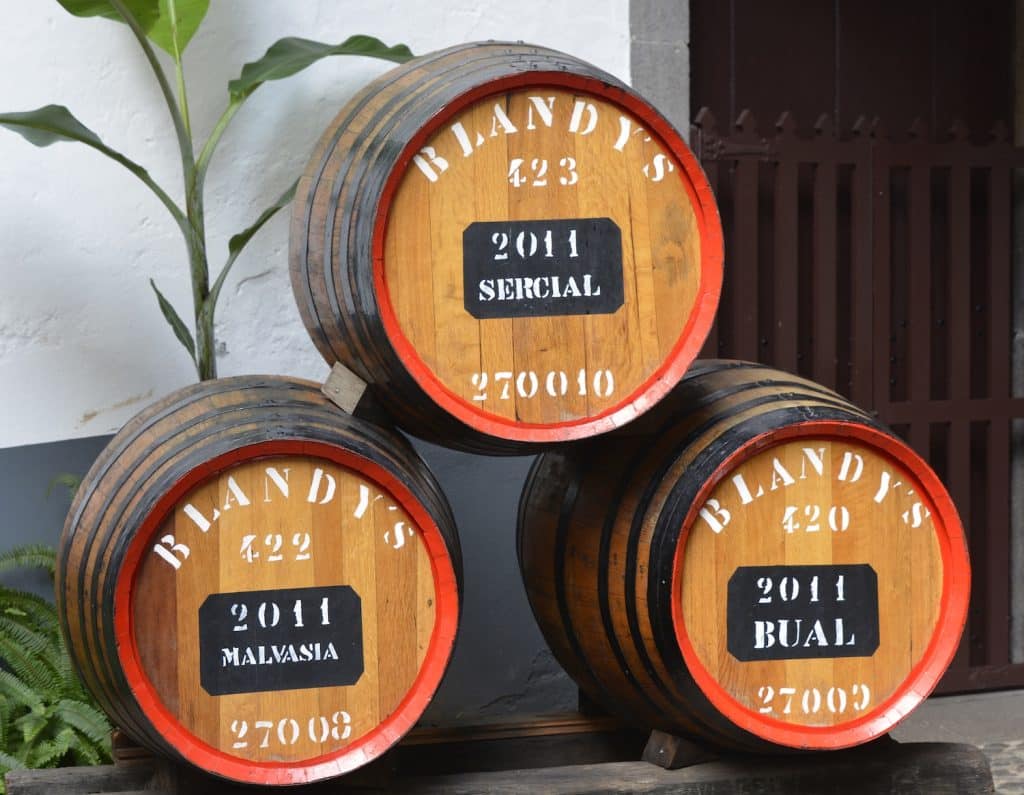
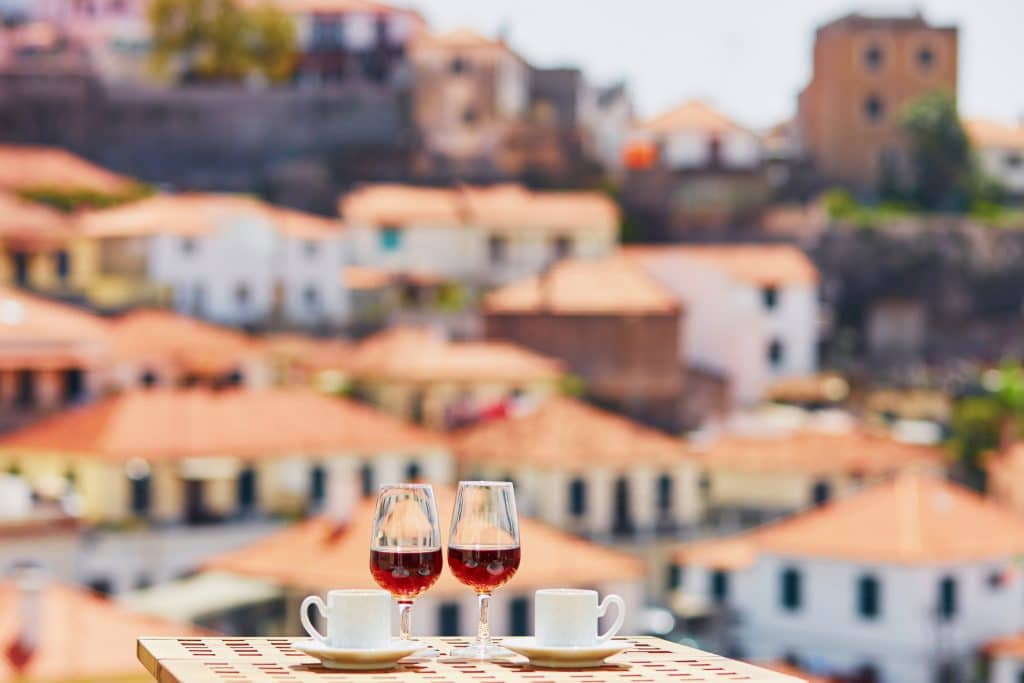
2: Madeira wine casks in the Blandy’s showroom, Funchal, Madeira, Portugal, 3: Madeira wine
São Lourenço Palace (Palácio de São Lourenço)
A 16th-century fort on Avenida Zarco – the grandest example of civil and military architecture on Madeira. Construction began under King John III and was completed during the union with Spain (1580–1640).
For centuries it served as the governors’ residence, and in 1807–1808 it was even occupied by the British during the Napoleonic Wars. Today it is the seat of the Representative of the Republic for the Autonomous Region of Madeira. The eastern part houses the Military Museum, with a collection of weapons from the 17th century to the present day (paid entry, Mon–Fri 10:00–16:30). The state rooms with their chandeliers and 18th-century furniture can be visited with a guide, but since August 2025 the palace has been closed to visitors for renovation (reopening has been announced for Q4 2026).
São Tiago Fort (Forte de São Tiago)
A yellow fortress at the eastern end of the Zona Velha, built from 1614 onwards to protect Funchal from pirates. Construction was led by master builder Jerónimo Jorge, then by his son Bartolomeu João, and in the 18th century it was extended by the engineer Tossi Columbina (who designed Funchal harbour).
For centuries the fort served as barracks – British troops were stationed here, among others – and in 1803 it sheltered flood victims. It used to house the Museum of Contemporary Art, but it is currently closed to visitors (you can only go into the restaurant). Inside the fort there’s also Restaurante do Forte – an elegant restaurant with a terrace overlooking the Old Town. The fort is clearly visible as you stroll around the Zona Velha and fits naturally into the first day’s route.
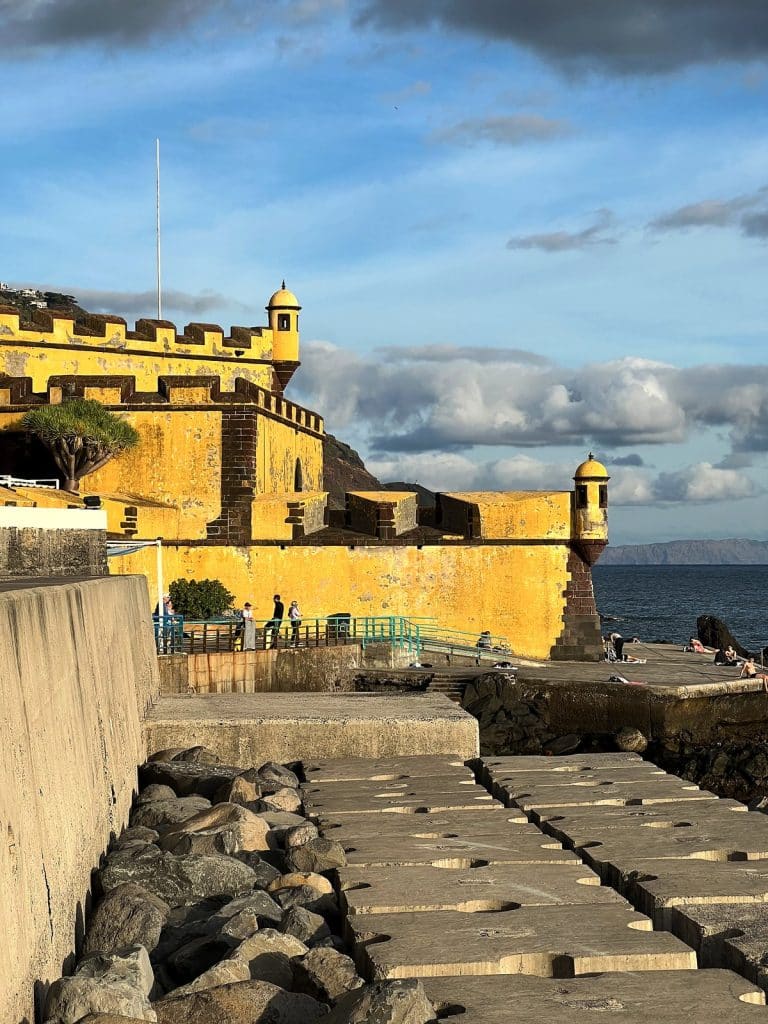
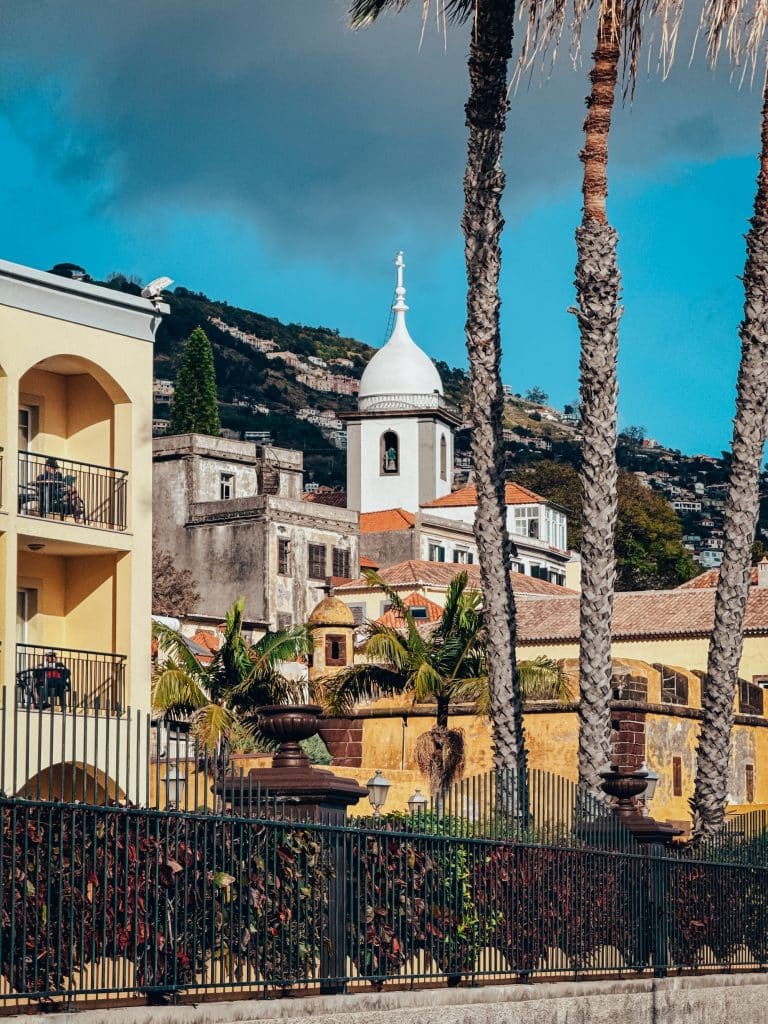
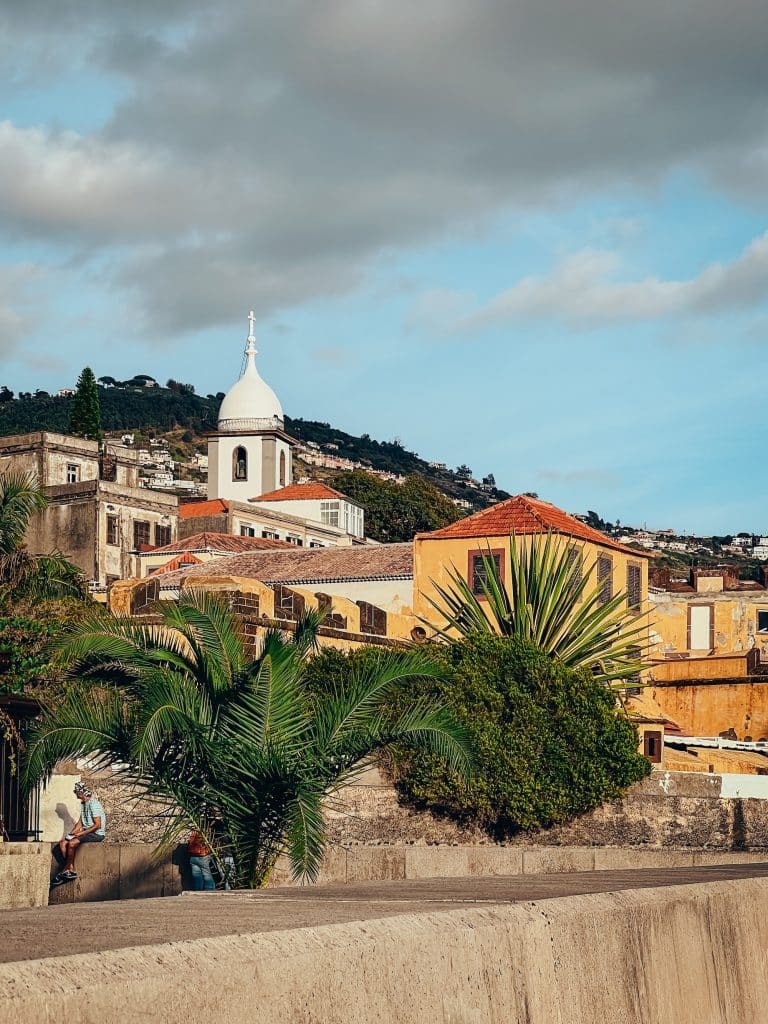
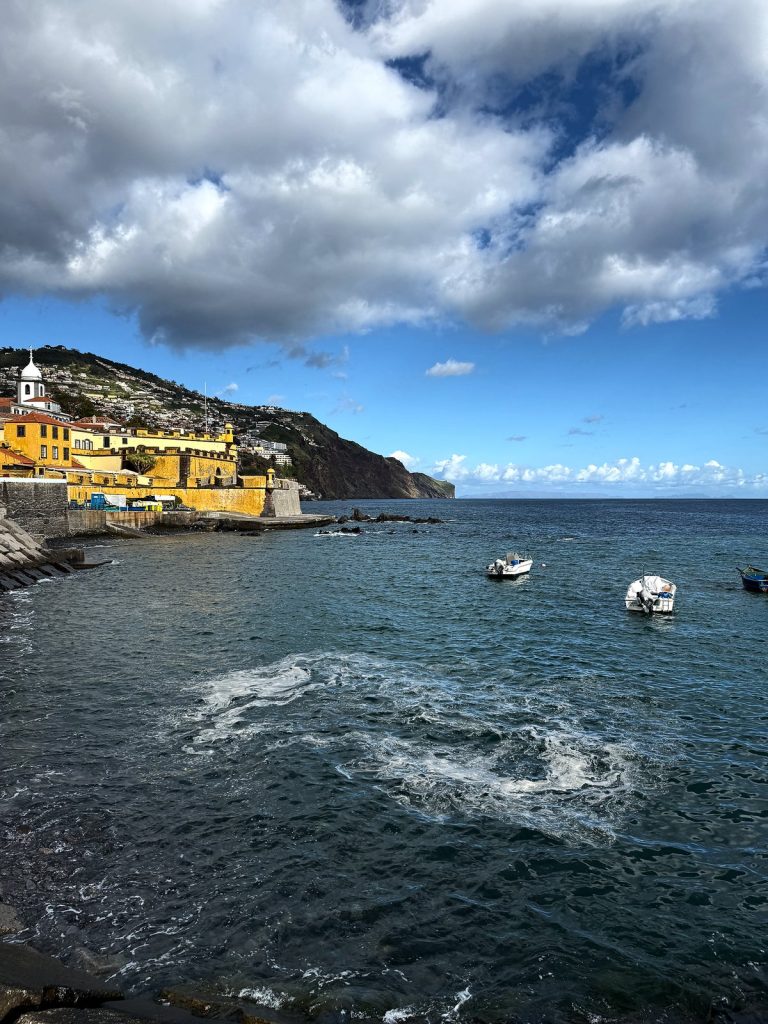
1: The walls of São Tiago Fort, November 2023, 4: The bay by São Tiago Fort, March 2025. Photos: Ewelina Podrez-Siama
The Jesuit Church (Igreja do Colégio)
Officially Igreja de São João Evangelista – a Jesuit church from 1629 that dominates Funchal’s prettiest square, Praça do Município. The interior marks the transition from Mannerism to Baroque: 17th-century gilded altarpieces (among the most precious in Portugal), a ceiling painted in trompe l’oeil, azulejos in the sacristy and the Chapel of the Eleven Thousand Virgins with a painted vault imitating a dome. In 2008 a large organ by organ builder Dinarte Machado was installed here – it was inaugurated by the Dutch conductor Ton Koopman. Free entry. You can also climb the church tower (paid). The church lies right on the way from Blandy’s Wine Lodge to the Mercado dos Lavradores, so it’s easy to fit into your route.
Santa Clara Convent (Convento de Santa Clara)
A convent of Poor Clares from the late 15th century, founded by Funchal’s second captain-donatary – João Gonçalves da Câmara, son of the island’s discoverer. Completed in 1497, it took in the daughters of the local nobility. Inside there’s a Gothic cloister, several richly decorated chapels with azulejos in the Moorish Marvila pattern (unique on Madeira), a coffered wooden ceiling with plant motifs and a galleon, and a silver tabernacle from 1671. A historical highlight: this is where you’ll find the tomb of João Gonçalves Zarco, the discoverer of Madeira. Until recently the convent was closed to visitors (an enclosed order), but after renovation it reopened in 2023. Visits are guided. A few Franciscan nuns still live here.
Miradouro Pico dos Barcelos
A popular viewpoint west of the centre, at about 355 m above sea level. The panorama takes in the whole of Funchal, the bay, the harbour with its cruise ships and – in good weather – the Ilhas Desertas on the horizon. The view is the “classic” one: the city spread out like an amphitheatre below you. There are tourist facilities: a car park, benches and a small café. Get there by car or taxi (about 10 minutes from the centre), or by bus. Best at sunset, when the light turns Funchal’s rooftops golden. This is the spot for anyone who wants “that famous photo” of Funchal from above.
Miradouro do Pináculo
A viewpoint at the eastern end of Funchal, in the parish of São Gonçalo, at 283 m above sea level. It’s regarded as one of the most emblematic miradouros in the city – and one of the most photographed spots on Instagram. The view is unusual because you look at Funchal slightly from the side – from the São Gonçalo cliffs you see the curve of the bay, the harbour, the whole city stacked up the slopes and the open Atlantic. The effect is different from Pico dos Barcelos, where you’re above the city – here you get a view from a distance.
It’s especially worth coming at sunset – the light over the bay is something special then. In the evening, when the city lights up, the view is just as good. The viewpoint is small (about 141 m²), right by the road, with benches. Take bus 039 Montanha (Estalagem Montanha stop) or drive – but be warned, the parking is literally 2–3 spaces by the road.
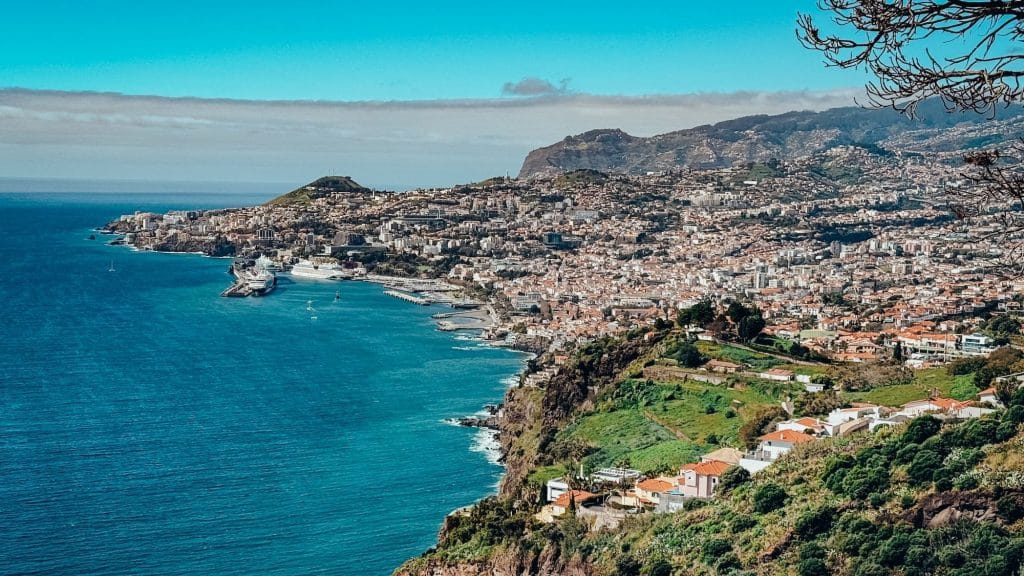
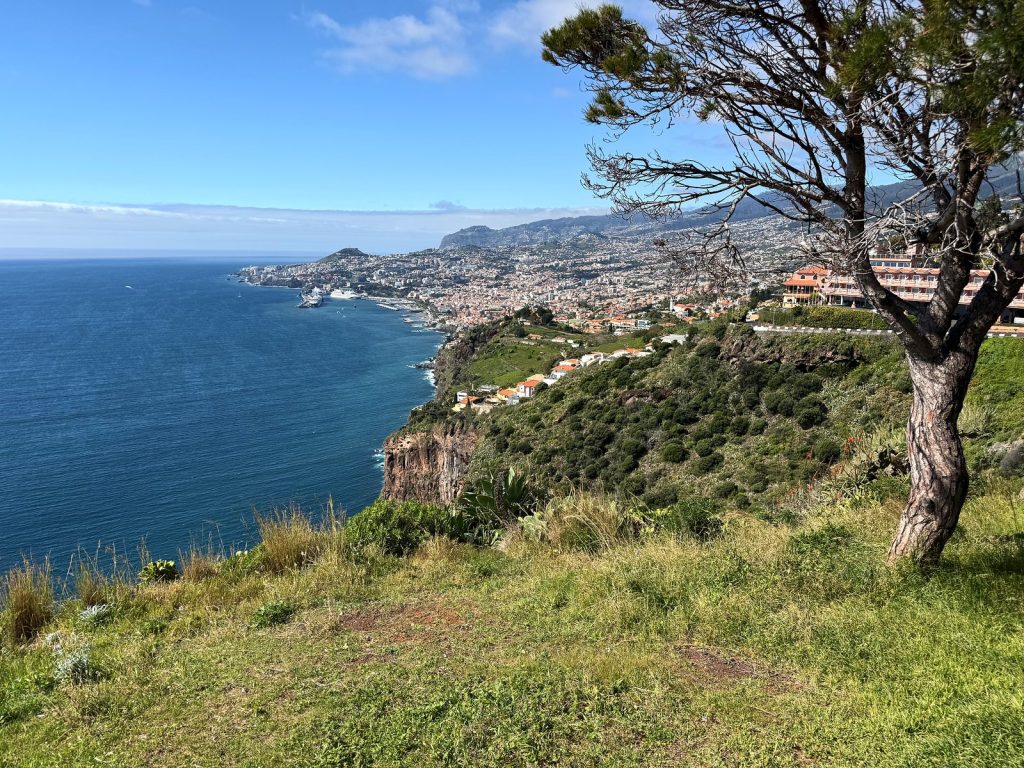
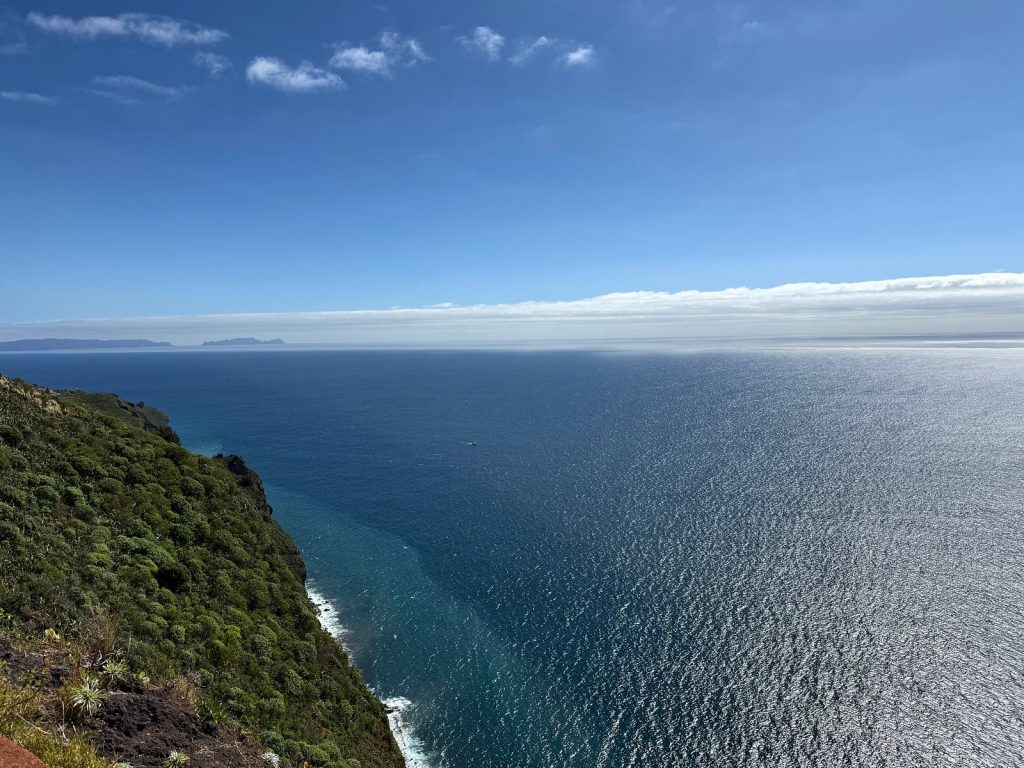
1: View from Miradouro do Pináculo, photo: Ewelina Podrez-Siama, February 2026, 2: View from Miradouro do Pináculo along the Funchal coast, February 2026, photo: Ewelina Podrez-Siama, 3: The cliff below Miradouro do Pináculo, February 2026, photo: Ewelina Podrez-Siama
Madeira Story Centre
An interactive museum telling Madeira’s story from its volcanic formation to the present day – 14 million years in about 45 minutes. Historical exhibits, multimedia and reconstructions (including Napoleon receiving Madeira wine on board HMS Northumberland on his way to St Helena, and the cabin of an Aquila Airlines seaplane).
On the third floor there’s a viewing terrace with a panorama of Funchal – worth a visit even without the museum. There’s also a restaurant (10% off with a ticket) and a big souvenir shop. A good place to start your stay and get the island’s historical context, or for a rainy day.
Funchal makes a good base: dolphin-watching cruises, canyoning and island tours, many with hotel pickup. Compare offers and reviews on GetYourGuide.
Practical information
Getting around Funchal
You can explore the centre on foot, but remember – the city is steep. Good shoes are essential. The alternatives are the Horários do Funchal city buses (€2.05 from the driver, cheaper with a GIRO card – €1.45 a ride), taxis and tourist tuk-tuks (a popular way to see the viewing terraces, among other things).
Where to eat in Funchal
In Funchal, as in any tourist city, it’s easy to end up with generic, made-for-tourists, so-so food. Below are my tried-and-tested places where you’ll eat well – and not only local dishes.
Bar No 2 (officially Pub Number Two, Rua D. Carlos I 54-56, Zona Velha) – a cult spot for prego, Madeira’s steak sandwich in bolo do caco (the local flatbread). Their “Prego Number Two” with bacon, cheese, tomato and lettuce is a hit – lots of guests come back every day. A huge choice of freshly made ponchas (I recommend the pescador), plus Nikita, a drink made with pineapple juice, beer and wine (when it’s made well, it tastes great!). Very reasonable prices – two pregos, beers and a coffee for under €15.
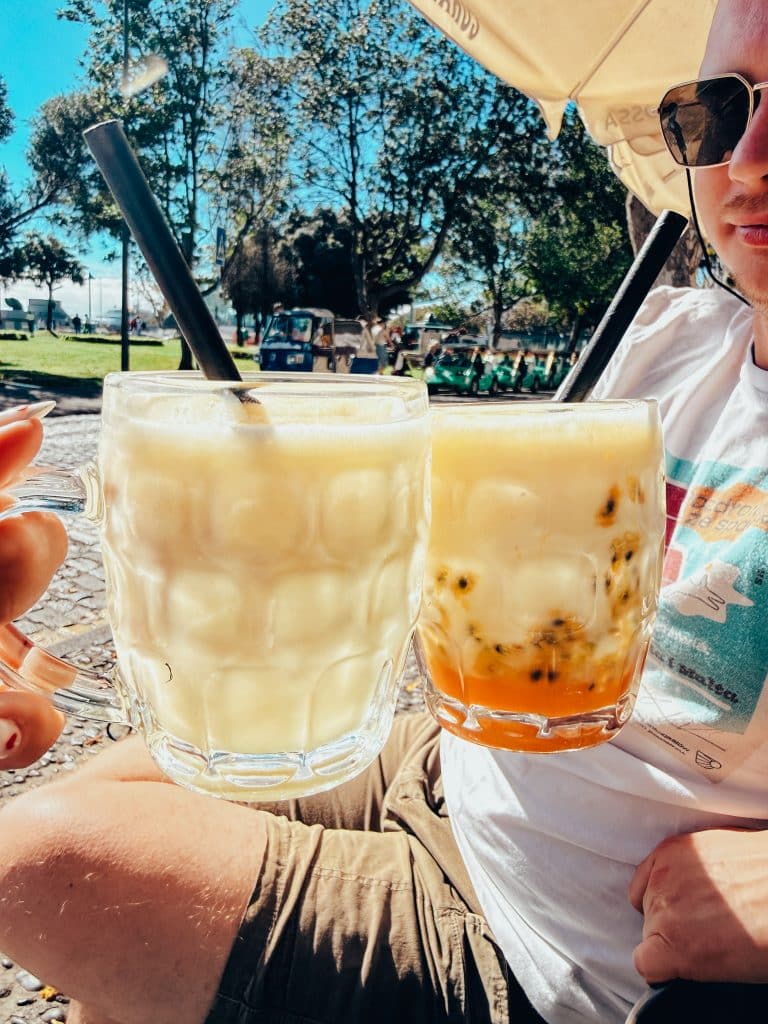
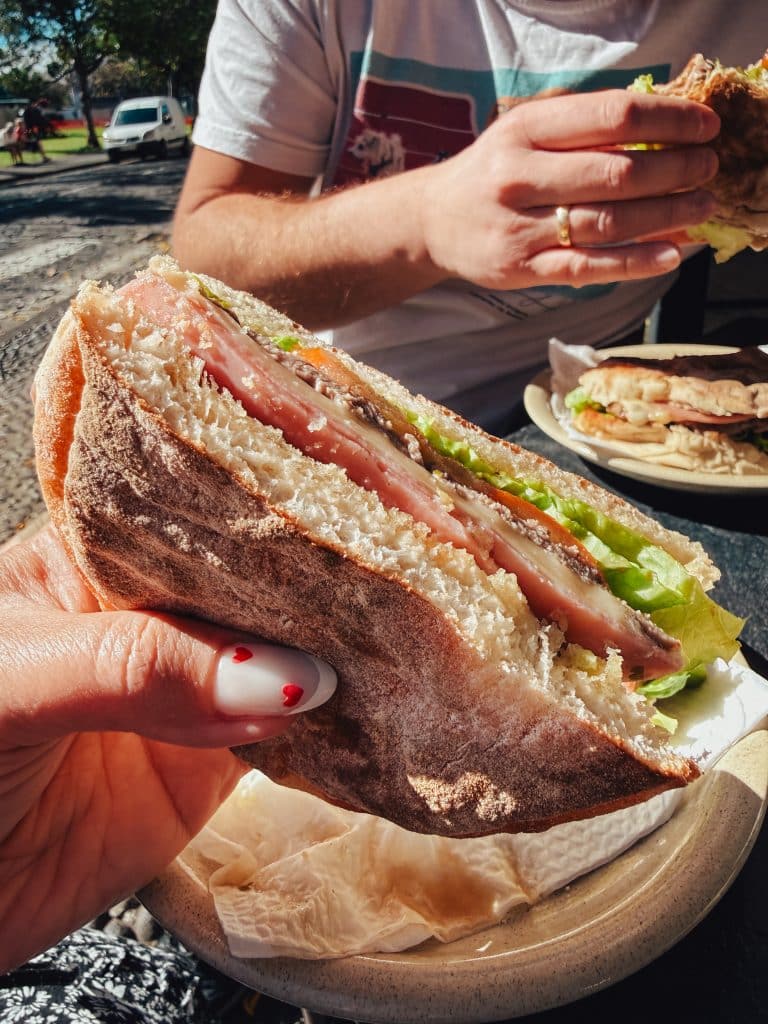
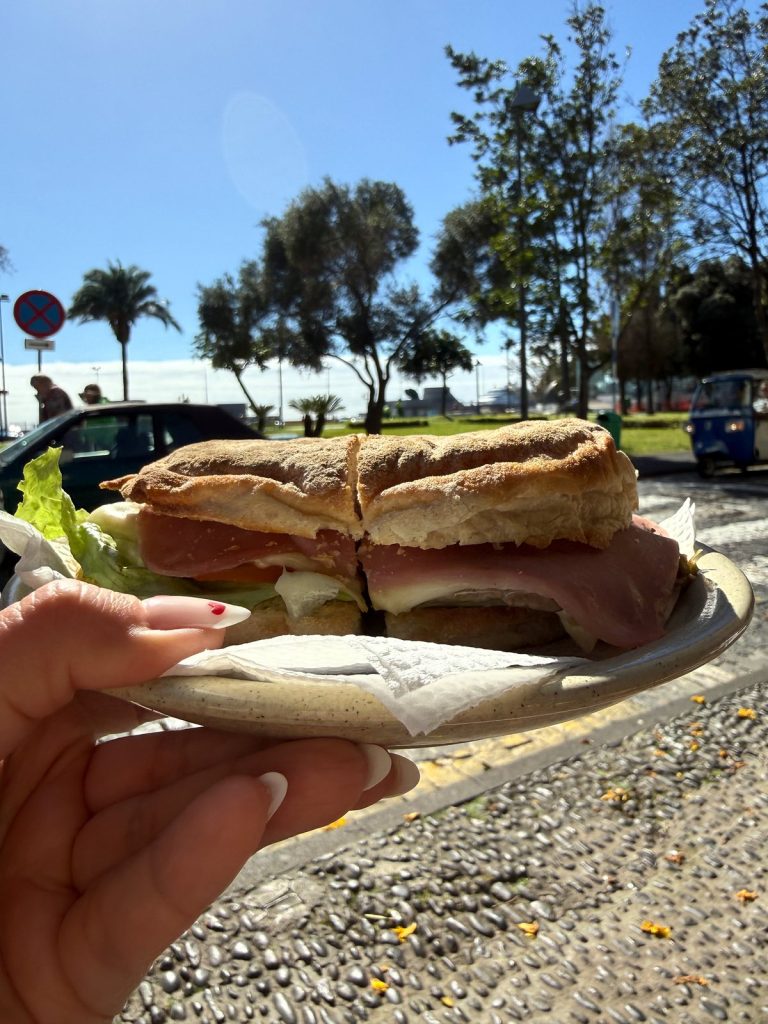
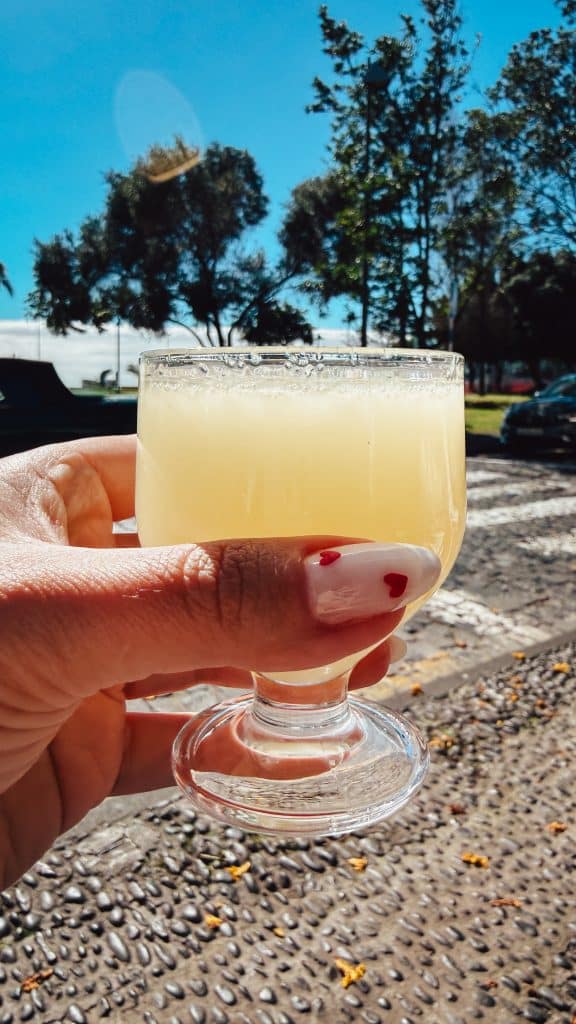
1: Nikita at Bar No2, photo: Ewelina Podrez-Siama, February 2026, 2: Prego at Bar No2, photo: Ewelina Podrez-Siama, February 2026, 3: Prego at Bar No2, February 2026, photo: Ewelina Podrez-Siama, 4: Poncha at Bar No2, photo: Ewelina Podrez-Siama, February 2026
Nata7 (3 branches: Rua dos Ferreiros 69 / Rua Dr. Fernão de Ornelas 60 / Caminho Santa Quitéria 45) – Madeira’s first café chain devoted entirely to pastéis de nata (custard tarts). It has been going since December 2022, and the recipe is more than 40 years old. The tarts are baked on site and fresh every day – if you time it right, you’ll get them still warm from the oven. Crisp pastry, creamy filling, a delicate caramelised top. A pastel de nata costs about €1, or €1.50 with a coffee. That’s an exceptional price for Madeira, as many cafés charge more for the tart alone. The perfect stop for a quick sweet break between sights.
Why Not? Restaurant Grill (Av. do Infante 28, by Santa Catarina Park) – a cosy grill restaurant serving Mediterranean and Madeiran food. Tasty bolo do caco, but also a good fish soup, grilled fish and juicy steaks. On average about €20 for a main course. Live music on Saturdays. Book a table – it’s a popular spot. TheFork often has discounts (up to 30%).
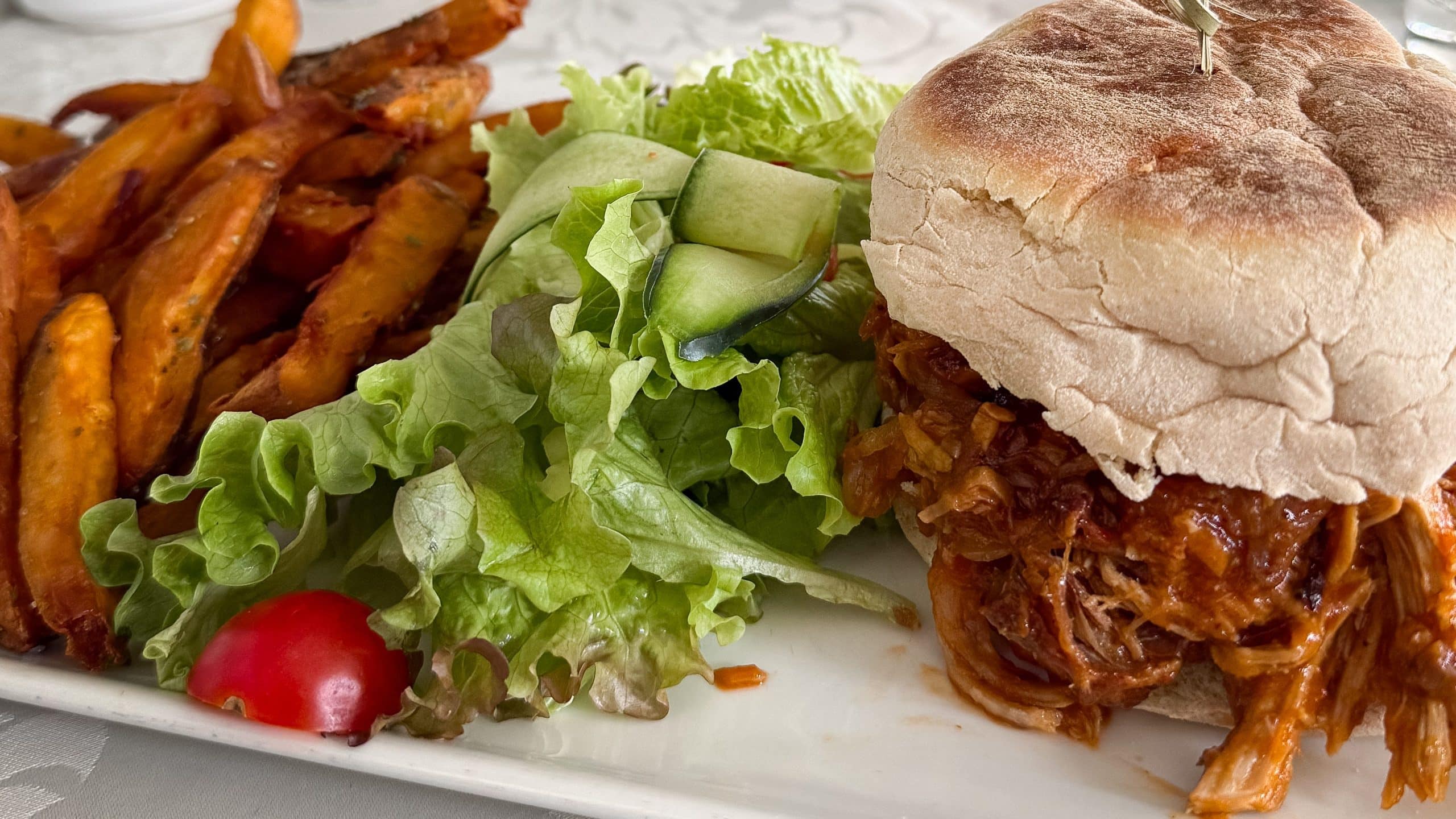
O Justiniano Garden (Av. do Infante 56) – one of the few places in Funchal where espetada is still made the traditional way: meat grilled over an open fire on a bay-laurel stick. It has been open since 1987 – a “Casa de Espetadas Madeirense”, as they call themselves. You see and smell the grill as soon as you walk in, with the chefs working over the open fire. Besides the beef espetada (about €15), try the salmon or prawn versions too. A big outdoor garden. In high season, book ahead – the queues can be long.
Martucci (Estrada Monumental 314, near the Lido) – really two places in one: a restaurant with a full menu and a pizzeria next door. The food is Italian, but they also make an excellent espada (black scabbardfish) with passion-fruit sauce – a Madeiran signature dish with an Italian twist. Fresh pasta, thin crispy pizzas, a good surf & turf. Tasting menu about €20. The chef is Filipe Fernandes, and the team that used to work here came from the legendary Mozart restaurant. Italian music in the background, a cosy feel.
Brunchology (Rua João Tavira 28, centre) – a fairly new breakfast place in Funchal. Shakshuka, pancakes with salmon and burrata, bowls – a modern menu, well executed. Vegan and gluten-free options. Open daily 9:00–18:00. A great spot for a slow, hearty breakfast before a day of hiking.
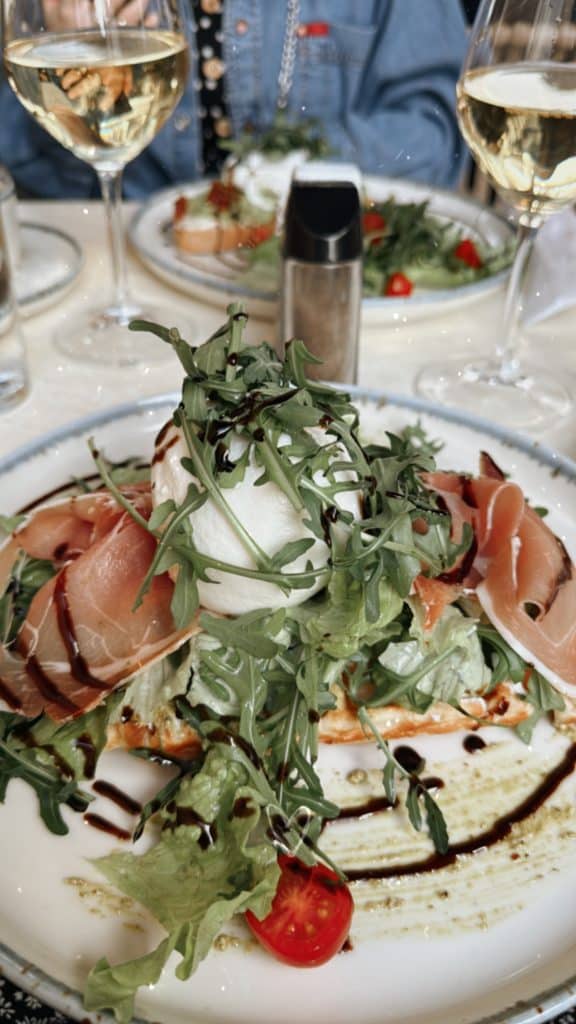
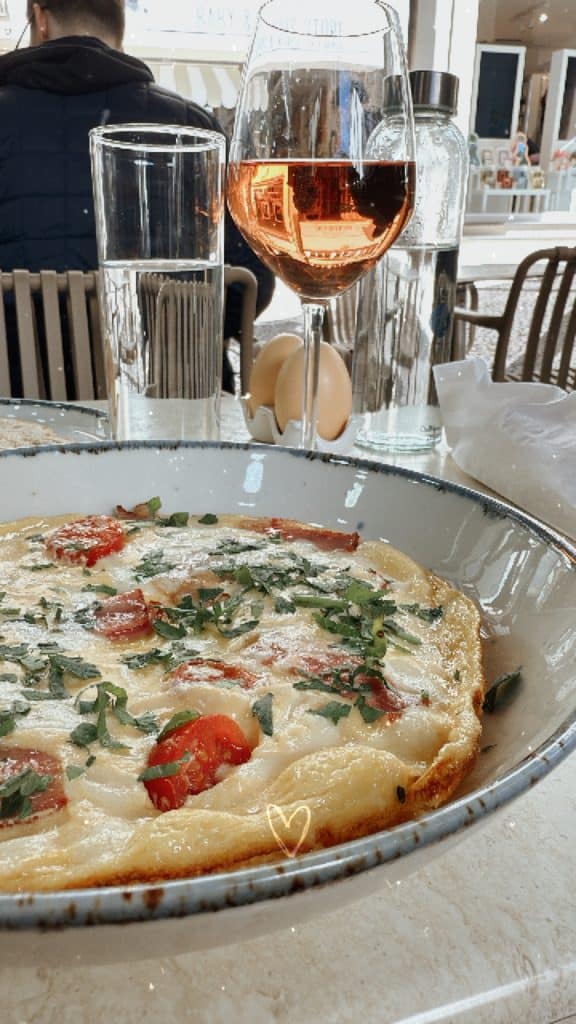
1: Brunchology, 2: Brunchology. Photos: Ewelina Podrez-Siama 2025
Banana’s Pub (Largo do Corpo Santo 20, Zona Velha, by the Corpo Santo chapel) – an atmospheric pub in the old town with great picado – pieces of meat pan-fried and served with chips, perfect for sharing over a beer. It’s also known for live music almost every day, banana beer (Madeira Beer Lab: Weiss Banana) and home-made ponchas. A good place to chill in the evening after sightseeing.
Fala Fala Vege Food (Arcadas de São Francisco 18, central Funchal) – a vegan and vegetarian place tucked away in a shopping arcade, set up by Poles. The menu is inspired by the owners’ travels and is mostly Middle Eastern: falafel, oriental wraps, hummus with flatbread. Vegan burgers with home-made chips cost about €10. A different dish of the day and cake of the day every day. They also have gluten-free options and the best sangria I’ve had in Funchal.
Ákua by Chef Júlio Pereira (Rua dos Murças 6, old town) – the top end of this list. Listed in the 2025 Michelin Guide and run by chef Júlio Pereira. The food is based on local seafood – there’s fresh catch in the display every day. Sardines with aubergine and passion fruit, bacalhau tacos, seafood rice. An open kitchen where you can watch the chef at work. Prices are higher than in typical restaurants – about €30–50 per person without drinks – but it’s also in a completely different league. Booking essential.
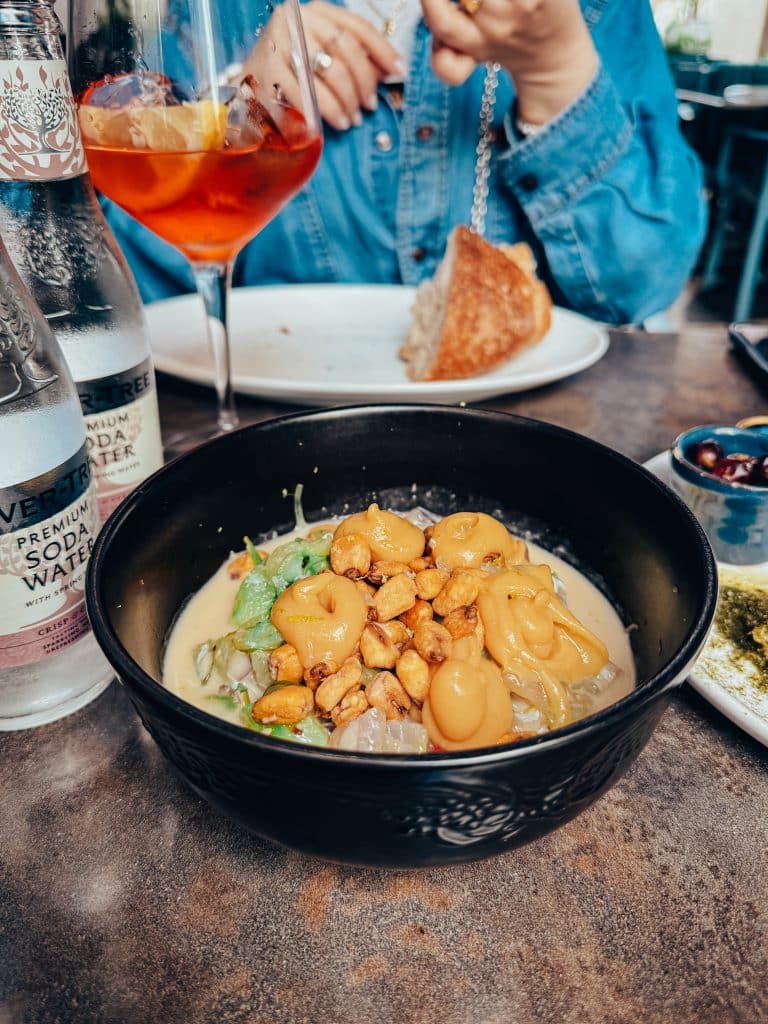
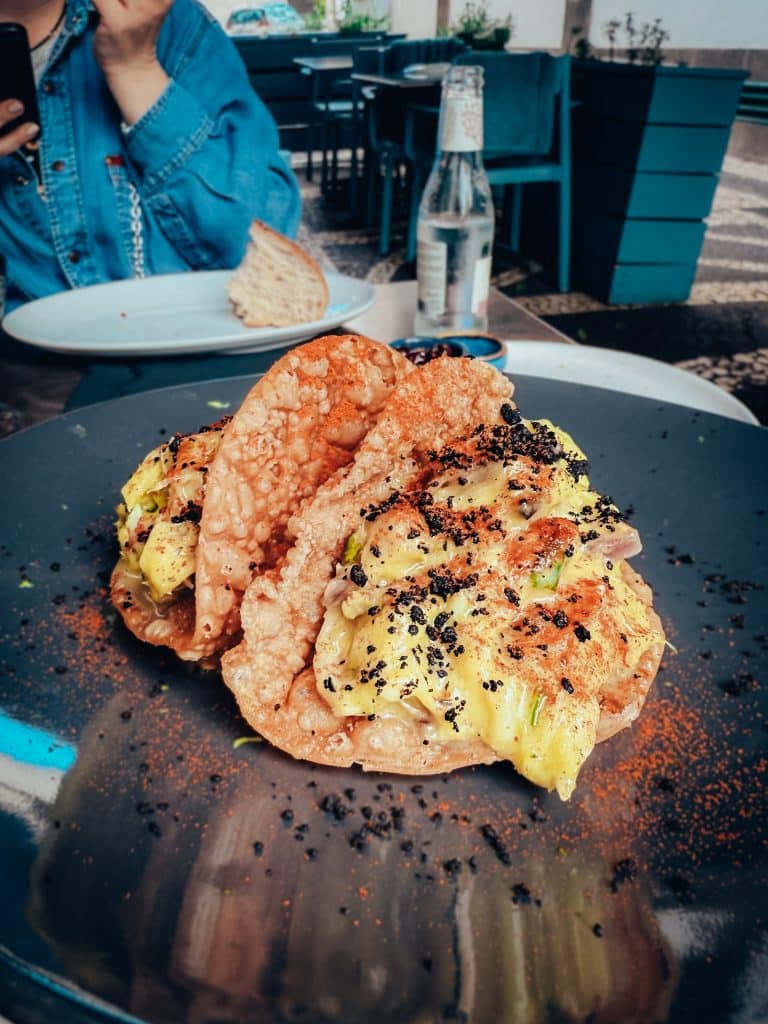
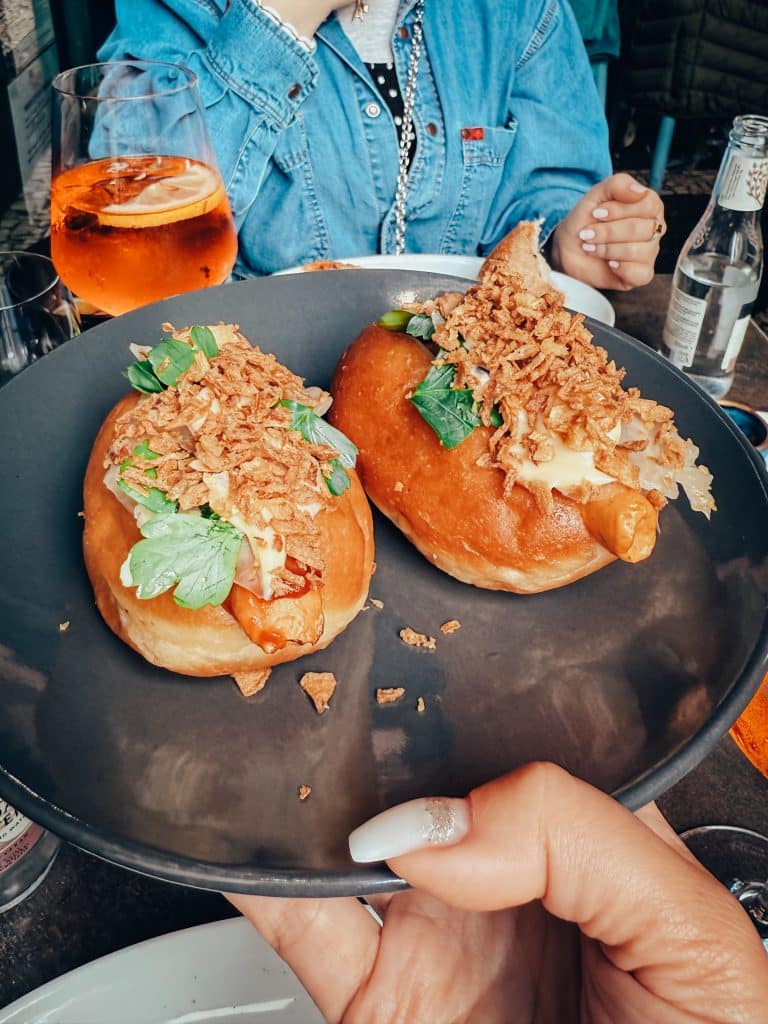
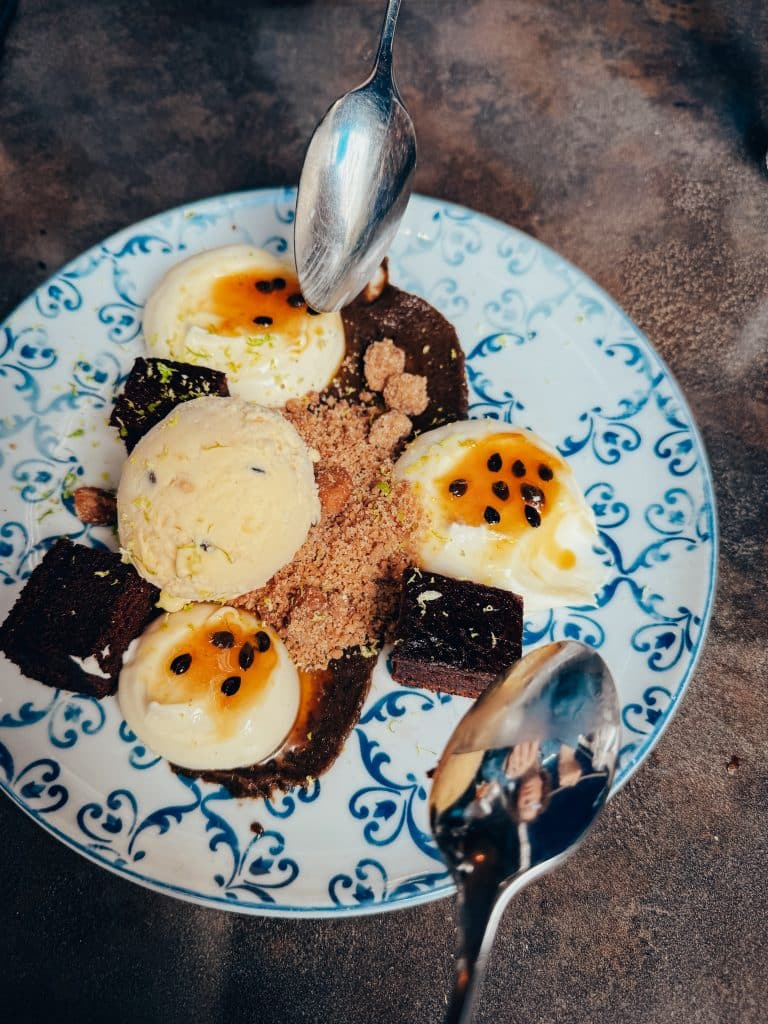
1: Ákua by Chef Júlio Pereira, 2: Ákua by Chef Júlio Pereira, 3: Ákua by Chef Júlio Pereira, 4: Ákua by Chef Júlio Pereira. Photos: Ewelina Podrez-Siama 2025
Funchal with a dog
Tesla, my dog, was a Funchal celebrity – locals recognised her in the street. Funchal is surprisingly dog-friendly for a southern European city:
- Restaurants – dogs are welcome on terraces, but usually not inside.
- Parks – Santa Catarina and the Jardim Municipal are no problem with a dog.
- Monte Palace – yes, you can go in with your dog!
- Fortaleza do Pico – a steep climb, but perfectly doable with a dog.
- The promenade – perfect for an evening walk with your four-legged friend.
Funchal at night
Funchal at night is a whole different experience. Madeira is generally pretty safe – I was happier walking around Funchal at night than around Wrocław in Poland, that’s for sure. The city is well lit, and the promenade and the Zona Velha with its live music have a completely different feel in the evening than during the day. Especially over the festive season (in the 2026/2027 season, from 1 December to 10 January) Funchal sparkles with thousands of lights – illuminated streets, the cathedral surrounded by glowing angels, colourful decorations on every lane.
The climax is New Year’s Eve – a fireworks display from about 50–60 launch sites on land and at sea that lasts about 8 minutes (58 sites for the 2025/2026 New Year). It is one of the best-known New Year’s Eve fireworks displays in the world.
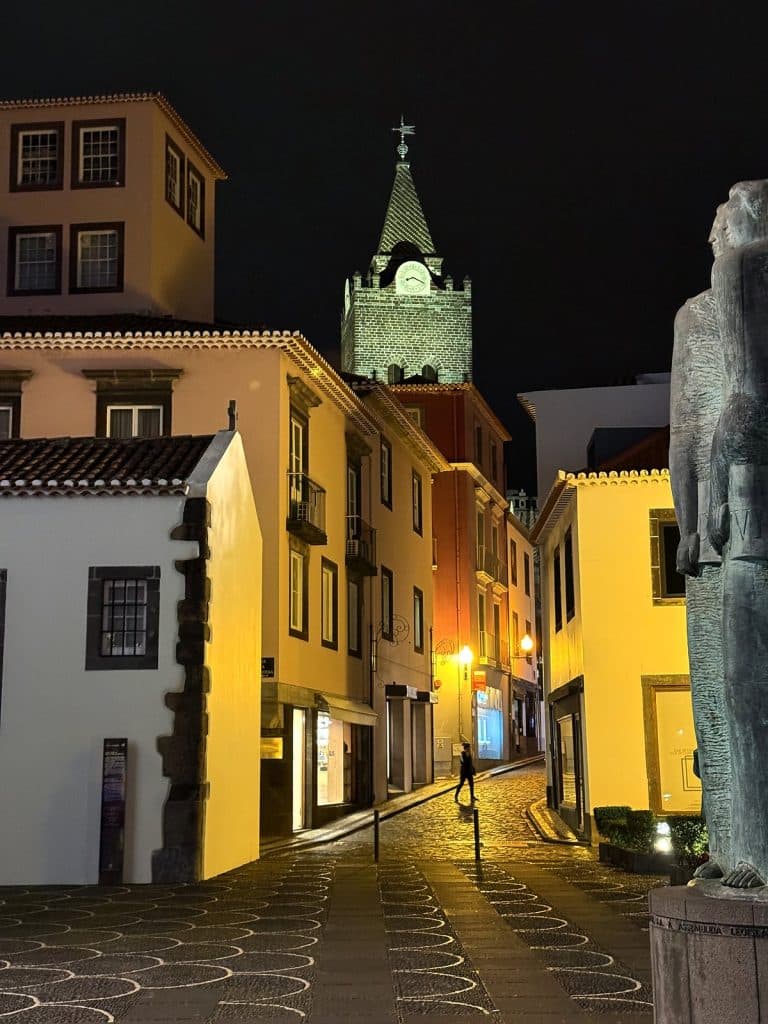
1: Funchal, 2: Funchal, 3: Funchal, 4: Funchal, 5: Funchal, 6: A lane with the Sé cathedral tower at night, February 2026. Photos: Ewelina Podrez-Siama
 Read nextWhere to stay in Madeira. 🏨 A base that keeps everything closeFunchal, Caniço, the west coast or the north? The areas compared by access, weather and tourist tax.
Checked by madeira-planner.com
Alto Lido, Funchal
See Alto Lido on Booking.comaffiliate link
Checked by madeira-planner.com
ASPA Studios, Funchal
See ASPA Studios on Booking.comaffiliate link
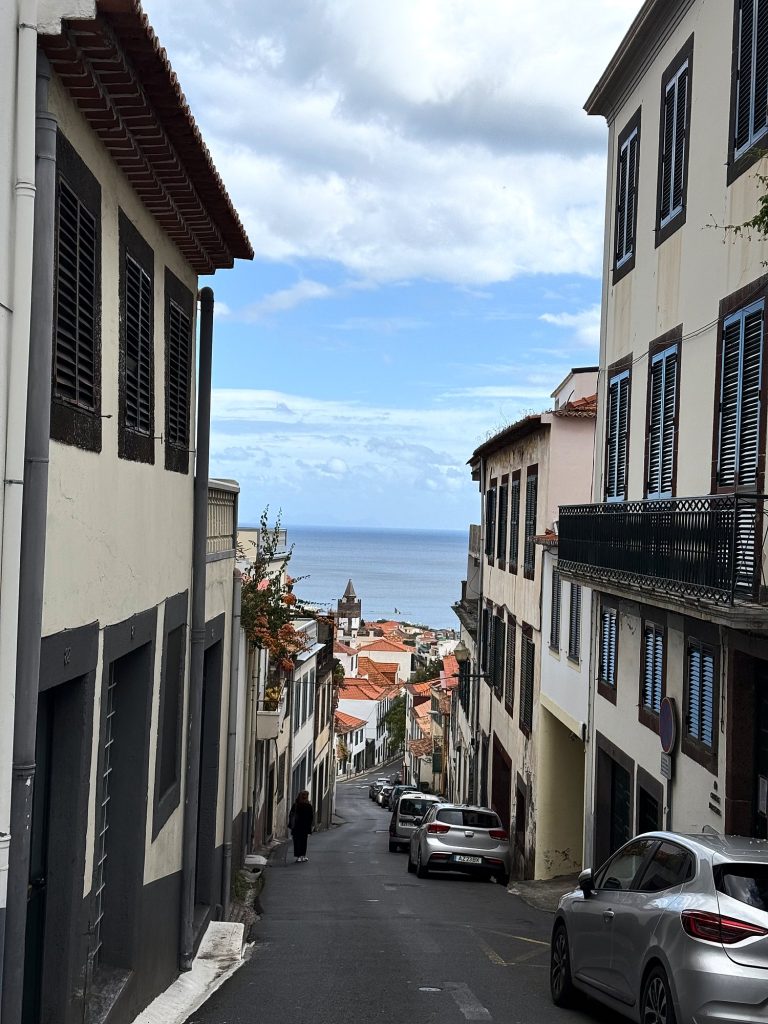
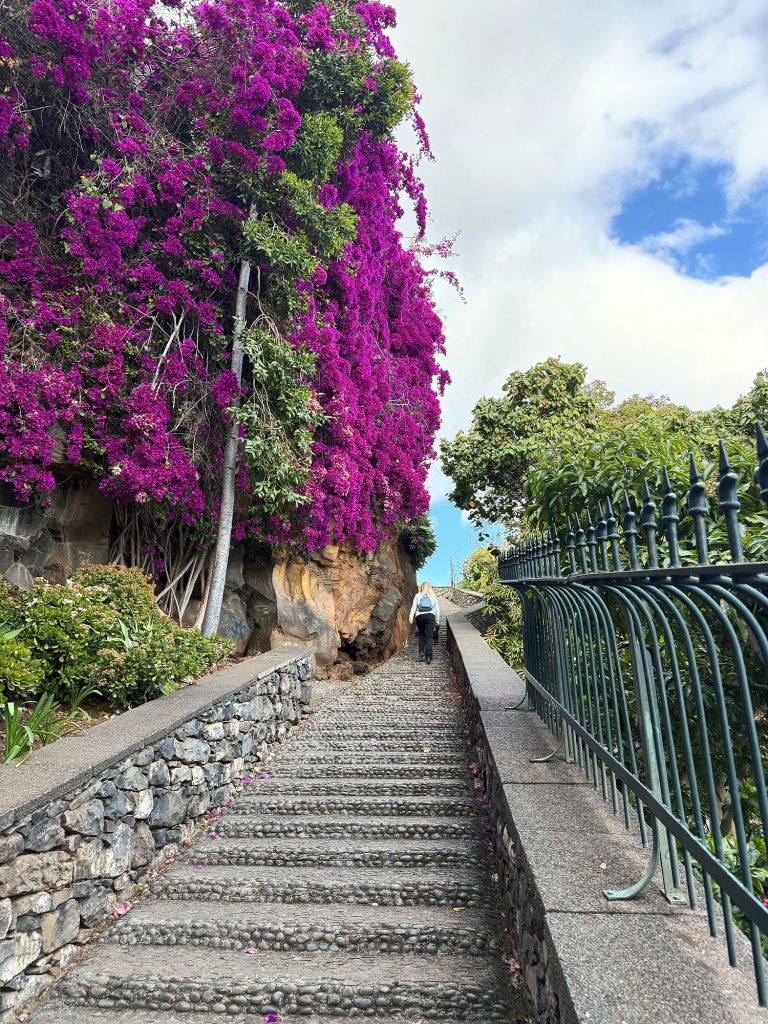
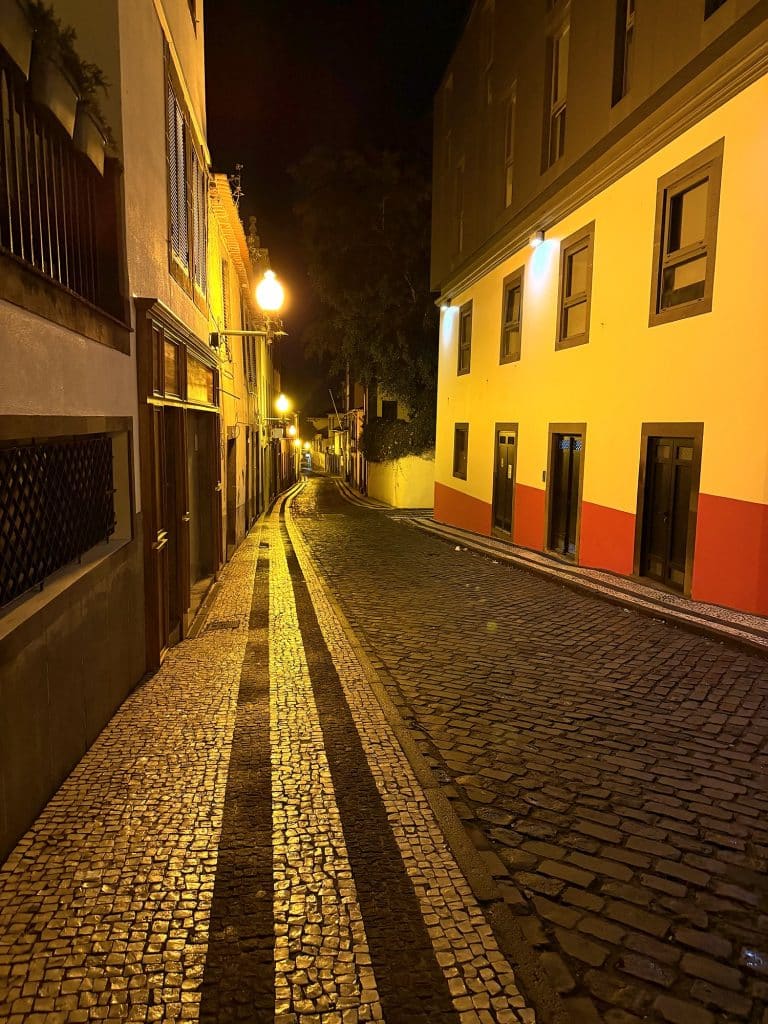
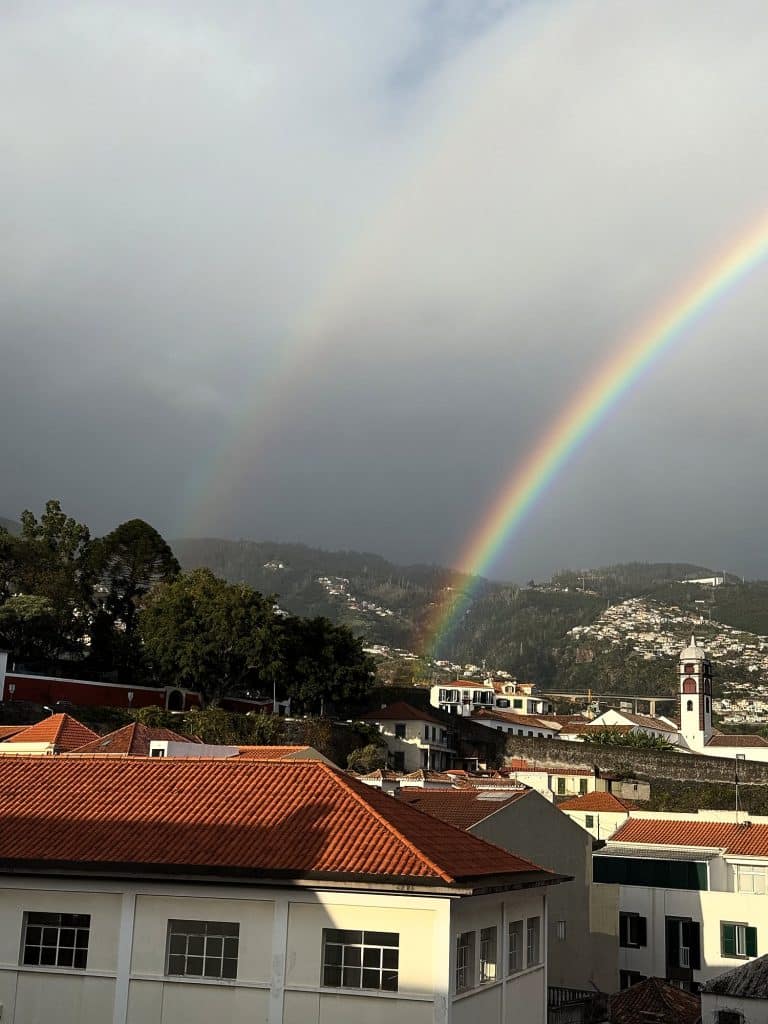
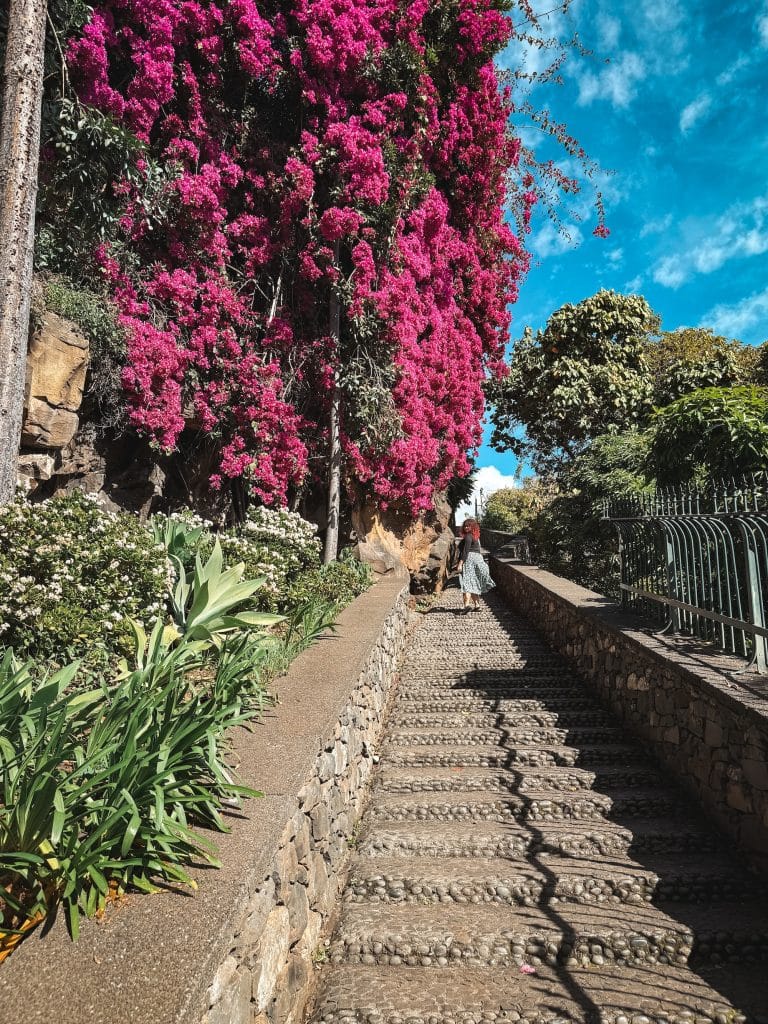
1: A lane in Funchal, 2: Steps and bougainvillea in Funchal, 3: Funchal at night, 4: A rainbow over Funchal. Photos: Ewelina Podrez-Siama 2025
In summary
Funchal is more than a base for hiking – it’s a living city with more than five hundred years of history, some Polish touches and real character. From the cathedral with its Mudéjar ceiling and the Polish monuments to concerts in the Anglican church and the views from Fortaleza do Pico – it deserves your time. And it’s worth not just visiting, but living here, even for a little while.
Where to stay in Madeira: compare hotels, apartments and guesthouses in Funchal and across the island. The search box shows current prices from Booking.com.