Madeira is a Portuguese island in the Atlantic, about 700 km off the coast of Africa. It’s only 57 km long and 22 km wide, yet its highest peak – Pico Ruivo – reaches 1862 m above sea level. Differences in height like that mean that on one island you’ll find mountain ridges above the clouds, subtropical laurel forests (UNESCO), hundreds of kilometres of levadas – historic irrigation channels with walking paths running alongside – plus cliffs, natural pools and picturesque fishing villages. Below are 20 places I consider unmissable, with current prices, distances and practical tips.
Madeira is an island that wins you over at first sight and very quickly stops being just another “destination” and becomes an unforgettable experience. That’s exactly how my chance week-long stay in Madeira turned into a tradition of coming back every year.
Green, rugged, wild in places, yet surprisingly orderly and friendly – a place where at noon you can stand on the roof of the world and a few hours later sip poncha with a view of the ocean. Here’s what’s worth seeing in Madeira!
Looking for a plan for the day? Dolphin-watching cruises, jeep tours and sunrise on Pico do Arieiro, many with hotel pickup. Compare offers and reviews on GetYourGuide.
Things to do in Madeira: what to see on the island of eternal spring
Madeira has plenty to offer: from spectacular viewpoints and waterfalls, through the famous levadas, to charming small towns and botanical gardens. Below is a list of places worth including in your itinerary.
- Cabo Girão — a glass-floored viewing platform above one of the highest cliffs in Europe.
- Funchal — the capital, with the Mercado dos Lavradores market, gardens and historic sights.
- Levadas — a network of irrigation channels with plenty of walking routes (e.g. Levada do Caldeirão Verde, Levada do Rei).
- Pico do Arieiro — sunrise and mountain trails linking it with Pico Ruivo.
- Porto Moniz — natural lava pools that are perfect for a swim.
- Curral das Freiras — a picturesque valley ringed by peaks.
- Jardim Botânico and Monte Palace — gardens with plant collections and panoramic views.
And that’s only the beginning! Take a look at the map of Madeira’s top 20 sights and read about each of them below.
A car from the airport: compare car hire prices at Madeira Airport (FNC) on DiscoverCars.
Map of 20 things to do in Madeira
1. Pico Ruivo – Madeira’s highest peak
Pico Ruivo (1862 m above sea level) is the absolute number one when it comes to Madeira’s mountains. In good weather you stand above the clouds and see the island from a perspective that completely changes your sense of scale.
Why go: It’s Madeira at its purest: space, silence, height and the feeling that the world has stopped for a moment. The trail isn’t technically difficult, and it’s hugely rewarding.
Getting there: The easiest way is by car to Achada do Teixeira, where a short trail leads to the summit (about 2.8 km, 1.5 h one way). From Funchal it’s about 49 km and roughly an hour’s drive via Santana.
The alternative is the famous PR1 trek from Pico do Arieiro (6.1 km, 3–4 h) – much more demanding, but spectacular. Since 1 May 2026 the trail has been fully open again; details below.
Cost: Online booking required, €4.50 per person.
Time: At least 4–5 h (including getting there and back). Check the weather forecast – clouds can ruin the whole visit. Bring a windproof jacket, water and good shoes.
2. Pico do Arieiro – the view without the trek
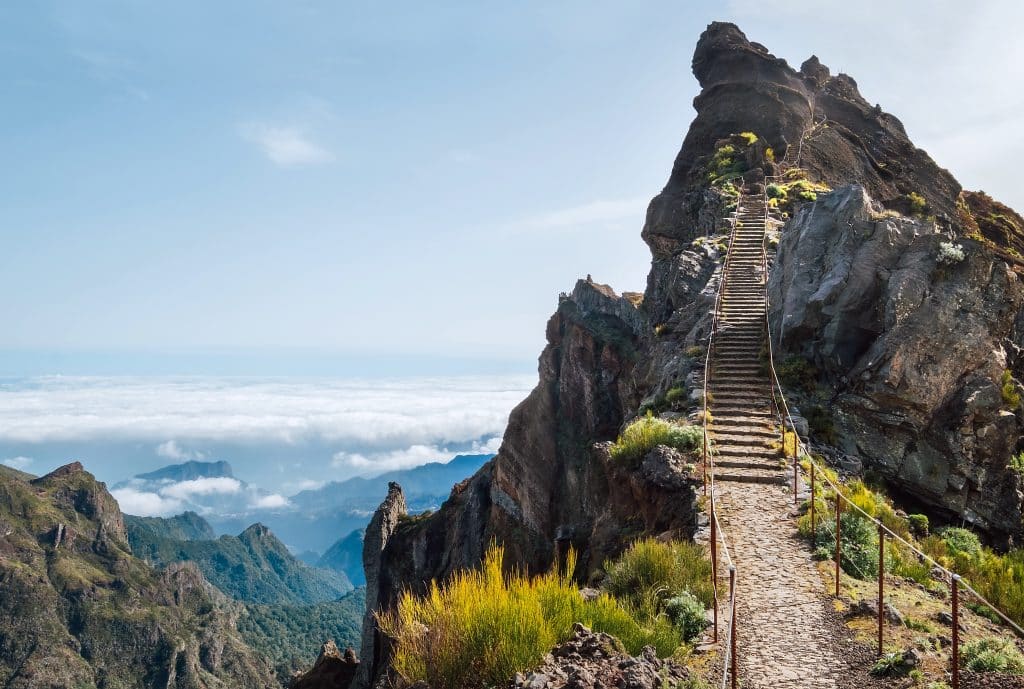
Pico do Arieiro (1818 m above sea level) is one of the few peaks you can drive up to. Sunrise here is a Madeira classic – a sea of clouds, mountain ridges and the first rays of sun make for National Geographic-worthy shots.
Why go? Even without hiking, the views are spectacular – you just step out of the car onto the viewing terrace. If you fancy more, the PR1 trail to Pico Ruivo starts right here.
Getting there: From Funchal it’s about 18 km and a 30–45 minute drive on a winding mountain road. Parking at the viewpoint has been paid since 28 October 2024: €4/h (first 30 min free, max. €20 a day), and the lower car parks cost €2/h (max. €5). At sunrise (the best time) the spaces run out before 6:00 – arrive at least 30–40 minutes before sunrise.
Cost: Viewing terrace: free. PR1 trail: €4.50 to Pedra Rija and back, or €10.50 for the full trail to Pico Ruivo (book online via SIMplifica).
Time: 30–40 minutes is enough for the terrace and photos. There’s a bar/restaurant at the top.
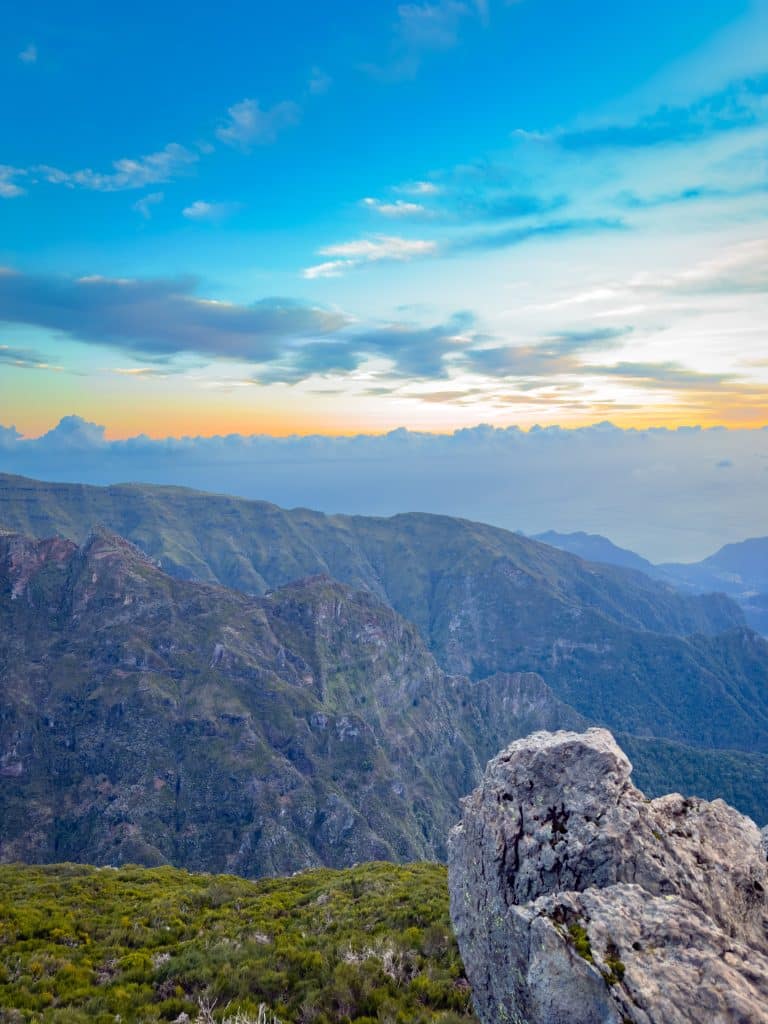
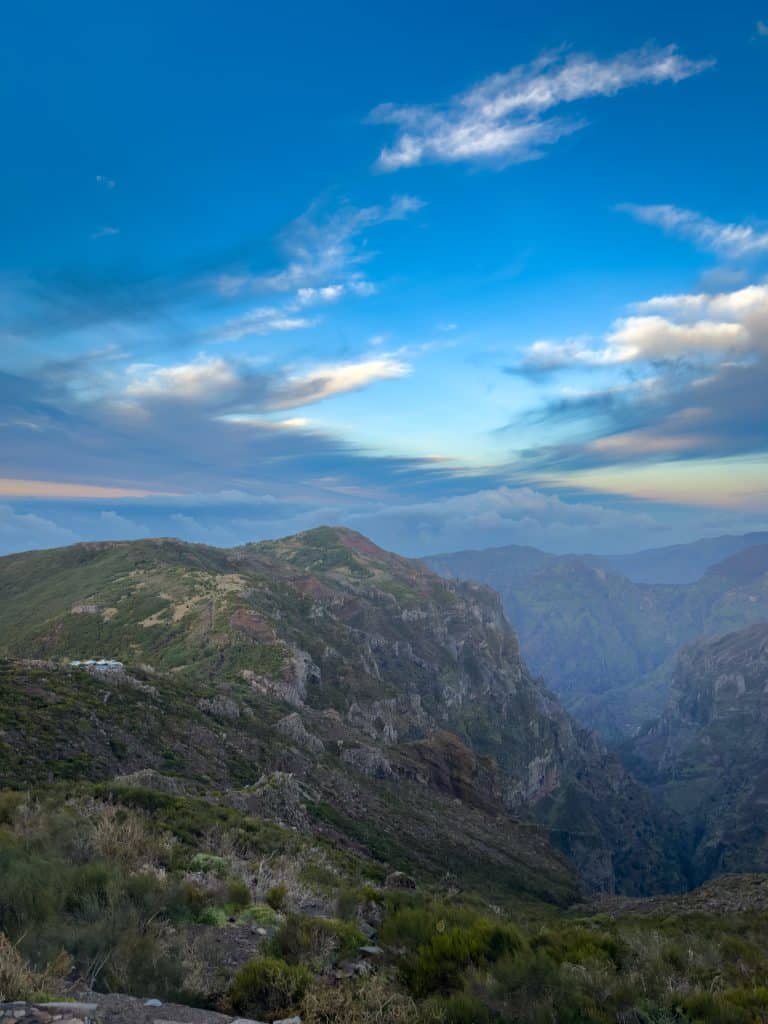
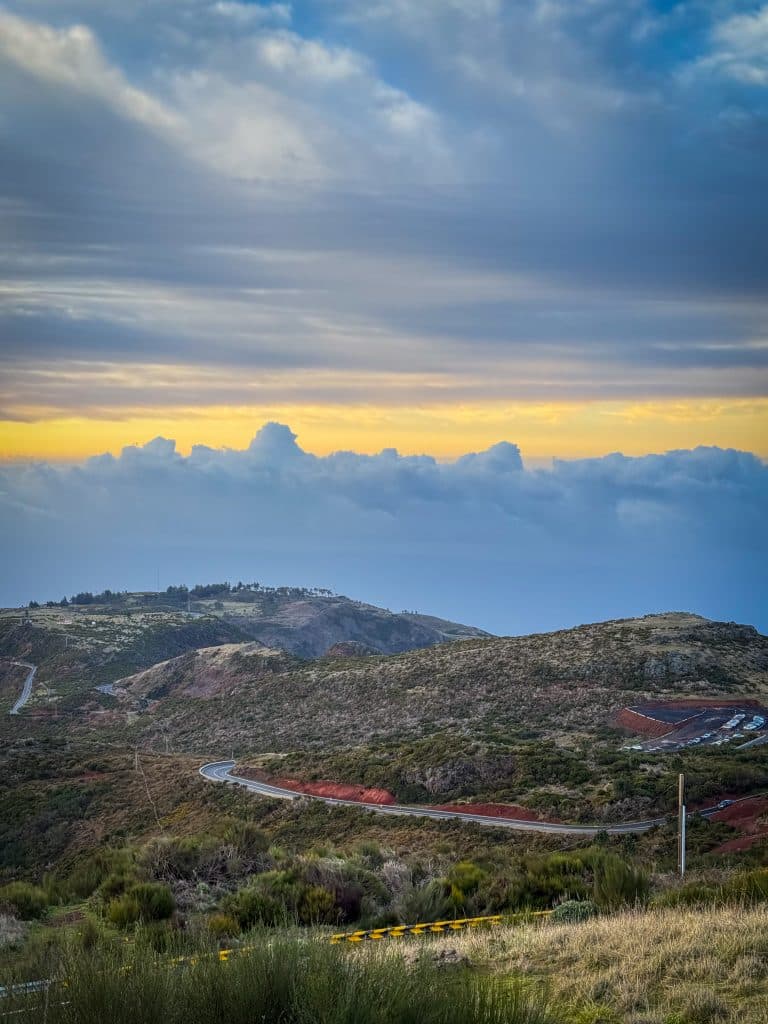
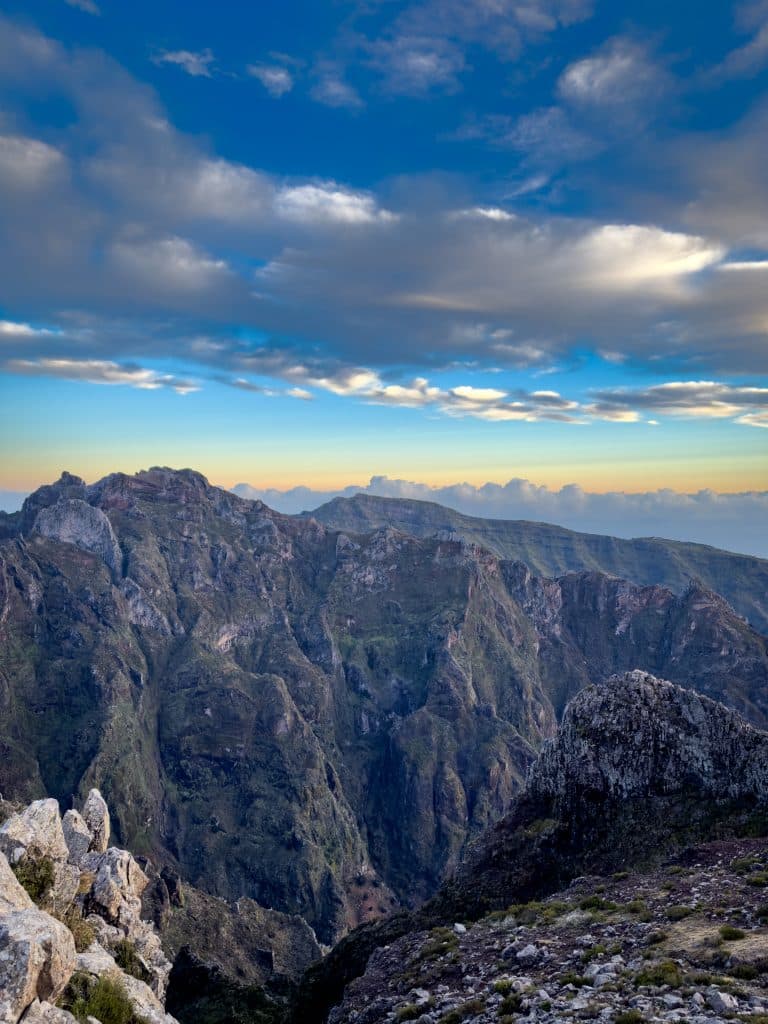
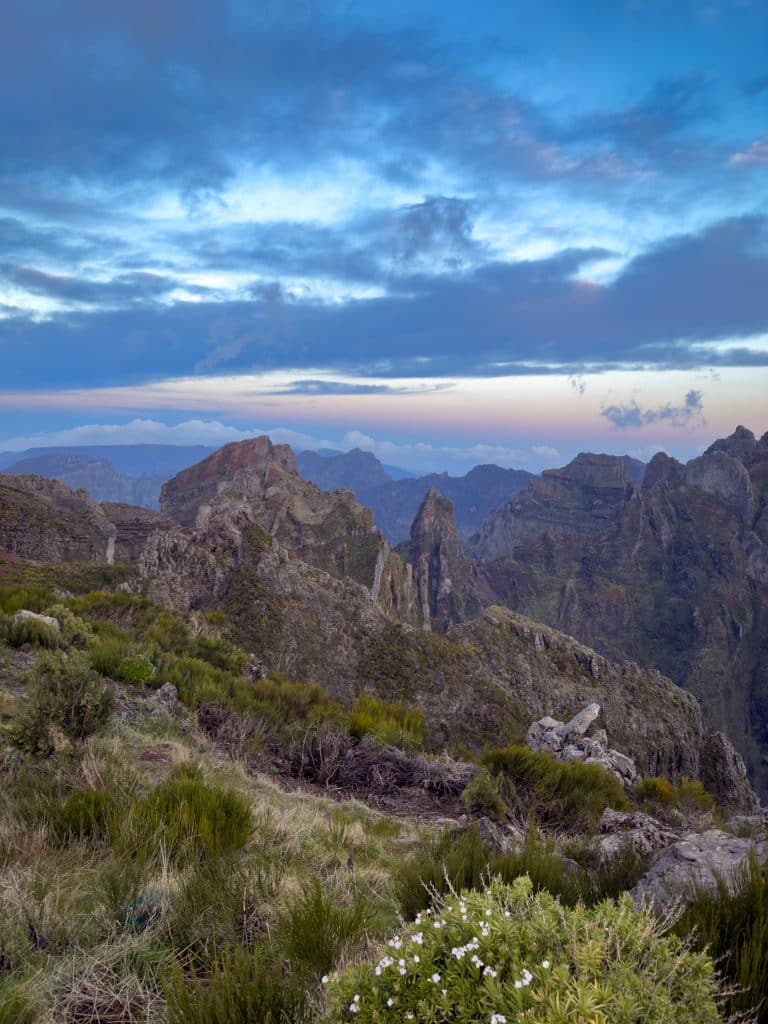
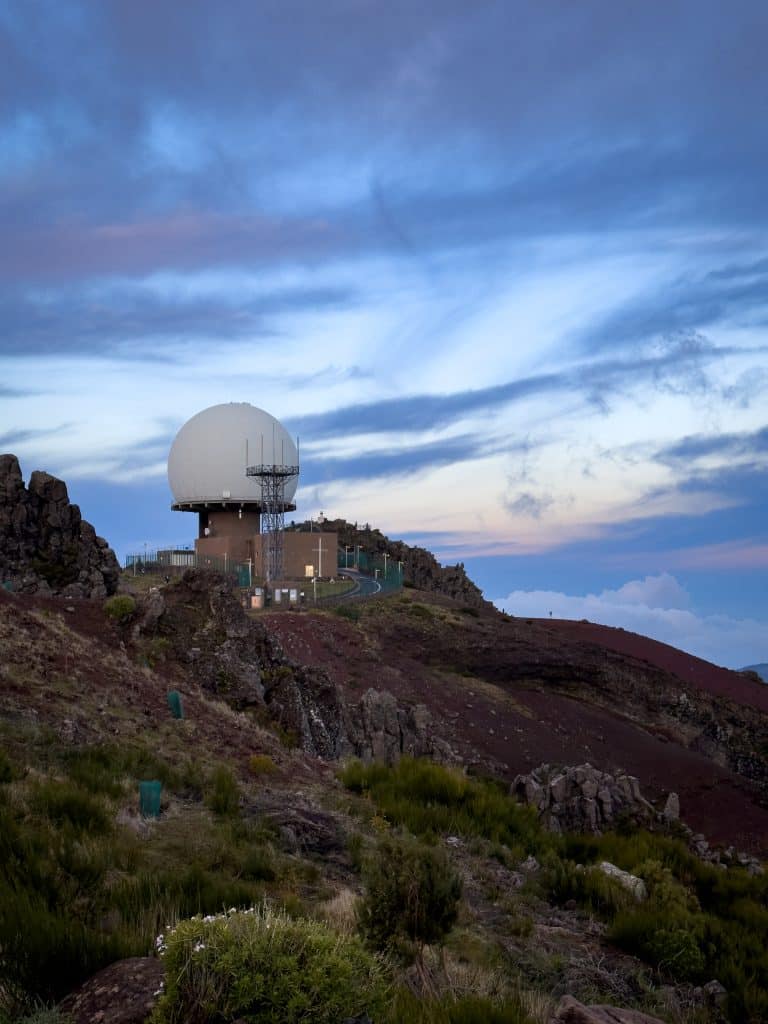
1: Sunrise on Pico do Arieiro, 2: Sunrise on Pico do Arieiro, 3: Sunrise on Pico do Arieiro, 4: Sunrise on Pico do Arieiro, 5: Sunrise on Pico do Arieiro, 6: Sunrise on Pico do Arieiro. Photos: Ewelina Podrez-Siama 2025
3. Ponta de São Lourenço – rugged, windswept Madeira
The eastern peninsula shows a completely different side of the island: dry, rocky, full of contrast. Instead of green forests – sharp volcanic rocks, yellow grasses and a turquoise ocean. Madeira’s most unusual, even slightly unsettling, landscape.
Why go? It’s the best place to see that Madeira isn’t just greenery and flowers. The PR8 trail runs along the cliffs with views of the ocean and the Ilhas Desertas (the Desertas islands). The colours are intense and the views dramatic, especially at sunset.
Getting there? By car to the Baía d’Abra car park (at the end of the ER109). About 45 minutes from Funchal. Parking is free, but in high season it’s full before 10:00.
Cost: €4.50 per person and mandatory booking on SIMplifica (since 1 January 2026). Since 30 September 2026 the trail has been undergoing upgrade works: there are signposted detours, but PR8 remains open. Without a car, take bus 702 (formerly 113) towards Caniçal and Baía d’Abra – check the SIGA timetable to see which services go all the way to the end of the road.
Time: The trail is about 8 km there and back (4 km one way), 2.5–3 h of walking.
 Read nextPonta de São Lourenço – the PR8 trailTickets, the works and detours, getting there by car and on bus 702, and the area around.
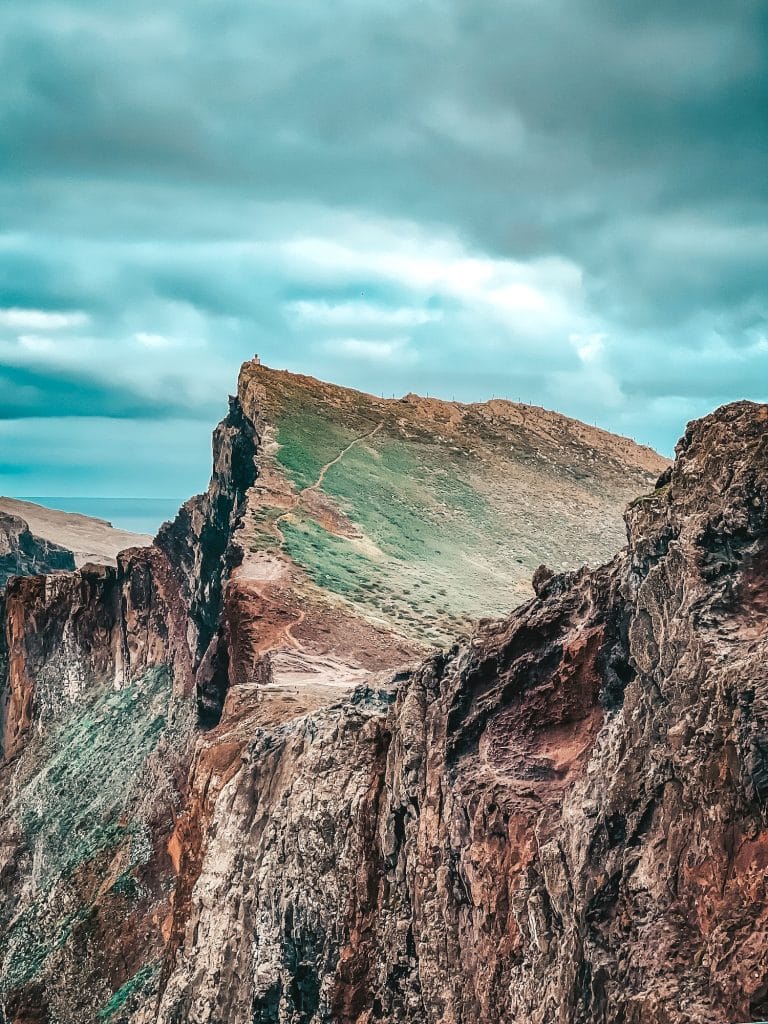
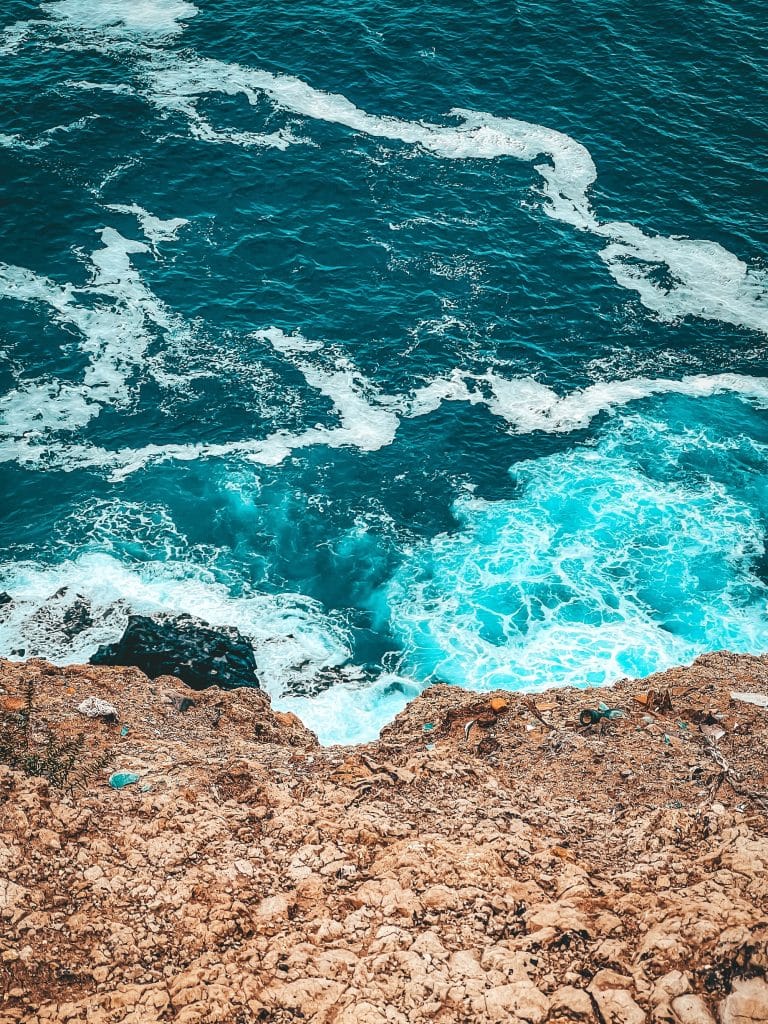
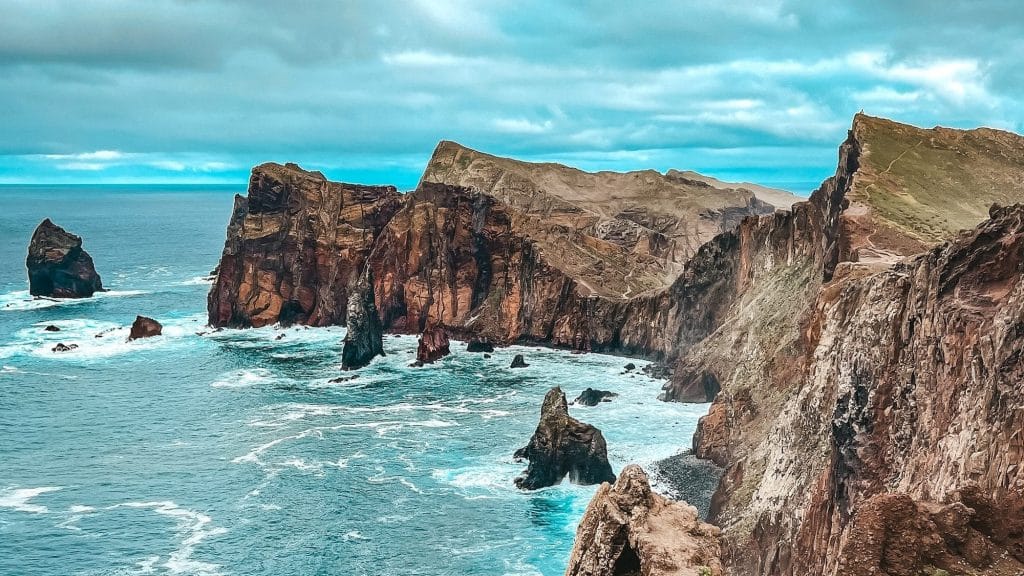
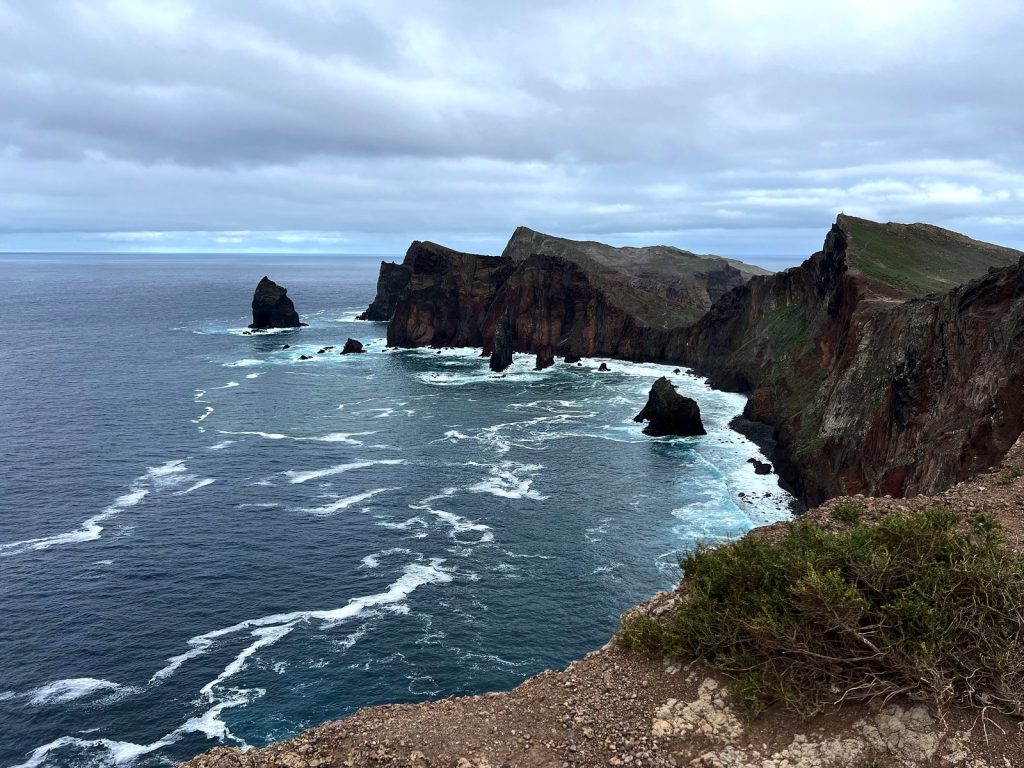
1: Ponta de São Lourenço.  (2023), 2: Ponta de São Lourenço.  (2023), 3: Ponta de São Lourenço.  (2023), 4: Ponta de São Lourenço – cliffs and rock pinnacles above the bay (November 2023). Photos: Ewelina Podrez-Siama
4. Levada das 25 Fontes and Risco
The best-known levada on the island leads through the laurel forest (UNESCO) to a cascade of waterfalls pouring down a cliff. In reality there are more than 25 streams, but the name stuck.
Why go? If you only see one levada, make it this one. Greenery, waterfalls, laurel forest – all in one place. The trail shows why Madeira’s levadas are the island’s calling card.
Getting there? By car to Rabaçal on the Paúl da Serra plateau. About 1 h from Funchal (about 43 km). You park by the ER105, and from there it’s about 2 km down a tarmac road to Casa do Rabaçal, where the trails split. You can ride down on the municipal shuttle bus (€5 one way, €8 return).
Cost: Online booking on SIMplifica is required, €4.50 per person per trail. PR6 and PR6.1 are two separate bookings, €9 in total. Morning slots on PR6 go several days in advance. If you’re doing a third trail that day, a pass pays off – you can work it out with the trail ticket calculator.
Time: The PR6 trail is 4.3 km one way (8.6 km there and back). Levada do Risco (PR6.1) is a separate trail — 3 km one way. Combining both gives about 14.6 km in total, but they are two separate trails that need separate bookings – 3–4 h of walking plus the walk from the car park.
 Read nextLevada das 25 Fontes and Risco (PR6)Tickets, booking, the shuttle bus to Casa do Rabaçal and how to get there.
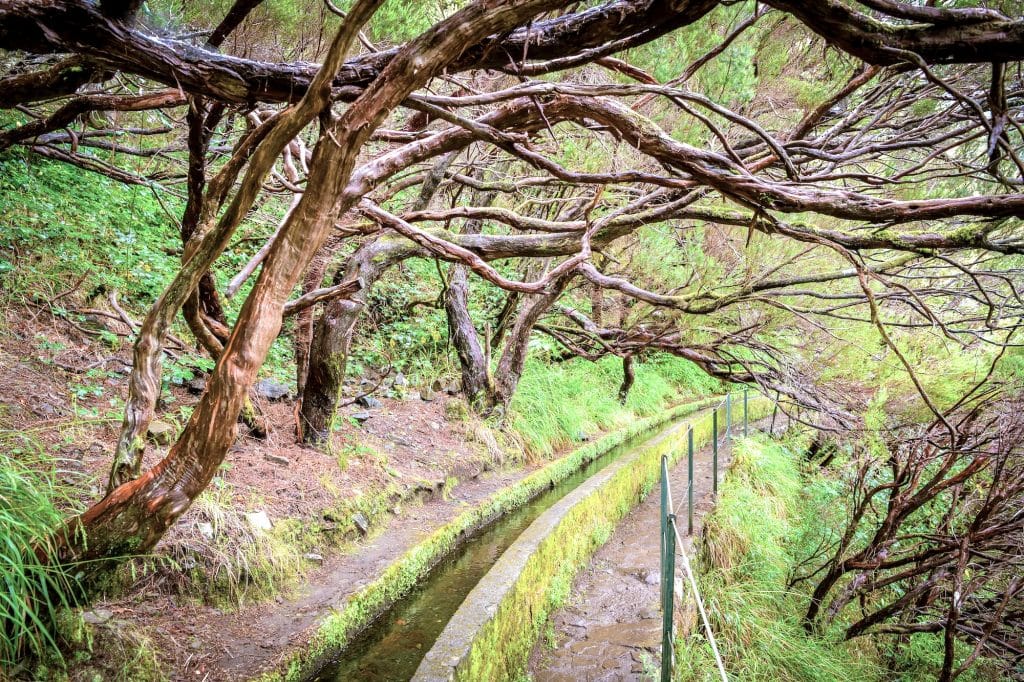
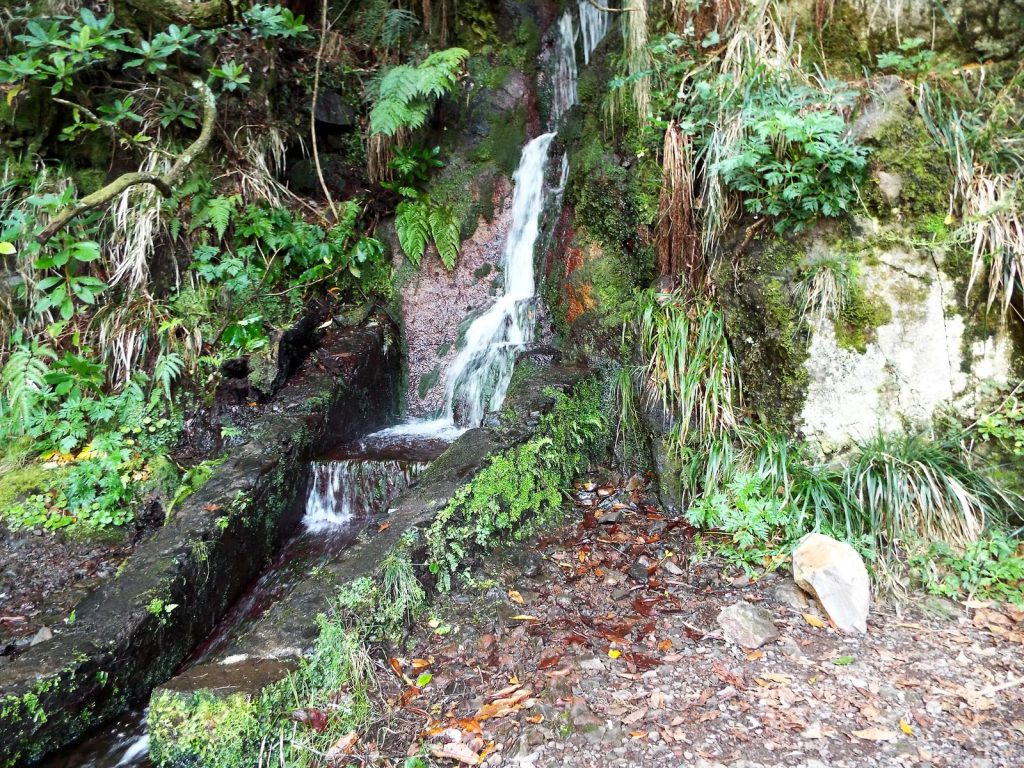
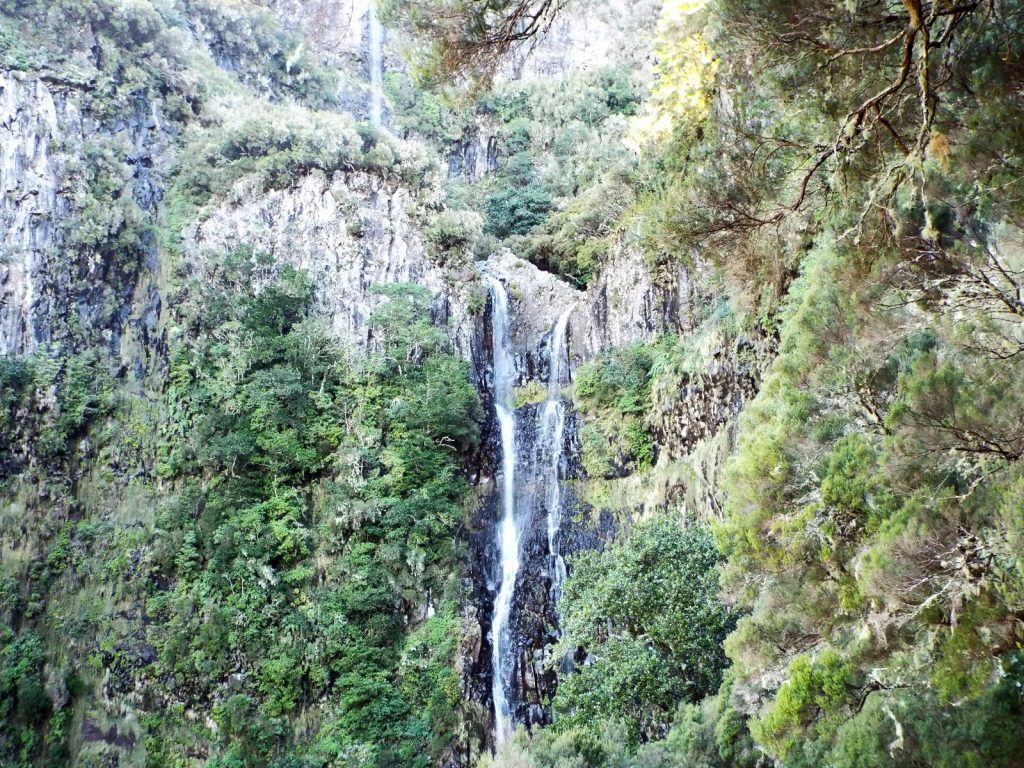
1: PR6 Levada das 25 Fontes, Madeira, 2: PR6 Levada das 25 Fontes – a cascade falling into the levada. Photo: Anita and Andrzej Podrez – February 2025, 3: The Risco waterfall on the PR6.1 trail. Photo: Anita and Andrzej Podrez – February 2025
5. Cabo Girão – a glass terrace above the ocean
A 580 m cliff (according to the municipality, the IFCN and Visit Madeira), one of the highest sea cliffs in Europe, with a glass skywalk. The glass platform hangs over the ocean – you look down and see the waves crashing against the rocks almost 600 m below. From the terrace you can also see the fajãs (Fajã dos Asnos and Fajã das Bebras) – small farming terraces at the foot of the cliff.
Why go? For the view and the thrill. It’s one of Madeira’s symbols – sheer cliffs, the ocean, narrow farming terraces cut into the rock. It’ll impress even the sceptics.
Getting there: From Funchal it’s about 20 minutes by car or 45–50 minutes by bus 267 or 340. The car park is large and free, but at busy times (10:00–15:00) it can be full. It’s worth coming in the morning or evening (better light).
Cost: €5 per person over 12 (since 1 January 2026), children under 12 free. You can buy tickets online on SIMplifica or from the machines at the entrance. Open daily 8:00–20:00.
Time: 30–40 minutes for the terrace and photos.
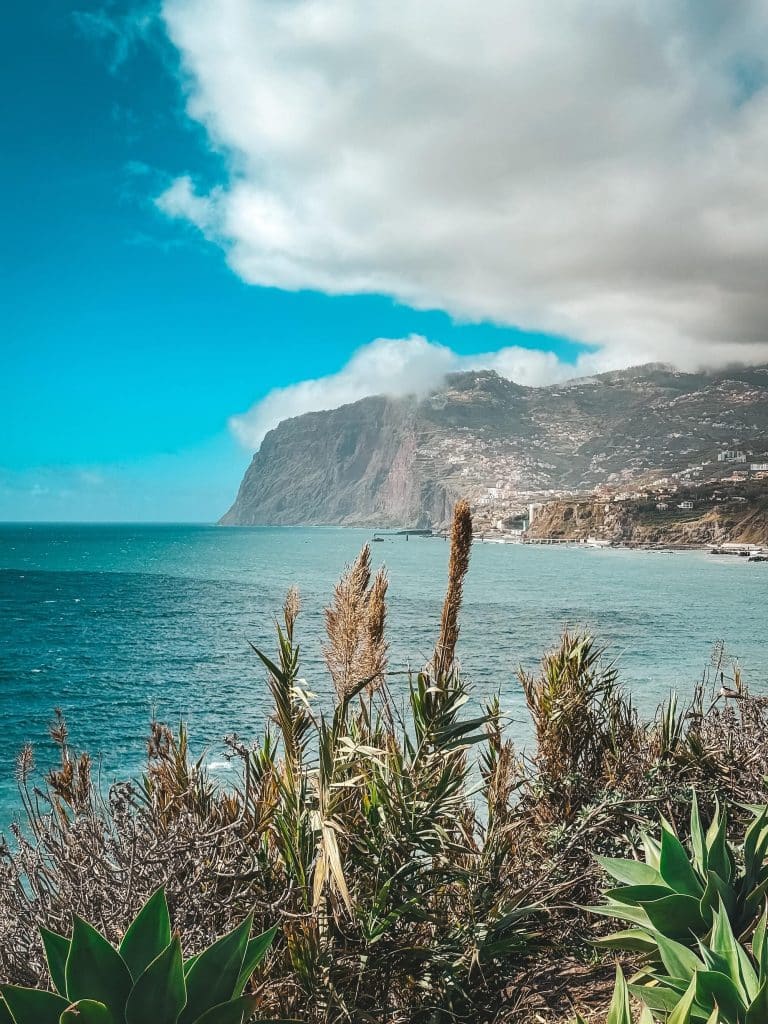
 Read nextCabo Girão – a 580 m cliff and a skywalk€5 tickets, opening hours, buses 267 and 340, and the cable car down to the fajãs.
6. Funchal – a capital that doesn’t overwhelm
Funchal is a city best explored slowly: strolling around, popping into the market, sitting down in little restaurants. It isn’t a capital that overwhelms you – it’s more a place that gently draws you into its rhythm and atmosphere.
Why go? Because Funchal is the only real city in Madeira – it’s both a base for exploring and a place with a genuine urban feel. Mercado dos Lavradores (the colourful market), Zona Velha (the old town with its street art), the seafront promenade, Madeira wine, good food – all in one place.
Getting there: Funchal is often the base for the whole stay.
- Metered taxi: about €30 to central Funchal during the day and about €35 at night and at weekends, plus €1.50 per piece of luggage (calculated from the fares in force since 1 January 2026).
- Bolt: usually cheaper than a taxi, but the price depends on the time of day and demand. Fares go up for hotels outside the centre.
- Aerobus to the centre (€6–7).
- Around town you get about on foot (in the centre), by city bus (€2.05 from the driver, €1.45 with a GIRO card) or by cable car (e.g. Funchal → Monte).
Cost: Sightseeing is mostly free. Paid attractions: the Monte cable car – €16 one way / €22 return, wine tastings (from €10), regional museums (€6 or €10 for adults).
Time: You can easily spend a whole day in Funchal – the market in the morning, then the old town, the afternoon by the ocean and dinner in the evening. Be sure to try espetada (beef skewers), bolo do caco (local flatbread with garlic butter) and a poncha in a bar.
 Read nextFunchal. ❤️ Madeira’s capital in two daysFunchal is a capital most visitors treat as a base for the trails — and that’s a mistake. A 15th-century cathedral with a Mudéjar ceiling, Polish monuments in the centre, concerts in the Anglican church, a market with Art Deco azulejos and gardens where you could spend a whole day. Give Funchal at least two days — and don’t just see it, live in it.
7. Monte Palace Tropical Garden – the exotic on a hillside
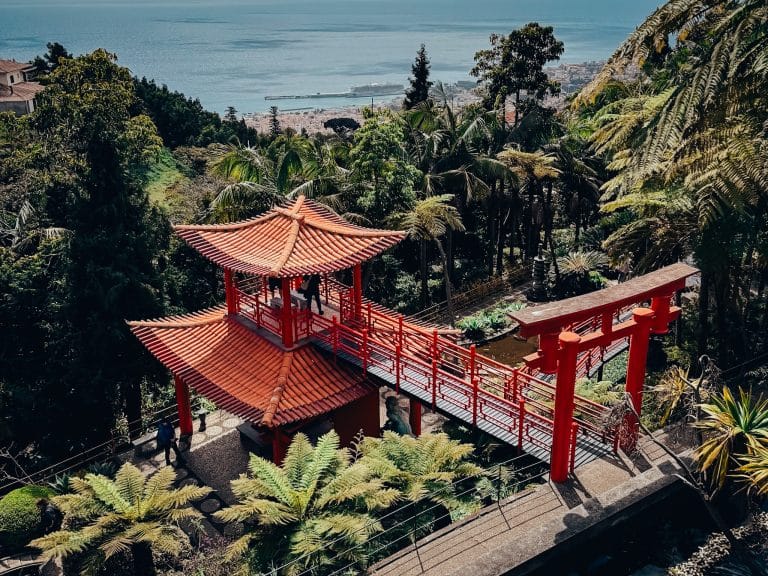
A sprawling garden (7 hectares) full of exotic plants, birds, waterfalls, ponds with colourful fish, sculptures and viewing terraces. Monte Palace Tropical Garden blends nature and aesthetics in a very polished way – Japanese pavilions, a huge variety of plants, azulejos (Portuguese tiles) and a mineral museum.
Why go? Because it’s a thoughtful, artistic composition, not just a “pretty garden”. If you like greenery, beautiful design and calm, you get all of it at once here. Peacocks roam freely, and the view of Funchal from above is beautiful.
Getting there: Monte is about 5 km by road north of central Funchal. Usually the best way up is the cable car from Zona Velha (€16 one way, about 18 min, amazing views from the cabin); otherwise take bus 020, 021, 022 or 048, or drive (paid parking, limited spaces).
Cost: Admission: €18
Time: 1.5–2 h for an unhurried visit. It’s best to come in the morning (before 11:00) – fewer tourists, better light. There’s a café in the garden (higher prices, a delicious Piña Colada and wonderful views).
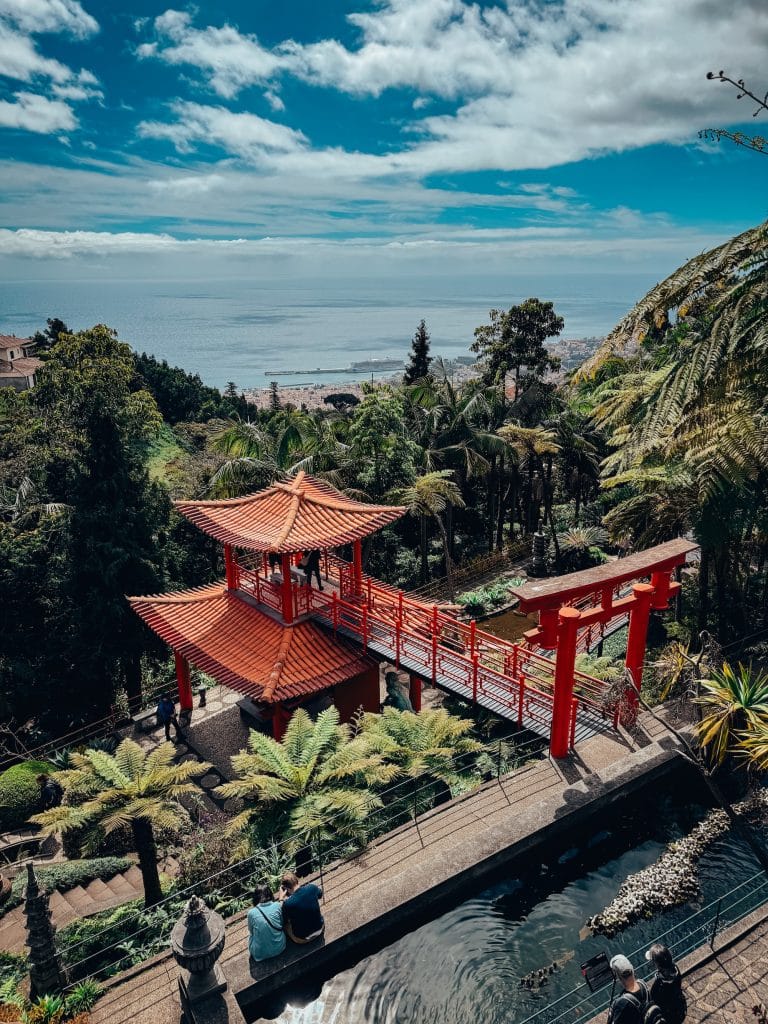
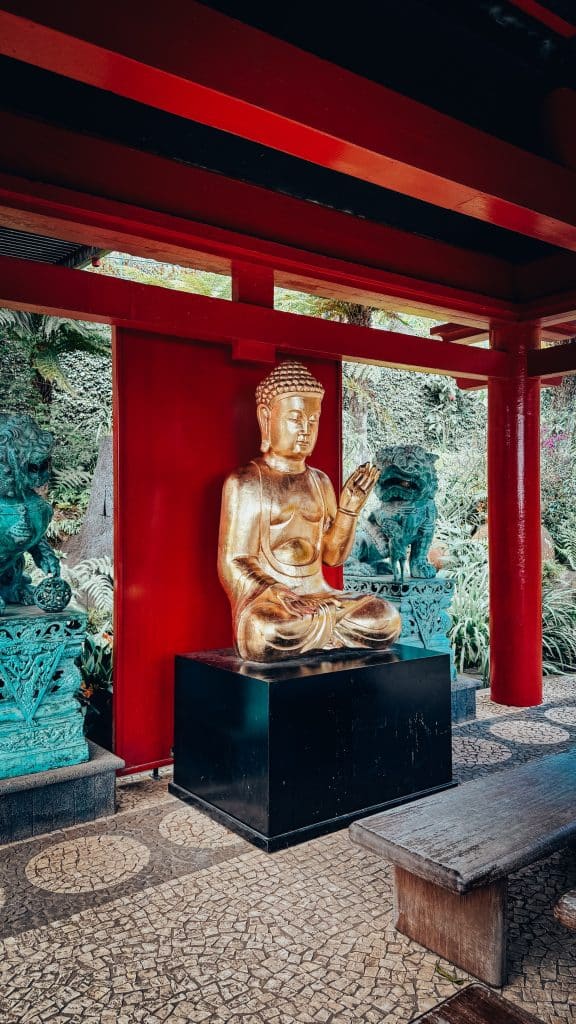
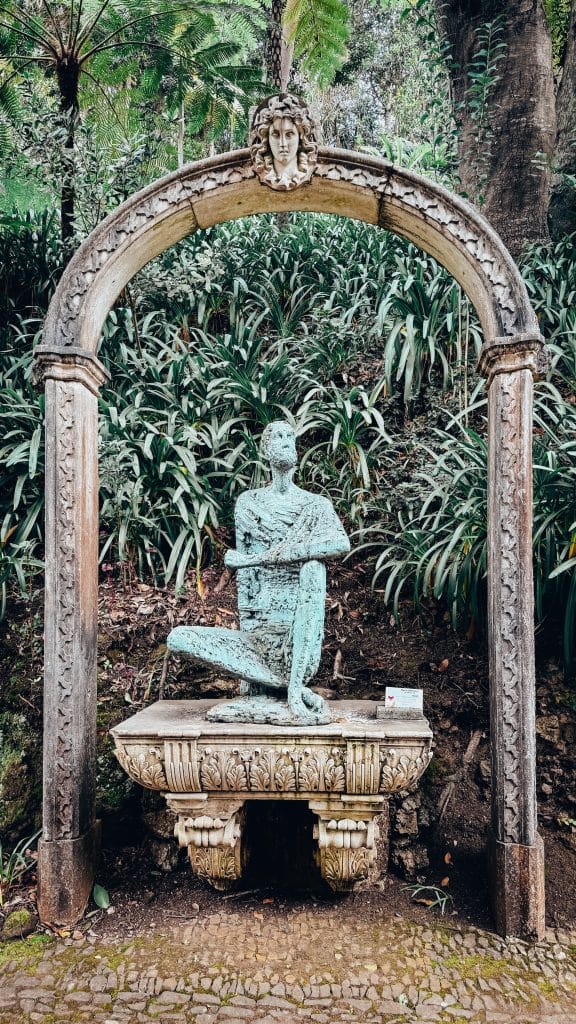
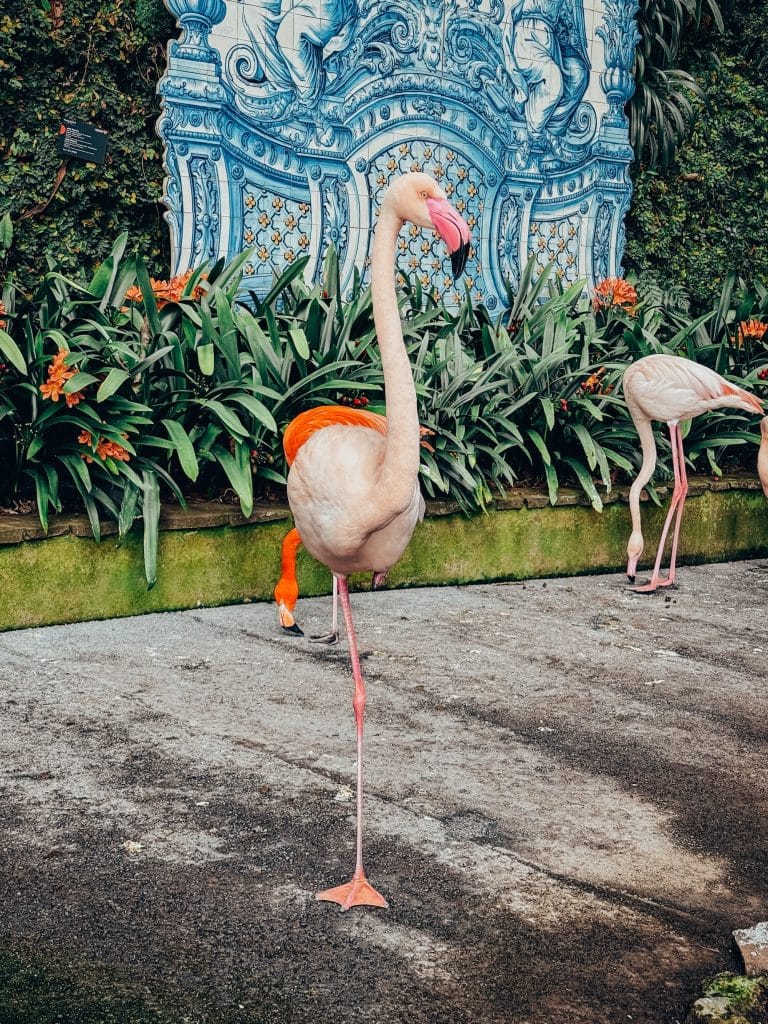
1: The Monte Palace oriental garden with red pagodas, a torii gate and a pond against a panorama of Funchal and the Atlantic Ocean, 2: A golden Buddha statue in one of the pagodas of the Monte Palace oriental garden, surrounded by bronze guardian lions, 3: A patinated bronze sculpture under a stone arch amid lush tropical plants at Monte Palace, 4: Flamingos walking in front of a wall covered in azulejos in the Monte Palace Tropical Garden. Photos: Ewelina Podrez-Siama 2025
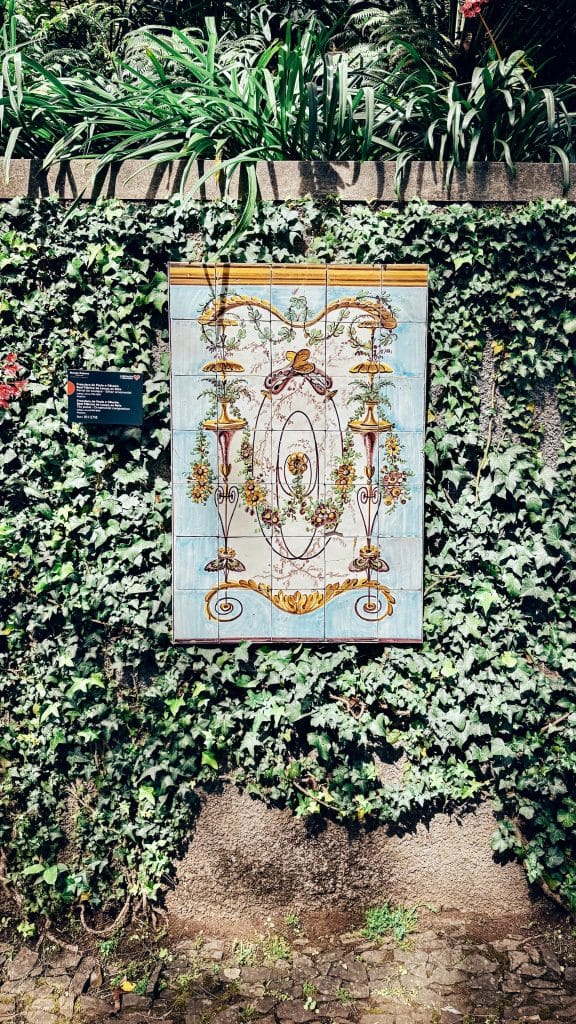
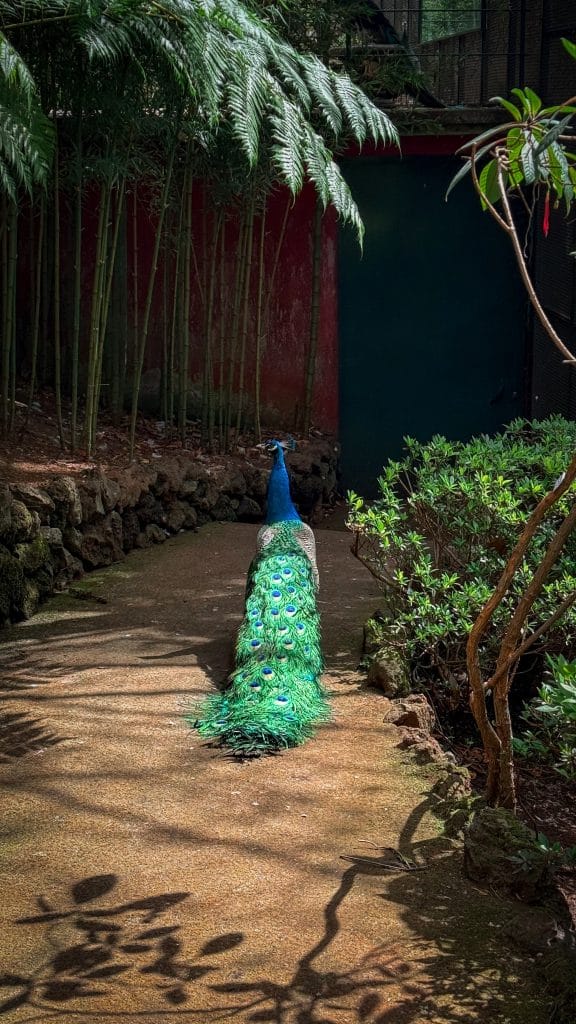
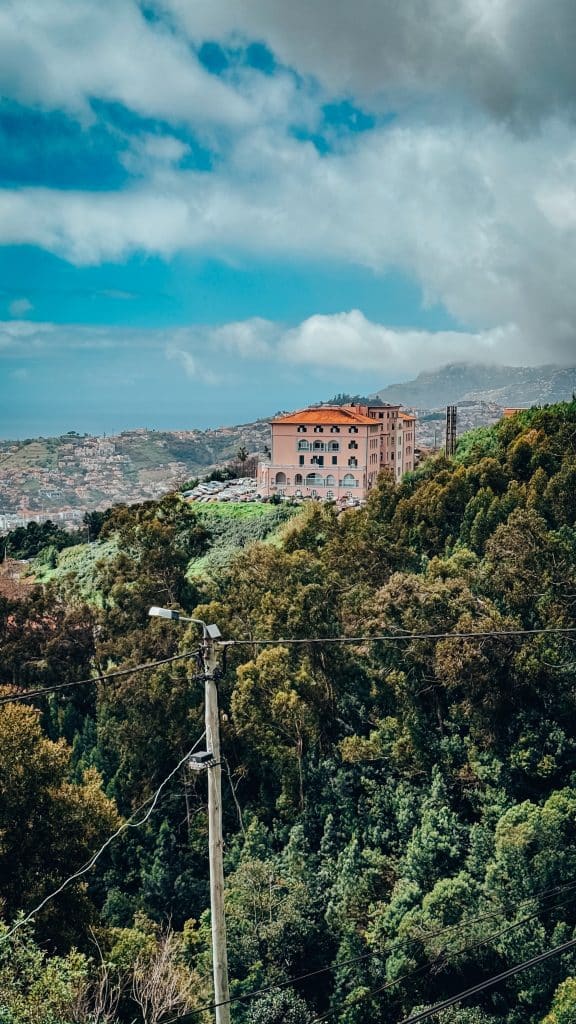
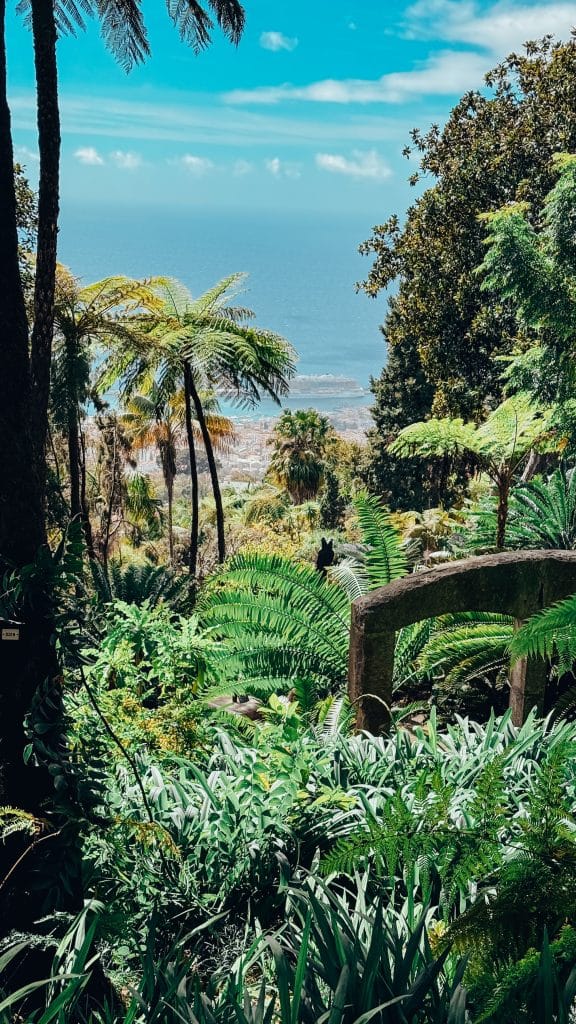
1: A panel of traditional Portuguese azulejos with a floral motif, set into an ivy-covered wall at Monte Palace, 2: A peacock with its tail fanned out on a path in the Monte Palace garden, with clumps of bamboo and the red wall of a pavilion behind, 3: The former Monte Palace hotel building (the interior is not open to visitors) seen from the garden, with a panorama of the hills of Funchal behind, 4: Tropical plants at Monte Palace — tree ferns, palms and bird-of-paradise flowers, with Funchal and the ocean below. Photos: Ewelina Podrez-Siama 2025
8. The Monte toboggan ride in a wicker sledge
You sit in a wicker sledge, and two men in traditional white outfits and straw hats push you downhill along the tarmac, controlling the speed with ropes and… using their shoes as brakes. This 19th-century relic is now a pure tourist attraction.
Why go? Because it’s a one-of-a-kind experience – slightly absurd, historic and memorable. It’s 10 minutes of fun and good photos. Is it a “must-see”? No. Is it worth it if you’re in Monte anyway? Yes.
Getting there: The ride starts by the Nossa Senhora do Monte church (get there as you would to Monte Palace). The toboggan stand is hard to miss – there’s usually a queue and the drivers in white outfits (the carreiros) waiting.
Cost: €30 (1 person) / €40 (2 people) / €60 (3 people). Mon–Sat 9:00–18:00, no rides on Sundays and public holidays.
Time: The ride takes about 10 minutes and ends in Livramento (below Monte). From there, take a taxi/Bolt back to Funchal (€5–10) or a bus. In high season the queue for the toboggans can take 30–45 minutes. All in, with waiting and getting back: about 1 h.
9. Porto Moniz – natural lava pools
Natural pools carved out of solidified lava, filled with clear ocean water and sheltered from the waves. Porto Moniz is a small town on the north-western tip of Madeira, and these pools are its main attraction.
Why go? It’s the most pleasant way to swim in the ocean in Madeira. The water is cool (18–22°C in summer), but the pools are shallow and warm up. The setting is beautiful – rugged cliffs, black lava, turquoise water.
Getting there: Porto Moniz is about 1 h’s drive from Funchal (about 50 km).
Northern route (faster): Funchal → VR1 → São Vicente → ER101 → Porto Moniz.
Southern route (scenic): along the south coast via Calheta and Prazeres, or across the Paul da Serra plateau – longer, but prettier. Most parking is free; in the paid zones it’s €0.80/h (Mon–Fri 9–19), free at weekends and on public holidays.
Cost: €3 per person (from age 4)
Time: 2–3 h for a swim and some relaxing. It’s best in summer (June–September), when the water is warmer. In winter the pools are open and the water is about 18–19°C (coldest in March, about 18°C). In summer it’s about 21–24°C. In stormy weather the pools are closed.
 Read nextPorto Moniz. 🌊 Pools in solidified lavaThe lava pools: 2026 prices and opening hours, getting there by car and by bus, and the area from Seixal to the Fanal forest.
10. Santana – traditional houses
Colourful, triangular, thatched houses – one of Madeira’s most recognisable symbols. Santana is a small town in the north of the island, famous for these distinctive buildings.
Why go? Because it’s one of Madeira’s symbols and a quick stop on a drive along the north of the island. The houses are charming, colourful and photogenic – especially the ones by the main road and in the Parque Temático.
Getting there: Santana is about 39 km and a 45–60 minute drive from Funchal, through the VR1 and VE1 tunnels, or longer over the mountains (Pico do Arieiro → Poiso → Ribeiro Frio). Free parking. Santana is often a stop on tour itineraries: Pico Ruivo → Santana → Queimadas.
Cost: Looking at the houses from outside: free. Parque Temático da Madeira (a theme park with reconstructions and exhibitions): €13 for adults, €9 for children aged 6–14 and seniors, open Tue–Sun 10:00–18:00.
Time: 20–30 minutes is enough for photos and a short walk. If you go into the Parque Temático, add an hour. In Santana, try espetada or sopa de tomate e cebola (a traditional tomato and onion soup from the north of Madeira).
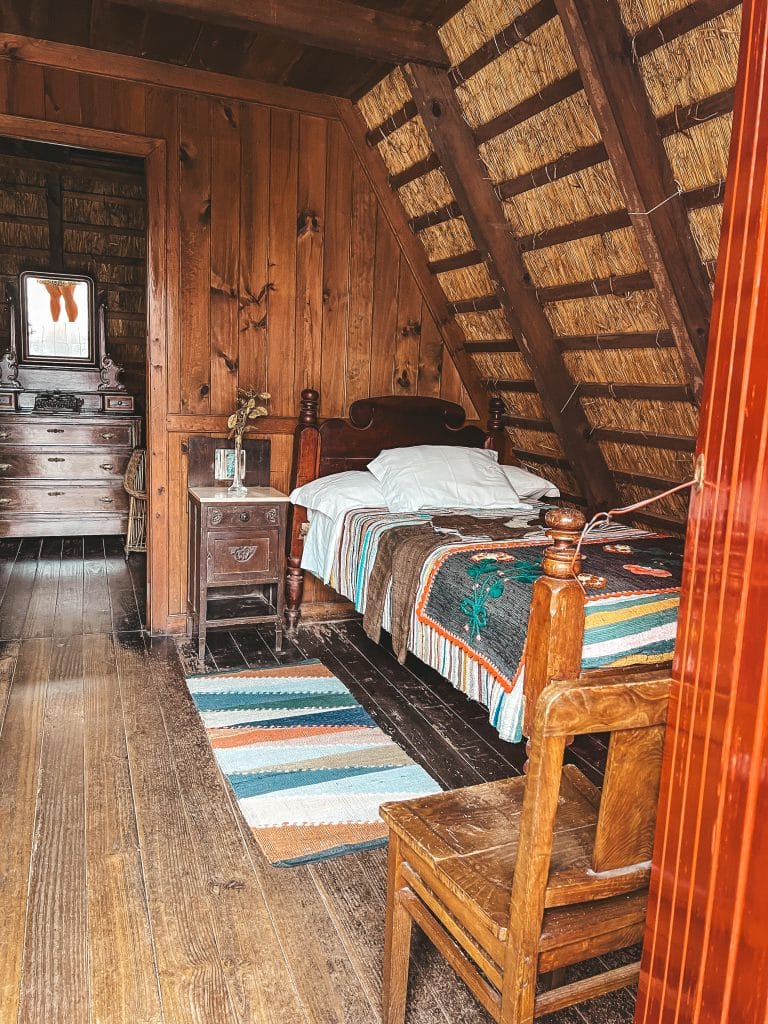
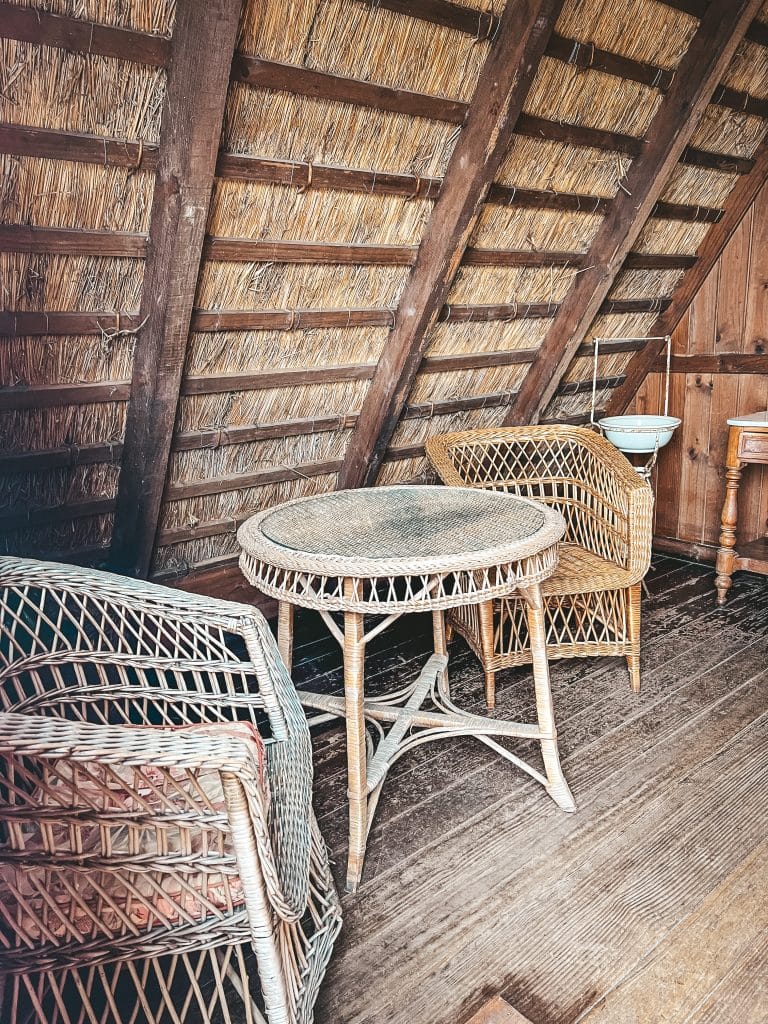
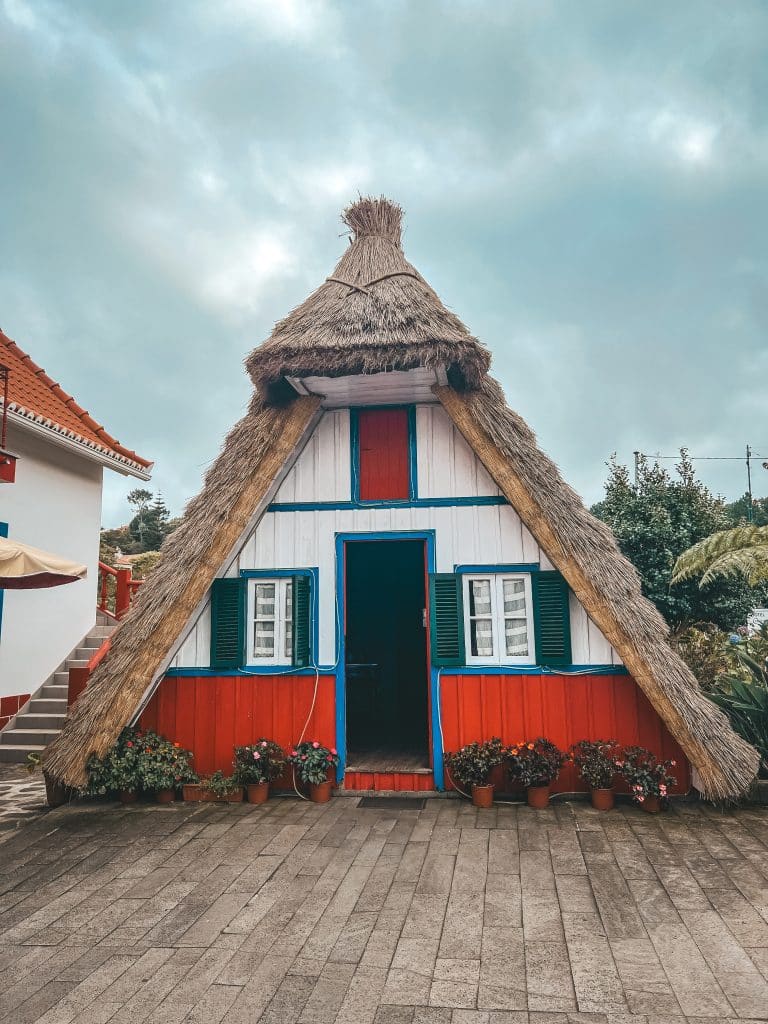
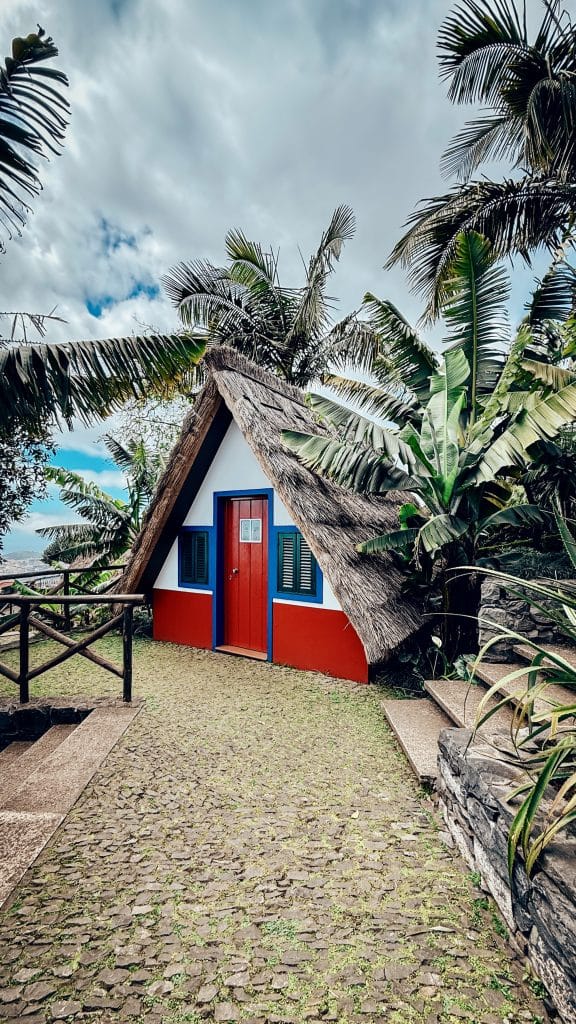
1: Santana (2023), 2: Santana (2023), 3: Santana (2023), 4: A replica of a traditional Santana house (casa de colmo) with a triangular thatched roof, in the grounds of the Monte Palace garden (2025). Photos: Ewelina Podrez-Siama
11. Curral das Freiras – the Nuns’ Valley
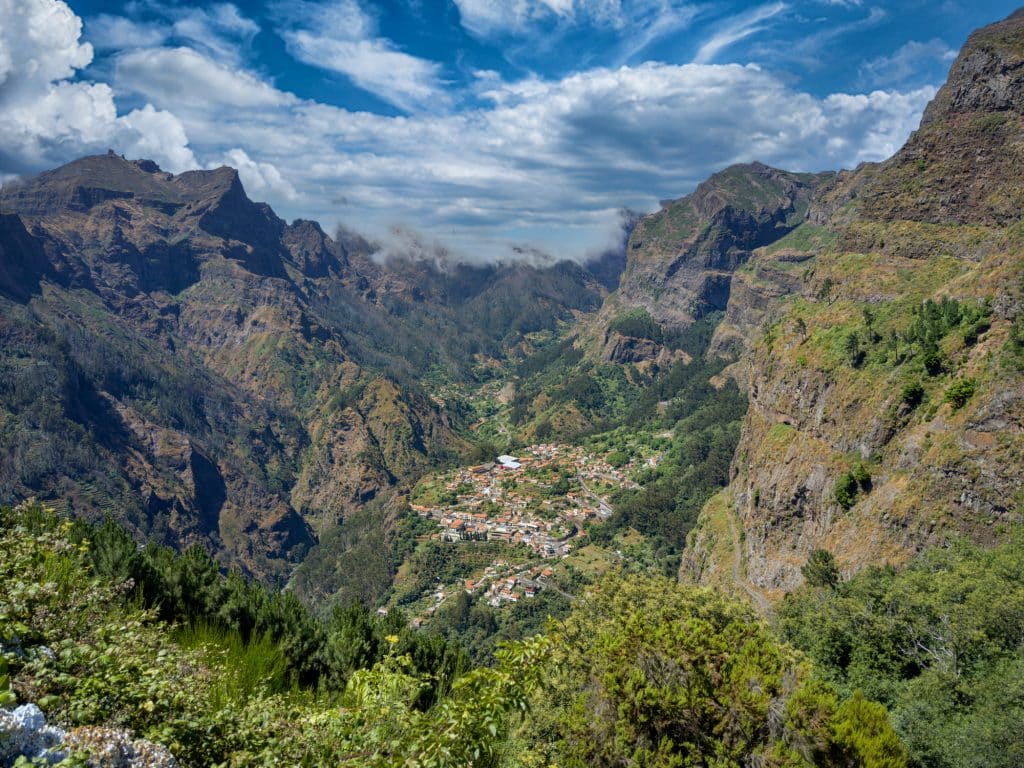
A deep valley surrounded by high mountains – one of the most dramatic places in Madeira. The name dates back to the 16th century, when nuns fled here from pirates – the valley was so well hidden that it made the perfect refuge.
Why go? The view from Eira do Serrado (a viewpoint at 1094 m above sea level) is stunning – you look down on the village nestled between sheer mountain walls. The scale is incredible. The village makes chestnut cakes and pastries – be sure to try them.
Getting there: 30–40 minutes from Funchal. The road is winding and steep, through a tunnel and then down hairpin bends. Stop first at Eira do Serrado (the viewpoint), then drive down to the village (15 min). Free parking. Alternatively, take bus 181 (formerly 81) from Funchal; some services go via Eira do Serrado.
Cost: Free. The only cost is a coffee or a slice of cake in the village, if you fancy one.
Time: 15–20 minutes at Eira do Serrado (a must!), an hour in the village (a walk, something to eat). 1.5–2 h in total. Check the weather – in mist or cloud you won’t see the view.
12. Câmara de Lobos – poncha and local atmosphere
A fishing village right next to Funchal – picturesque, authentic and known for the best poncha on the island. Colourful boats, an old centre, an atmosphere that isn’t staged for tourists. Winston Churchill painted the harbour view here in oils in 1950.
Why go? Authentic atmosphere, good food and the best poncha. The O Pescador bar (on the waterfront) is a classic – they’ve been serving poncha for generations. Poncha is Madeira’s traditional drink: traditional aguardente (sugar-cane rum), honey and lemon juice (the Regionale version also has orange juice).
Getting there:
About 9 km west of Funchal – 10–15 minutes by car or by bus 236, 237 or 238 (formerly 137); most routes to the west of the island also pass through Câmara de Lobos. A ticket costs €2.65 from the driver, €2 with a GIRO card.
You can also walk along the coastal promenade (a very pleasant 1.5 h walk). Parking by the harbour is often paid; you’ll find free spaces in the side streets.
Cost: Free to explore.
Time: An hour for a stroll and a poncha, ideally in the late afternoon (16:00–18:00) – lovely light, and the harbour comes to life. Churchill’s viewpoint is a 10-minute walk uphill from the harbour.
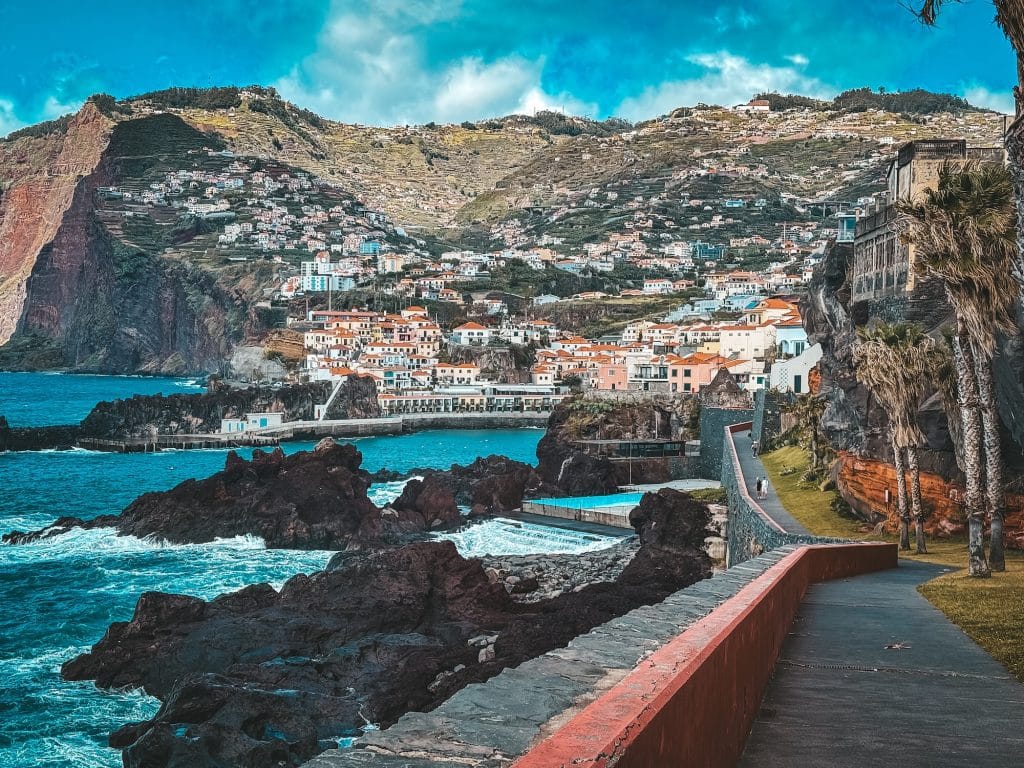
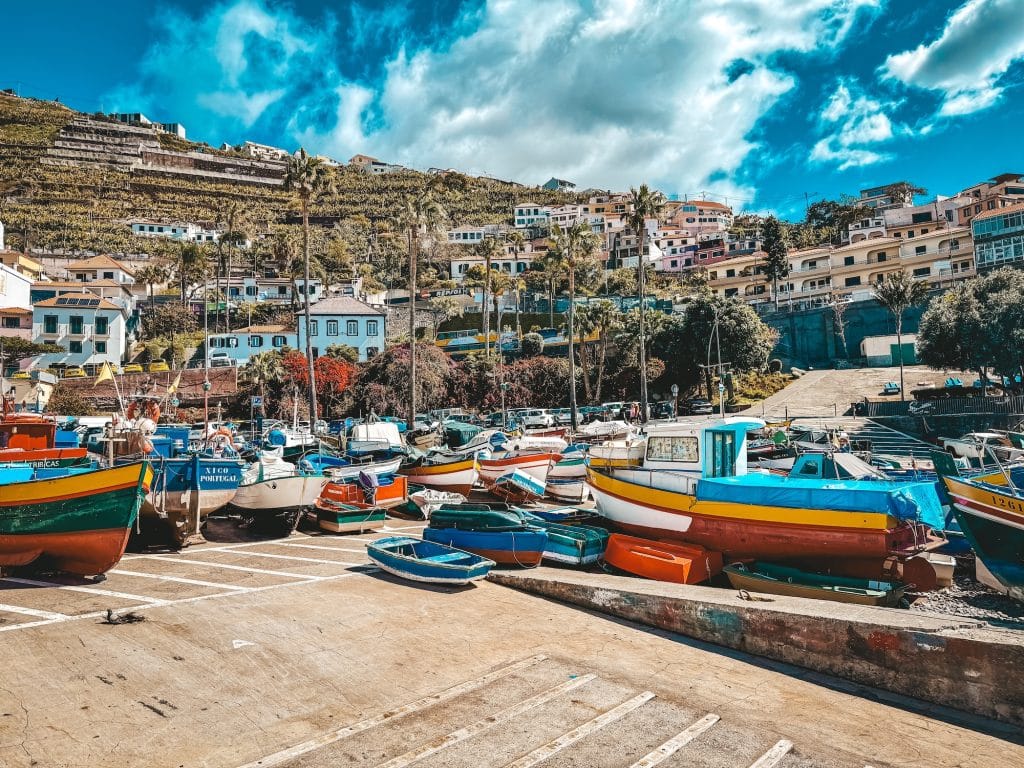
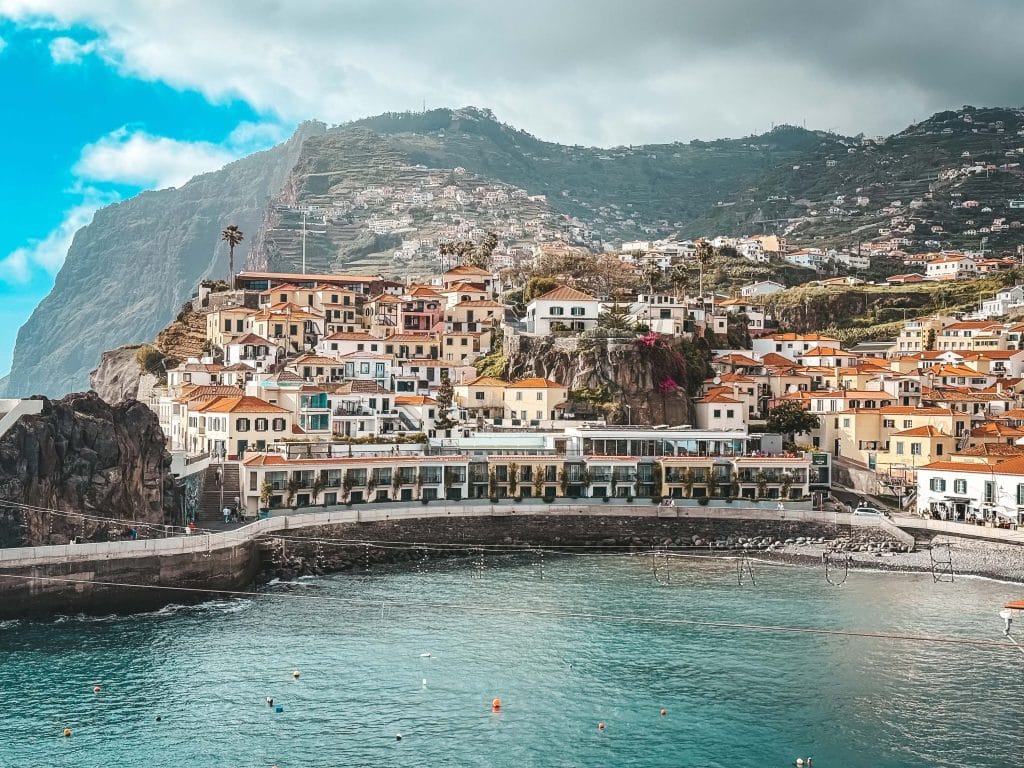
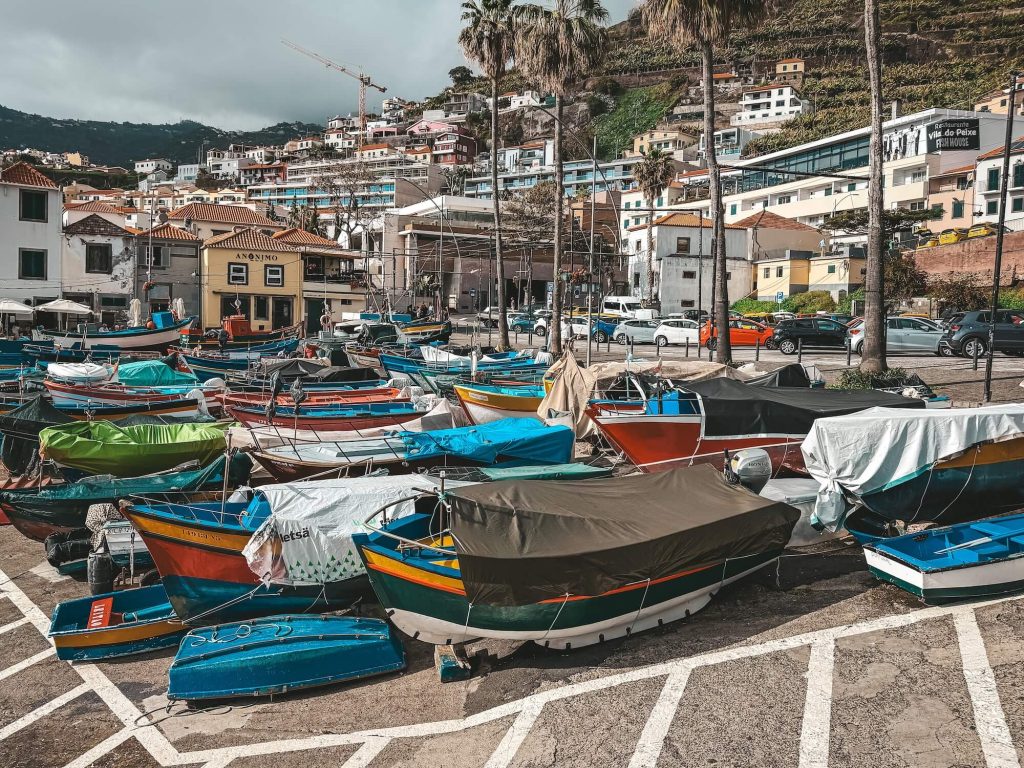
1: View from the promenade towards Câmara de Lobos – lava rocks, natural pools and a town growing out of the rock (March 2025), 2: Câmara de Lobos harbour from above – dozens of boats crowded on the quay, with banana plants and vine terraces climbing the slope behind them (March 2025), 3: Panorama of Câmara de Lobos from the harbour – colourful houses climbing the slope all the way up to Cabo Girão.  (February 2026), 4: Colourful fishing boats pulled up on shore in the harbour of Câmara de Lobos – the heart of a village that still lives from fishing (February 2026). Photos: Ewelina Podrez-Siama
13. Levada do Caldeirão Verde – wild nature
A wild levada leading to a tall waterfall (100 m) in the heart of the mountains. The PR9 trail runs through dense laurel forest, narrow tunnels, over bridges and along drops, all the way to the spot where the waterfall plunges into a green pool (hence the name, “Green Cauldron”).
Why go? It’s one of the most “primeval” routes on the island – you feel you’re in the wilderness, far from civilisation. The laurel forest is dense, damp and full of ferns and moss. The levada is narrow, and with the tunnels a sense of adventure is guaranteed.
Getting there: The trail starts at Queimadas (a nature park). From Funchal it’s about 50 min – 1 h by car: ER101 → Santana → turn-off to Queimadas (5 km uphill on a narrow but tarmacked road). Parking at Queimadas has been paid since 28 October 2024: €2/h (first 30 min free, max. €10 a day), and the spaces fill up before 9:00.
Cost: €4.50 per person and mandatory booking on SIMplifica (since 1 January 2026).
Time: about 13 km there and back to Caldeirão Verde (6.5 km one way). Since 29 May 2026 the trail has been open again as far as Caldeirão Verde, while the section beyond it to Caldeirão do Inferno remains closed.
14. Dolphin and whale-watching trips
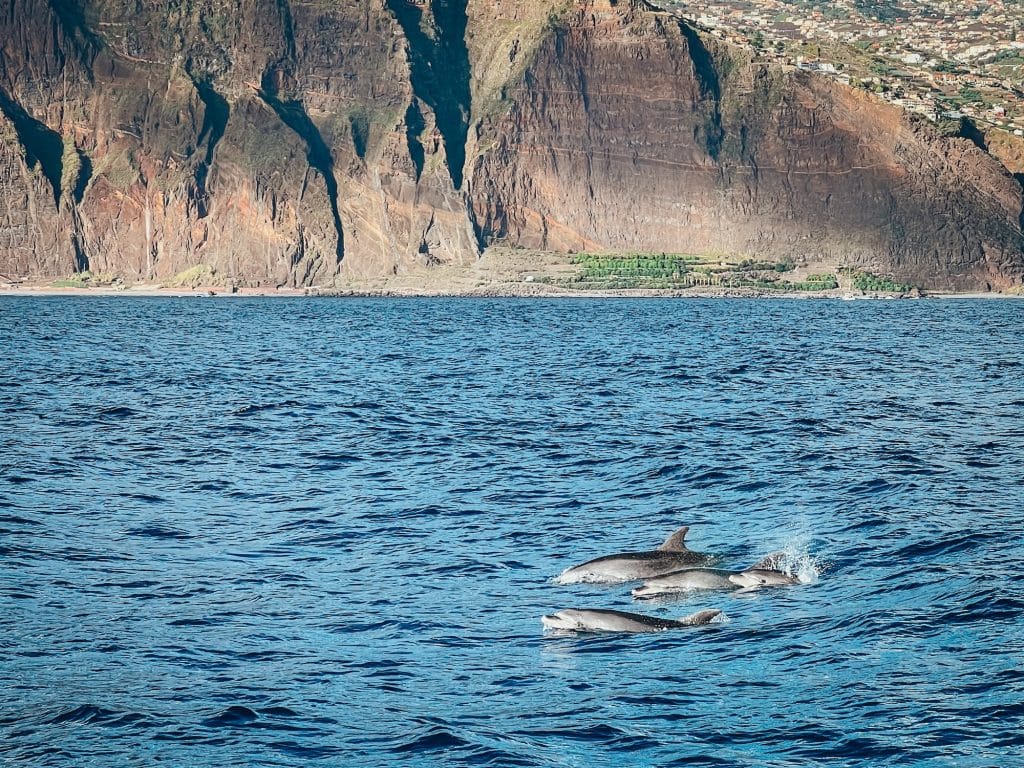
Madeira is one of the best places in Europe to watch marine mammals – 28 species of whales and dolphins live in the waters around the island. The chance of seeing dolphins is 90–95%, and whales 30–50% (depending on the season).
Why go? Because meeting dolphins in their natural environment stays with you for a long time. Watching them swim alongside the boat, leap and play is something completely different from an aquarium. The trips are run with respect for the animals (by certified companies).
Getting there: Most trips leave from the marina in Funchal (city centre, a 10-minute walk from Zona Velha). Parking by the marina is paid (€5 a day).
Cost: Standard trip (3 h): €40–50. Extended trip (4–5 h): €60–70.
Popular companies: VMT Madeira and Ventura do Mar — they sail from the marina in Funchal. Lobosonda — sails from the marina in Calheta (south-west coast). Online booking is required (sometimes you can buy a ticket directly at the marina, but not always).
Time: 3–5 h (depending on the option).
Trips usually leave in the morning (9:00–10:00) – the ocean is calmer and the chances are better. Bring warm clothes (it’s cooler out at sea even in summer), a windproof jacket, sunglasses and sunscreen.
15. Fanal Forest – a magical laurel forest
Ancient laurel trees (several hundred years old), mist, silence. Fanal is one of the most atmospheric parts of the laurel forest (UNESCO). Twisted branches covered in moss, and on a misty day (which is often) the whole place looks like a scene from a fantasy film.
Why go? Fanal is one of the most atmospheric places on the island. If you get mist, the experience is incredible – laurel trees emerging from the white, silence, another world. Even without mist the forest is beautiful – old, gnarled trees and lots of green.
Getting there: Fanal lies on the Paúl da Serra plateau, about 1 h from Funchal (about 48 km): Ribeira Brava → Ponta do Sol → Canhas → across the Paúl da Serra plateau to Fanal on the ER209 (tarmacked, but narrow and winding – take it slowly). You can’t drive the ER105 from Encumeada up to Paul da Serra – it has been closed since January 2024. Free parking.
Cost: Free – it’s a wild forest, no fees.
Time: 30–60 minutes for a walk and photos. It’s best in the morning (mist is more frequent) or in the afternoon (when the clouds roll down). Bring a windproof jacket (it’s cool and windy) and good shoes (wet, muddy). Watch out for the cows – they graze on the plateau.
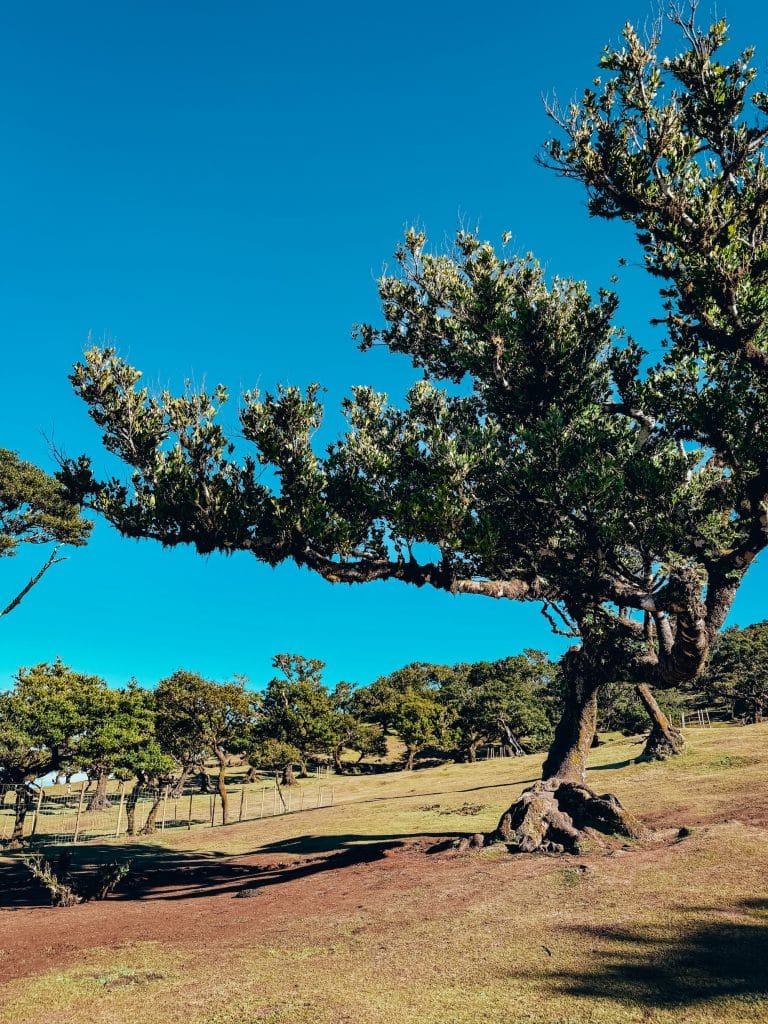
Photo: Ewelina Podrez-Siama – February 2026
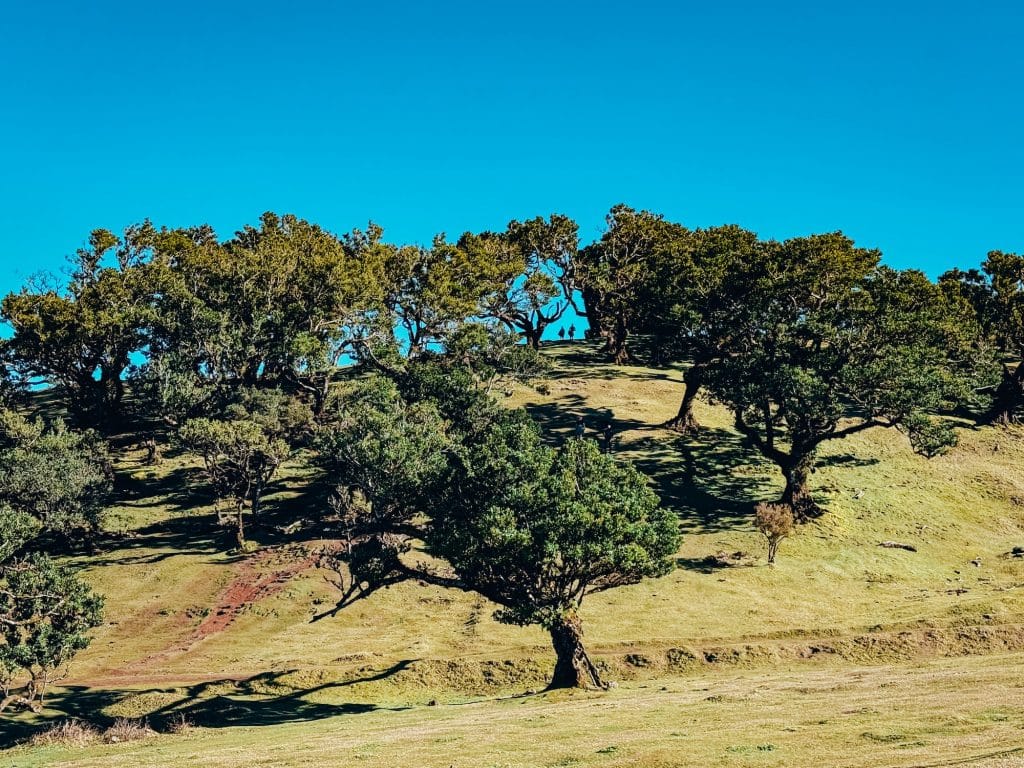
Photo: Ewelina Podrez-Siama – February 2026
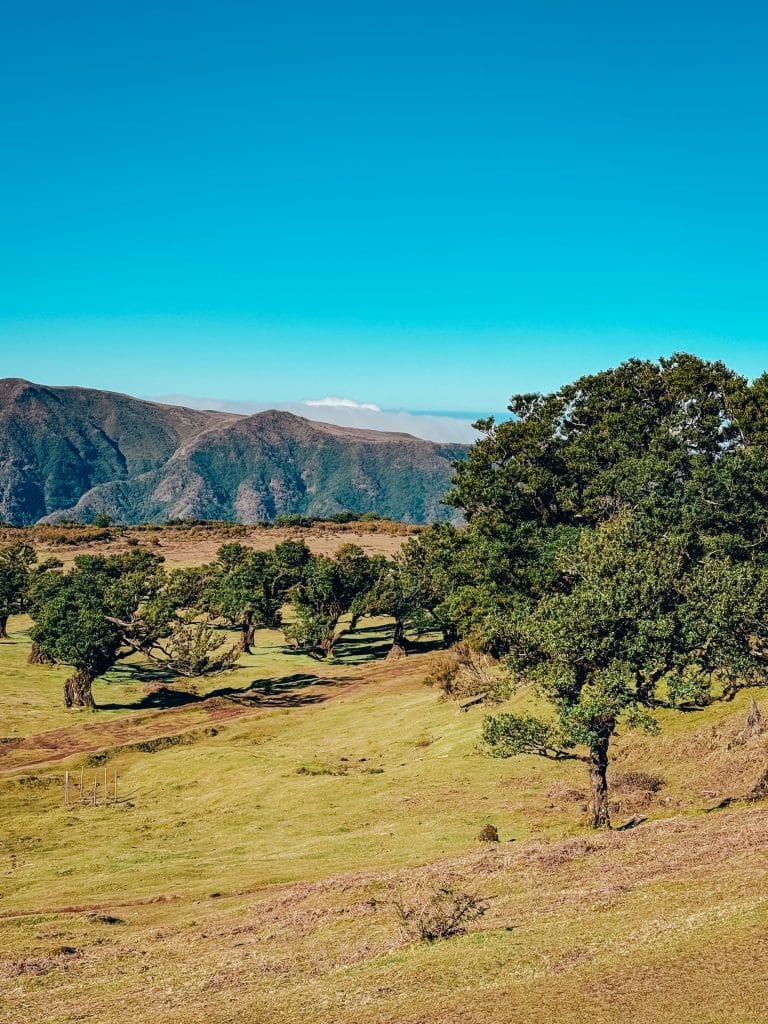
Photo: Ewelina Podrez-Siama – February 2026
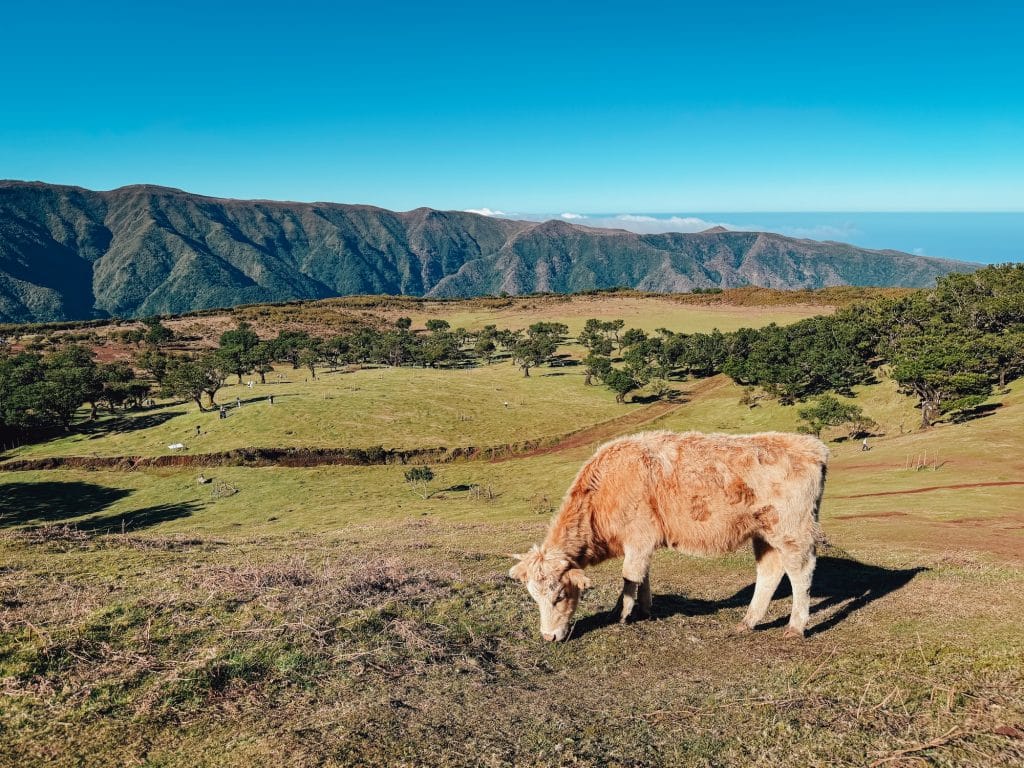
Photo: Ewelina Podrez-Siama – February 2026
1: A single til tree with its characteristic horizontal branch and lichen on the bark. On a sunny day you can see every detail – the texture of the bark, the green lichen, the way it branches out, 2: A group of old til trees on a hill, with visitors walking in the distance. Paths let you wander freely around the main part of the forest – some of the trees are several hundred years old, 3: Twisted til trees scattered across the green plateau against the mountains of central Madeira. Note the trees’ typical shape – low, wide-spreading crowns sculpted by the wind, 4: Panorama of the Paul da Serra plateau with a grazing cow in the foreground. A view of the mountains of central Madeira and scattered til trees – on a cloudless day the plateau has spectacular views. Photos: Ewelina Podrez-Siama February 2026
 Read nextFanal forest. 🌳 A fairy-tale forest on Paul da Serra (Madeira)Fanal is an area on the Paul da Serra plateau in north-western Madeira. Its main attraction is the laurel forest (laurisilva) – part of a UNESCO World Natural Heritage site. It’s one of the oldest and best-preserved stretches of laurel forest on the island.
16. Achadas da Cruz – a cable car to the end of the world
A steep cable car (gradient ~98%, one of the steepest in Europe) that drops down to a wild stretch of coast. At the bottom: a wild beach, rocky cliffs, small farming plots (fajãs) and silence.
Why go? The views and a sense of total isolation. The ride down gives you a decent dose of adrenaline, and at the bottom rugged beauty awaits – no infrastructure, just nature.
Getting there? The north-west coast, about 1–1.25 h from Funchal (Ribeira Brava → Ponta do Sol → Calheta) or 30 min from Porto Moniz (heading south on the ER101). Free parking at the top station.
Cost: €3 one way / €5 return. The municipality doesn’t publish current opening hours. The last notice (winter 2023): 8:00–12:00 and 13:00–18:00, tickets until 16:30. Call before you go: +351 291 852 951. Closed in stormy weather.
Time: 5 minutes down, 30–60 minutes at the bottom, 5 minutes back up. 1–1.5 h in total. There are no facilities at the bottom – bring water and snacks. You can walk down (a steep path, 30–40 min), but most people take the cable car.
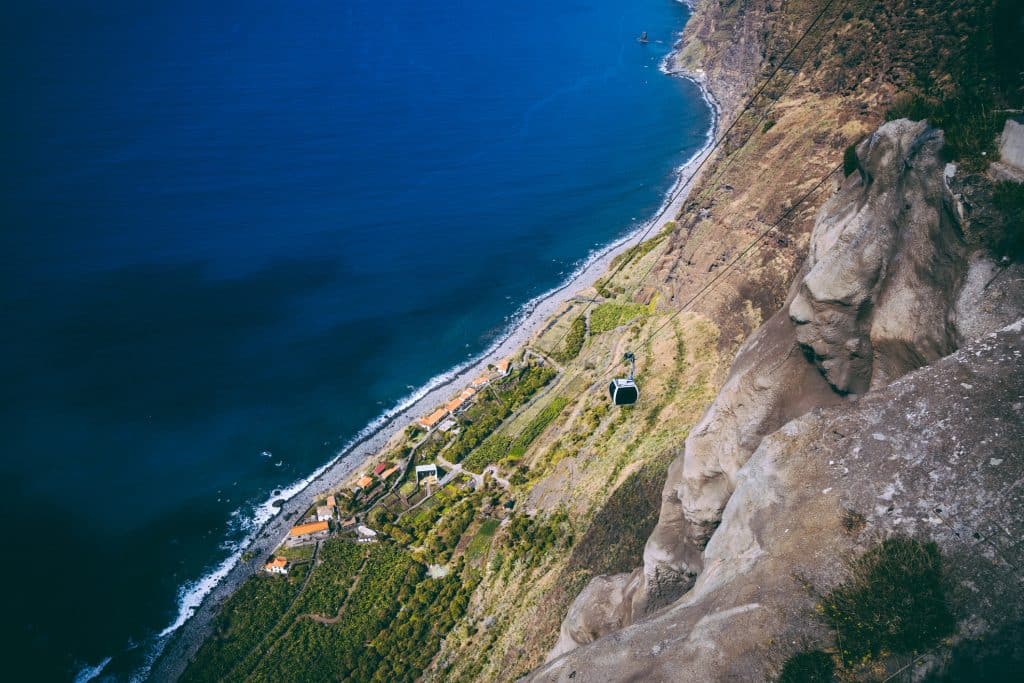
17. Jardim Botânico in Funchal – a classic with a view
A classic botanical garden with a rich plant collection (thousands of species), on a hillside above Funchal. Viewing terraces, ponds, peacocks and themed sections (cacti, palms, medicinal plants). Less of a “wow” factor than Monte Palace, but just as well kept.
Why go? For the variety of plants and the panorama of Funchal from above. A calm place to relax after an intense day in the mountains. Peacocks wander freely – children love them.
Getting there? 3 km north of central Funchal. By bus 031, 029 or 131 (€2.05 from the driver, €1.45 with a GIRO card), by cable car (Zona Velha → Monte, then Monte → Jardim Botânico, €11 one way, €16 return) or by car (there are only a few spaces at the entrance; the lower station of the cable car to the garden has a free car park).
Cost: €10 (over 12), €3 (ages 6–12), children under 6 free. The ticket also covers the Natural History Museum in the garden.
Time: 1.5–2 h for an unhurried visit. It’s best in the morning (before 11:00). There’s a café in the garden (higher prices). Don’t miss: the viewing terrace (panorama of Funchal), the succulent garden and the palm collection.
 Read nextFunchal Botanical GardenEverything about the garden: tickets, opening hours, getting there and how it compares with Monte Palace.
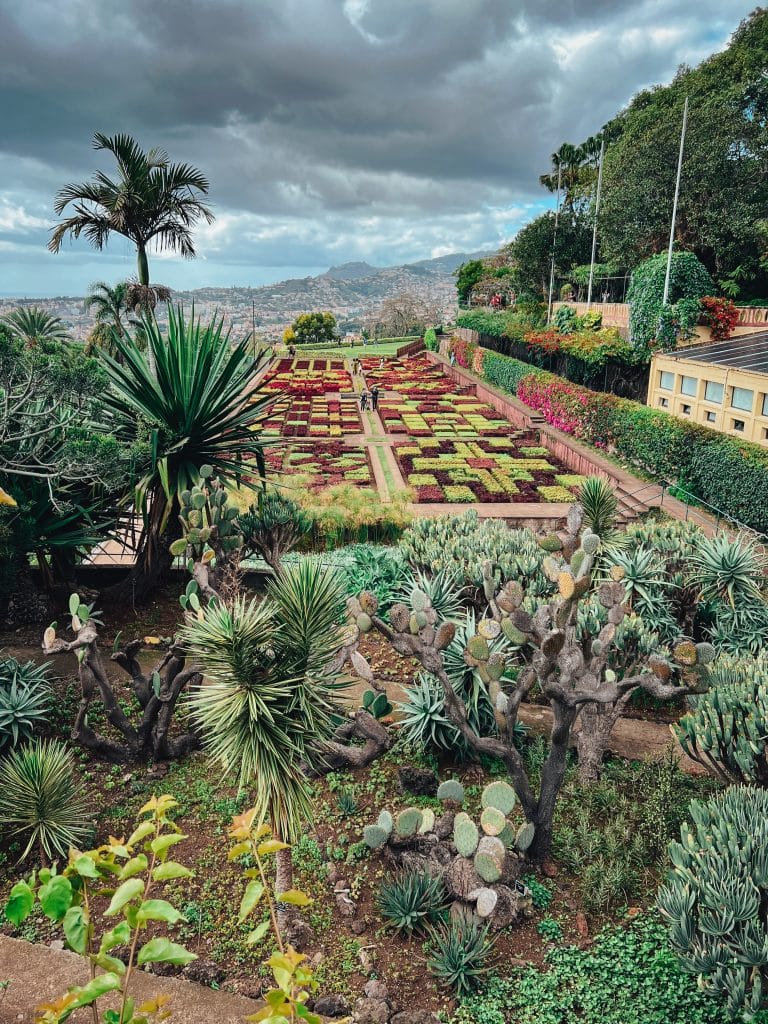
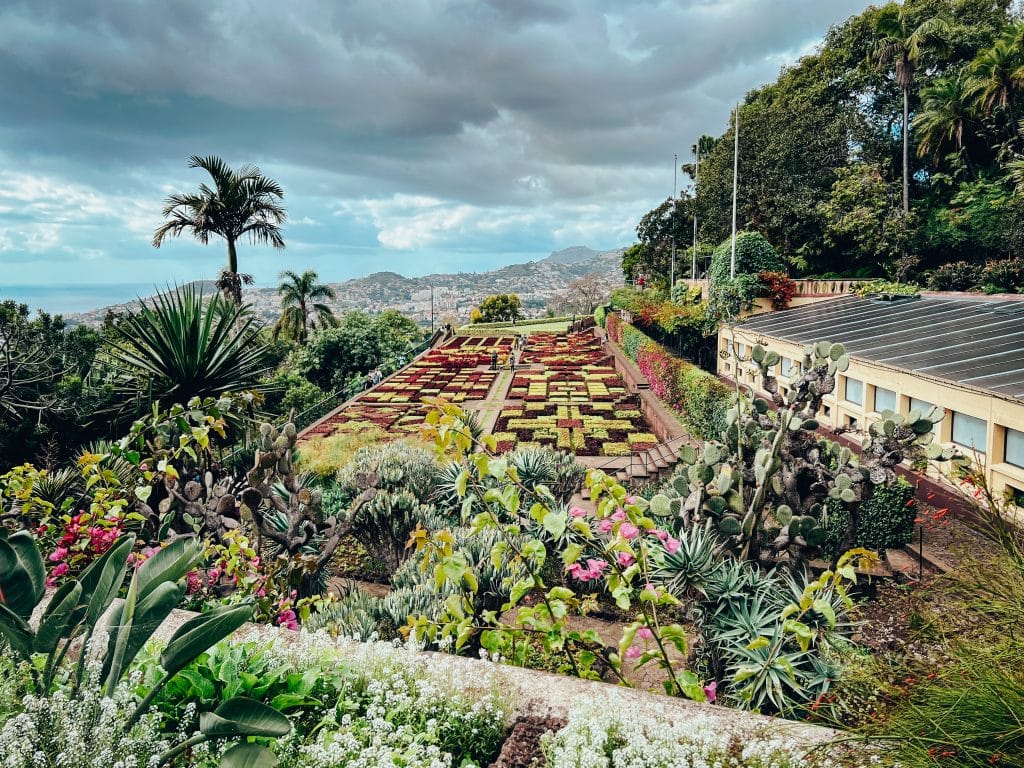
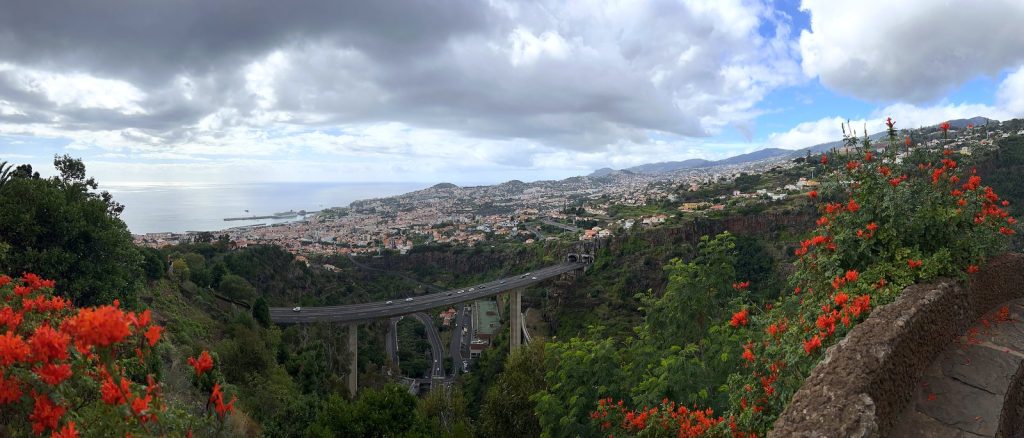
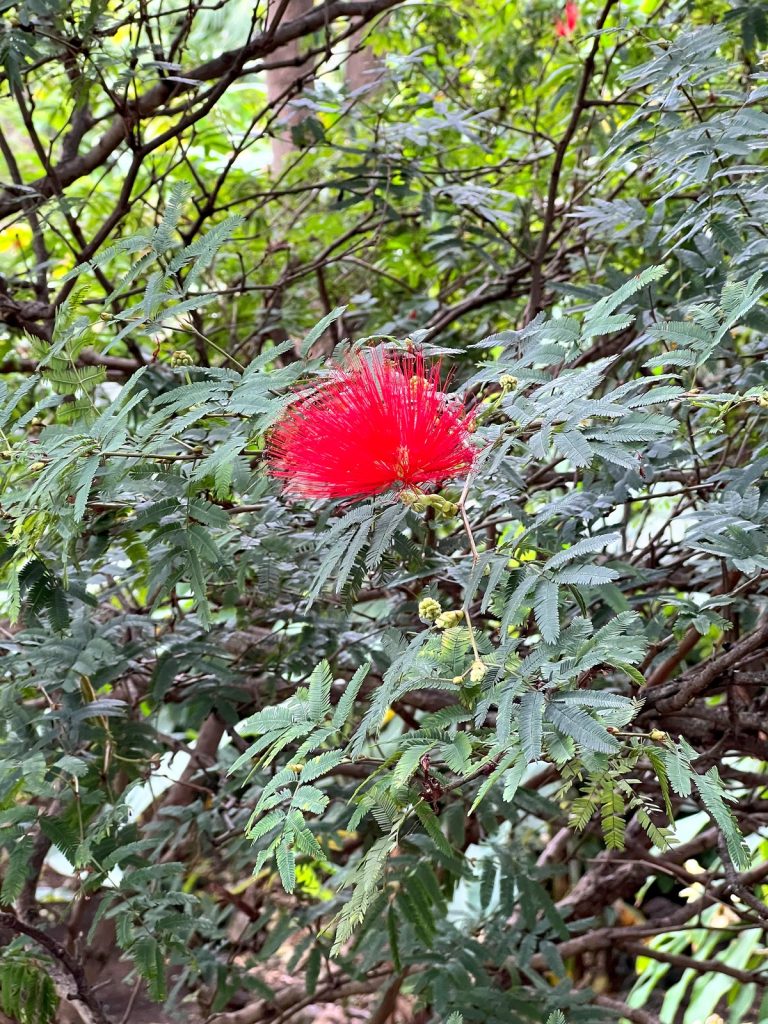
1: Jardim Botânico – the botanical garden in Funchal (2023), 2: Jardim Botânico – the botanical garden in Funchal (2023), 3: Jardim Botânico – the view from the garden over Funchal and the ocean (November 2023), 4: Jardim Botânico – a flowering shrub in the garden (November 2023). Photos: Ewelina Podrez-Siama
18. Seixal – the black beach of the north
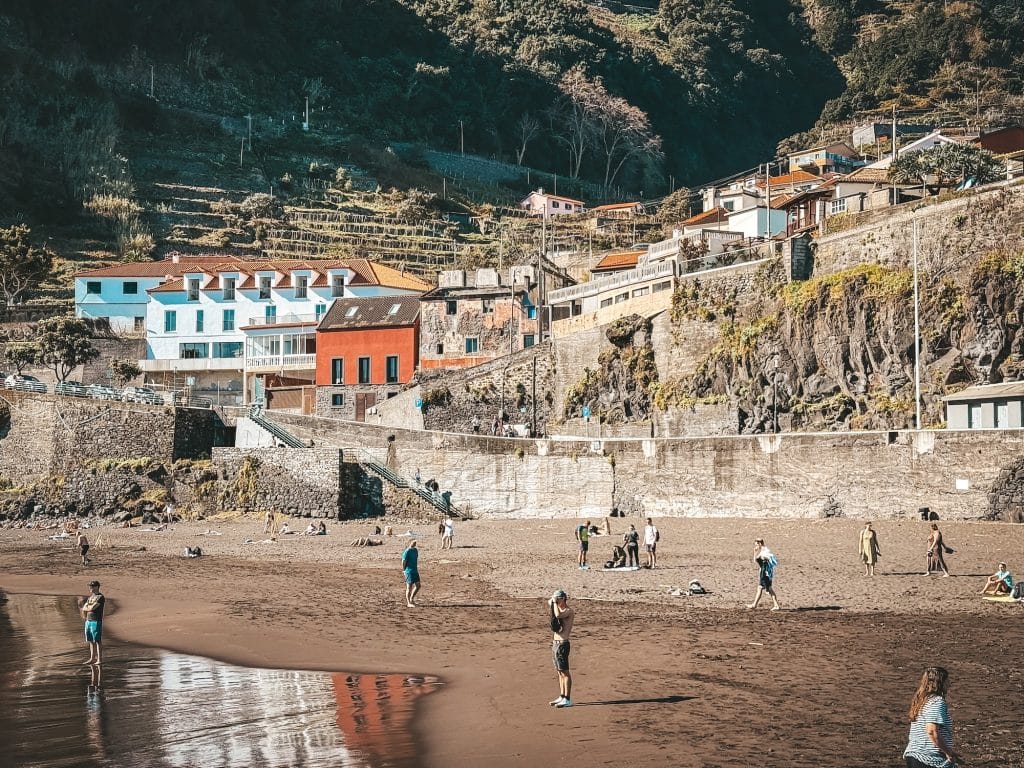
A narrow strip of black volcanic sand between tall green cliffs and the ocean. The contrast of colours (black sand, green slopes, blue ocean) makes for an incredible view. Right next to it are free pools by the sailing club (10:00–19:00). Porto Moniz also has free pools, by the aquarium.
Why go? The contrast of colours is stunning – especially on a sunny day. It’s one of the few beaches in Madeira where you can actually swim (though the ocean is cool – 18–20°C in summer).
Getting there: The north coast, about 1 h from Funchal (about 41 km): VR1 → São Vicente → ER101 → Seixal. 20 min east of Porto Moniz. Free parking by the beach (it fills up quickly in high season).
Cost: Free (beach and sea pool).
Time: 1–2 h for a swim and some relaxing. It’s best in summer (June–September).
19. São Vicente – volcanic caves
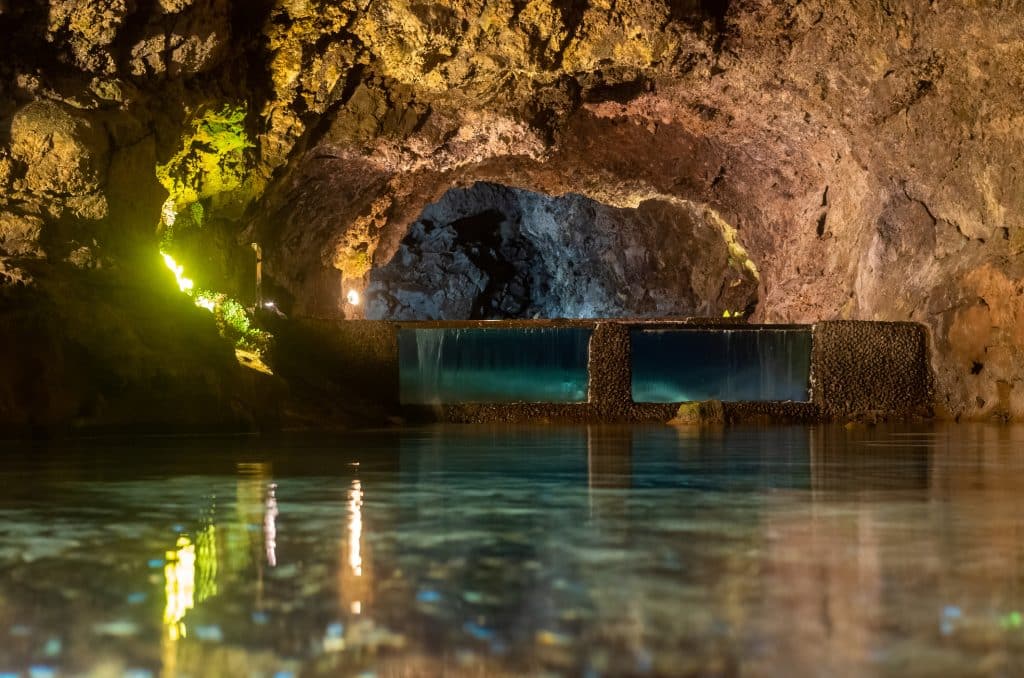
In São Vicente you’ll find a system of lava tubes formed millions of years ago and an education centre about Madeira’s volcanism, the Grutas e Centro do Vulcanismo.
Why go? It makes a nice change from the landscapes above ground. You see how Madeira was formed – lava tubes, rock formations. A good attraction for families with children (educational and interactive). But note – the caves themselves are currently closed; more information below.
Getting there: The north coast, about 1 h from Funchal on the VR1 (through the tunnel). Free parking at the entrance.
20. Ponta do Pargo – sunset at the edge of the island
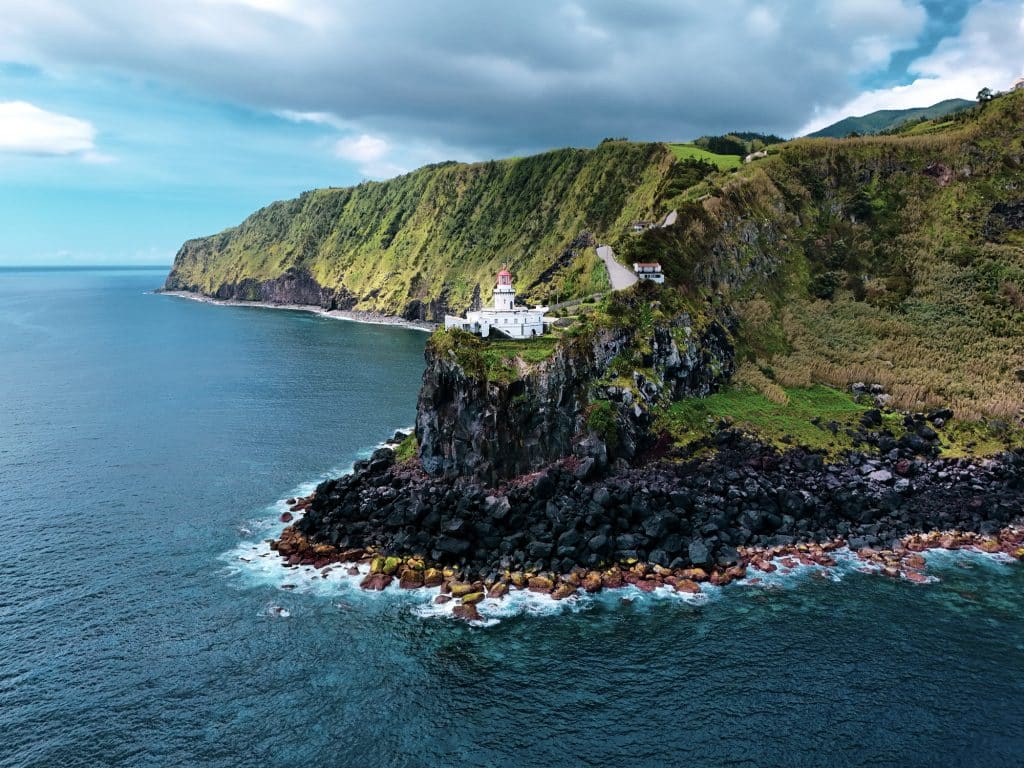
Madeira’s westernmost point – a small headland with a lighthouse and dramatic cliffs. A quiet, untouristy spot, but above all one of the best places on the whole island to watch the sunset.
Why go? The sun sinks straight into the ocean, the sky turns orange and pink, the waves crash against the rocks – a classic, dramatic view. The place is relatively unknown, so you’ll have peace and quiet.
Getting there: The western tip of the island, about 1 h from Funchal (about 49 km).
Southern route (shorter): Ribeira Brava → Ponta do Sol → Calheta → Ponta do Pargo. Northern route (scenic): São Vicente → Porto Moniz → Ponta do Pargo. Free parking by the lighthouse.
Cost: Free – it’s a wild headland.
Time: 50–60 minutes (arrive 30 min before sunset, wait, take photos). Check the sunset time and the weather – on a very cloudy day you’ll lose the magic.
 Read nextPorto da Cruz. 🥃 Steam-powered rum distillery below Penha d’ÁguiaA rum distillery with steam-driven machinery, Penha d’Águia, a surfers’ beach and the Vereda do Larano trail.
 Read nextWhere to stay in Madeira. 🏨 A base that keeps everything closeFunchal, Caniço, the west coast or the north? The areas compared, with travel times, weather and the tourist tax.
Things to do in Madeira – frequently asked questions
When is the best time to go to Madeira?
Any time of year – Madeira has a mild climate (15–25°C). The best seasons are spring (March–May) and autumn (September–November) – fewer tourists, pleasant temperatures and plants in bloom.
Is it worth hiring a car?
Without a car you’ll be limited to Funchal and a few main sights you can reach by bus or on organised tours.
Are the levadas difficult?
Are the levadas difficult? Usually not technically, but they can be long and narrow. Most levadas are flat paths along the channels, but they’re narrow (1–2 m) and often run along sheer drops. Fitness matters more than technical skills. I compare easy and harder routes in my round-up of the most beautiful levada walks in Madeira.
Is Madeira expensive?
Prices are moderate, similar to mainland Portugal. Food: €10–20 per main course. Accommodation: from €40 (hostel) to €150+ (hotel). Car hire: €25–40 a day.
How many days do you need?
At least 7–10 days to see the main sights without rushing. If you have 4–5 days, focus on the top 10.
Are there beaches in Madeira?
Not in the traditional sense – it’s a mountainous island with cliffs. There are a few beaches (Seixal, Machico, Calheta), but the ocean is cool (18–22°C in summer). The best swimming is in the lava pools (Porto Moniz, Seixal). The neighbouring island of Porto Santo has a long sandy beach (about 9 km). The ferry from Funchal takes about 2 h 15 min, and you can buy tickets on the Porto Santo Line website.
Do you need to book the trails?
Yes – since 1 January 2026 the PR trails managed by the IFCN require mandatory online booking via SIMplifica (€4.50 per person, the full PR1 €10.50). PR3, PR3.1, PR4 and PR23 are outside the system. In high season, book ahead.
What should I pack for Madeira?
Good walking boots, layers (it’s 10–15°C cooler in the mountains), a windproof jacket, a torch (for the tunnels), sunscreen and a camera.
Can I travel to Madeira with a dog?
Yes, it’s possible, though it takes some effort. Most restaurants will let you sit on the terrace with a dog, plenty of hotels and apartments accept dogs, and some attractions are dog-friendly – e.g. the Monte cable car and the Monte Palace garden. Most official trails, however, are off limits.
Looking for a place to stay in Madeira? Compare hotels, apartments and houses across the island on Booking.com, with reviews and free cancellation on many offers.