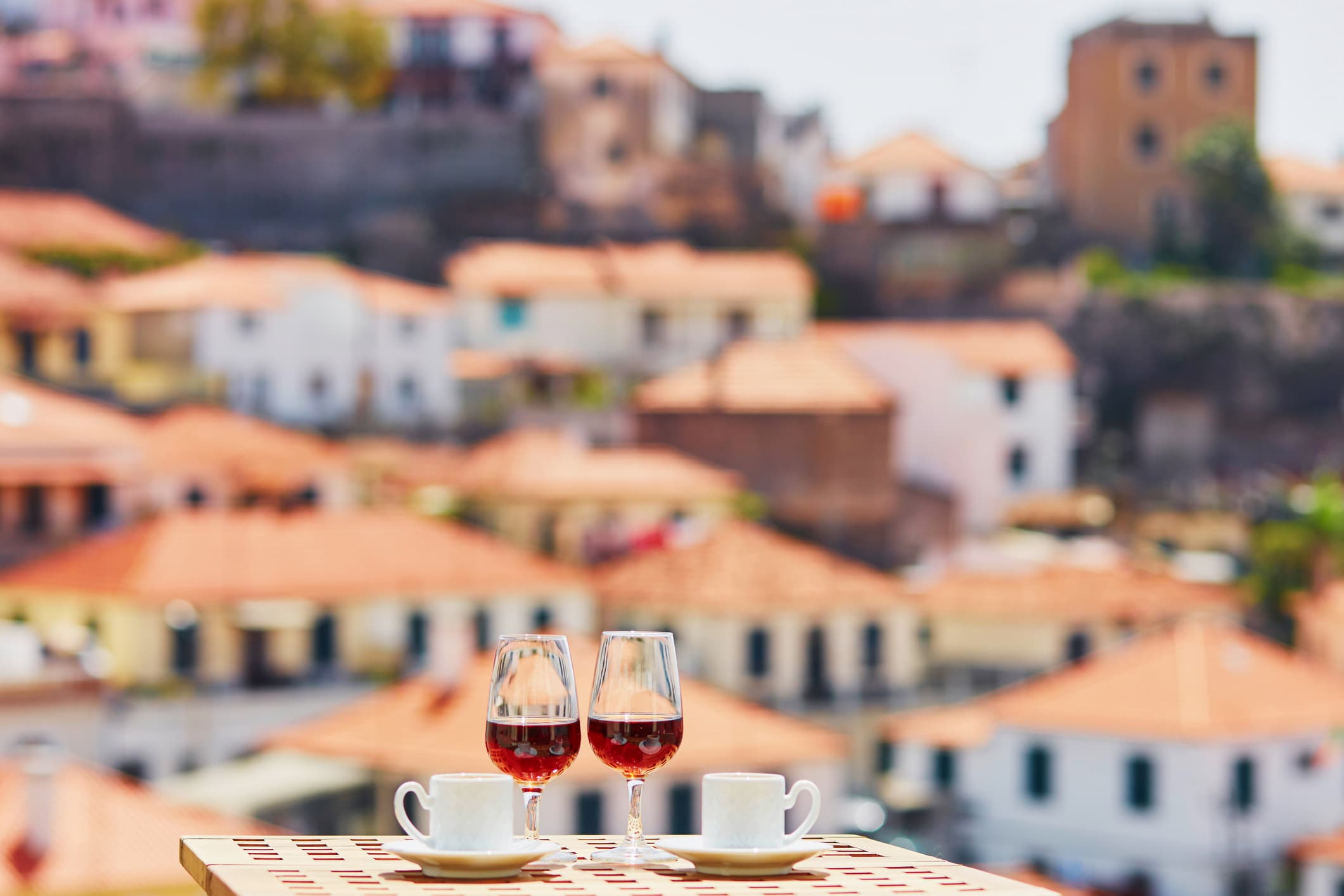
- Madeira wine is a fortified wine – grape spirit is added to it, which is why it keeps for a very long time.
- The four noble varieties are Sercial (dry), Verdelho (medium dry), Boal (medium sweet) and Malvasia (sweet).
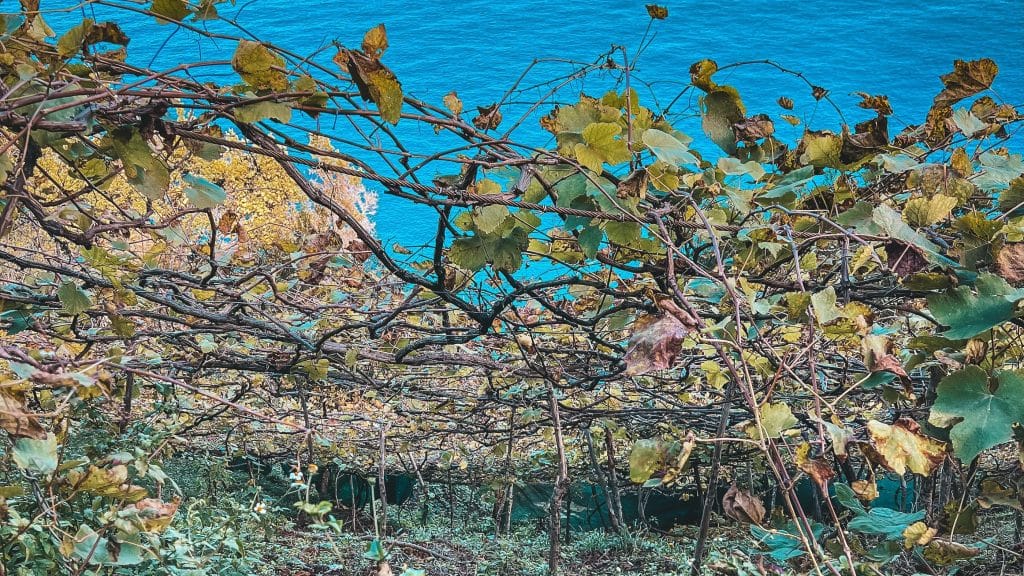
- The vines grow on poios terraces on steep slopes, trained on pergolas.
- Where to try it: at Blandy’s Wine Lodge on Avenida Arriaga in Funchal (tour with tasting) and at the Madeira Wine Museum.
- The Madeira Wine Festival runs from late August to mid-September (in 2027 from 22 August to 12 September), during the grape harvest.
Madeira wine is one of the most famous drinks in the world – chosen to toast the independence of the United States on 4 July 1776, praised by Shakespeare in his plays, admired by kings and explorers. For more than five centuries this “nectar of the gods” has been made on the steep terraces of a volcanic island, and it remains a symbol of Madeira.
What makes Madeira wine so special?
Madeira wine owes its character to a combination of four factors:
- the volcanic soil,
- the island’s climate,
- a distinctive production process
- and local grape varieties.
What matters – and what surprises you on the first sip – is that Madeira is a fortified wine: spirit is added during production, which gives it its characteristic taste and lets it keep for a long time.
More than 30 grape varieties used for wine grow in Madeira, but four are considered the noblest: Sercial, Verdelho, Boal and Malvasia.
Growing vines on Madeira’s terraces
For centuries Madeirans have grown vines on terraces called poios –
small strips of land on steep hillsides. The vines are trained
on pergolas – wooden (or nowadays metal) frames, often with vegetables growing underneath. These terraces are a typical feature of
the Madeiran landscape, often looking straight out to the ocean, as in the photo below.
The four royal varieties of Madeira wine
Sercial – Madeira’s dry wine
The best-known dry Madeira, ideal as an aperitif. It’s pale in colour, light and has a strong aroma.
According to scientific research carried out in Madeira, the Sercial variety yields around 3989–4346 kg/ha, which makes it one of the more productive noble varieties. (study in the journal Agronomy, 2022)
Verdelho – medium dry wine
A delicate, fairly aromatic wine with a golden colour. It can be served with meals.
Did you know? Although Verdelho is one of the main Madeira varieties, research from 2018–2019 showed unstable yields – just 641–934 kg/ha, well below the other noble varieties. (study in the journal Agronomy, 2022)
Boal (Bual) – medium sweet wine
A mellow, velvety wine the colour of dark gold. It can be served with roasts or desserts.
Malvasia (Malmsey) – sweet wine
A sweet, heavier wine with a reddish colour and an intense aroma. Between meals or with desserts.
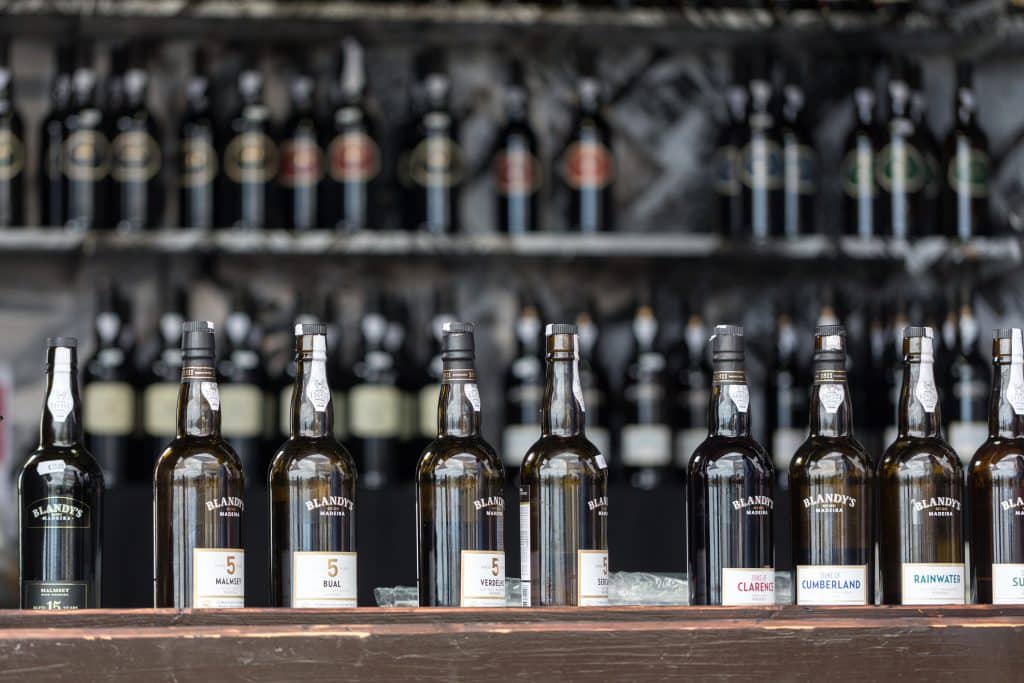
Blandy’s Wine Lodge. A tasting in the heart of Funchal
The most popular place to taste Madeira wine in the capital. The Blandy family’s wine lodge (Adegas de S. Francisco) is at Avenida Arriaga 28, not far from Funchal Cathedral.
Official opening hours:
- Monday–Friday: 10:00–18:30
- Saturday: 10:00–18:00, Sunday: 10:00–13:00 and 14:00–18:00
- Guided tours in English: 10:30, 14:30, 15:30, 16:30
- Also available in German, Portuguese, French and Spanish
What to expect on the tour
- The cooperage – how the casks for ageing the wine are made
- The ageing rooms – casks of various sizes, the largest about 2.5 metres high
- The museum room – Blandy’s account books going back to around 1780, typewriters, historic production equipment
- The tasting room – at the end every visitor gets two glasses of wine. You can taste more for an extra charge.
The lodge buildings date from the Baroque period – these are the oldest Madeira wine cellars on the island, where wine was once made, stored and sold.
The Madeira Wine Museum
Besides Blandy’s Wine Lodge, Funchal also has the Madeira Wine Museum (Museu do Vinho da Madeira). It’s housed in Baroque-style buildings with the oldest Madeira wine cellars. In the museum you can see letters from famous people and exhibits about the history of winemaking on the island.
The Madeira Wine Festival – a traditional grape harvest
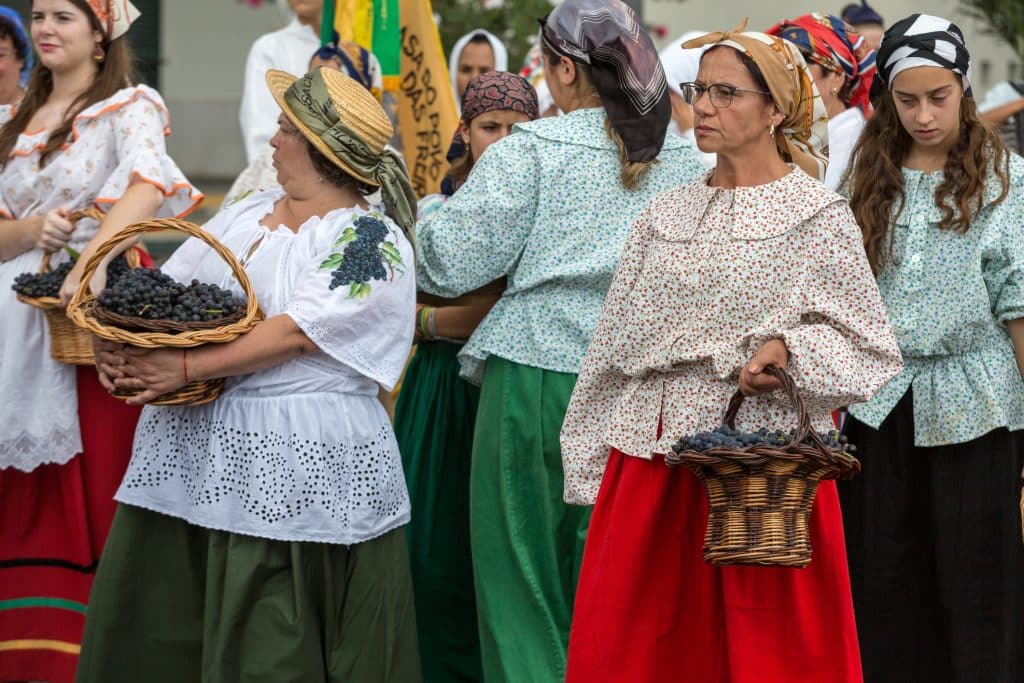
The Wine Festival (Festival do Vinho da Madeira) runs from late August to mid-September (in 2027 from 22 August to 12 September), during the grape harvest. The tradition goes back to the first settlers – the celebrations keep alive the old customs of Madeirans’ ancestors.
Where to celebrate
The main celebrations take place in two places:
- Funchal – the island’s capital
- Estreito de Câmara de Lobos – a village famous for its traditional celebrations
What happens in Estreito de Câmara de Lobos?
In Estreito de Câmara de Lobos the harvest is celebrated “the way it used to be” – with music and dancing. You can taste wine in traditional cellars. You can watch a procession of harvest workers and demonstrations of their hard work.
The Wine Festival is a classic festa where you can try regional food, see traditions that are still very much alive and, above all, have a great time.
Madeira wine – summary
Madeira wine is more than a drink – it’s five hundred years of history you can taste. From dry Sercial, perfect as an aperitif, through delicate Verdelho and velvety Boal, to sweet Malvasia – there’s something for everyone.
A tour of Blandy’s Wine Lodge in Funchal is a must. For a few euros you’ll walk through historic cellars with casks taller than a person, see account books from the 18th century and finally – most importantly – taste two kinds of wine.
If you’re in Madeira in September, do stay for the Wine Festival. In Estreito de Câmara de Lobos you’ll see a traditional harvest as it was centuries ago – with music, dancing and tastings straight from the cellar.
When buying a souvenir, there’s no wrong choice. Malvasia is a safe bet as a present, Sercial will delight lovers of dry wines, and Boal is perfect with a dessert on a winter evening. Buy it at a wine lodge or a decent shop – you’ll avoid the airport tourist traps.