Pico do Areeiro is Madeira’s third-highest peak (1818 m above sea level) and the highest point you can reach by car. From the car park, a few steps take you up to a viewing platform with a panorama of the central mountain range – on clear days it stretches all the way to Porto Santo (about 60 km). The summit is the starting point of the famous PR1 Vereda do Areeiro trail to Pico Ruivo. Since 1 May 2026 the PR1 has been fully open again, and the famous “Stairway to Heaven” is on the first stretch, up to Miradouro da Pedra Rija. Pico do Areeiro is one of the most popular places for sunrise and sunset above a sea of clouds. The drive from Funchal via Poiso takes about 40 minutes. You can get there by car, by taxi or on the Horários do Funchal bus, which runs daily from Funchal at 6:00 and 13:30 (ticket €3). It’s much colder at the top than on the coast, so warm clothes are a must even in summer.
Pico do Arieiro is one of the most popular spots in Madeira for sunrise and sunset – the panorama above a sea of clouds draws crowds of photographers, couples with flasks of coffee and people who want to see “that one Madeira photo” with their own eyes.
And yes – it really does look like the photos. Maybe even better. Only in real life it’s quieter, colder and more spectacular.
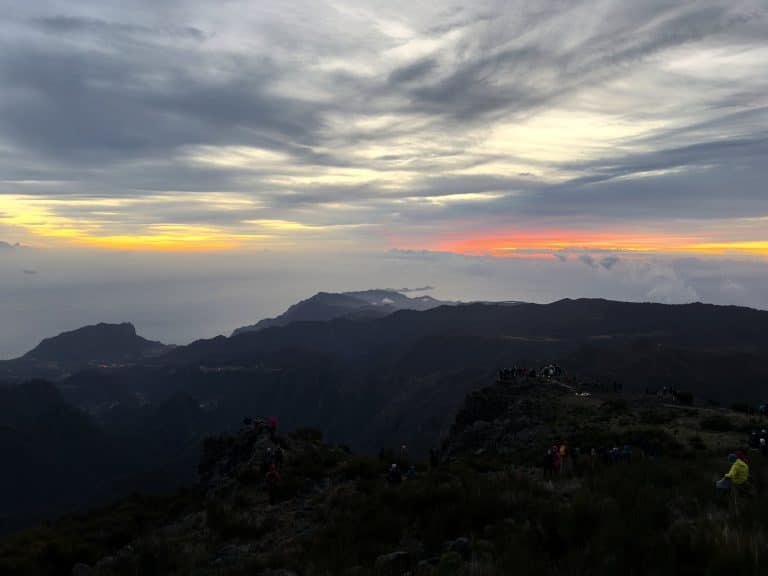
I was on Pico do Arieiro before dawn, when people stood in silence and total darkness, wrapped in down jackets, torches in hand. Everyone was impatiently waiting for the first rays of the sun. It was one of those moments when even a crowd doesn’t bother you – because everyone is looking in the same direction, and a moment later you all share views that take your breath away.
Sunrise without a car? Pico do Arieiro tours at sunrise or sunset, some combined with the walk to Pico Ruivo, many with hotel pickup. Compare offers and reviews on GetYourGuide.
Pico do Arieiro: the essentials
Pico do Areeiro (also spelt “Arieiro”) rises to 1818 metres above sea level. Only two peaks are higher:
- Pico Ruivo (1862 m)
- Pico das Torres (1851 m)
Together these three form Madeira’s central mountain range – dramatic, jagged rock formations from the island’s volcanic past, made of rock from the so-called Intermediate Volcanic Complex. This is where you see the island’s wildest, most “vertical” face.
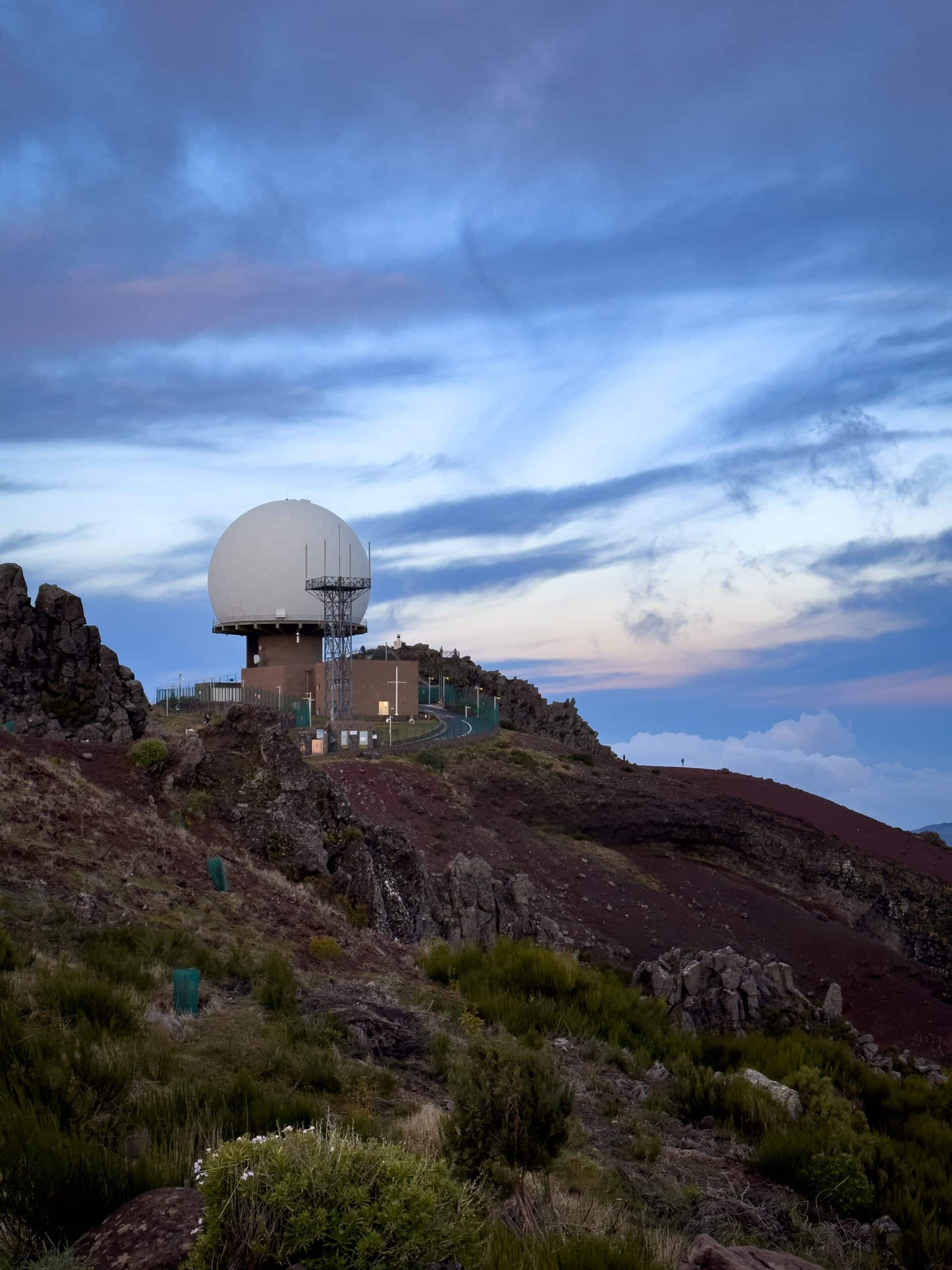
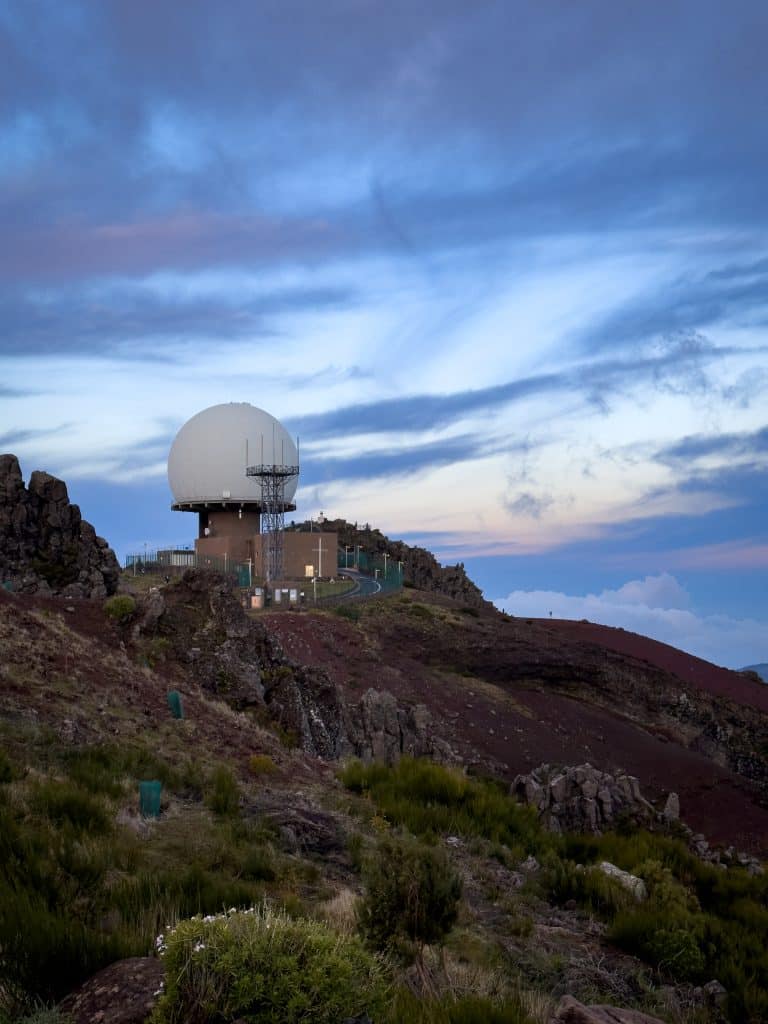
On the summit stands the distinctive white dome of the Air Force’s military radar – visible from many places in Madeira. For some it’s an eyesore, for others an interesting contrast between nature and technology.
The viewing platform looks out over the central part of the island, and on really clear days you can even make out Porto Santo, about 60 km away.
Getting to the summit: by car, by taxi or on the Horários do Funchal bus, which runs daily from the lower cable car station in Funchal at 6:00 and 13:30. A ticket costs €3, and from 25 October 2026 the second service returns at 18:00 (Horários do Funchal). For sunrise, your options are a car, a taxi or a tour.
You’ll find prices and a comparison of other trips, including jeep tours and dolphin-watching cruises, in my guide to tours and excursions in Madeira.
How to get to Pico do Arieiro
The drive from Funchal takes about 40 minutes.
From the centre, head towards Poiso, where you turn right at the junction following the signs for Pico do Arieiro. The road is tarmac and in good condition, but it winds its way high up in hairpin bends through the natural park.
The higher you go, the starker the landscape – less green, more rock, more space. It’s one of those drives that are an attraction in themselves.
The car park is at the summit. You have two options:
Upper car park (tarmac)
– €4 per hour, first 30 minutes free, maximum €20 per day
– mainly for people watching the sunrise or popping up “for the photos”
Lower car park (unpaved)
– about 1.3 km further down
– €2 per hour, maximum €5 per day
– for visitors planning a longer stay or setting off on the PR1 trail
Both car parks have been paid since 28 October 2024, and the rates haven’t changed for 2026 (as of October 2026). From 2027 they are due to rise to €4.25 and €2.25 per hour.
At sunrise it can get really busy – if you want a space closer to the platform, arrive early.
 Read nextCar hire in Madeira. 🚗 Steep roads without the stressPrices, airport pick-up, deposit and insurance, mountain roads and parking, checked in October 2026.
The PR1 trail – Vereda do Areeiro
Pico do Areeiro is the starting point of Madeira’s most famous mountain trail – PR1 Vereda do Areeiro, which leads to Pico Ruivo.
- Official distance: 6.1 km one way
- Return: beyond Pedra Rija you are not allowed to come back the same way. From Pico Ruivo you descend to Achada do Teixeira (PR1.2, 2.8 km) or to Ilha (PR1.1, 8.2 km)
- Walking time: about 3 h to Pico Ruivo (Visit Madeira)
 Read nextPico Ruivo and the PR1 trail from Pico do Arieiro€10.50 tickets, one-way traffic, how to get back from Achada do Teixeira and the shorter PR1.2.
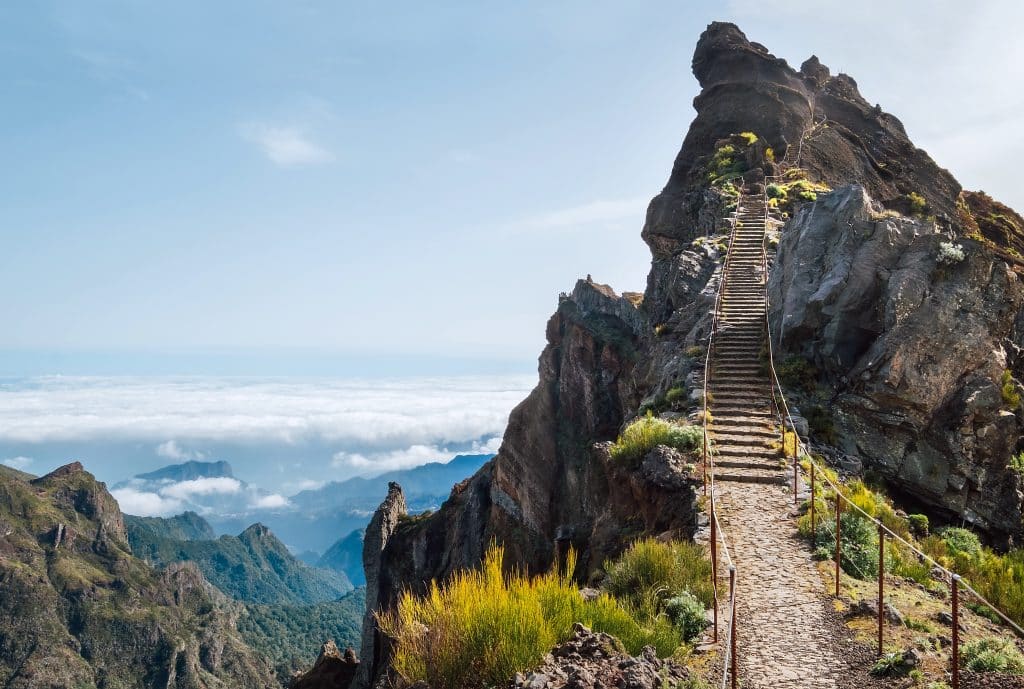
The route follows narrow ridges, tunnels cut into volcanic tuff, sheer drops and stone steps hanging above the valleys. One of the most spectacular trails in Europe – and that’s no exaggeration.
Which PR1 option to choose in SIMplifica and how to buy a ticket is explained in my guide to Madeira hiking trail tickets.
To the trailhead by car: many trailheads, such as Pico do Arieiro or Fanal Forest, can’t be reached by public transport. Compare car hire prices at Madeira Airport (FNC) on DiscoverCars.
Pico do Arieiro sunrise and sunset
Pico do Arieiro sunrise and sunset: view forecast
Will there be a sea of clouds, clear skies or a summit lost in cloud? A 7-day estimate for an altitude of 1818 m.
Loading the forecast…
This is an estimate from the Open-Meteo weather model (cloud cover at about 750, 1500, 2000 and 3000 m), updated every hour. Mountain weather changes fast, so in the morning take another look at the live webcams and the trail status. The drive from Funchal to the summit takes about 40 min.
This is one of the best places in Madeira to watch the light. Thanks to the altitude, you very often find yourself above the clouds. The valleys then fill with a white sea of mist, and the highest peaks stick out like islands.
There’s something unreal about this view. The silence. And a certain kind of humility.
Sunrise
Lots of people come up for sunrise – both visitors and local photographers. It’s worth being there at least 30 minutes before the official sunrise.
The afterglow before sunrise is often the most beautiful part – before the sun appears above the horizon, the clouds start glowing from within.
Heads-up: it will be cold. Even if it’s 20°C in Funchal.
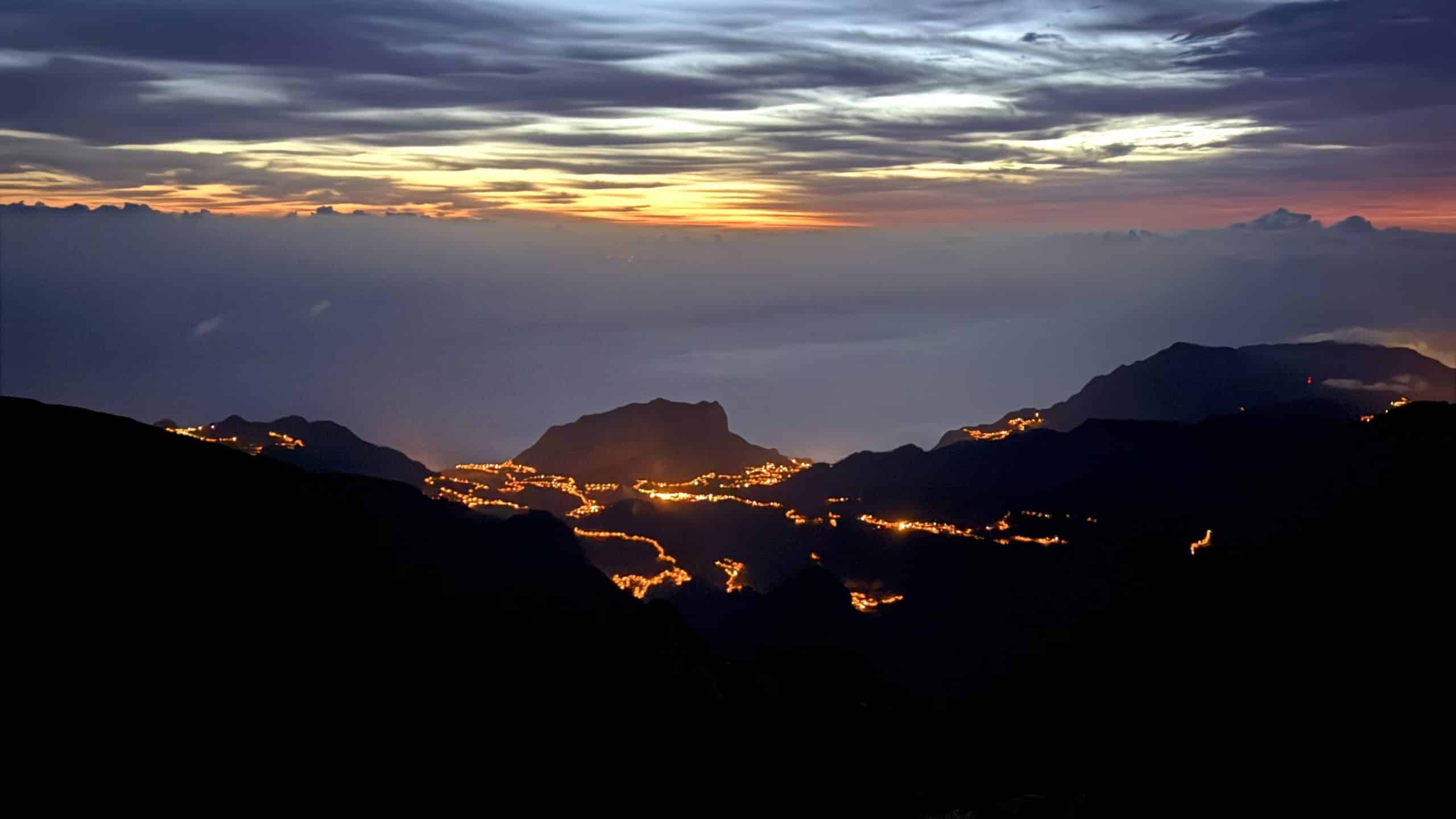
Sunset
Sunsets draw smaller crowds than the mornings, but the show can be just as spectacular. The light is warmer, the shadows longer and the atmosphere calmer.
After sunset a long queue of cars heads down from the car park – bear that in mind if you’re planning dinner in town.
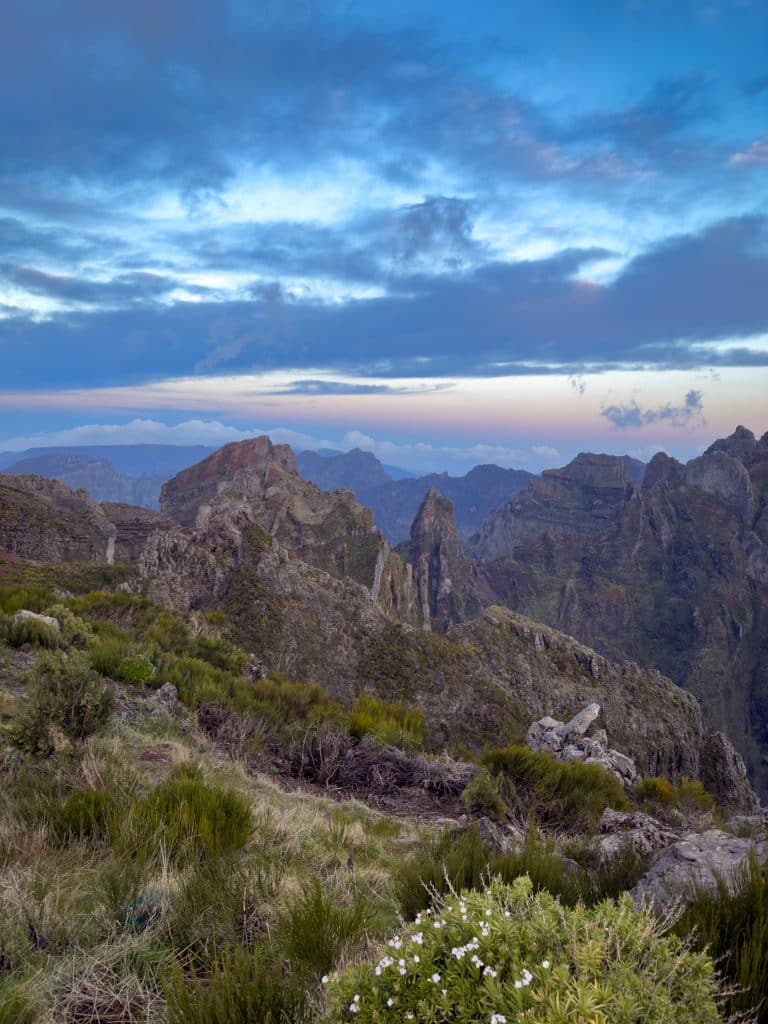
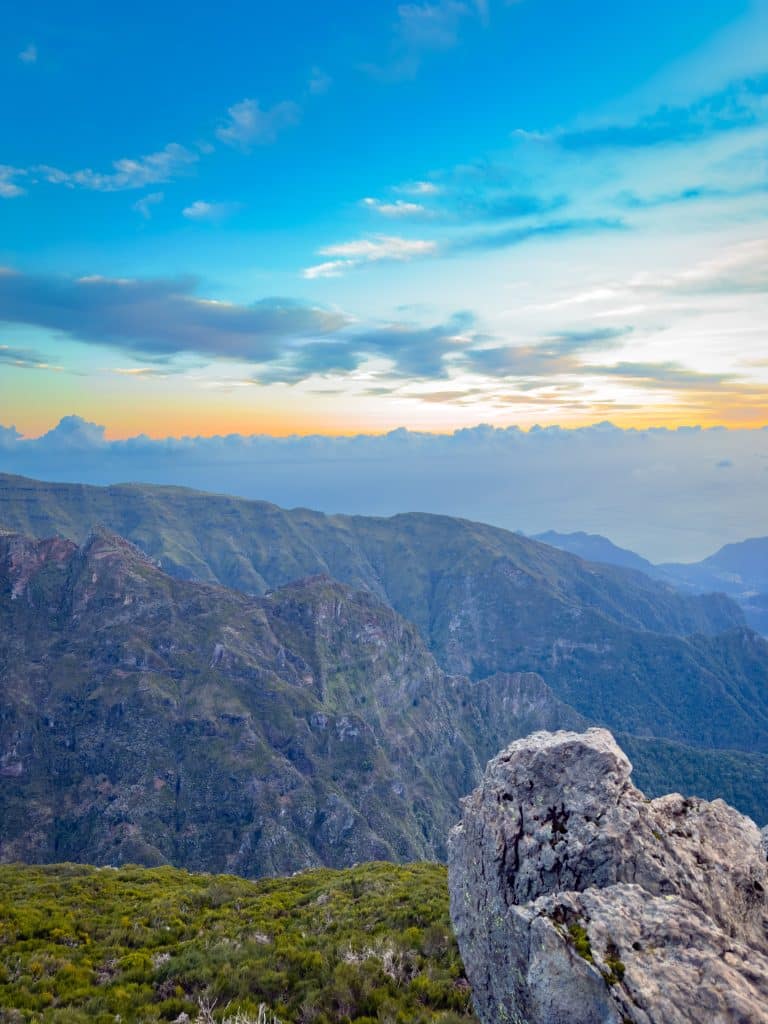
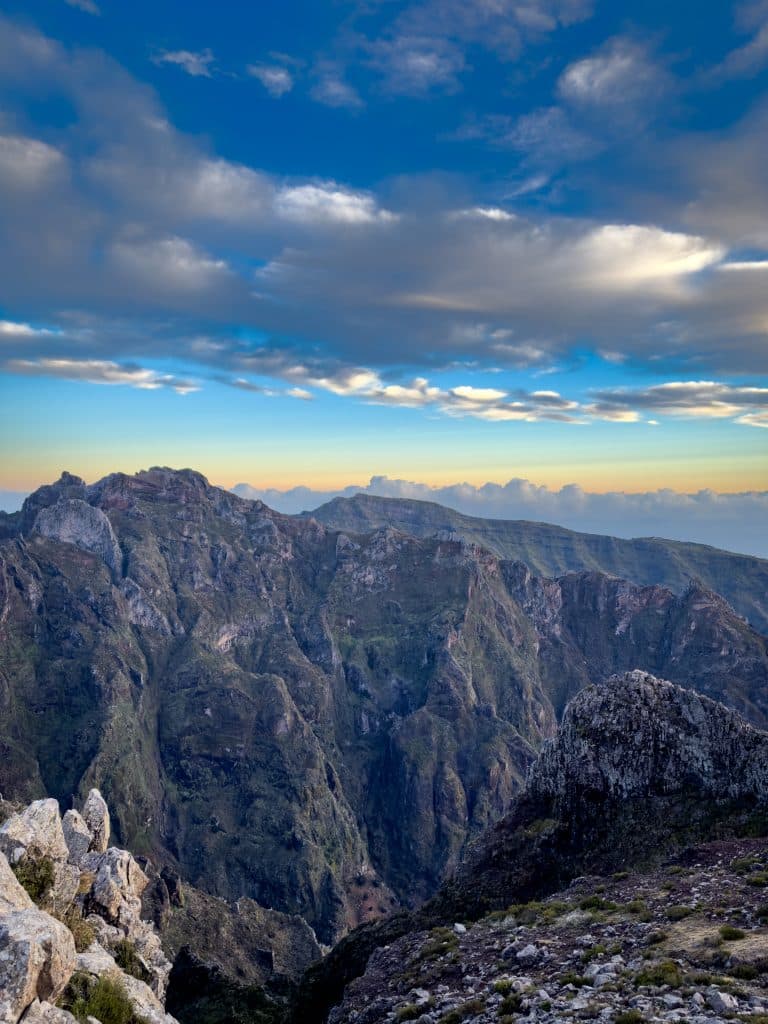
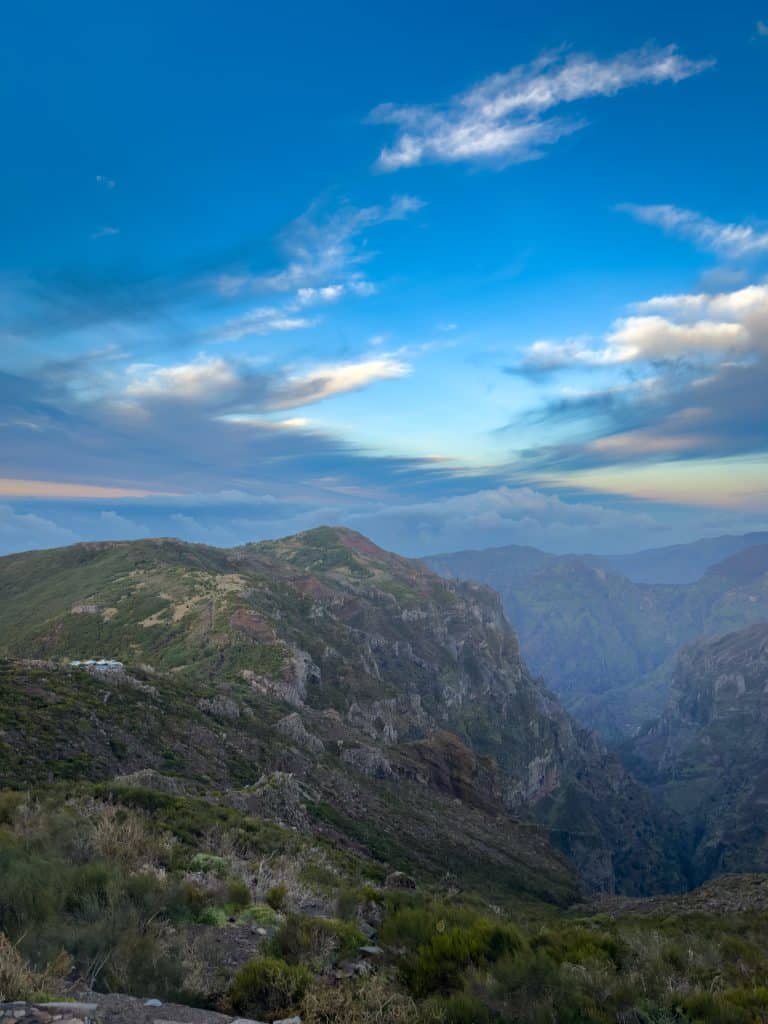
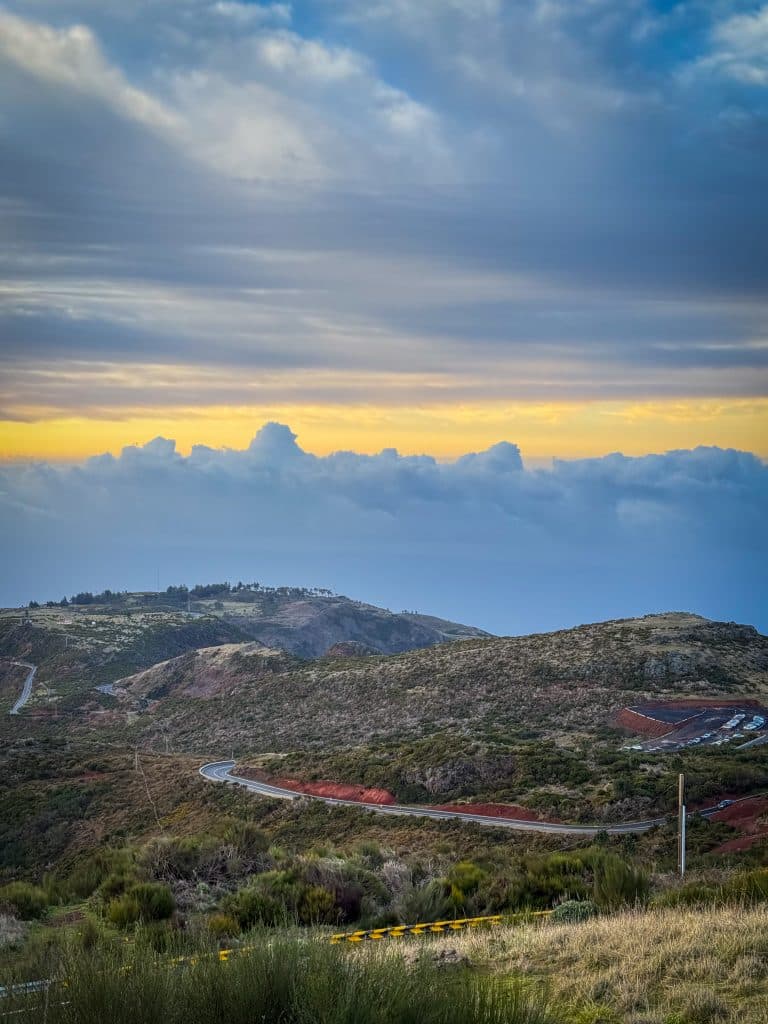
1: Sunrise on Pico do Arieiro, 2: Sunrise on Pico do Arieiro, 3: Sunrise on Pico do Arieiro, 4: Sunrise on Pico do Arieiro, 5: Sunrise on Pico do Arieiro, 6: Sunrise on Pico do Arieiro. Photos: Ewelina Podrez-Siama March 2025
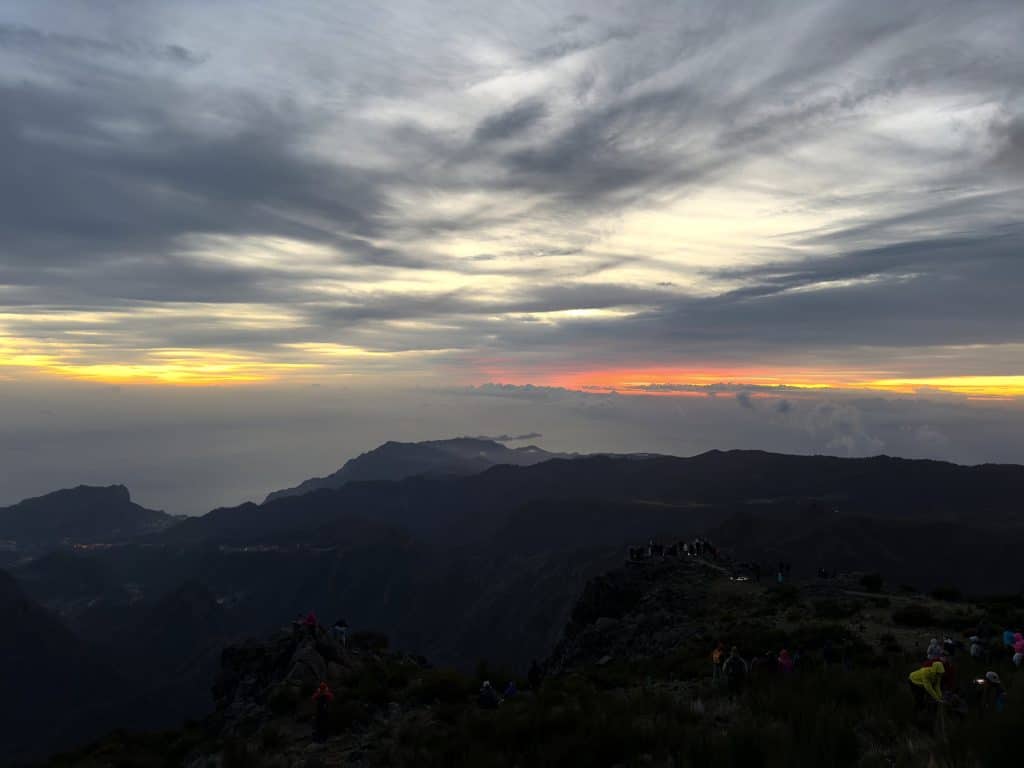
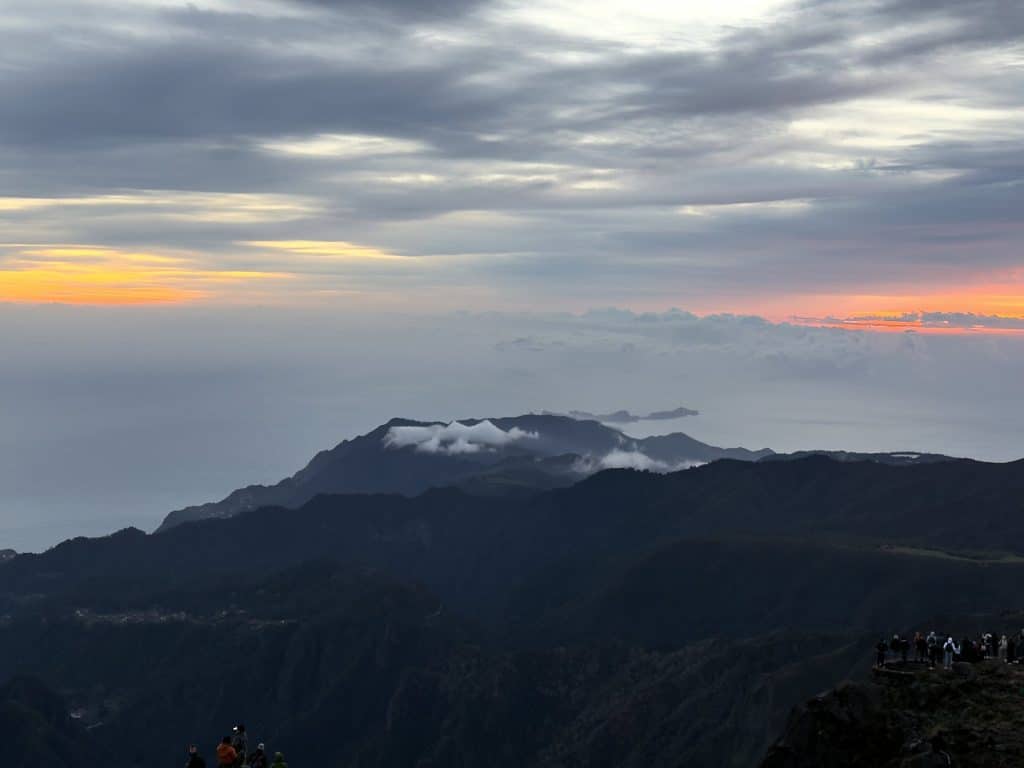
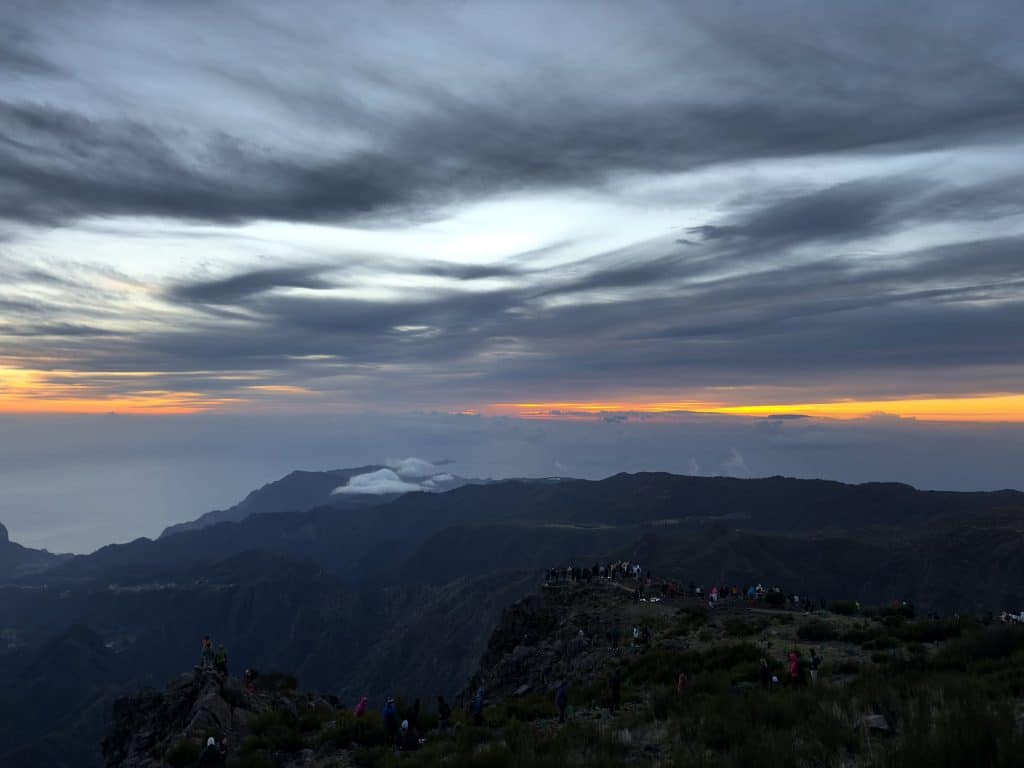
1: Dawn on Pico do Arieiro, 2: The mountains at dawn from Pico do Arieiro, 3: The sky at dawn over Pico do Arieiro. Photos: Ewelina Podrez-Siama, 2025
What to bring
Altitude makes a huge difference. If it’s 20°C on the coast, it can be below 10°C up here. Add the wind, which makes it feel even colder. I was on Pico do Arieiro in March in a light jacket – and I really appreciated every extra layer, especially when it turned out that -1°C and the first snowflakes were waiting for me (shortly afterwards the trail was closed).
Essentials:
- A warm jacket (even in summer)
- Long trousers
- Comfortable shoes
- A torch or head torch (if you’re going before sunrise – it will be dark)
On the PR1 trail, including the first stretch to Pedra Rija (1.2 km), there may be icy patches – especially on the shaded, north-facing sections.
When to visit Pico do Arieiro
Time of day
Sunrise and sunset are the most photogenic, but they also bring the biggest crowds. In the middle of the day it can be very bright and harsh (take sunscreen and sunglasses), but there are usually fewer people. Mornings give you the best chance of a view above the clouds – later on the mist often clears.
Time of year
Thanks to Madeira’s mild climate, Pico do Areeiro is accessible all year round. September to November means fewer visitors, but also a higher risk of fog and cloud. In winter, windy days and icy patches are more common.
Interesting facts about Pico do Arieiro
The military radar on the summit
The white dome on the summit is an airspace surveillance radar of the Portuguese Air Force (Estação de Radar n.º 4), not a weather radar. The weather radar for the archipelago stands on Porto Santo. Entry to the station grounds is forbidden. In photos it makes a strong contrast with the natural rock formations – and it’s hard to keep it out of the frame.
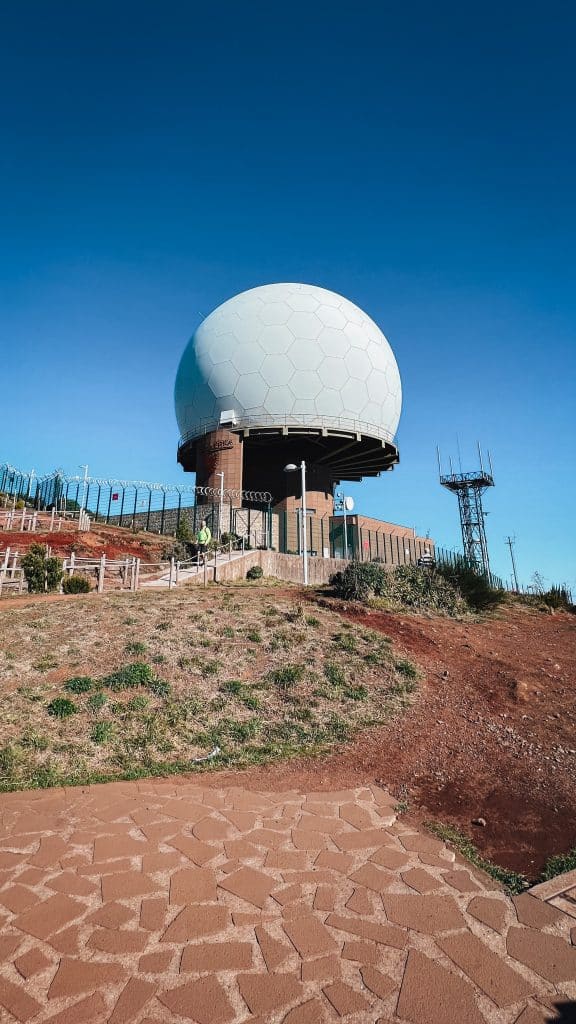
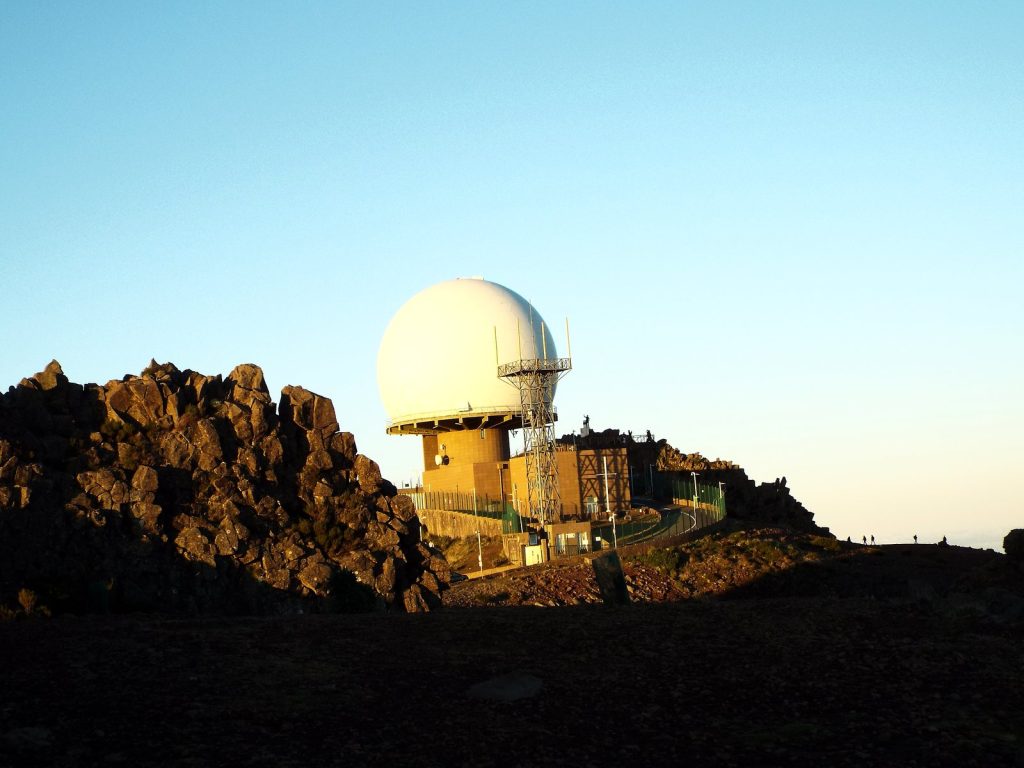
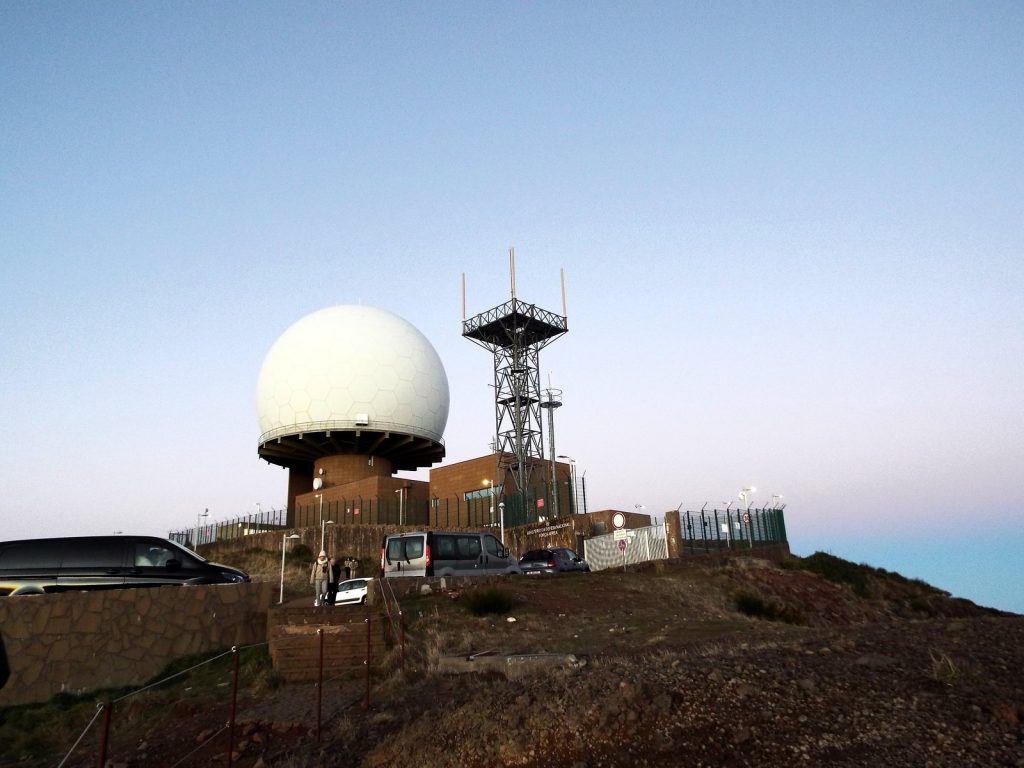
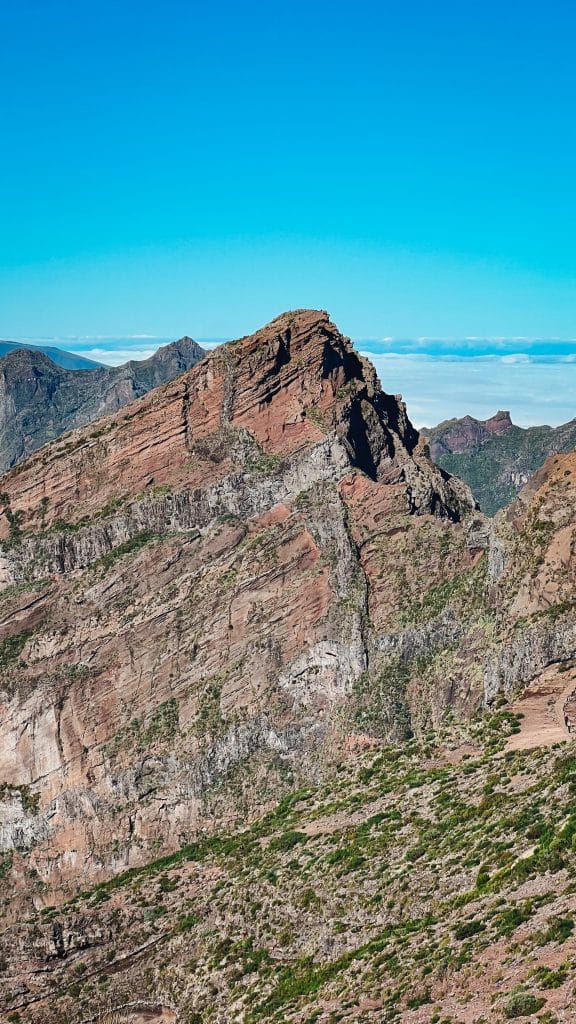
1: Daytime views from Pico do Arieiro – the dome of the military radar. Photo: Ewelina Podrez-Siama – November 2023, 2: The military radar dome on Pico do Arieiro in the morning sun – photo: Anita and Andrzej Podrez – February 2025, 3: The radar and antenna mast on the summit of Pico do Arieiro at dawn – photo: Anita and Andrzej Podrez – February 2025, 4: Daytime views from Pico do Arieiro. Photo: Ewelina Podrez-Siama – November 2023
High-mountain plants
The area around Pico do Arieiro is protected under Natura 2000. At this altitude the vegetation is adapted to harsh conditions – tree heath (urze), shrubby forms of laurel, and endemic grasses and mosses.
In the valleys below, the laurel forest (laurissilva) has survived – a relic of the subtropical forests from before the Ice Age, unique in Europe.
Geology
The peak was formed during the middle phase of Madeira’s volcanic activity, about 700,000 years ago. The visible layers of lava and volcanic tuff form distinctive bands on the slopes – if you like geology, this is one of the most interesting places on the island.
Summary
Pico do Arieiro is a place that’s very easy to “tick off” – drive up, take a photo, move on. But if you give it a moment, it becomes much more than a dot on the map.
It’s rare to find a place where you can drive up to such a spectacular mountain peak and, after a two-minute walk, stand above the clouds with Pico Ruivo and Pico das Torres in the background.
Even if you don’t walk the whole PR1 to Pico Ruivo, simply walking the “Stairway to Heaven” to Pedra Rija and watching the light over the central mountains is one of the most beautiful experiences in Madeira.
A sunrise above a sea of clouds isn’t just a pretty view. It’s the moment you truly feel how high, wild and dazzling Madeira is.
📚 Bibliography and sources (8)
Official sources:
- IFCN (Instituto das Florestas e Conservação da Natureza) – list of Madeira’s walking trails, updated 2 October 2026
- Visit Madeira – Madeira’s official tourism website (visitmadeira.com)
- PR1 Vereda do Areeiro – official IFCN trail sheet
Guidebooks:
- Paddy Dillon, Walking on Madeira – a guide to Madeira’s walking trails
- City Guide Madeira EN, Sunflower Guides
Scientific publications:
- Sotiriou & Nunes (2024) – Volcanic Landscapes and Geotourism Development: Analysing How Madeira’s Volcanic Origin Shapes its Tourism Industry, with a Focus on Hiking Tours and Scenic Viewpoints
Online checks (October 2026):
- Wikipedia – Pico do Areeiro
- TripAdvisor, AllTrails, JourneyEra – recent reviews and trail status
The author’s own experience, photos and information
No car? Book a fixed-price transfer from Funchal, e.g. to Porto Moniz, São Vicente, Calheta or the airport, in advance with Kiwitaxi.
⚠️ Important: madeira-planner.com is an independent guide I run as a hobby, where I share my own experience and what I’ve learnt during my stays in Madeira. I’m not a licensed mountain guide – everything here is for information and inspiration only.
Before every hike, check the current trail status on the official website of IFCN (Madeira’s Institute of Forests and Nature Conservation), check the weather forecast and be honest about your fitness. Conditions in the mountains can change fast – if you have no mountain trekking experience or are planning more demanding routes, consider hiring a qualified guide.
When you head out on the trails, you do so at your own risk. Your safety depends on the decisions you make.