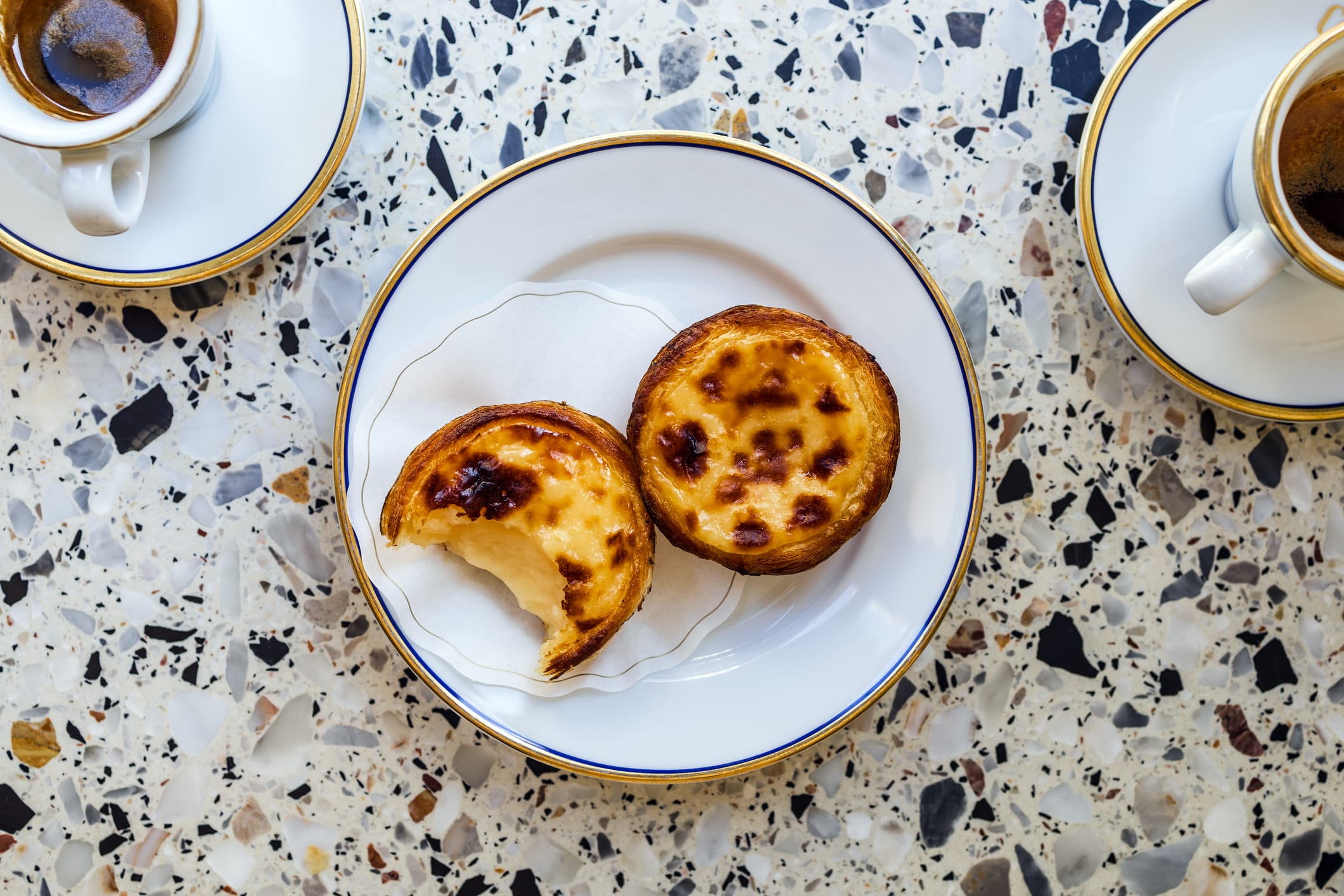
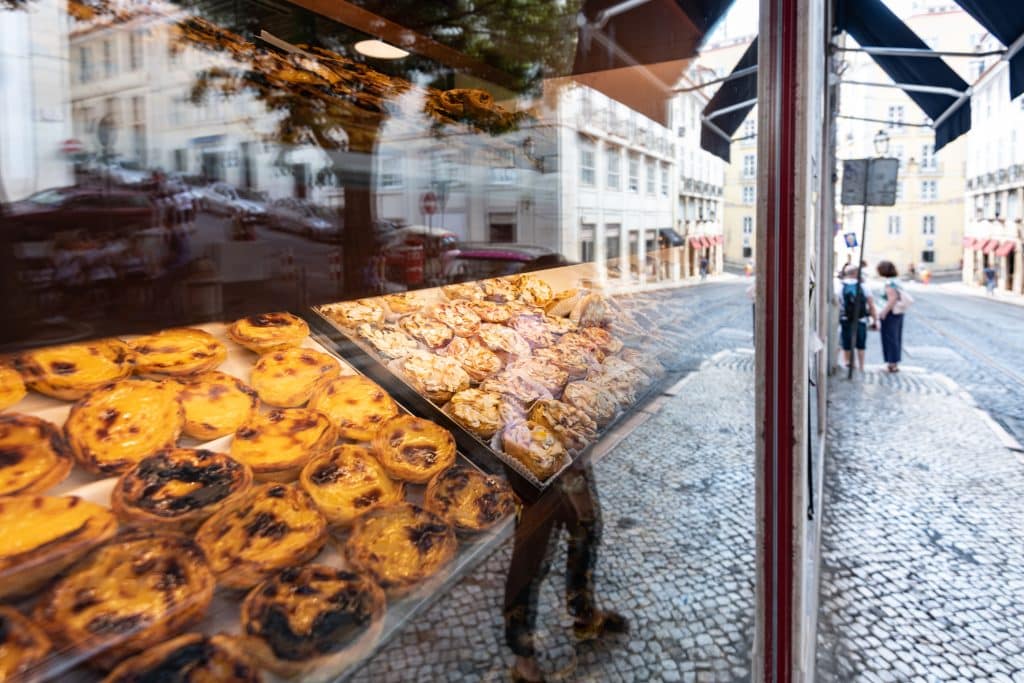
- Pastéis de nata are Portuguese puff pastry tarts filled with custard and scorched on top.
- They come from the Jerónimos Monastery in Lisbon’s Belém district. Since 1837 the original recipe has been known to the Fábrica de Pastéis de Belém bakery.
- In Madeira you can buy them in almost every café. In Funchal, the classics are Golden Gate and Café Teatro on Avenida Arriaga.
- They’re best eaten warm, dusted with cinnamon or icing sugar, with a coffee.
- In this guide you’ll find a recipe for 12 (about 45 minutes).
Pastéis de nata (singular pastel de nata) are small puff pastry tarts filled with custard and scorched on top to a golden brown. A symbol of Portuguese cooking that has won over taste buds all around the world.
Want to taste it on the spot? Compare Madeira wine tastings and food tours in Funchal on GetYourGuide.
From a monastery recipe to a world-famous dessert
Pastéis de nata were created before the 18th century in the Jerónimos Monastery (Mosteiro dos Jerónimos) in Lisbon’s Belém district. Their origins are surprisingly practical.
The monks used huge quantities of egg whites to starch their habits. That left them with masses of yolks that couldn’t go to waste. Out of economic necessity came a recipe for crisp pastries with an egg custard filling, which they developed and refined in the monastery kitchens for more than a hundred years.
After the Liberal Revolution of 1820, monastic life was thrown into doubt. Religious orders began to lose their funding and many were closed down. The monks of Jerónimos needed an income – so they started selling their pastries at a nearby sugar refinery.
In 1834 the monastery finally closed. The recipe was bought by the businessman Domingos Rafael Alves, who three years later, in 1837, opened the Fábrica de Pastéis de Belém – a bakery making the pastries to the original monastery recipe.
The original vs the imitations: Only the pastries baked at the Fábrica de Pastéis de Belém may be called “pastéis de Belém”. The owning family registered the name in 1911. All the others, however good, are “pastéis de nata” – the general name for Portuguese custard tarts.
The original 1837 recipe remains a secret. Only three people know it, and it’s kept in the bakery’s “secret room”. Today the Fábrica de Pastéis de Belém sells more than 20,000 pastries a day. In 2011 pastéis de Belém were named one of the Seven Wonders of Portuguese Gastronomy, and in 2009 The Guardian included them in its list of the 50 best things to eat in the world.
Recipe – how to bake pastéis de nata at home
Makes: 12
Prep time: 20 minutes
Baking time: 25 minutes
Total: about 45 minutes
Ingredients
- 1 pack (approx. 500 g) frozen puff pastry, defrosted
- 1 cup (240 ml) milk
- 3 tablespoons cornflour
- ½ vanilla pod
- 1 cup (200 g) white sugar
- 6 egg yolks
Method
- Heat the oven to 190°C. Grease a muffin tin with oil or cooking spray.
- In a saucepan, heat the milk, sugar, cornflour and vanilla, stirring constantly, until the mixture thickens.
- In a separate bowl, whisk the egg yolks with half a cup of the warm vanilla mixture. Mix until smooth.
- Pour the whisked yolks back into the saucepan and stir. Cook for another 6 minutes, stirring constantly. Then remove the vanilla pod.
- Line the muffin tin with the puff pastry – bottom and sides. The pastry should form little cases.
- Pour the vanilla custard into the pastry cases, filling them almost to the top.
- Bake for 25 minutes, until the tops are browned and the characteristic darker spots appear.
- Take out of the oven, leave to cool for a few minutes and remove from the tin.
Nutrition (per tart): 336 kcal | Fat: 18.2 g | Carbohydrates: 38.7 g | Protein: 5 g
A fact about temperature: The original pastéis are baked in a very hot oven – according to interviews with the owners of the Fábrica de Pastéis de Belém, as hot as around 400°C, like a pizza oven. That heat creates the characteristic scorch marks on top of the custard while keeping it creamy inside. It’s hard to recreate in a home oven, but the result at 190°C is very good too.
Pastéis de nata in Madeira
Pastéis de nata are just as popular in Madeira as in the rest of Portugal. You’ll find them in practically every pastry shop, café and coffee bar on the island.
Where to try them in Funchal
Golden Gate and Cafe Teatro – both cafés on Avenida Arriaga are classic spots for people-watching over a coffee and a pastel de nata. The perfect pit stop after exploring central Funchal.
Madeira’s food context
In Madeira, pastéis de nata are part of a wider baking tradition. The island is known for desserts made with local ingredients – mel de cana (sugar cane molasses), exotic fruit, honey. Traditional Bolo de Mel (honey cake) and malasadas (fried Carnival doughnuts) have deeper local roots, but pastéis de nata fit perfectly into Madeira’s culture of cafés and relaxing over coffee.
How to eat pastéis de nata: tradition and practice
The Portuguese have their own rules:
Topping: Traditionally, pastéis de nata are dusted with icing sugar and cinnamon. Pastry shops always have a cinnamon shaker and a sugar bowl on the table – everyone sprinkles to taste. Some prefer them plain, to enjoy the pure flavour of the custard.
Drink: Pastéis de nata are most often eaten with an espresso (bica) or a café com leite (coffee with milk). The coffee balances the sweetness of the pastry. At the Fábrica de Pastéis de Belém the standard order is a pastel de nata + espresso.
Temperature: They’re best warm, straight from the oven. Crisp pastry, silky custard – if you have the choice, always go for the ones that have just come out of the oven. Pastéis de nata taste best on the day they’re baked.
Summing up
Pastéis de nata are more than a sweet treat – they’re a piece of Portuguese history you can taste in any café in Madeira. Simple ingredients, precise technique and a tradition that goes back to 18th-century monastery kitchens.
In Madeira, try them with a coffee on Avenida Arriaga while you watch the world go by. A warm, crisp pastry with custard that melts in your mouth – that moment of relaxation shows exactly why the Portuguese love their café culture so much.
Looking for a plan for the day? Dolphin-watching cruises, jeep tours and sunrise on Pico do Arieiro, many with hotel pickup. Compare offers and reviews on GetYourGuide.