- Discovery: the Portuguese reached Porto Santo in 1418 and Madeira in 1419–1420 (Zarco, Teixeira and Perestrelo, sent by Prince Henry the Navigator).
- 15th–16th centuries: the sugar era. In 1570 there were 40 sugar mills, enslaved people worked the plantations and the first levadas were built.
- From the 17th century the main export was Madeira wine, whose taste was transformed by heating (estufagem).
- 19th–20th centuries: sanatoriums for Europe’s elite and, during the First World War, two bombardments of Funchal.
- Today Madeira is an autonomous region of Portugal, and tourism is the main pillar of its economy.
Madeira has a mere 600 years of documented history – not much by European standards. From the Portuguese discovery in 1419, through the sugar era, the golden age of wine and the 19th-century elite’s craze for sanatoriums, to two bombardments in the First World War and today’s tourism boom – every era has left its mark on the island. And you can still see most of those traces with your own eyes.
Looking for a plan for the day? Dolphin-watching cruises, jeep tours and sunrise on Pico do Arieiro, many with hotel pickup. Compare offers and reviews on GetYourGuide.
Before the Portuguese arrived
Madeira wasn’t completely unknown before the 15th century. According to some theories, the Phoenicians may already have known the archipelago, although the island remained uninhabited. Medieval sailors also came across it in the 14th century.
In his “Parallel Lives” (the Life of Sertorius), Plutarch describes how the Roman general met sailors in Spain, at the mouth of the Baetis, who told him about idyllic Atlantic islands known as the Isles of the Blessed.
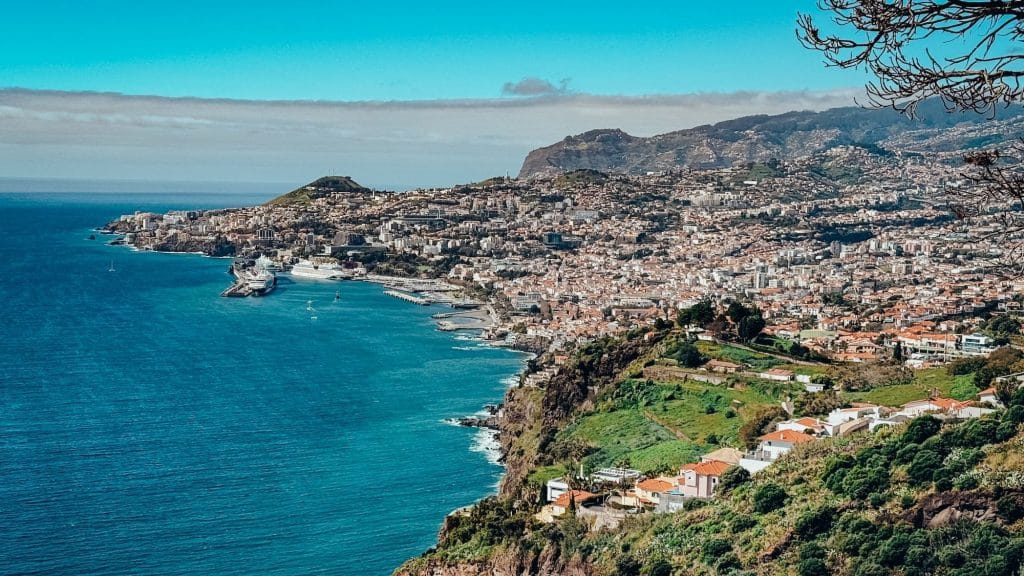
Discovery and the first settlers (1418–1450)
Three Portuguese men are regarded as the discoverers of Madeira: João Gonçalves Zarco, Tristão Vaz Teixeira and Bartolomeu Perestrelo. In 1418 a storm drove them to Porto Santo, the smaller island of the archipelago. They landed on Madeira itself in the following years (1419 and 1420). They were acting on the orders of Prince Henry the Navigator.
The name “Madeira” (Portuguese for wood or timber) was probably given in contrast to the other, more barren islands of the archipelago. The island really was covered in dense forest.
Land for farming was gained by clearing and burning the forest – hence the legends of a fire that burned for years, although modern research points rather to gradual felling.
Dividing the island
Henry the Navigator divided Madeira into two captaincies (capitanias):
- Funchal – governed by Zarco (the south coast)
- Machico – governed by Teixeira (the eastern part)
Porto Santo went to Bartolomeu Perestrelo.
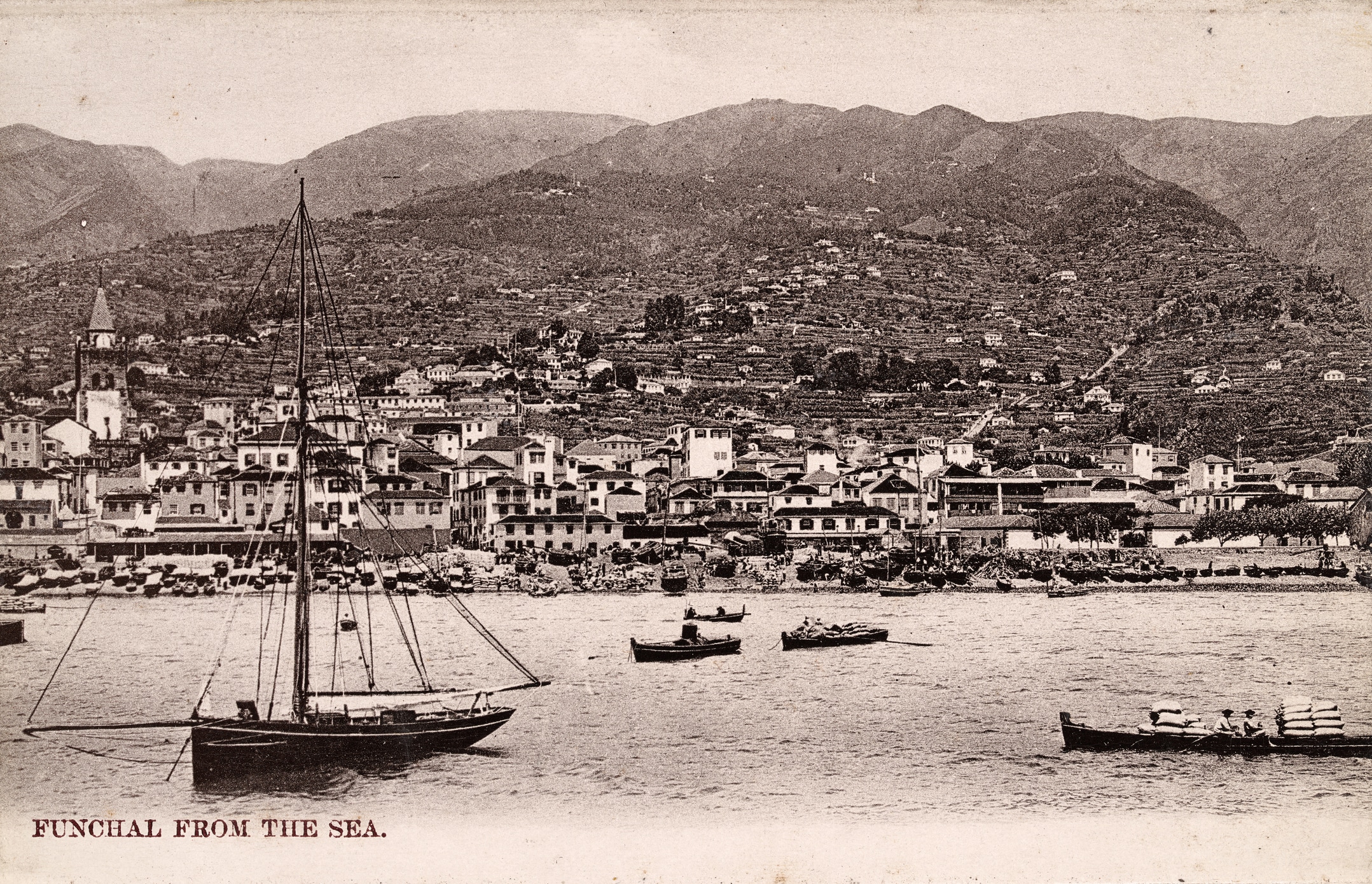
Funchal quickly became the main centre. Its name comes from the word funcho (fennel), a plant that grew here in abundance.
Who were the first settlers?
The island was settled mainly by people fleeing Portugal, persecuted Moors and Jews from Spain, as well as Dutch and Italians.
The Columbus connection – Porto Santo
A few years before his famous voyages across the Atlantic, Christopher Columbus lived on Porto Santo. He married Filipa Moniz, the daughter of Bartolomeu Perestrelo, the island’s first governor. At the time Columbus was a sugar trader and knew both the conditions for growing sugar cane and the sailing technique known as the Volta do mar. The experience he gained on Madeira influenced his later voyages.
You can still visit the Columbus House Museum on Porto Santo (Casa Colombo) – the building where the navigator lived.
The sugar era: the first economic boom (c. 1450–1600)
In the 1450s wheat production began to fall. Prince Henry ordered the settlers to plant sugar cane – Sicilian varieties were brought in, together with the know-how to grow them. The mild climate and plentiful water (thanks to the first levadas) created conditions in which the cane thrived.
Sugar production quickly became the engine of the economy. Funchal attracted merchants and adventurers from all over Europe – Italians, Basques, Catalans, Genoese and Flemings. In the second half of the 15th century Funchal became an essential port of call on Europe’s trade routes.
In 1570, at the height of its prosperity, Madeira had 40 sugar mills. Sugar was exported mainly to Portugal and Flanders (today’s Belgium).
Slavery – the dark side of the sugar plantations
The growth of the sugar plantations created a demand for labour. From 1452 enslaved people were brought to Madeira – first Berbers and Guanches from the nearby Canary Islands, later Africans. In the 16th century enslaved people probably made up 10% of the island’s population.
The colonial sugar production system – based on slave labour, wind-powered mills and access to the sea – was tested on a smaller scale on Madeira before being transferred to the Caribbean and Brazil.
Levadas – an irrigation system from the 15th century
The sugar economy made it necessary to build irrigation channels – the levadas. The first ones appeared from the 1450s onwards, carrying water from the wet north to the dry, sunny south of the island.
The levada system kept growing over the following centuries. Today it is a unique network of channels which, together with the distribution channels, totals about 3100 km and doubles as the backbone of the island’s walking trails (details in my guide to levada walks in Madeira). Levadas still do many jobs today – they supply people with water, irrigate crops and feed hydroelectric power stations.
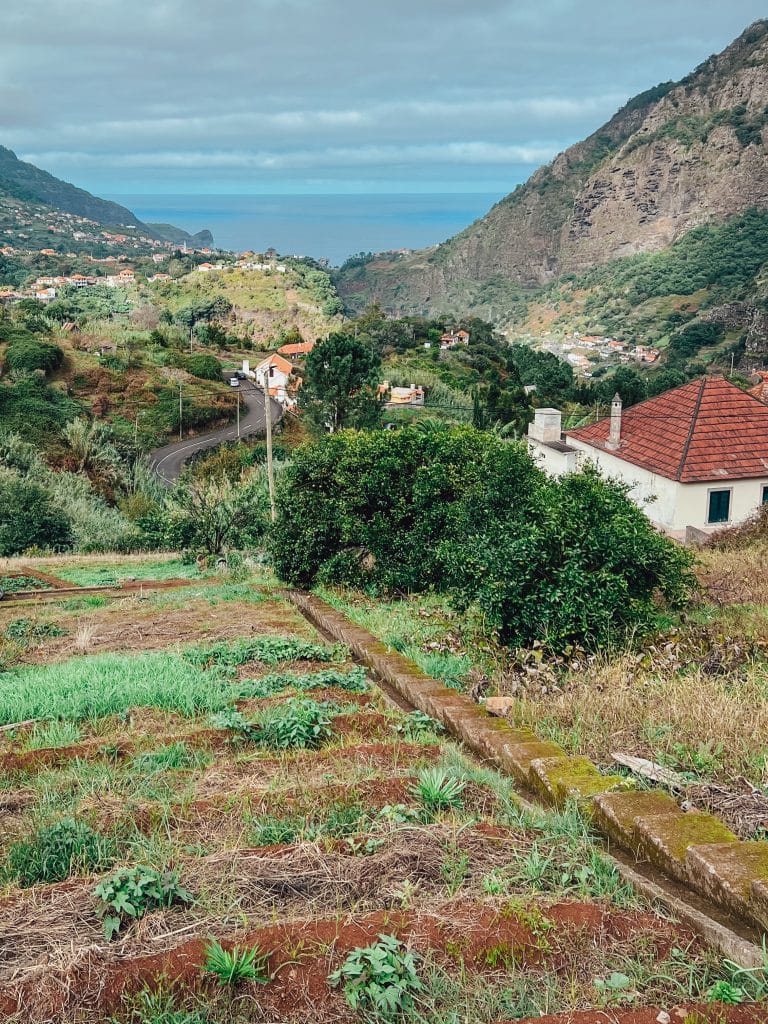
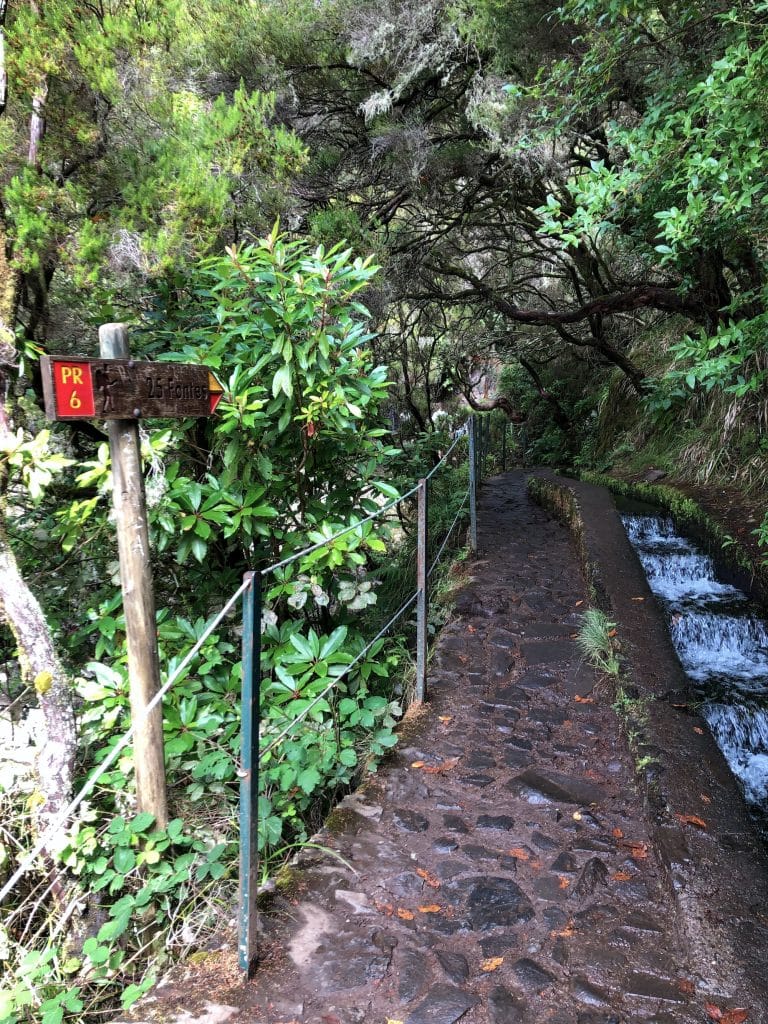
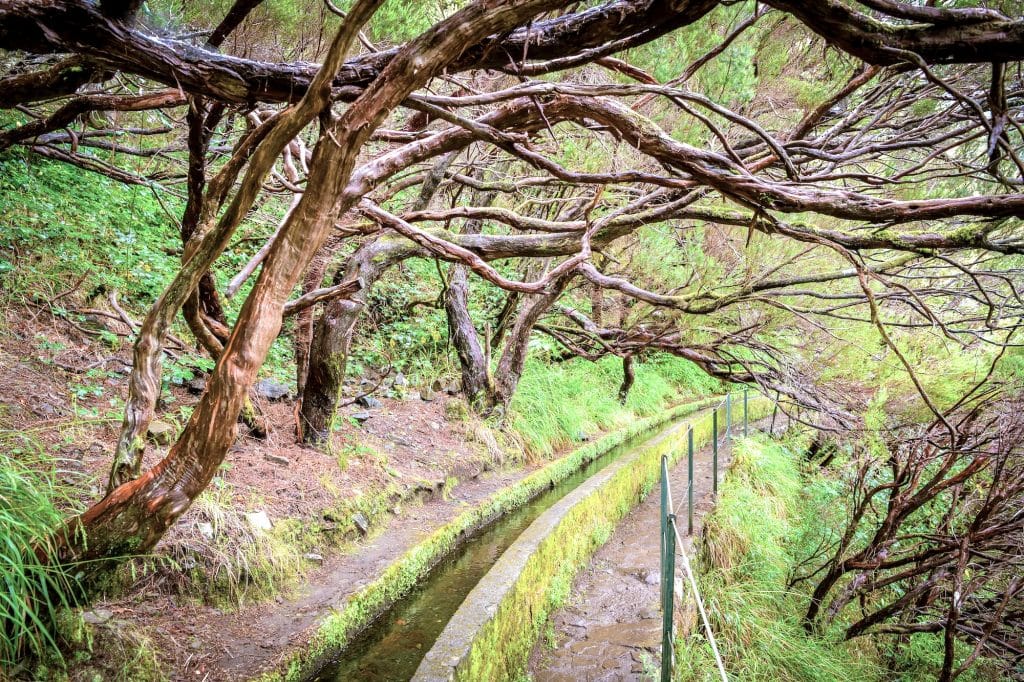
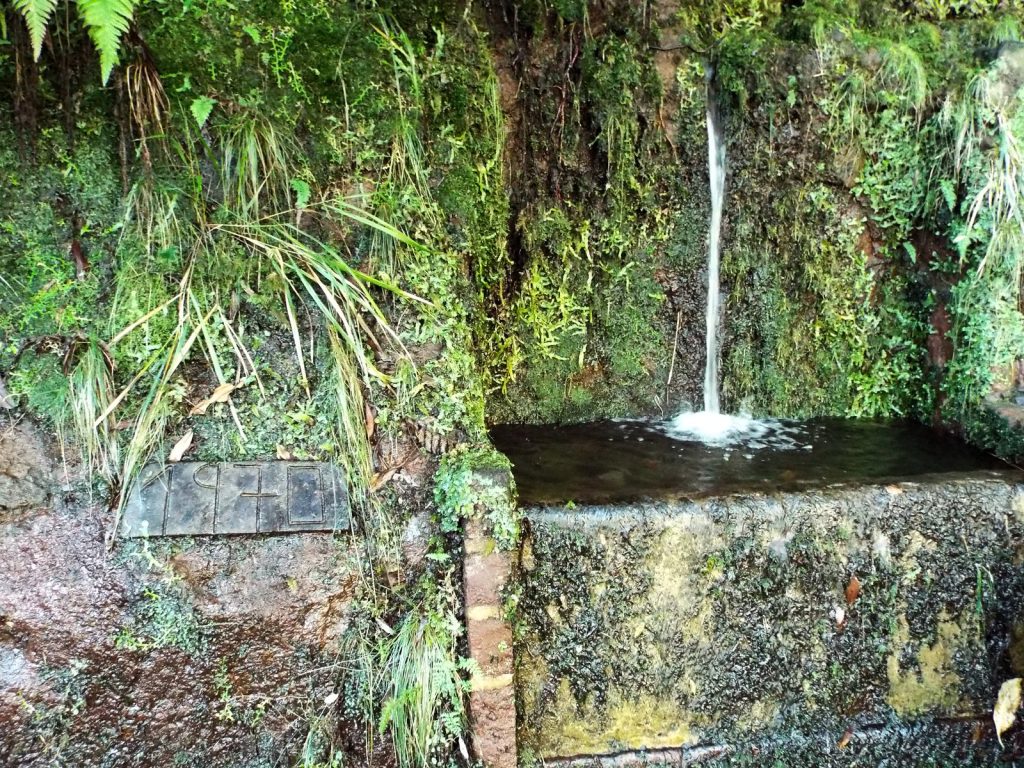
1: A levada on the way to Porto da Cruz, 2: PR6 Levada das 25 Fontes, 3: PR6 Levada das 25 Fontes, 4: A levada basin by the PR6 trail in Rabaçal, photo: Anita and Andrzej Podrez, February 2025
The end of the monopoly
In the late 16th and the 17th century Madeira gradually lost its position in sugar production. Competition from cheaper sugar from Brazil (a Portuguese colony) and São Tomé led to the collapse of the island’s sugar mills. By the end of the 17th century only 5 of the 40 mills were left.
The Iberian Union (1580–1640)
An often overlooked but important period: from 1580 to 1640 Madeira, like the whole of Portugal, was part of the Spanish empire (the Iberian Union). In 1586 the island was placed under the authority of a governor, gradually turning it into a crown colony.
Madeira wine: a new speciality (from the 17th century)
After Portugal regained its independence and drew closer to Great Britain, Madeirans began to grow rich on trade, especially with the New World. By 1676 the island had 50,000 inhabitants, 10,000 of them in Funchal, which had become a cosmopolitan port – almost every ship sailing from the colonies to Lisbon called here.
In the 17th century winegrowing took centre stage. Wine had been made on Madeira before (vines were probably brought over as early as the 15th century), but now it became the main export.
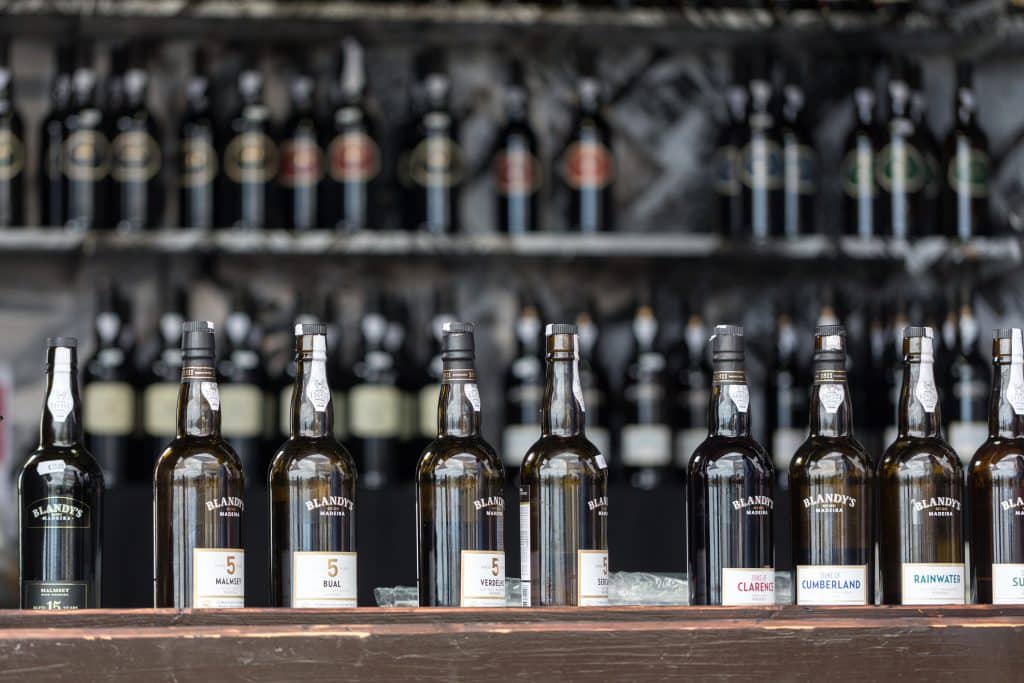
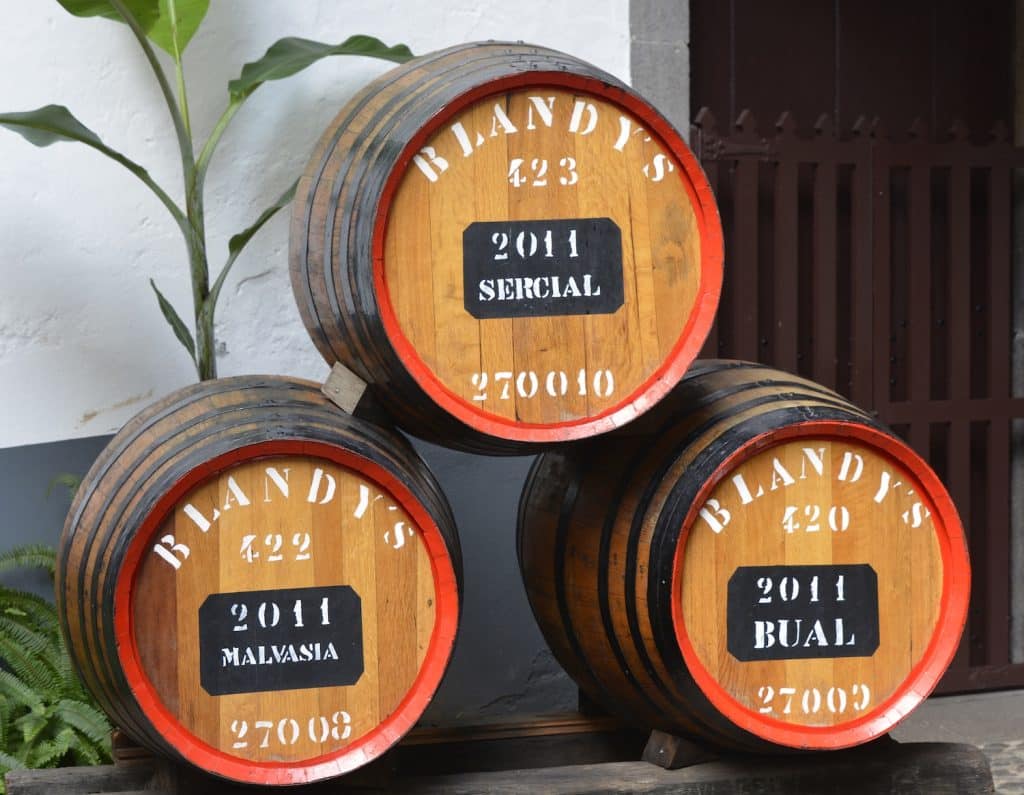
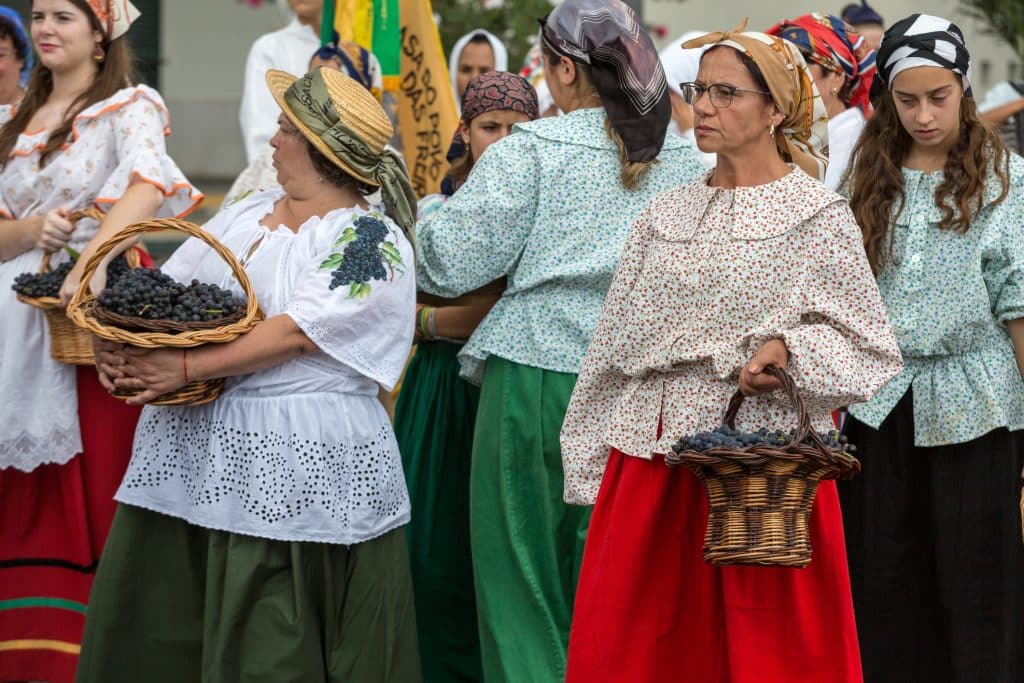
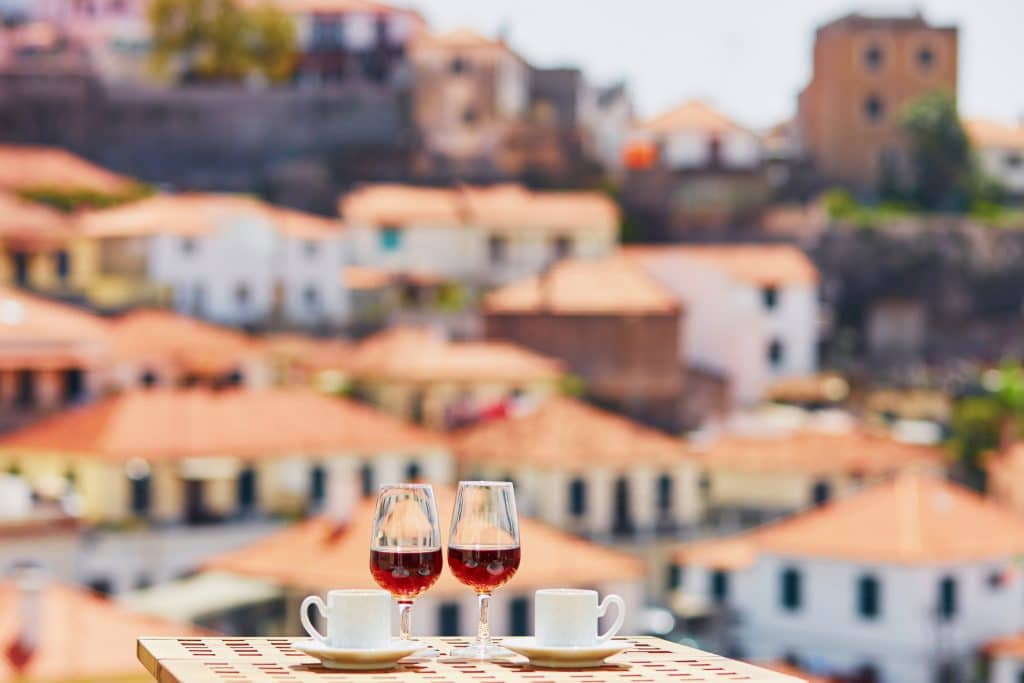
Why did Madeira wine taste so special?
The key to its success was the discovery of estufagem – heating the wine. According to tradition, it happened by accident: on long voyages through the tropics the casks in the hold warmed up, and on its return the wine had a better, caramel flavour than before the journey.
In time, producers began heating the wine on purpose in special rooms (estufas) or leaving the casks in the sun (vinho ao canteiro – the method used for the finest vintages).
Madeira wine in world history
In the 17th and 18th centuries Madeira wine became one of the most popular luxury drinks in the colonial Western world.
According to tradition, the Founding Fathers of the USA toasted the signing of the American Declaration of Independence in 1776 with Madeira wine.
British influence: from merchants to sanatorium (17th–19th centuries)
British wine merchants
As trade treaties with England multiplied, influential English merchants settled on Madeira and eventually took control of the increasingly important wine trade. The English traders consolidated markets in North America, the West Indies and England itself.
Besides trading, the British founded schools, built churches and cemeteries and invested in all sorts of businesses – tourism, furniture-making, rope-making and embroidery (the famous Madeira embroidery).
Many of the trading houses still exist today: Blandy’s (since 1811), Cossart Gordon and Leacock’s.
The British occupation (1801–1814)
During the Napoleonic Wars Great Britain occupied Madeira twice – in 1801–1802 and 1807–1814. Both occupations were temporary and accepted (under pressure) by the Portuguese government, but they show how strategically important the island was to the British Empire – both as a base on the route to India and as a centre of the wine trade.
Madeira as a sanatorium for Europe’s elite
In the 19th century Madeira became famous as a health resort. Its mild, stable climate (an annual average of 22.6°C by day and 16.5°C at night on the coast) drew people with tuberculosis and those looking to convalesce.
Visitors fell into four groups: patients, travellers, tourists and scientists. Most belonged to the wealthy aristocracy. The first travel guide to Madeira was published in 1850.
Famous guests of sanatorium-era Madeira:
- Empress Sisi (Elisabeth of Bavaria) – spent the winter of 1860–61 on the island (November 1860 to April 1861), recovering from tuberculosis and from the depression she had fallen into at the Viennese court
- Winston Churchill – visited Madeira twice: briefly in 1899 (on his way to the Boer War) and in January 1950, when he stayed at Reid’s and painted in his beloved Câmara de Lobos.
Reid’s Palace Hotel
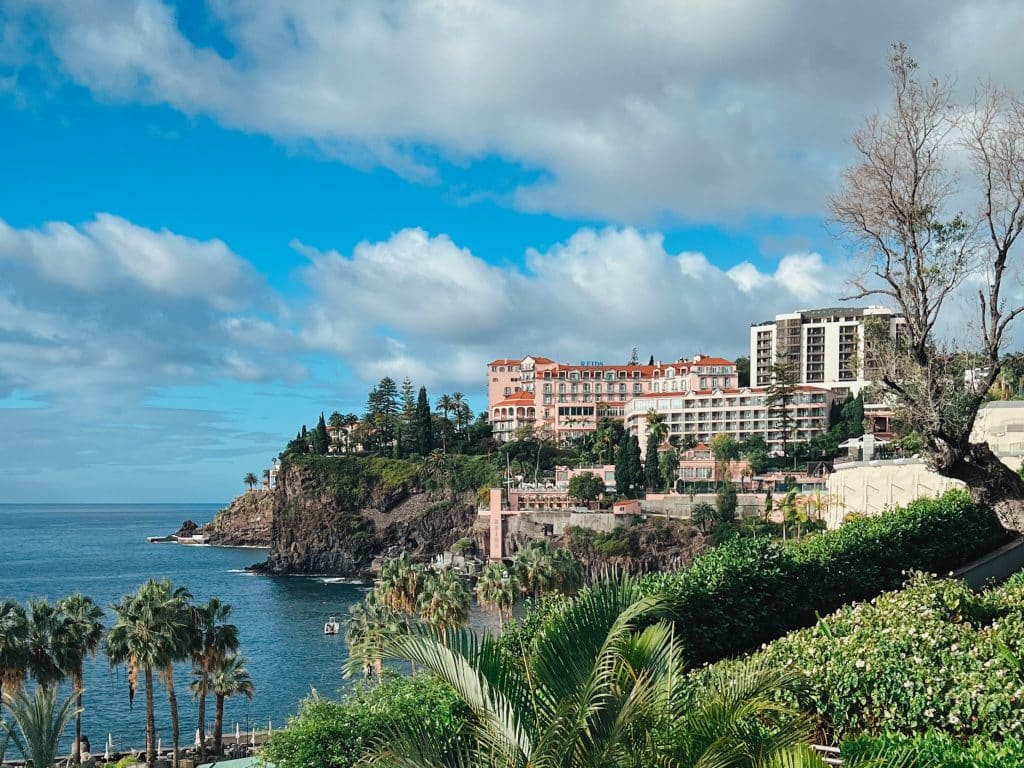
In 1891 “Reid’s New Hotel” opened – a luxury hotel on a clifftop, planned by the Scottish businessman William Reid and opened after his death (1888) by his sons. It still operates today as the five-star Belmond Reid’s Palace.
The 20th century: wars, exile, revolts
The First World War – Madeira under fire
Contrary to what you might think, Madeira did not sit out the First World War in peace.
On 3 December 1916 the German submarine U-38 entered Funchal harbour. It torpedoed and sank three ships (the British cable ship Dacia, the French transport Kanguroo and the French gunboat Surprise – 35 of her crew were killed). After attacking the ships, the U-boat shelled Funchal for two hours from a distance of about 3 km. Madeira’s batteries returned fire and eventually forced the U-boat to withdraw.
The second attack came on 12 December 1917, when two U-boats (U-156 and U-157) shelled Funchal again. This time the bombardment lasted about 30 minutes, with 40 shells of 120 and 150 mm calibre fired. Three people were killed and 17 injured, and houses and the Santa Clara church were damaged.
In 1927, at Terreiro da Luta, the priest José Marques Jardim put up a monument more than 5 metres tall, Nossa Senhora da Paz (Our Lady of Peace), to mark the end of the war. The anchor chains of the sunken ships were built into its base.
Charles I of Austria – an emperor in exile
After the First World War, Charles I (Karl I) of the House of Habsburg, the last emperor of Austria-Hungary, was exiled to Madeira after two failed attempts to regain the Hungarian throne. The council of the Allied powers chose Madeira because it was isolated in the Atlantic and easy to keep watch over. Charles I died on the island on 1 April 1922. His coffin rests in a chapel of the church of Nossa Senhora do Monte.
Piłsudski in Madeira – a Polish connection
A Polish thread in the island’s story: Józef Piłsudski, the Polish marshal and statesman, stayed on Madeira from 21 December 1930 to 23 March 1931. His stay is commemorated by a plaque at the Quinta Bettencourt villa on the outskirts of Funchal and by a bust in central Funchal.
Piłsudski celebrated his name day during his stay. To mark the occasion, a campaign was launched in Poland to send cards to the island – more than a million postcards were sent from all over the country. They were to be delivered by the “Wicher”, Poland’s newest destroyer, freshly completed in France.
There is also a Portuguese legend that Ladislaus III of Varna, King of Poland and Hungary, settled on Madeira after the Battle of Varna.
The Madeira Revolt of 1931
In 1931 a rebellion broke out on the island against General Carmona’s dictatorship in Lisbon. The immediate cause was a restriction on the right to mill flour, which pushed up the price of bread and triggered an economic crisis. After some initial success, the rebellion was crushed by troops sent from Lisbon.
The Second World War
Portugal was neutral (and from 1943 non-belligerent). Thanks to the Anglo-Portuguese alliance (the Treaty of Windsor of 1386 – the oldest alliance in the world still in force), Madeira took in refugees.
In July 1940 about 2000 Gibraltarians were evacuated to the island, as Gibraltar was under threat of a possible attack by Spain or Germany. On the island they were called Gibraltinos. Some of them married Madeiran women and stayed after the war.
On 12 November 1940 Hitler issued Directive No. 18, which considered invading Portugal and seizing Madeira and the Azores. It was never carried out.
The Carnation Revolution and autonomy
After the Carnation Revolution of 1974 and the fall of the dictatorship, Madeira became an Autonomous Region on 1 July 1976. It gained its own regional government and parliament (Assembleia Legislativa da Madeira).
Modern Madeira
Joining the EU and new infrastructure
When Portugal joined the European Economic Community in 1986, Madeira gained access to structural funds.
The results include:
- The Vias Rápidas (expressways) – for example the 44.2 km VR1 with 30 tunnels, linking Funchal with the airport and the commercial port at Caniçal
- The expansion of the airport (now Cristiano Ronaldo International Airport, named after the most famous footballer born on Madeira), with direct flights to more than 30 airports in Europe
UNESCO heritage
In 1999 Madeira’s laurel forest (Laurissilva) was added to the UNESCO World Heritage List. It is the largest surviving area of subtropical laurel forest – a relic of the forests that covered Europe millions of years ago. The listed forest covers about 15,000 ha, roughly 20% of the island.
Renewable energy – levadas in the 21st century
A fun fact: today the levadas serve not only walkers but also the power supply. The Socorridos hydroelectric plant, fed by water carried along the levadas, is the island’s main hydraulic system. In the first half of 2022, 33% of Madeira’s electricity came from renewable sources – as part of an EU co-funded project worth €34.7 million.
Madeira today – good to know
- Capital: Funchal – about 106,000 inhabitants in the 2021 census, about 42% of the archipelago’s population
- The whole archipelago: 250,744 inhabitants in the 2021 census, and about 266,000 at the end of 2025
- Area: 801 km² (Madeira island alone: 741 km²)
- Airport: Cristiano Ronaldo International Airport – direct flights to more than 30 European cities
- Getting around: since 1 July 2024 the buses have run as one network, SIGA, made up of Horários do Funchal (Funchal), SIGA Rodoeste (the west of the island) and CAM (the east and north)
- Climate: subtropical; in Funchal an annual average of 20.0°C, about 23°C by day and about 17°C at night (IPMA 1991–2020)
Following history: what to see
Funchal – the old town and museums
- Zona Velha (Old Town) – Funchal’s oldest lanes and historic architecture from the 16th–19th centuries
- Museu Quinta das Cruzes – a historic residence with collections of furniture and porcelain
- Museu da Cidade do Açúcar (Sugar Museum) – the story of the sugar era
- Sé do Funchal cathedral – Gothic, from the 15th century
- Fortaleza de São Tiago – a 17th-century fort, currently closed to visitors (only the restaurant is open)
Wine – quintas with tastings
- Blandy’s Wine Lodge (Funchal) – cellars dating back to the 19th century
- Pereira d’Oliveira (Funchal)
- H.M. Borges (Funchal)
Monte and around
- Igreja de Nossa Senhora do Monte – the church whose chapel holds the coffin of Charles I of Austria
- Terreiro da Luta – the Nossa Senhora da Paz monument with the chains of ships sunk in the First World War
Porto Santo
- Casa Colombo (Columbus House Museum) – the building where Columbus lived
Levadas – living engineering heritage
A network of about 3100 km of irrigation channels (including the distribution channels) built between the 15th and 20th centuries, which today forms the backbone of the walking trails and still does its economic job.
Frequently asked questions about Madeira’s history
Which country does Madeira belong to?
Madeira belongs to Portugal. Since 1 July 1976 it has been an autonomous region with its own regional government and parliament.
When was Madeira discovered?
The Portuguese reached Porto Santo in 1418 and Madeira in 1419–1420, sent by Henry the Navigator. Zarco, Teixeira and Perestrelo are regarded as the discoverers.
Where does the name Madeira come from?
In Portuguese “madeira” means wood. The island was covered in dense forest, hence the name.
Who lived on Madeira before the Portuguese?
Nobody. The island was uninhabited, although according to some theories ancient sailors may already have known the archipelago.
Since when has Madeira been part of the European Union?
Together with Portugal, since 1986, when the country joined the European Economic Community.
📚 Bibliography and sources (9)
Sources I used for this article:
- Oliveira Marques, A.H. – Historia Portugalii (Polish edition of his History of Portugal), vol. 1, Warsaw: PWN, 1987
- Vieira, A. – Slaves with or without Sugar, Autonomous Region of Madeira, 1996
- Gregory, D. – The Beneficent Usurpers: A History of the British in Madeira, 1988
- Gomes Eanes de Zurara – The Chronicle of the Discovery and Conquest of Guinea (15th century)
- The official Visit Madeira guide – visitmadeira.com
- Instituto Nacional de Estatística (INE) – Censos 2021: ine.pt
- Instituto Português do Mar e da Atmosfera (IPMA) – climate data: ipma.pt
- The madera.org.pl portal (in Polish) – Józef Piłsudski on Madeira
- my own notes and memories from trips to Madeira, 2023–2026
Looking for a place to stay in Madeira? Compare hotels, apartments and houses across the island on Booking.com, with reviews and free cancellation on many offers.