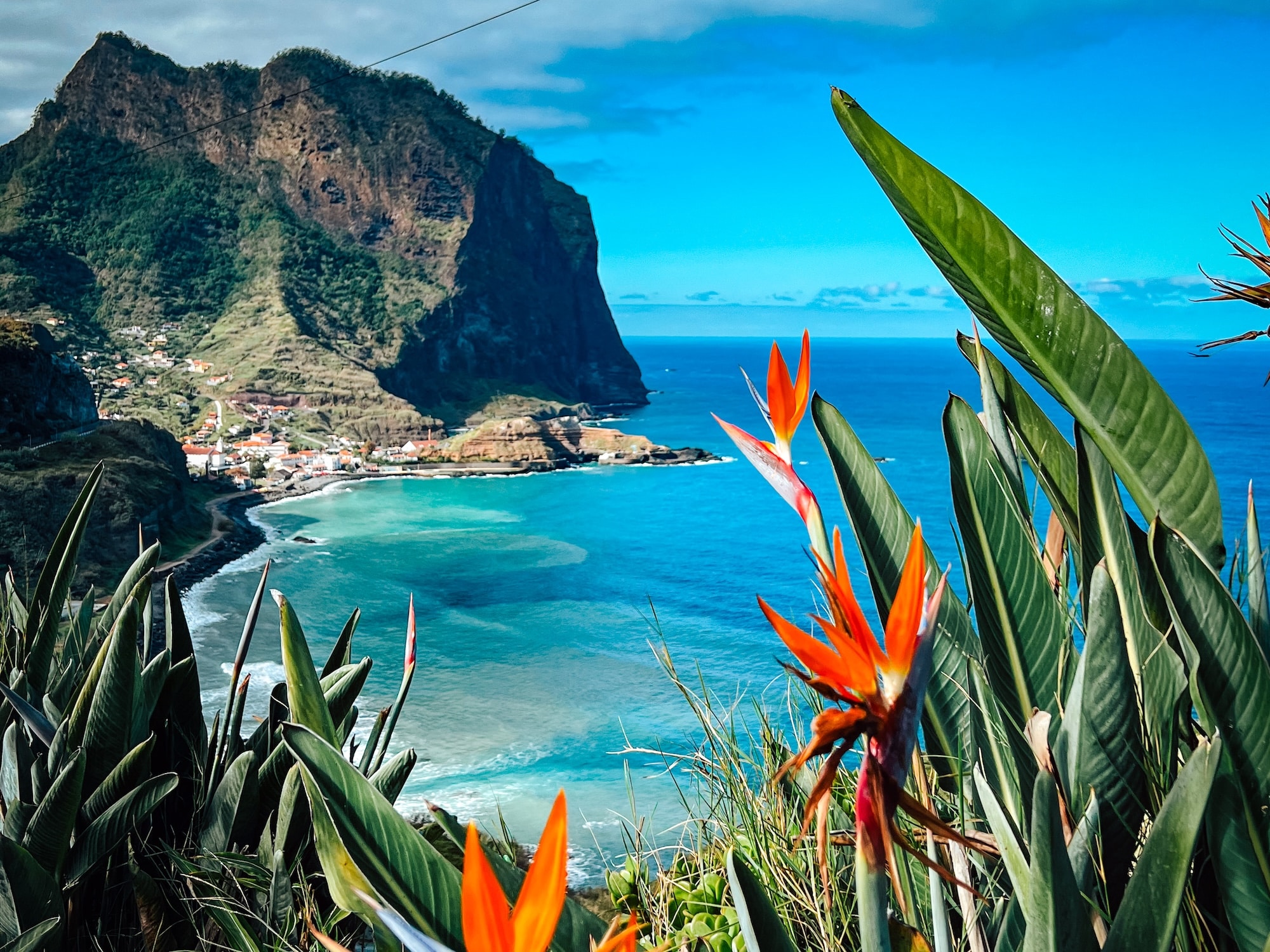
Madeira is not just another island in the Atlantic. You won’t find sandy beaches like on Tenerife, all-inclusive resorts like on Majorca, or the calm of a Scandinavian coastline like on the island of Bornholm.
Madeira is a volcanic Portuguese island where, on the same day, you can walk along a levada through subtropical forest, eat fresh black scabbardfish in a fishing harbour and be back in town for a carnival parade. Where the Atlantic meets mountains rising to almost 1900 metres, and trails run alongside irrigation channels dating back to the 15th century.
I’ve spent many weeks in Madeira – in winter, spring and autumn. I know one thing: your first visit is only a reconnaissance. The real Madeira begins when you stay longer.
Looking for a place to stay in Madeira? Compare hotels, apartments and houses across the island on Booking.com, with reviews and free cancellation on many offers.
Key facts: size, population and time zone
Madeira is a Portuguese island in the Atlantic Ocean, about 970 km south-west of Lisbon and about 700 km west of the coast of Morocco. It is the largest island of the Madeira archipelago, which forms an autonomous region of Portugal within the European Union. This is the island known as Portugal’s “island of eternal spring”.
Madeira in numbers
A car from the airport: compare car hire prices at Madeira Airport (FNC) on DiscoverCars.
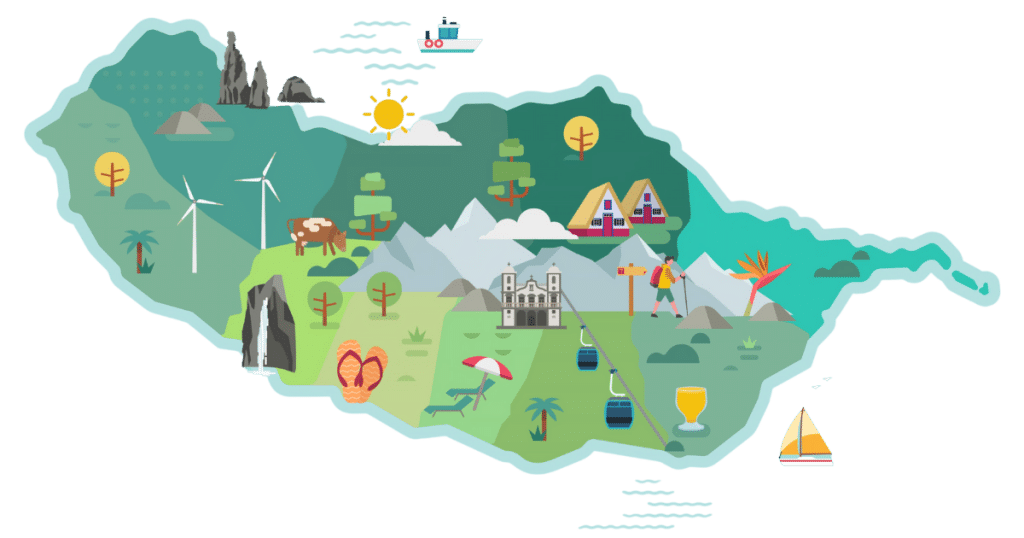
Where is Madeira? Map
Madeira lies in the Atlantic Ocean, roughly level with Morocco (about 32–33° north). From Funchal it’s about 970 km to Lisbon as the crow flies, about 700 km to the nearest African coast in Morocco, and about 3700 km to Warsaw. So geographically Madeira is closer to Africa than to Europe, but it belongs to Portugal and the European Union.
The island itself is about 57 km long and 22 km wide, with an area of about 741 km². A mountain range runs through the middle, topped by the highest peak, Pico Ruivo (1862 m). The whole archipelago covers 801 km² and is made up of four parts:
| Island | Area, location, population |
|---|---|
| Madeira | about 741 km²; the main island, with Funchal and the airport; about 259,000 inhabitants |
| Porto Santo | about 42 km²; about 70 km north-east of Funchal (ferry or plane); about 6900 inhabitants |
| Desertas | about 14 km² (Deserta Grande, Bugio and Ilhéu Chão); 20–40 km south-east of Madeira’s eastern tip; uninhabited nature reserve |
| Selvagens | about 3 km² (Selvagem Grande, Selvagem Pequena and Ilhéu de Fora); about 300 km to the south, closer to the Canary Islands; uninhabited nature reserve |
Map of the island with the places in this guide
On the map below I’ve marked the places I write about in this guide. You can zoom in and move it around.
Plan your trip: the key guides
This page is your starting point. You’ll find the details, prices and directions in separate guides, grouped by planning stage.
How to get to Madeira
For most travellers the only way to get here is to fly to Aeroporto da Madeira Cristiano Ronaldo (FNC) in Santa Cruz, about 13 km east of Funchal as the crow flies (about 20 km by expressway).
Your options:
- Direct flights from the UK and many EU airports.
- Flights with a change, most often in Lisbon or Porto (TAP, easyJet, Ryanair).
How to get from the airport to Funchal
- Metered taxi: about €30 to central Funchal during the day and about €35 at night and at weekends, plus €1.50 per piece of luggage (calculated from the fares in force since 1 January 2026).
- Bolt: usually cheaper than a taxi, but the price depends on the time of day and demand. Fares go up for hotels outside the centre.
- Aerobus to the centre (€6–7).
Bolt turned out to be my main way of getting around Funchal – faster than the buses, cheaper than a taxi.
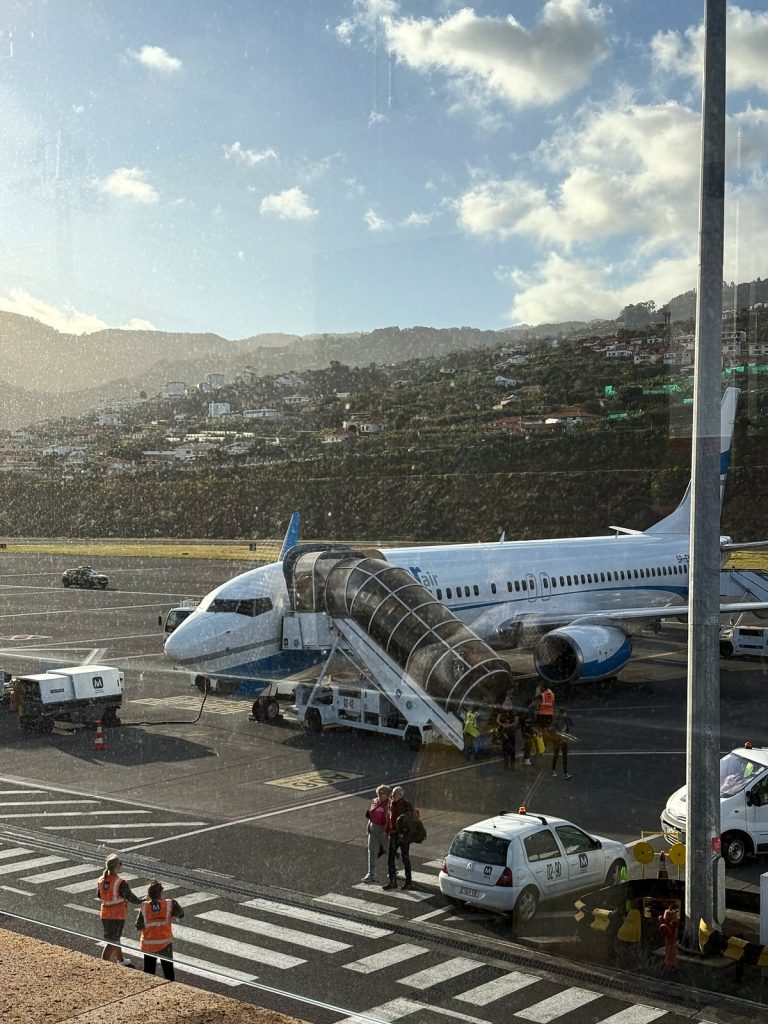
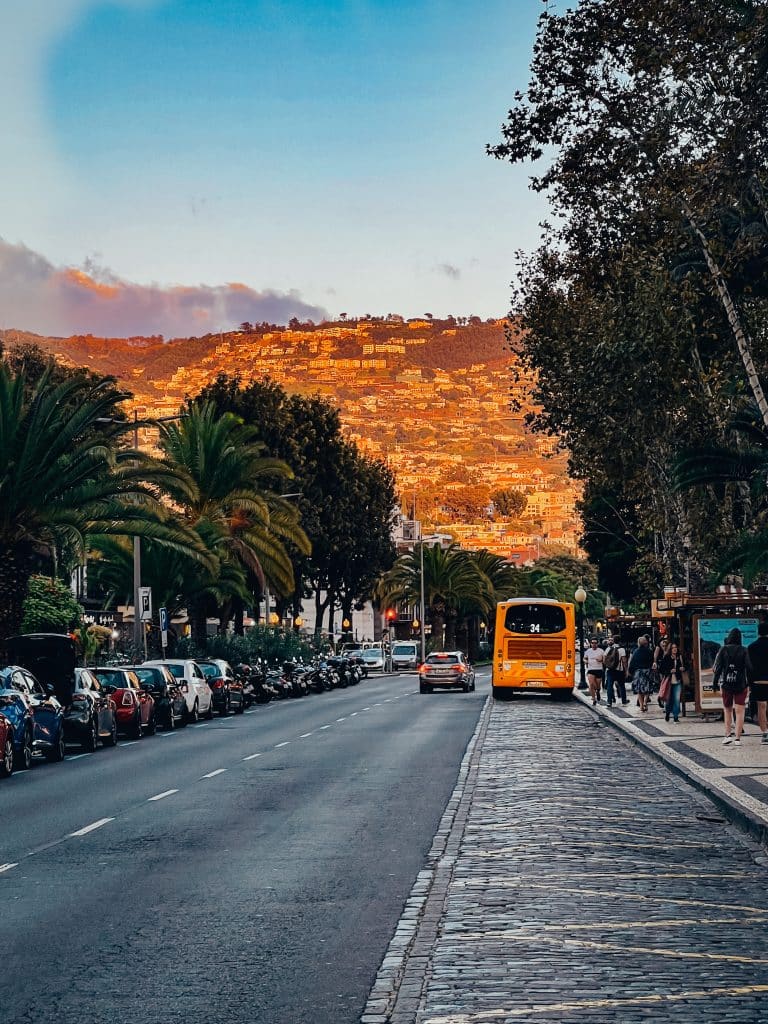
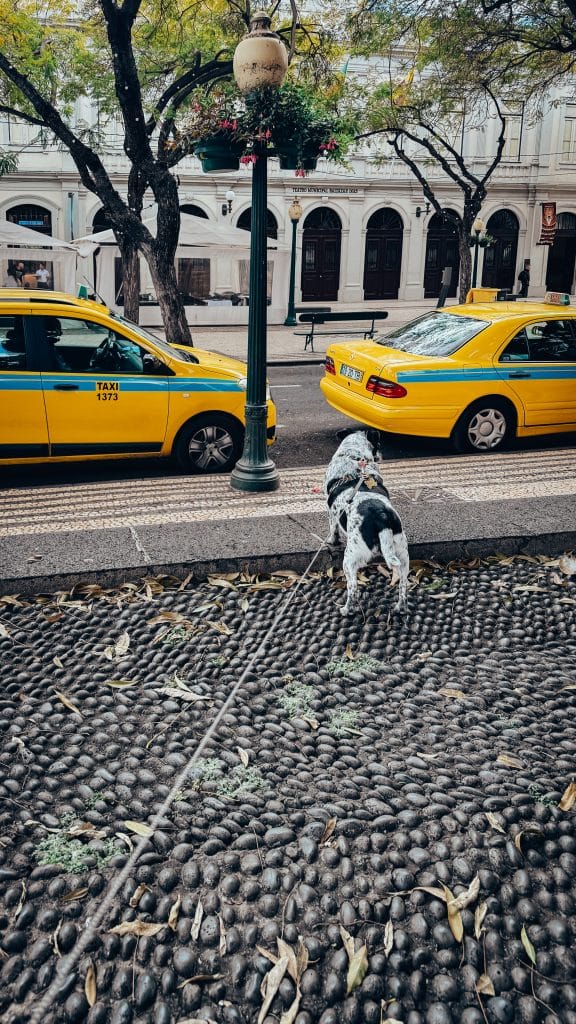
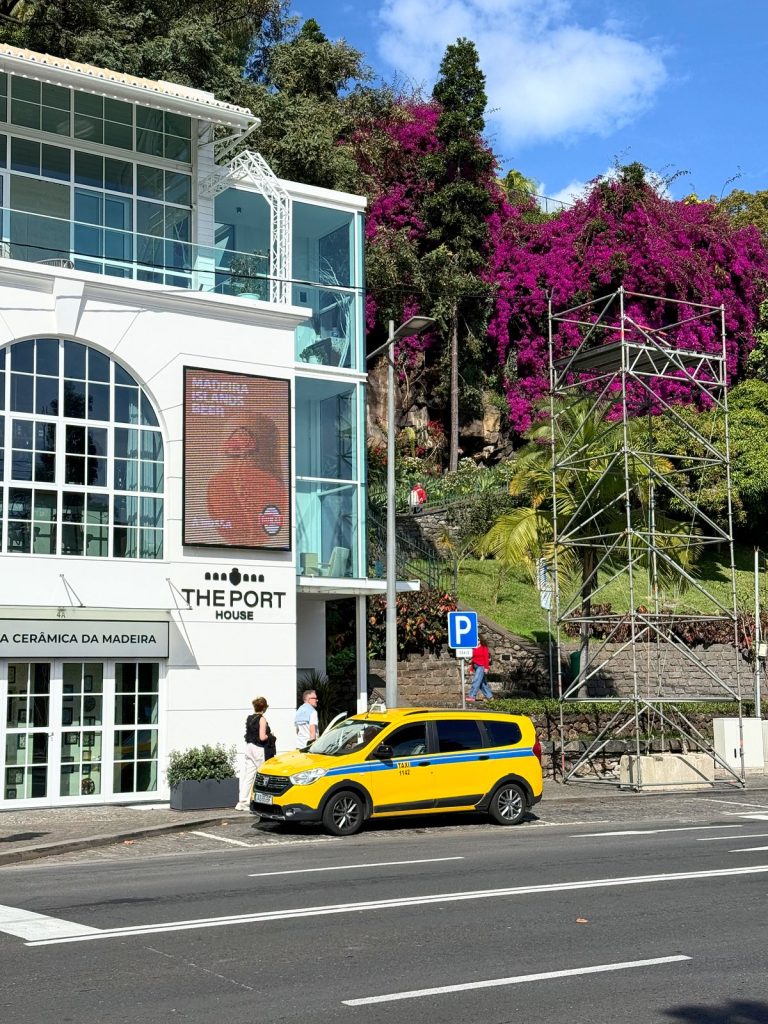
1: Madeira airport – a plane on the apron, seen from the terminal, 4: A yellow taxi in Funchal. Photos: Ewelina Podrez-Siama February 2026
Madeira by ferry
There’s no regular passenger ferry from mainland Portugal. Cruise ships call at the island regularly – an option if you’d like a short visit to Funchal and enjoy that way of travelling.
History of Madeira – from discovery to autonomy
Discovery (1419): Madeira was officially discovered by the Portuguese navigators João Gonçalves Zarco and Tristão Vaz Teixeira on an expedition sent by Henry the Navigator. The island was uninhabited and covered in dense laurel forest (hence the name “Madeira”, which means wood in Portuguese).
Settlement and the burning of the forests (1420–1450): The first settlers burned large parts of the forest to make room for crops. Legend has it that the fires burned for 7 years – probably an exaggeration, but the clearing was certainly intense.
The sugar era (15th–17th century): Madeira became one of Europe’s main sugar cane producers. The wealth from the sugar trade paid for the levadas – the irrigation system that is now the island’s main tourist attraction.
Madeira wine (from the 17th century): When sugar production moved to Brazil, Madeira turned to wine. Madeira wine became famous thanks to its unique production process – heating and oxidation – which meant it survived long sea voyages.
Autonomy (1976): After the Carnation Revolution in Portugal (1974), Madeira became an autonomous region with its own parliament and government.
Today: Madeira lives mainly from tourism, wine and bananas.
 Read nextMadeira history. 📜 The story of a Portuguese islandMadeira has only 600 years of documented history – not much by European standards. From the Portuguese discovery in 1419, through the sugar era,
Geography and geology
Madeira is the top of a volcano rising from the floor of the Atlantic. Most of the mountain is hidden under water.
A mountain range with Pico Ruivo (1862 m) runs through the middle of the island, dividing the humid, green north from the drier, sunnier south.
Volcanic origins
Madeira was formed by volcanic activity that began about 5–7 million years ago. The island was built in three main geological phases:
- the oldest basalt formation (the eastern part),
- the middle phase (the main massif),
- the youngest volcanic activity in the west (Paul da Serra).
Madeira’s geology and what it means for visitors
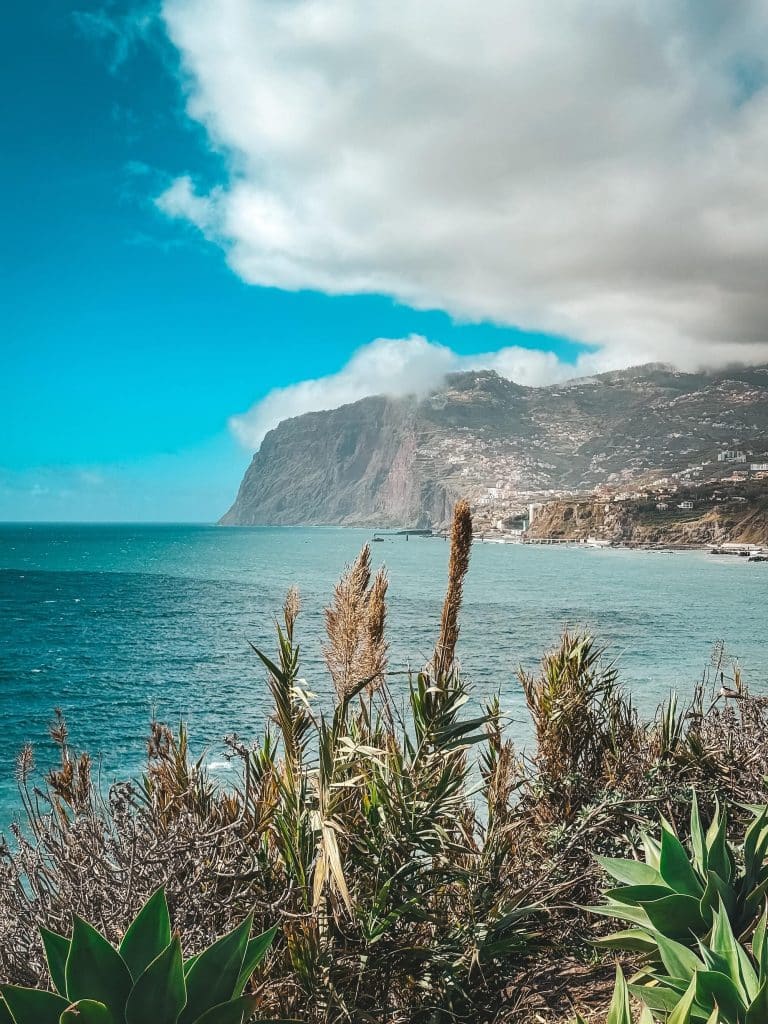
This geology gives Madeira its dramatic, one-of-a-kind landscapes – steep cliffs on one side (Cabo Girão: 580 m high, one of the highest sea cliffs in Europe), deep valleys carved by erosion on the other, and of course the levadas (irrigation channels that now double as walking trails and routes).
The basalt rock forms a natural network of fissures that carries water from the humid interior of the island – which is why the irrigation channels worked at all.
Madeira’s climate – the island of eternal spring
Madeira lies at the same latitude as Morocco, but the cool Canary Current and steady trade winds keep temperatures in a comfortable range all year round. “The island of eternal spring” – that’s how Madeira markets itself. And it’s true, but with an asterisk.
Madeira’s microclimates
The island is so varied that you can get 4 different kinds of weather on the same day:
- Funchal and the south coast: Warm, sunny, sheltered from the wind
- The north coast: Humid, often misty, 2–3°C cooler
- The mountains (above 1500 m): Can be cold even in summer, snow in winter
- Paul da Serra (the plateau in the west): Windy, often misty, 1300–1500 m above sea level
Temperatures and rainfall
Average temperatures:
- The coolest month is February: 16.8°C on average (about 20°C by day, about 14°C at night).
- The warmest is August: 23.7°C on average (about 27°C by day, about 21°C at night).
- The annual average in Funchal is 20.0°C, and there are no frost days at all (IPMA 1991–2020).
Rainfall: Most rain falls from October to March, the least from June to August. The north of the island is much wetter than the south – Funchal gets 574 mm of rain a year on average (IPMA 1991–2020), the mountains in the centre over 3000 mm. I go through it month by month in my guide to Madeira weather.
In practice: what it’s really like
February/March: I’ve been twice – once I got a week of sunshine (18–21°C, perfect hiking weather), the other time a crazy month of downpours and snow on Pico do Arieiro. On the same day I could sunbathe on the terrace and freeze in the mountains. Never a dull moment.
Pluses of February: Carnival in Funchal, even fewer tourists on the trails, lower accommodation prices.
November: Very warm, comfortable temperatures for walking. The downside: the midges bite like mad – insect repellent is a must.
What this means for your visit
- Windproof jacket – even in August (it can be cold in the mountains)
- Layers – you’ll be taking them off and putting them back on several times a day
- In March it can snow on Pico do Arieiro while you’re in a T-shirt in Funchal on the same day – I found that out first-hand
- Humidity of 70–80% all year round – great for plants, less so for rheumatism
Nature and plant life
This unique climate makes Madeira’s nature truly extraordinary.
The laurel forest (Laurisilva)
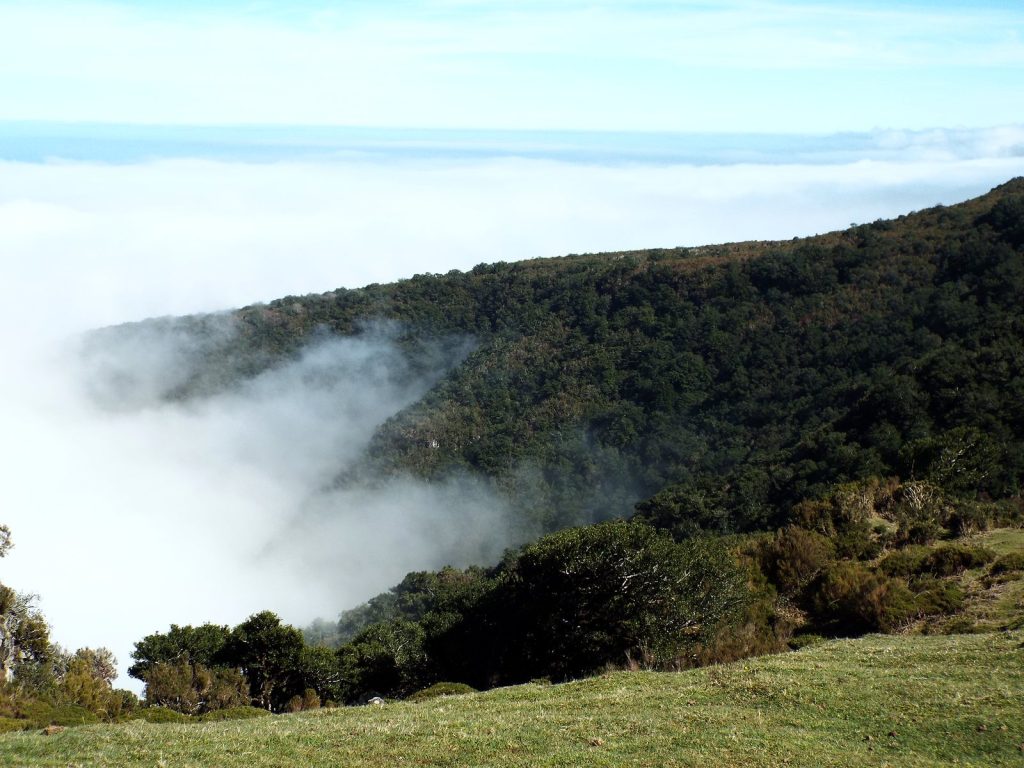
The laurel forest is a relic of the Tertiary period that survived the Ice Age and today grows in only a few places in the world (Madeira, the Azores, the Canary Islands). In Madeira it covers about 15,000 hectares (20% of the island) and is on the UNESCO World Heritage List.
Laurisilva is a dense, humid forest made up mainly of laurel species, ocotea (til) and barbusano. It works like a sponge – it soaks up moisture from the trade-wind mists and slowly releases it into the levada system.
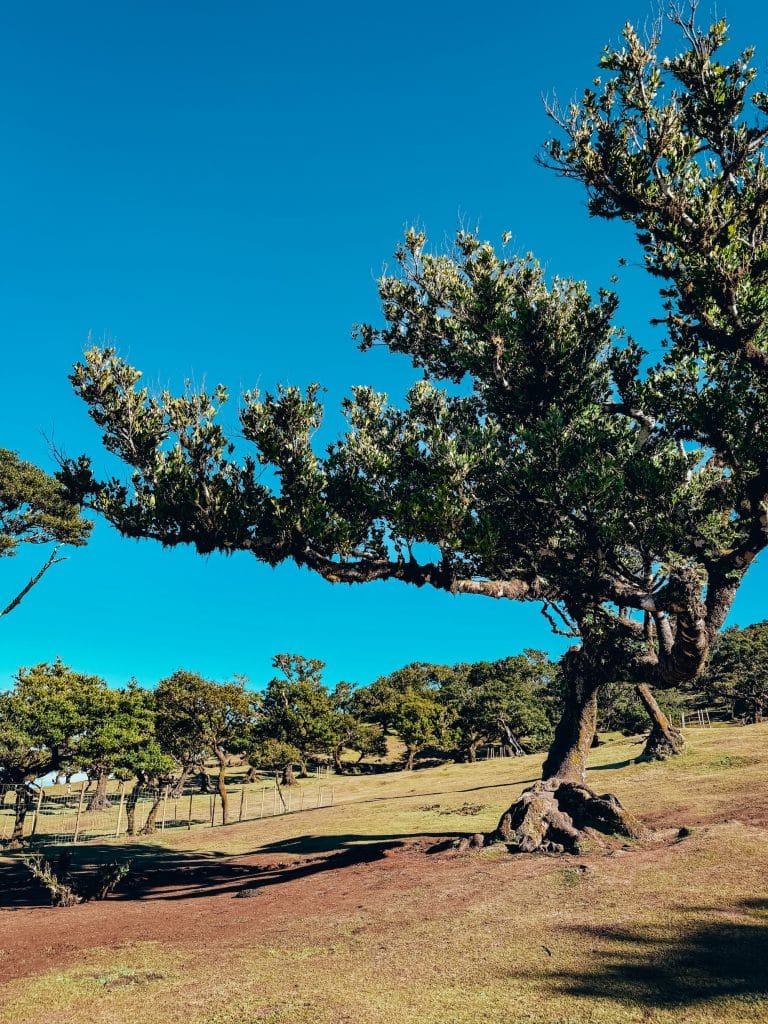
Photo: Ewelina Podrez-Siama – February 2026
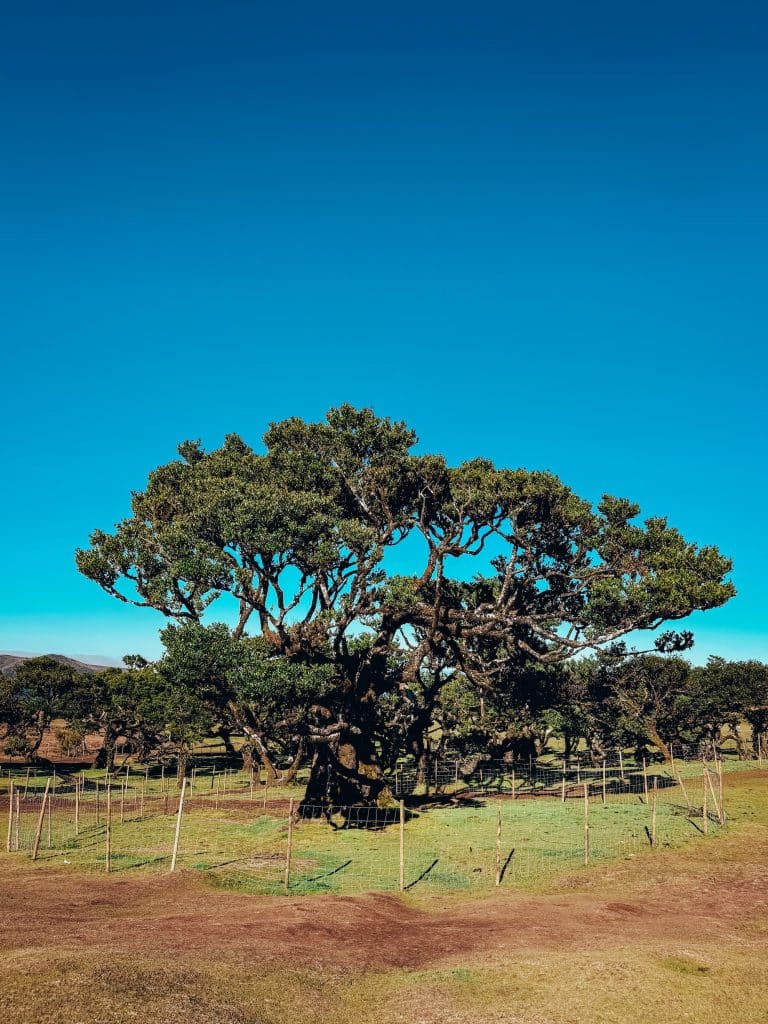
Photo: Ewelina Podrez-Siama – February 2026
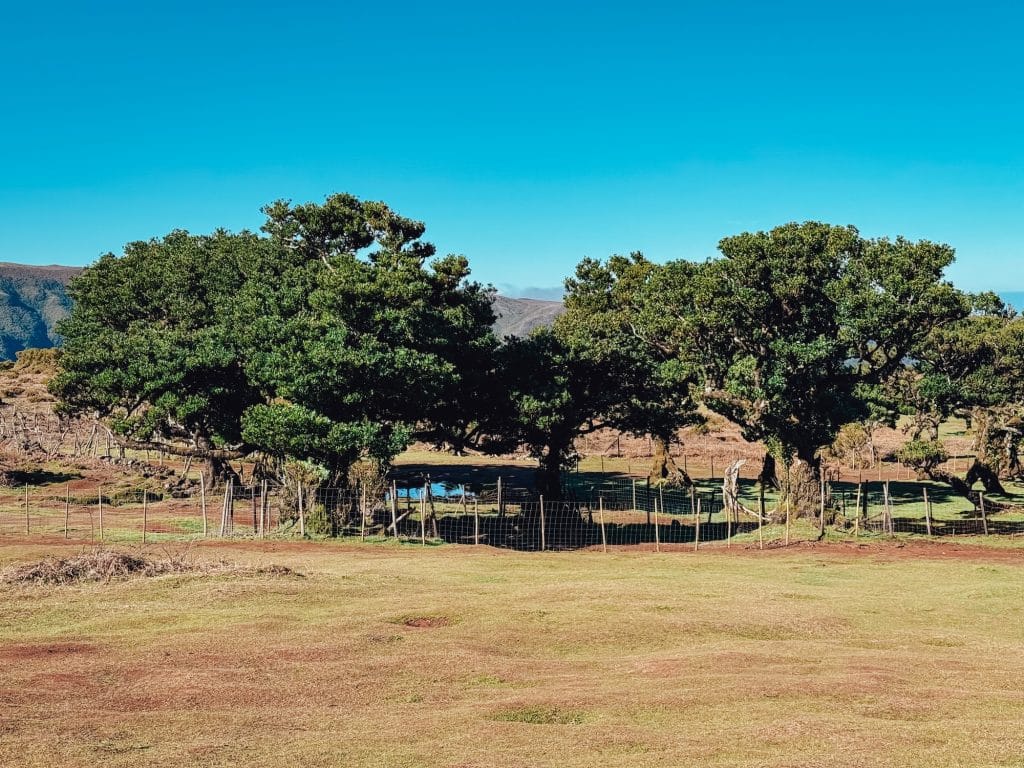
Photo: Ewelina Podrez-Siama – February 2026
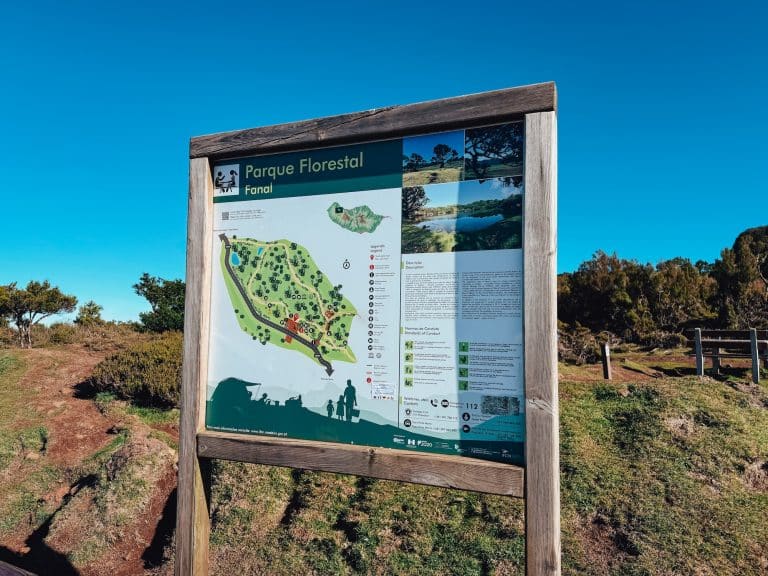
1: A single til tree with its characteristic horizontal branch and lichen on the bark. On a sunny day you can see every detail – the texture of the bark, the green lichen, the way it branches out.
Photo: Ewelina Podrez-Siama – February 2026, 2: A monumental fenced-off til tree – one of the most famous in Fanal. Some of the oldest trees are fenced off to protect them because of their age and natural value.
Photo: Ewelina Podrez-Siama – February 2026, 3: Old til trees fenced off for protection, typical of the Fanal area on Paul da Serra. In the background, the mountains of central Madeira.
Photo: Ewelina Podrez-Siama – February 2026, 4: Wooded slopes below Fanal and clouds rolling in from the ocean. Photo: Anita and Andrzej Podrez – February 2025
Endemic species – found ONLY in Madeira
Madeira’s flora and fauna are quite literally unique. Only here will you find species such as:
Endemic birds:
- Trocaz pigeon (Columba trocaz) – a critically endangered species that lives only in the laurisilva
- Madeira firecrest (Regulus madeirensis) – Europe’s smallest bird
- Madeira chaffinch (Fringilla coelebs madeirensis) – a small songbird
Plants:
Madeira is home to many endemic plants found nowhere else in the world, including endemic orchids such as the Madeiran orchid (Dactylorhiza foliosa).
Levadas – irrigation channels and walking trails
Levadas are Madeira’s signature irrigation channels, carrying water from the humid north to the dry plantations in the south. Sources put their total length at anything from about 800 to over 3000 km, depending on what is counted. I write more about their history and the trails in my guide to levada walks in Madeira.
Construction: Work began in the 15th century, shortly after Madeira was settled. Slaves and labourers cut tunnels through the rock and built channels on cliff faces, often in deadly conditions. The last levadas were still being built in the 20th century.
Narrow maintenance paths (caminho de levada) run alongside the levadas – and these have become today’s popular walking trails.
Worth knowing: The system still irrigates fields and plantations, and the levada paths are now the island’s most popular trails. The IFCN (Madeira’s Institute of Forests and Nature Conservation) manages the official trails along the levadas.
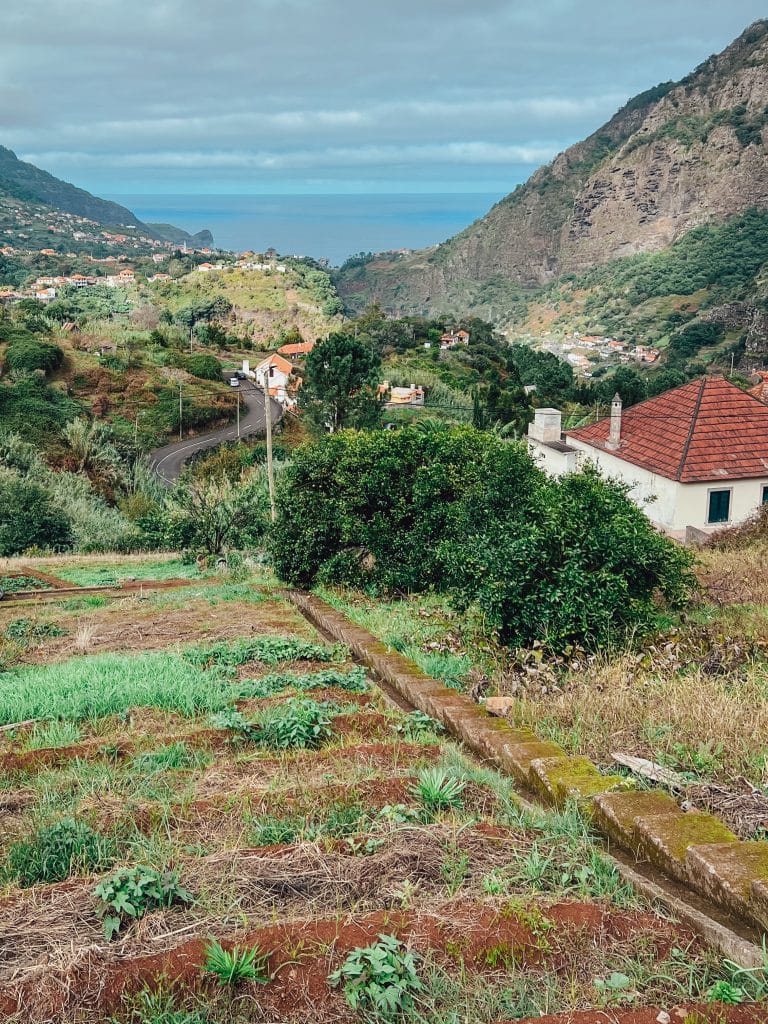
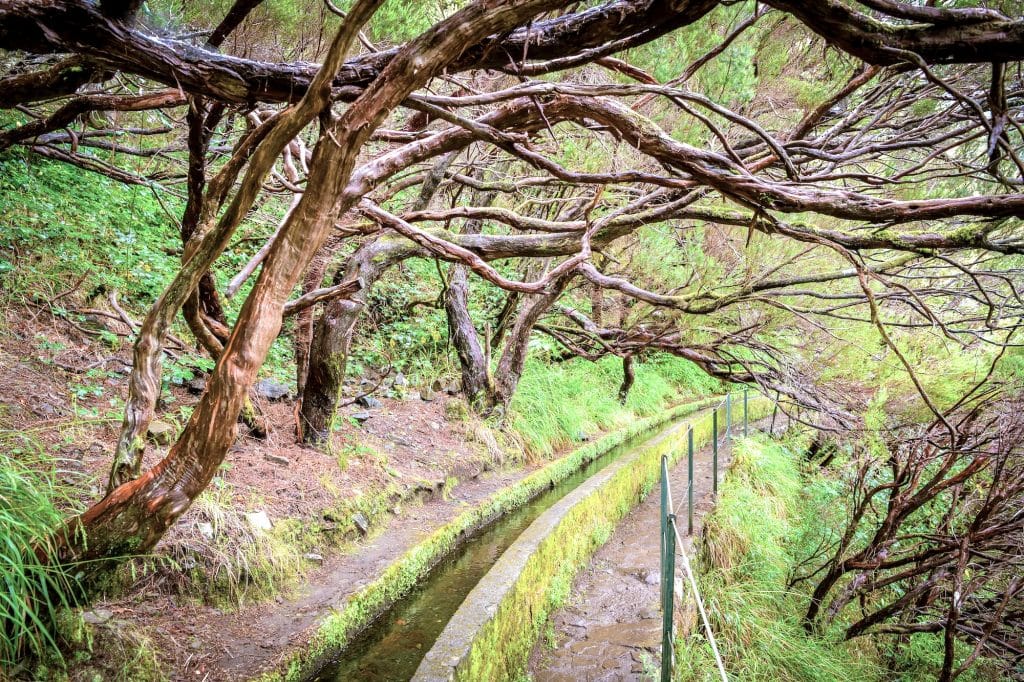
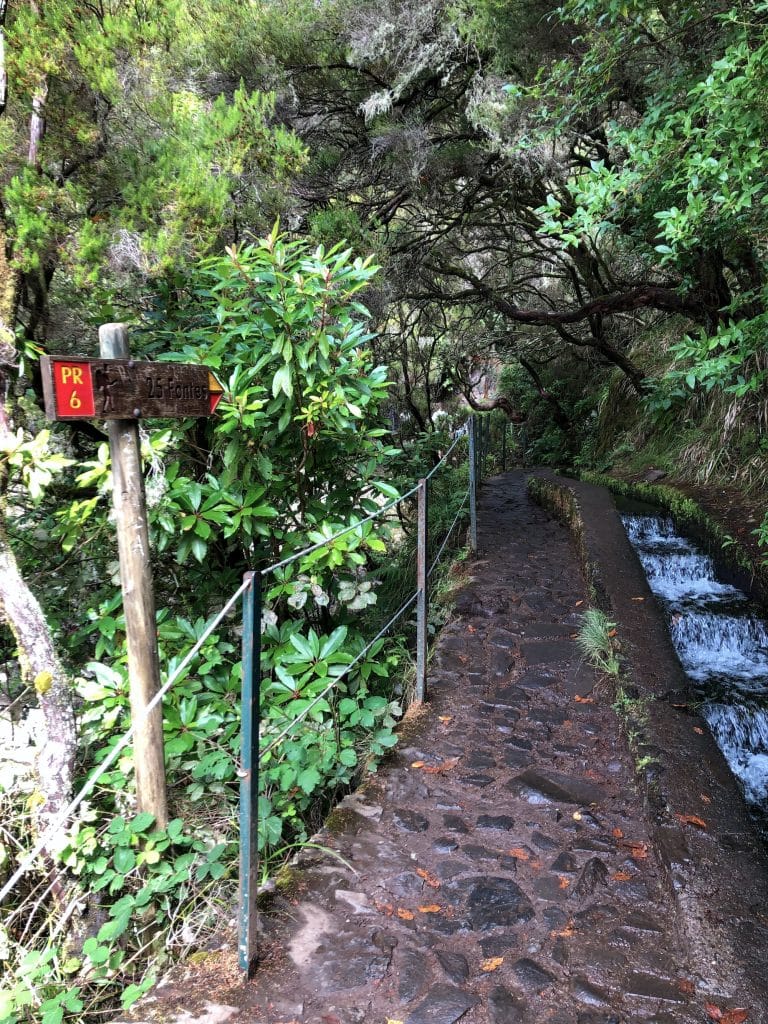
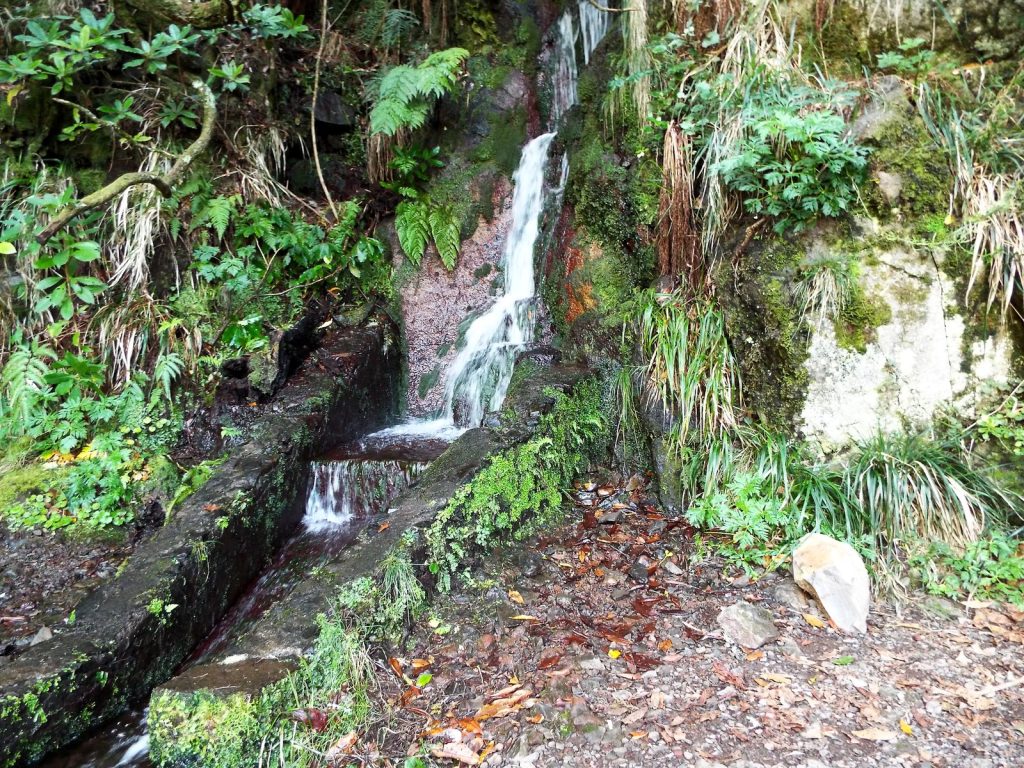
1: A levada on the way to Porto da Cruz. Photo: Ewelina Podrez-Siama 2023, 2: PR6 Levada das 25 Fontes, 3: PR6 Levada das 25 Fontes, 4: PR6 Levada das 25 Fontes – a cascade falling into the levada. Photo: Anita and Andrzej Podrez – February 2025
What to do in Madeira
1. Hiking and levada trails
The official IFCN list of trails (Percursos Pedestres Recomendados – PR) includes 39 routes in Madeira, counting variants, plus another 3 on Porto Santo (as of 2 October 2026). They range from easy strolls to demanding mountain treks.
Top 3 for first-timers:
- PR1 – Vereda do Areeiro: from Pico do Arieiro to Pico Ruivo, the island’s highest peak – views over the whole of Madeira (one-way traffic from Pedra Rija onwards)
- PR8 – Vereda da Ponta de São Lourenço: The peninsula in the east, a treeless moonscape with the ocean on both sides
- PR9 – Levada do Caldeirão Verde: Through tunnels into a green gorge – a levada classic
You’ll find individual routes in the Madeira trails category, and a comparison with a table in my round-up of the most beautiful levada walks in Madeira.
⚠️ Before every walk, check the current trail status on the IFCN website – the weather can close routes without warning.
 Read nextMadeira trail status. 🥾 Current list of IFCN routesIf you’re planning to hike in Madeira, don’t rely on guides from a year ago. Trail statuses in Madeira change – sometimes because of maintenance work, sometimes because of the weather or landslides after heavy rain. This article is updated continuously from official IFCN data. Last updated: 4 October 2026
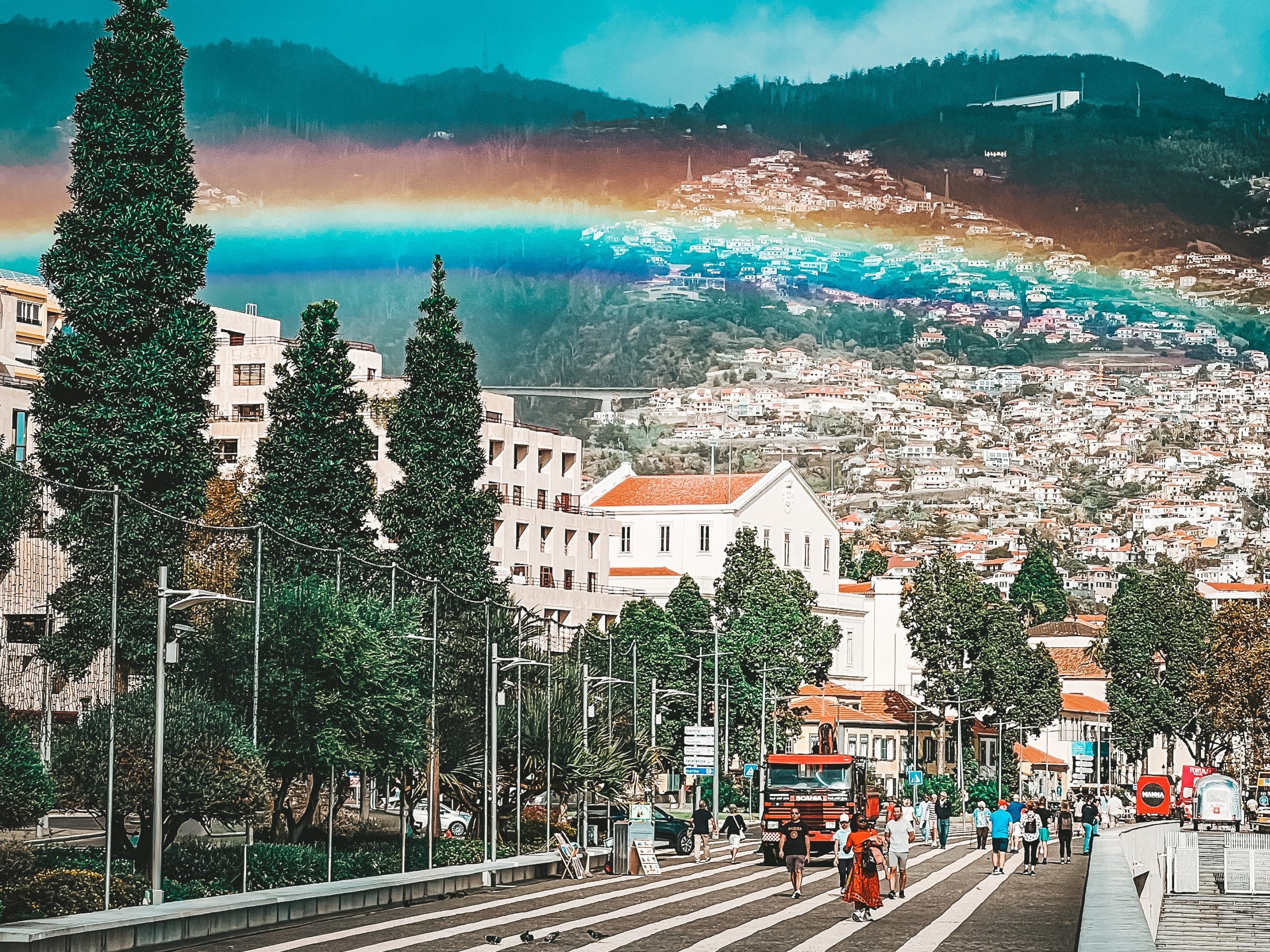
2. Funchal – a capital with soul
I love Funchal. This city has soul – it isn’t overdone, it isn’t forced. You drink your morning coffee next to a Portuguese man on his way home from the night shift, and in the afternoon at the Mercado you buy passion fruit from a lady who remembers the days before tourism.
Must-sees:
- Mercado dos Lavradores: A market with tropical fruit, fish and flowers
- Zona Velha: The old town with its street art (Projeto Arte de Portas Abertas)
- Teleférico: The cable car up to Monte – spectacular views over the city and the ocean
- Monte Palace and Jardim Botânico: Gardens with Madeira’s endemic plants
- Museu CR7: The Cristiano Ronaldo museum (he was born in Funchal)
3. Madeiran food
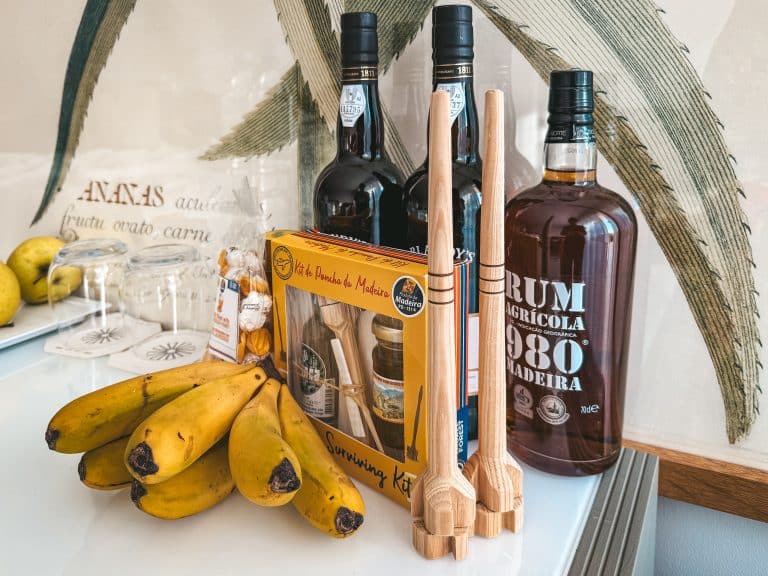
Madeira isn’t just about trails – it’s also espetada (beef skewers on a bay laurel stick), bolo do caco (garlic flatbread), fresh espada (black scabbardfish) and poncha (a local drink made with aguardente).
Where to eat: Forget central Funchal – the best places are off the main tourist trail.
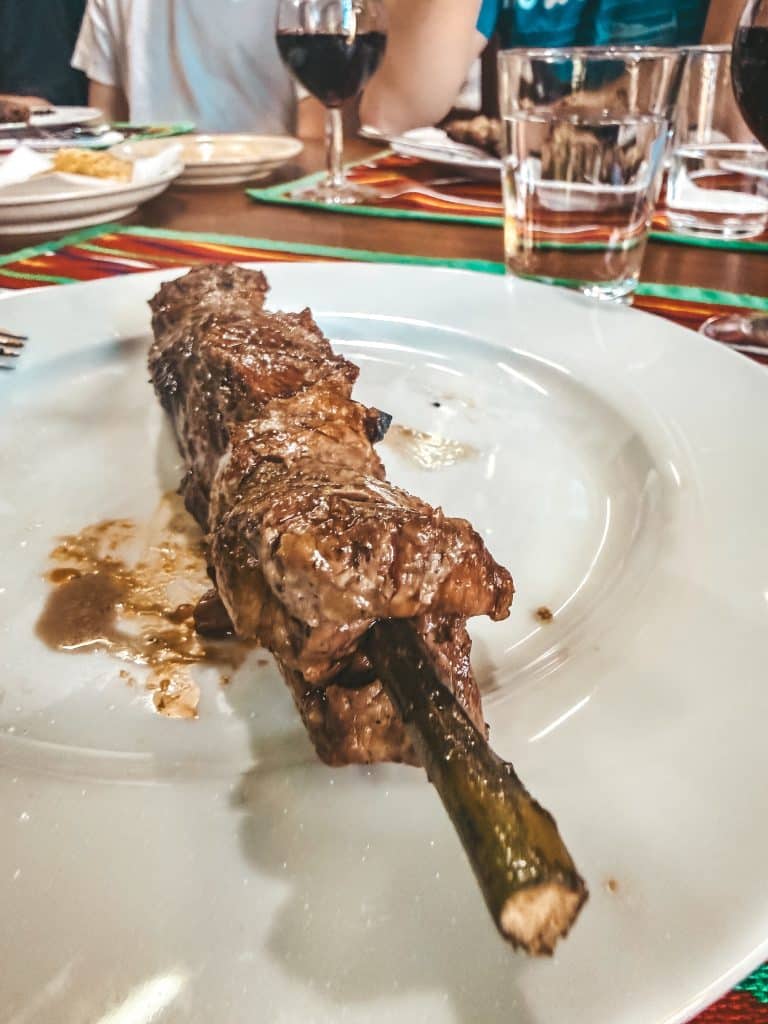
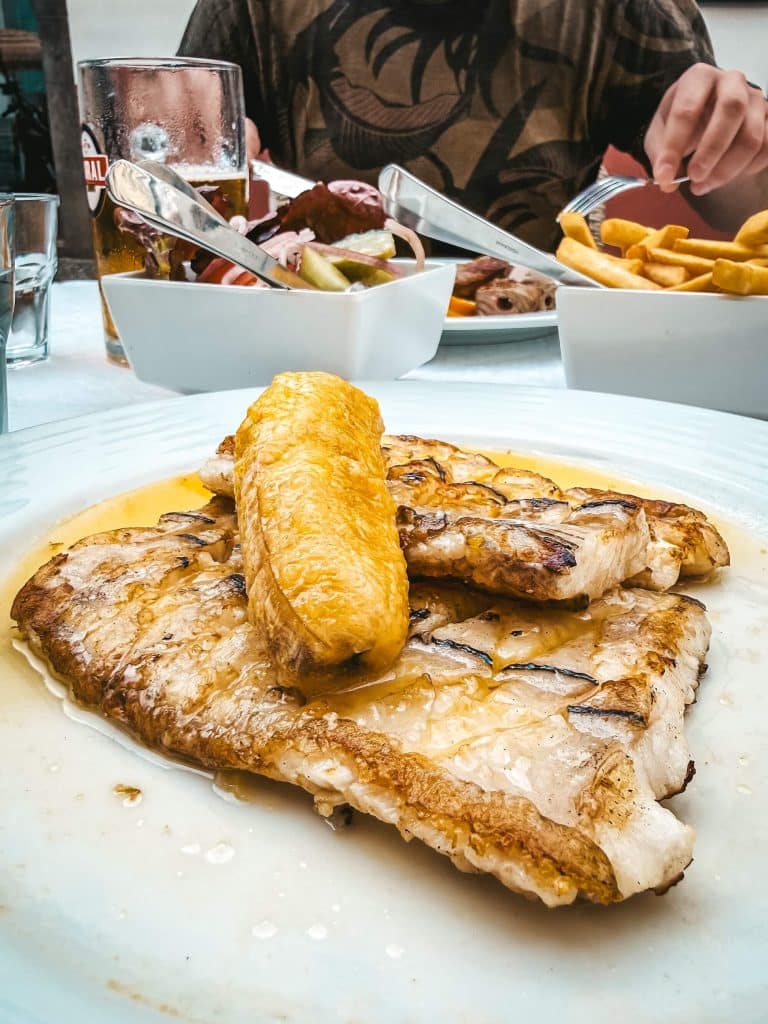
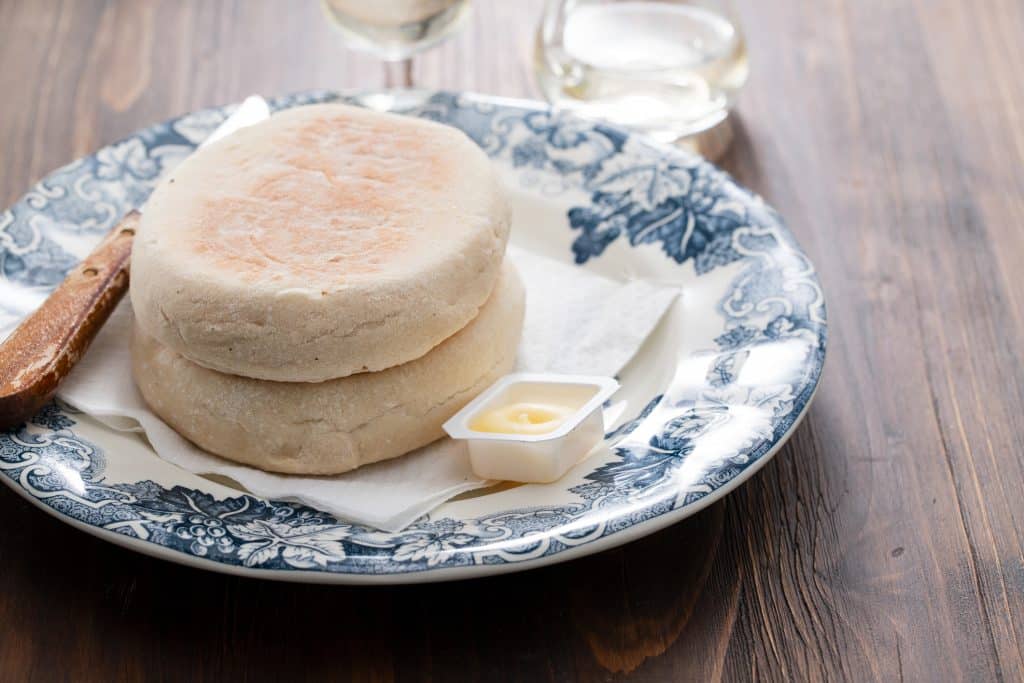
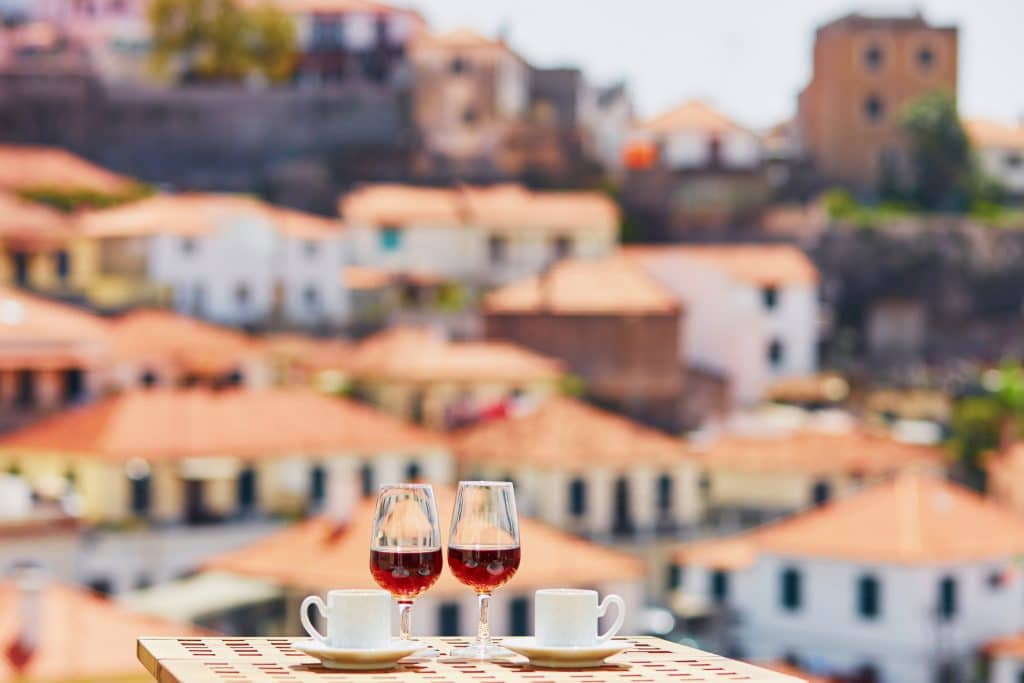
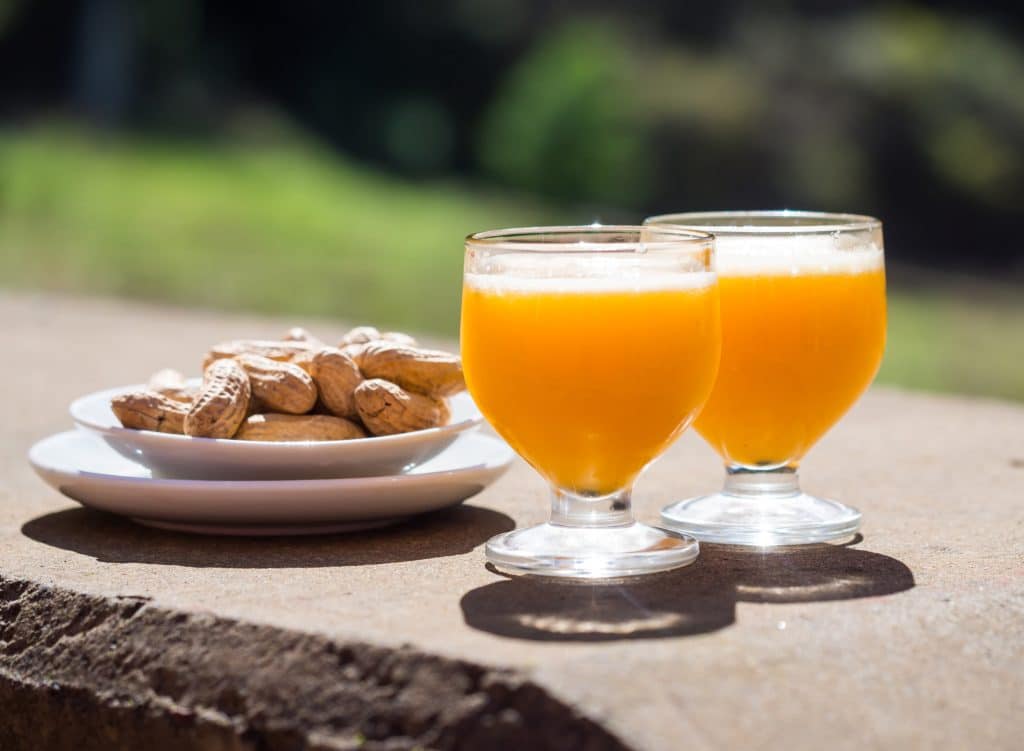
1: Original espetada, grilled on a bay laurel branch and seasoned with salt and bay leaves. Photo: Ewelina Podrez-Siama – February 2026, 2: Grilled black scabbardfish with banana – a classic dish in Câmara de Lobos, where fishing isn’t folklore but everyday life. Photo: Ewelina Podrez-Siama – February 2026, 3: Bolo do caco, 4: Madeira wine, 5: Poncha Regionale
4. Câmara de Lobos – a real fishing harbour
8 km west of Funchal. A small, authentic town where people still live mainly from fishing. Churchill painted in oils here in January 1950.
I fell in love with this place – I set off from Funchal for a walk with my dog and ended up staying all day. The restaurants serve fresh peixe espada straight off the boat, and there’s none of the tourist hustle above the harbour. It’s best to come in the evening, when the fishermen return with their catch.
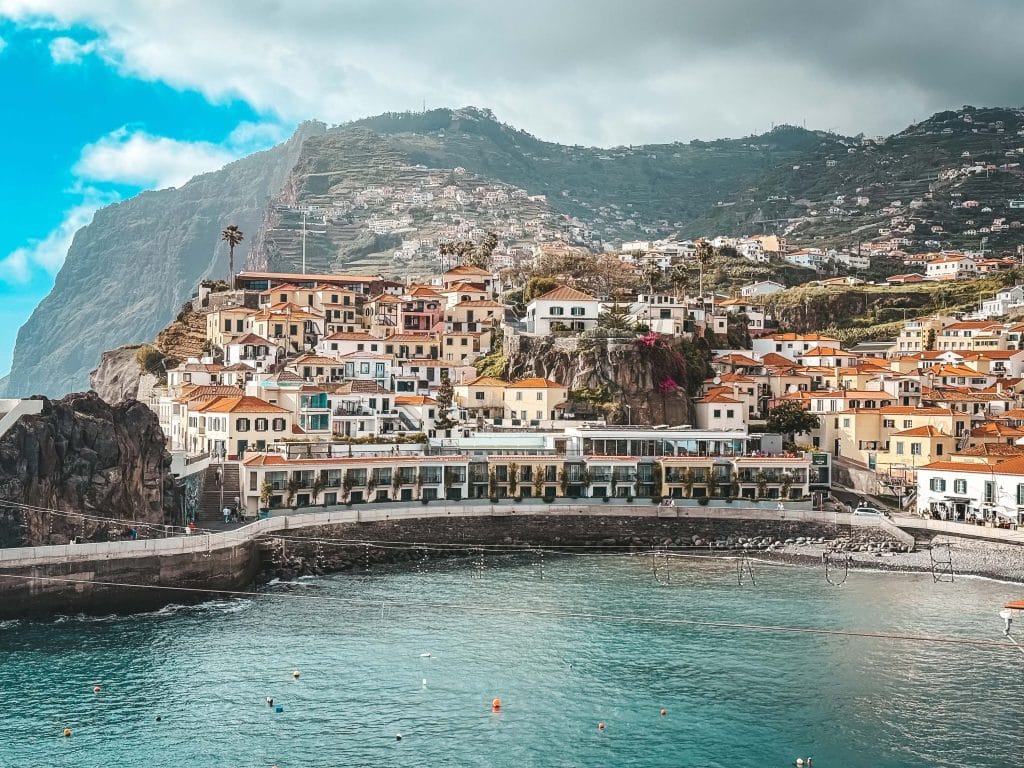
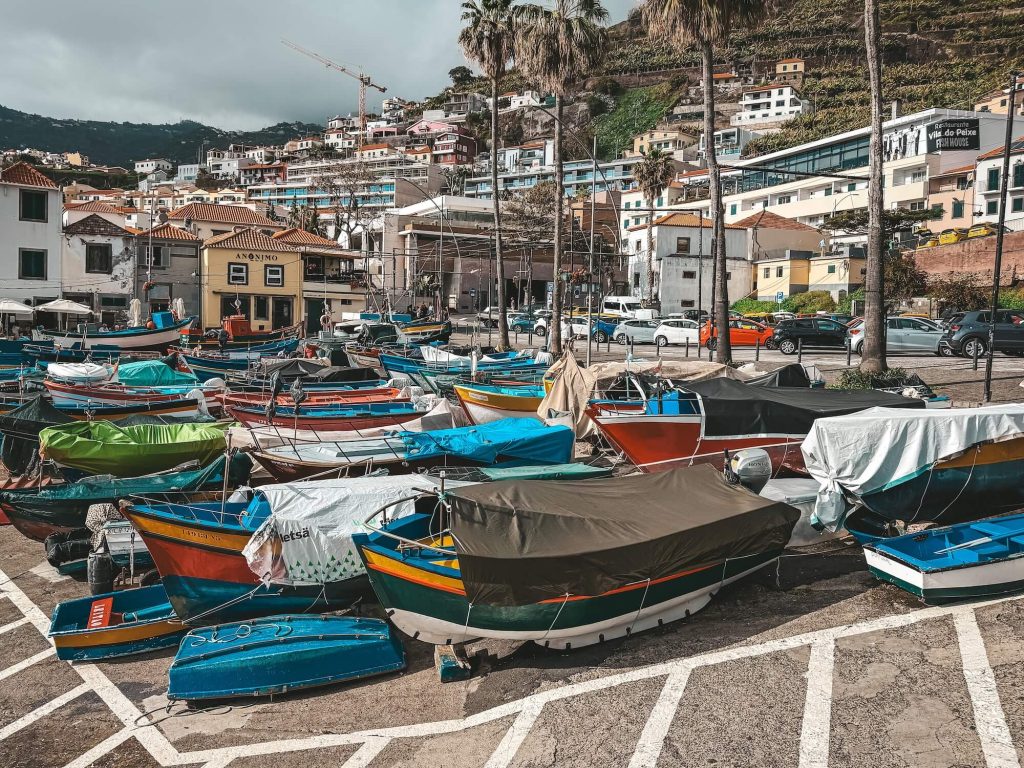
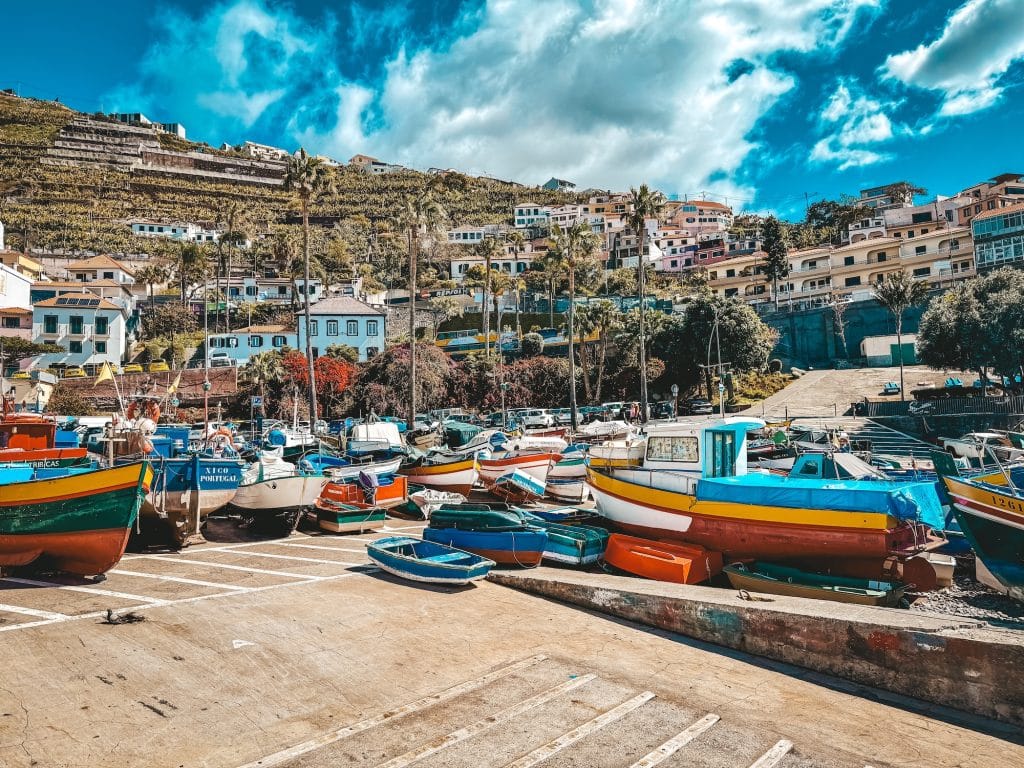
1: Panorama of Câmara de Lobos from the harbour – colourful houses climbing the slope all the way up to Cabo Girão.  (February 2026), 2: Colourful fishing boats pulled up on shore in the harbour of Câmara de Lobos – the heart of a village that still lives from fishing (February 2026), 3: Câmara de Lobos harbour from above – dozens of boats crowded on the quay, with banana plants and vine terraces climbing the slope behind them (March 2025). Photos: Ewelina Podrez-Siama
5. Cabo Girão – Skywalk
A glass platform on a 580 m cliff, admission €5 (since 2026). The view is spectacular, but be prepared for queues – it’s a very popular stop for coach tours. It’s best to come in the morning or late afternoon. Details: Cabo Girão – tickets, opening hours and how to get there.
6. Beaches and swimming spots
Porto Santo: The ferry from Funchal takes about 2 h 15 min. The island is famous for its 9-kilometre sandy beach – a contrast to Madeira’s rocky shores. If you’re longing for sand, this is your option. You can buy ferry tickets on the Porto Santo Line website. I cover the timetable, prices, a plan for the day and travelling with a dog in my guide to Porto Santo.
Porto Moniz – natural volcanic pools: The best-known natural pools in Madeira. There are two areas:
- Piscinas Naturais (paid): €3 per person, open 9:00–19:00 (summer) / 9:00–17:00 (winter). Lifeguard during the bathing season (in 2026: 15 April – 15 October), showers, changing rooms and a bar. Area ~3800 m², depth ~2 m.
- Cachalote/Aquarium Pools (free): Wilder, with no facilities (just an outdoor shower) and no lifeguard. More natural, but getting in and out of the water is harder.
The pools are filled with seawater by the Atlantic waves. The water isn’t warm (ocean temperature: 18–23°C depending on the season), but swimming among volcanic rocks is a unique experience.
Seixal – natural pools: Free pools by the sailing club and the paid Poças das Lesmas (€2.50 at last check), with views of the green cliffs. Nearby is Seixal beach with black volcanic sand – one of Madeira’s few sandy beaches.
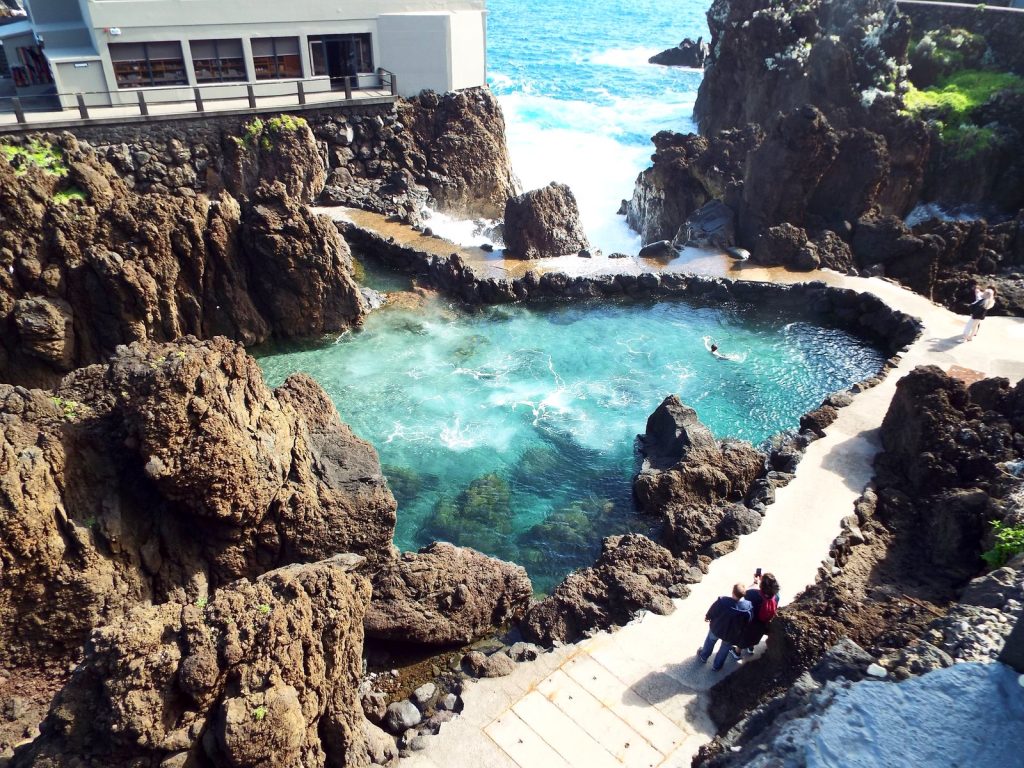
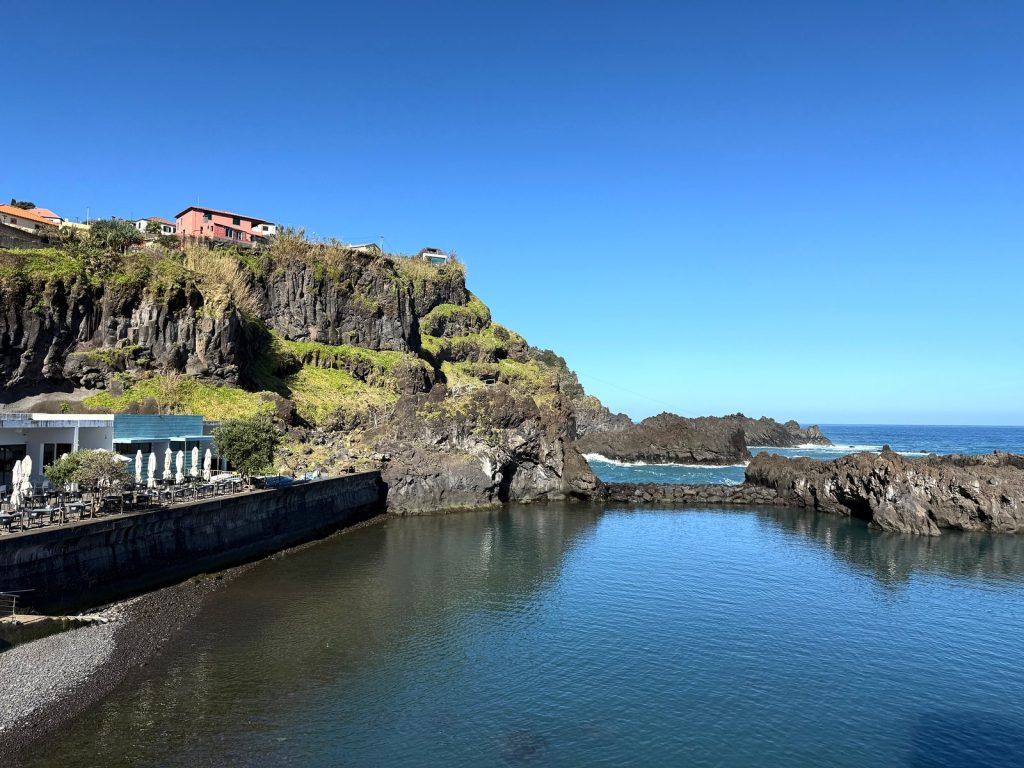
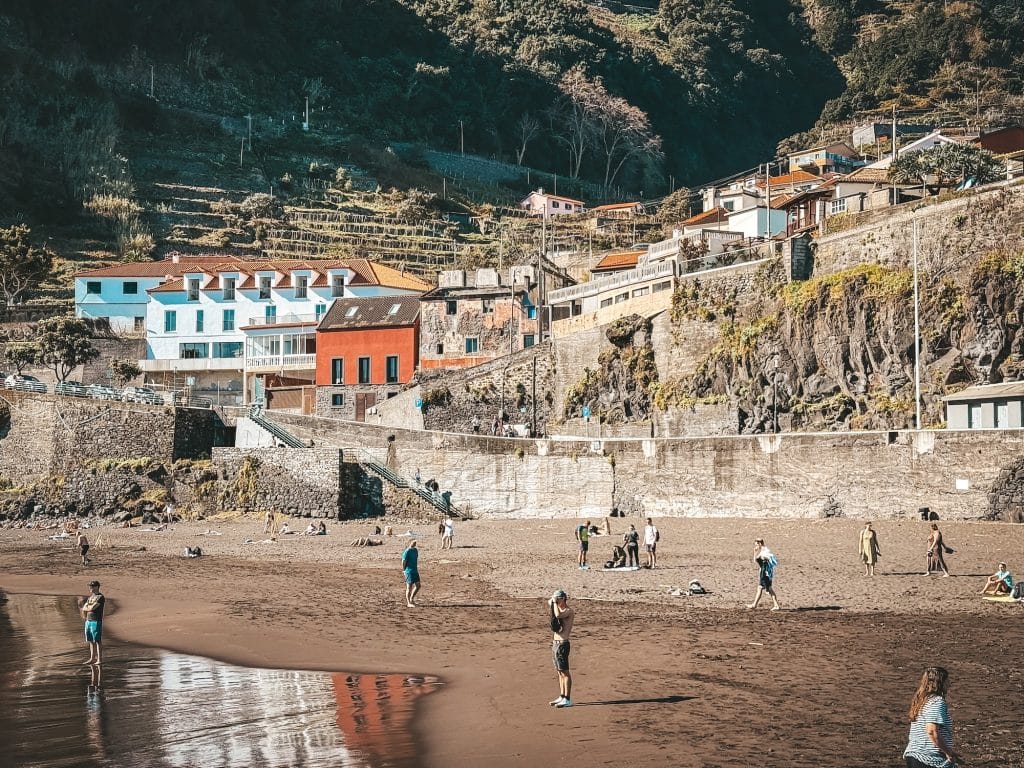
1: The natural pools in Porto Moniz. Photo: Anita and Andrzej Podrez – February 2025, 2: The natural pools in Seixal. Photo: Ewelina Podrez-Siama – February 2026, 3: View of the black beach in Seixal. Photo: Ewelina Podrez-Siama – February 2026
Doca do Cavacas (Poças do Gomes): Natural pools in Funchal, between the capital and Câmara de Lobos. Smaller but charming, and easy to reach by city bus or on foot from the Lido area.
The ocean: 18–23°C depending on the season. Cold, but you can swim in summer.
7. Activities for adrenaline seekers
- Canyoning: Ribeira das Cales, Ribeiro Frio
- Paragliding: Arco da Calheta
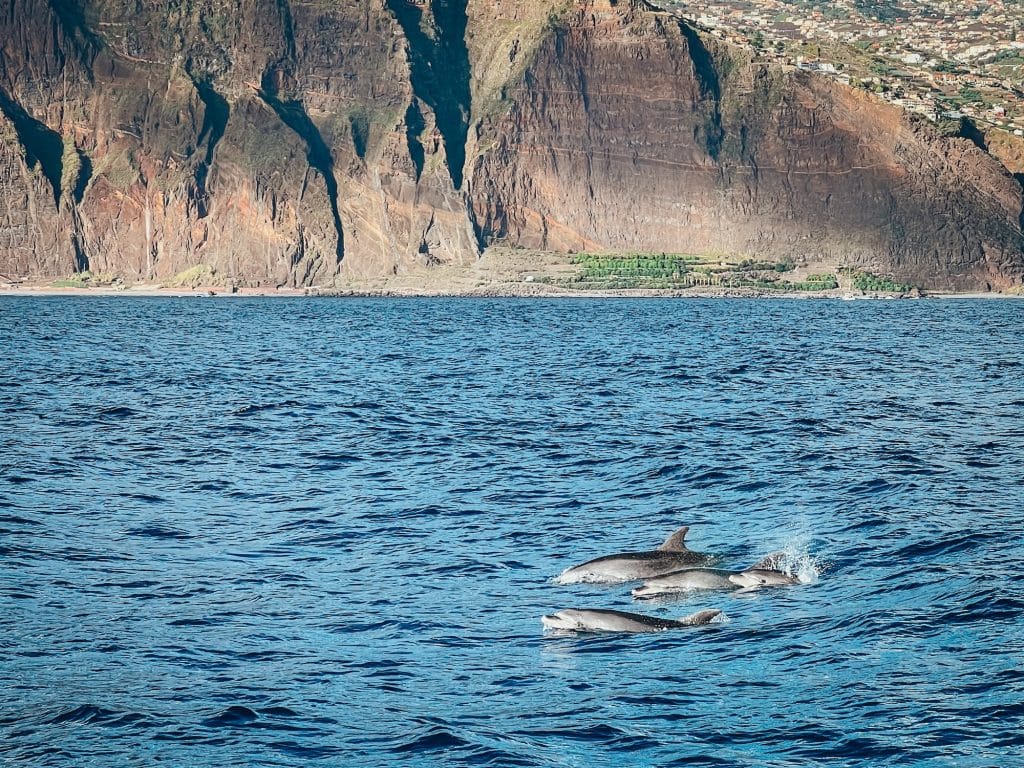
- Whales and dolphins: 28 species of cetaceans in the waters around Madeira, with trips from Funchal, Calheta and Machico. Sightings are possible all year round. Prices: €35–60 per person depending on the operator and the type of boat.
 Read nextPorto Moniz. 🌊 Pools in solidified lavaThe lava pools: 2026 prices and opening hours, getting there by car and by bus, and the area from Seixal to the Fanal forest.
 Read nextPorto da Cruz. 🥃 Steam-powered rum distillery below Penha d’ÁguiaA rum distillery with steam-driven machinery, Penha d’Águia, a surfers’ beach and the Vereda do Larano trail.
Getting around Madeira
Buses
Public buses serve most of the island. All routes belong to the joint SIGA network with a single GIRO ticketing system: Horários do Funchal runs in Funchal, SIGA Rodoeste covers the west of the island, and CAM the east and north (including the Aerobus, route 500). Since 9 March 2026 the routes have had new three-digit numbers.
Useful routes for visitors:
- To Monte: 020, 021, 022 and 048
- To Cabo Girão: selected services on route 267 (“via Cabo Girão”)
- To the airport: Aerobus 500; to Machico: 701 (formerly 23)
- To Porto Moniz: 340 via São Vicente or 380 via Calheta
- To Santana: 801; to Curral das Freiras: 181
Fares: since 1 April 2026 a ticket bought from the driver costs €2.05 within one municipality and €2.65 for longer routes (anywhere on the island). With a rechargeable GIRO card (€0.50) you pay €1.45 / €2.00, and a day ticket for the whole island costs €6.55.
Reality check: The buses are hit and miss – sometimes on time, sometimes 20 minutes late, sometimes they simply don’t turn up. A plan B (Bolt or a taxi) is always a good idea. Check the current timetables for every route before you go at siga.madeira.gov.pt.
Taxis and Bolt
Taxis are easy to find in Funchal and the larger towns. Bolt works brilliantly – often cheaper than a taxi and quicker than waiting for a bus. Funchal to Cabo Girão by taxi: about €24 during the day (calculated from the IMT fare table).
Car hire
If you want to explore the island on your own, a car is a game changer.
Prices: depend on the season and the company. You’ll find a comparison of rental companies, deposits and current rates in my guide to car hire in Madeira.
Note: Madeira’s roads are mountainous and narrow, with sharp bends. Tunnels are often single-lane with traffic lights. Not for nervous drivers.
 Read nextCar hire in Madeira. 🚗 Steep roads without the stressPrices, airport pick-up, deposit and insurance, mountain roads and parking, checked in October 2026.
How much does Madeira cost?
Supermarket prices
Some examples (from supermarkets such as Continente and Pingo Doce):
- Bread: €0.50–1.50
- Milk (1 l): €0.60–0.80
- Tropical fruit (passion fruit, bananas): very cheap
- Local wine: from €3–4 a bottle
- Beer (Super Bock): about €0.60 per 0.5 l
Restaurants
Typical prices:
- Everyday lunch (prato do dia): €7–10
- Dinner at a good restaurant: €15–25 per person
- Espresso: €0.60–0.80
- Poncha (local drink): €2–3
Accommodation
- 3-star hotel: from about €50 a night (depending on the season and location)
- Apartment (Airbnb, Booking): €40–100 a night
- Hostel: €20–35 a night for a bed
My tip: Apartments rather than hotels – especially for a longer stay. You get contact with Portuguese people, your own kitchen and the chance to live normally. And it’s much cheaper. In Funchal I recommend the Zona Velha (old town) or Lido – close to the centre, but quiet.
Activities
- PR trails (IFCN): €4.50, the full PR1 €10.50
- Porto Moniz natural pools: €3 (paid pools) or €0 (the free Cachalote pools)
- Monte cable car: €16 one way, €22 return
- Regional museums: €6–10
- Whale-watching trip: €35–60 (depending on the operator)
In total:
| Travel style | € per day |
|---|---|
| 💰 Budget | €50–70 |
| 💳 Mid-range | €80–120 |
| ✨ Comfortable | €150+ |
 Read nextWhere to stay in Madeira. 🏨 A base that keeps everything closeFunchal, Caniço, the west coast or the north? The areas compared, with travel times, weather and the tourist tax.
Practical information
Internet and mobile coverage
- Mobile coverage is good in towns and on the main roads. In the mountains and in tunnels it can be patchy.
- Wi-Fi in most hotels and restaurants.
- Options for digital nomads: Coworking spaces in Funchal (Cowork Funchal, The Spot), apartments with good internet – check the reviews before you book.
Health
- The EHIC (European Health Insurance Card) is valid – Madeira is part of the European Union.
- Main hospital in Funchal: Hospital Dr. Nélio Mendonça.
- Pharmacies (farmácias) are well stocked.
Safety
Madeira is one of the safest places in Europe. Crime is low. The biggest danger: tripping over on a trail.
What to pack
- Walking boots – a must, even for easy levadas (wet stones)
- Head torch – some trails have dark tunnels (e.g. PR9, and PR6.6 with the Túnel do Cavalo)
- Windproof jacket – the weather changes quickly
- Insect repellent – especially in autumn
- Sunscreen – the sun is strong, even when it’s cloudy
Language
Most people working in tourism speak English. In small villages it varies, but the Portuguese are helpful. A few basic Portuguese phrases:
- obrigado/a (thank you),
- por favor (please),
- bom dia (good morning).
Organising your trip
Travel agencies sell Madeira as a popular destination. The first time, I left the organising to an agency myself, and that’s a good idea when you don’t know the island yet. But if you’re planning to come back: the real experience is when you can live in Madeira, not just see the sights. Organising it yourself (flights + apartment + buses/Bolt) gives you more freedom and a free choice of where to stay.
🏝️ Madeira is the place for you if:
- ✅ You like active holidays – hiking, canyoning, paragliding
- ✅ You’re interested in nature, endemic species and unique ecosystems
- ✅ You want to get to know the local culture, not just a hotel resort
- ✅ You’re looking for somewhere for a longer stay (digital nomad, slow travel)
- ✅ You’re ready for changeable weather and flexible plans
⚠️ Worth knowing before you go
-
🏖️
No sandy beaches: Rocky shores and a cold ocean (18–23°C depending on the season)
-
🚗
Mountain roads: Steep, narrow, with tunnels – not for nervous drivers
-
🌦️
Changeable weather: You need a plan B in case of rain or closed trails
-
👥
Peak-season crowds: Popular trails and cruise-ship days can get crowded
-
⛰️
Heights: Many routes run along sheer drops – if you’re afraid of heights, read the trail description before you set off
My take
Madeira isn’t an island for everyone. And that’s a good thing. It’s a place for people who want more than a sunbed and cocktails. Here you have to put in a bit of effort – get up early for the sunrise, walk 10 km along a levada, accept that the trail you planned might be closed after a downpour.
But in return you get authenticity, dramatic landscapes and the feeling that you’ve really been somewhere. It’s an island of contrasts – wild mountains and elegant Funchal, empty trails and carnival crowds, sun and snow on the same day.
If you’re looking for an island that lives to its own rhythm, where the ocean meets volcanic mountains and 15th-century levadas are a bridge between past and present – stay in Madeira for longer than a week. Because that first week is just a reconnaissance. The real Madeira begins afterwards.
🔗 Useful links
-
🥾
Trail status: Madeira trail status (updated daily from the IFCN list)
-
🚌
Bus timetables: siga.madeira.gov.pt
-
ℹ️
Official tourism website: visitmadeira.com
-
🌤️
Weather: ipma.pt (the Portuguese meteorological institute)
-
🚡
Monte cable car: madeiracablecar.com
-
⛴️
Ferry to Porto Santo: portosantoline.pt
FAQ – your questions about Madeira
Where is Madeira?
Madeira lies in the Atlantic Ocean, about 970 km south-west of Lisbon and about 700 km west of the coast of Morocco. Geographically it’s closer to Africa than to Europe, but it belongs to Portugal and the European Union.
How big is Madeira?
Madeira island itself covers about 741 km², and the whole archipelago, with Porto Santo, the Desertas and the Selvagens, 801 km². The island is about 57 km long and 22 km wide.
Is Madeira part of Portugal?
Yes. Madeira is an autonomous region of Portugal with its own parliament and government. It belongs to the European Union as an outermost region, and the currency is the euro.
What time zone is Madeira in?
The same as Lisbon (and London): UTC+0 (WET) in winter and UTC+1 (WEST) in summer. Clocks change on the same days as in the rest of the EU, so Madeira is always one hour behind Central European Time (e.g. Amsterdam, Berlin or Warsaw). Don’t confuse Madeira with the Azores, which are another hour behind.
How do you get to Madeira?
By plane: Madeira Airport (FNC) is in Santa Cruz, about 20 km from Funchal by expressway. There are direct flights from the UK and many EU airports, and connecting flights via Lisbon or Porto. There’s no regular passenger ferry from mainland Portugal.
Why is Madeira called the “island of eternal spring”?
Because there’s no winter on the coast. In Funchal the average temperature of the coolest month (February) is about 17 °C, and of the warmest (August) about 24 °C. Between 1991 and 2020 there wasn’t a single day of frost there. It’s much cooler in the mountains, and Pico do Arieiro sometimes gets snow.
Is Madeira expensive?
A budget of €50–70 a day is a realistic minimum, and €80–120 a day gives you comfort. You’ll find example prices for shops, restaurants, accommodation and activities in the cost section of this guide.
When is the best time to visit Madeira?
It depends on what you like. February and March: carnival and fewer tourists, but changeable weather. May–June and September–October: more settled weather and warmth. July and August: the warmest and busiest months.
Do you need to hire a car in Madeira?
No. You can explore the island by bus and Bolt, especially around Funchal. A car does give you more freedom, though. Bear in mind that the roads are mountainous and narrow, with lots of tunnels.
How many days do you need in Madeira?
At least a week, ideally 10–14 days. If you want to explore at a relaxed pace, walk the trails and discover lesser-known places, plan 3–4 weeks.
Can you travel to Madeira with a dog?
Yes, but with limitations. Dogs are welcome in places such as the Monte Palace garden and on many restaurant terraces. It’s better not to take a dog on the narrow levada trails, and the IFCN doesn’t publish any rules for dogs on the trails. You’ll find the details in my guide “Madeira with a dog”.
This article is based on my own experience from months spent in Madeira (February 2026, February–March 2025, November 2023) and on official sources: IFCN (trail list as of 2 October 2026), Visit Madeira, the guidebooks Walking on Madeira (Paddy Dillon) and Sunflower Guides, scientific publications on the island’s climate and geology, and Wikipedia (history, geology).
Prices and practical information checked: October 2026 (SIGA buses from 1 April 2026, trails and museums from 1 January 2026, IMT RAM taxi fares).
Where to stay in Madeira: compare hotels, apartments and guesthouses in Funchal and across the island. The search box shows current prices from Booking.com.