The best things to bring back from Madeira are Madeira wine (look for the DOC Madeira label — four grape varieties, each one different) and Rum Agrícola da Madeira, made from fresh sugar-cane juice and protected by an EU geographical indication. At the Mercado dos Lavradores you’ll find bird-of-paradise flowers and proteas that survive the journey without water, as well as tropical fruit you’ll hardly ever see in shops back home. If you buy Madeira embroidery — only with the IVBAM hologram. With cork products, check for the cortiça portuguesa label. The best shopping is in the side streets between the Cathedral and the Old Town, on Rua de Santa Maria and at local craftspeople’s stalls during festivals — not on the main tourist streets. For alcohol without the tourist mark-up: Pingo Doce. For Madeira wine with a tasting and a 10% discount: Blandy’s Wine Lodge, Av. Arriaga 28. You can also get most products in the duty-free area at FNC airport.
I always come back from Madeira with an overloaded suitcase. Not because I fall into the tourist-stall trap – quite the opposite. During a month-long workation in Funchal I learned where to look for things that really last. I’ve gathered it all in one place: what’s worth buying, where to find good-quality souvenirs and what to steer well clear of.
Want to taste it on the spot? Compare Madeira wine tastings and food tours in Funchal on GetYourGuide.
Where to buy souvenirs in Madeira
- Mercado dos Lavradores — the city market in central Funchal. Flowers, fruit, local produce and a few souvenir stalls. Note: prices by the main entrance are higher than further inside. It’s worth going deeper in and taking your time to look around.
- Rua de Santa Maria — a side street in the Old Town, a few minutes’ walk from the Mercado. Small shops with handmade ceramics, jewellery and cork — a completely different league from the tourist stalls on the main streets.
- Local craftspeople’s stalls — they pop up during carnival and festivals, in the municipal park and by the cable car up to Monte. Places and dates vary, but keep your eyes open — this is where local makers bring work you won’t find anywhere else.
- Small, non-touristy shops. Funchal has plenty of them — just step off the main streets and peek into the side streets between the Cathedral and the Old Town. The rule is simple: if the window isn’t full of the usual mass-produced magnets and souvenirs with “Madeira” printed on them — go in.
- Blandy’s Wine Lodge (Av. Arriaga 28) — a must if you’re after Madeira wine. A shop with tastings, a 10% discount on purchases, and the option of collecting them in the duty-free area at the airport.
- Engenhos do Norte (Porto da Cruz) — the biggest rum distillery in Madeira, worth a visit for more than just a bottle. You can tour the distillery, see how the rum is made and buy it straight from the source — including bottlings that are harder to find in shops in town.
- Galeria Plaza — a shopping centre in Funchal, with shops such as Tiffosi, which sells good-value clothes. A good place to shop away from the usual tourist circuit.
- Pingo Doce and other supermarkets — the best option for alcohol (Madeira wine, rum agrícola) without the tourist mark-up. Prices are much lower than in souvenir shops.
- Central Camacha — if you’re heading to the east of the island, stop here for wickerwork. Some of it still comes from small family workshops.
- ✈️ Duty-free at FNC airport — a good last-minute option. Wine, rum, bolo de mel, bolo do caco, honey and flower bulbs packed for travel. You can buy cut flowers (bird-of-paradise flowers, proteas) just before security. Prices are similar to town, the choice is smaller — but you don’t have to carry your shopping around for the whole trip.
Looking for a plan for the day? Dolphin-watching cruises, jeep tours and sunrise on Pico do Arieiro, many with hotel pickup. Compare offers and reviews on GetYourGuide.
Madeiran wine and spirits
Madeira is famous for two kinds of alcohol: traditional rum agrícola and fortified Madeira wine. Both are worth taking home.
Madeira wine
Before you grab the first bottle you see, it’s worth knowing what you’re actually buying. Madeira wine isn’t an ordinary wine to have with dinner — it’s a fortified wine with more than 500 years of tradition, praised by Shakespeare and served at the celebration of American independence on 4 July 1776. On the island it’s as strong a symbol as bird-of-paradise flowers and levadas.
The four main grape varieties give completely different characters:
- Sercial is light, aromatic and dry — perfect as an aperitif.
- Verdelho is medium-dry and golden, and goes brilliantly with food.
- Boal — medium-sweet and velvety, for roasts and desserts.
- Malvasia is the richest and sweetest, and intense — this is the one the Founding Fathers raised their glasses with.
Where to buy it? There are several options, and each makes sense in a different situation. In a supermarket such as Pingo Doce you’ll get solid bottles without overpaying. At Blandy’s Wine Lodge on Av. Arriaga 28 in Funchal you can turn shopping into an experience: a guide takes you through the historic cellars, then you taste 2 wines — and you get a 10% discount in the shop (and you can collect your purchases in the duty-free area). The third option is the airport duty-free. Whatever you choose, look for the DOC Madeira label — it guarantees the protected designation of origin.
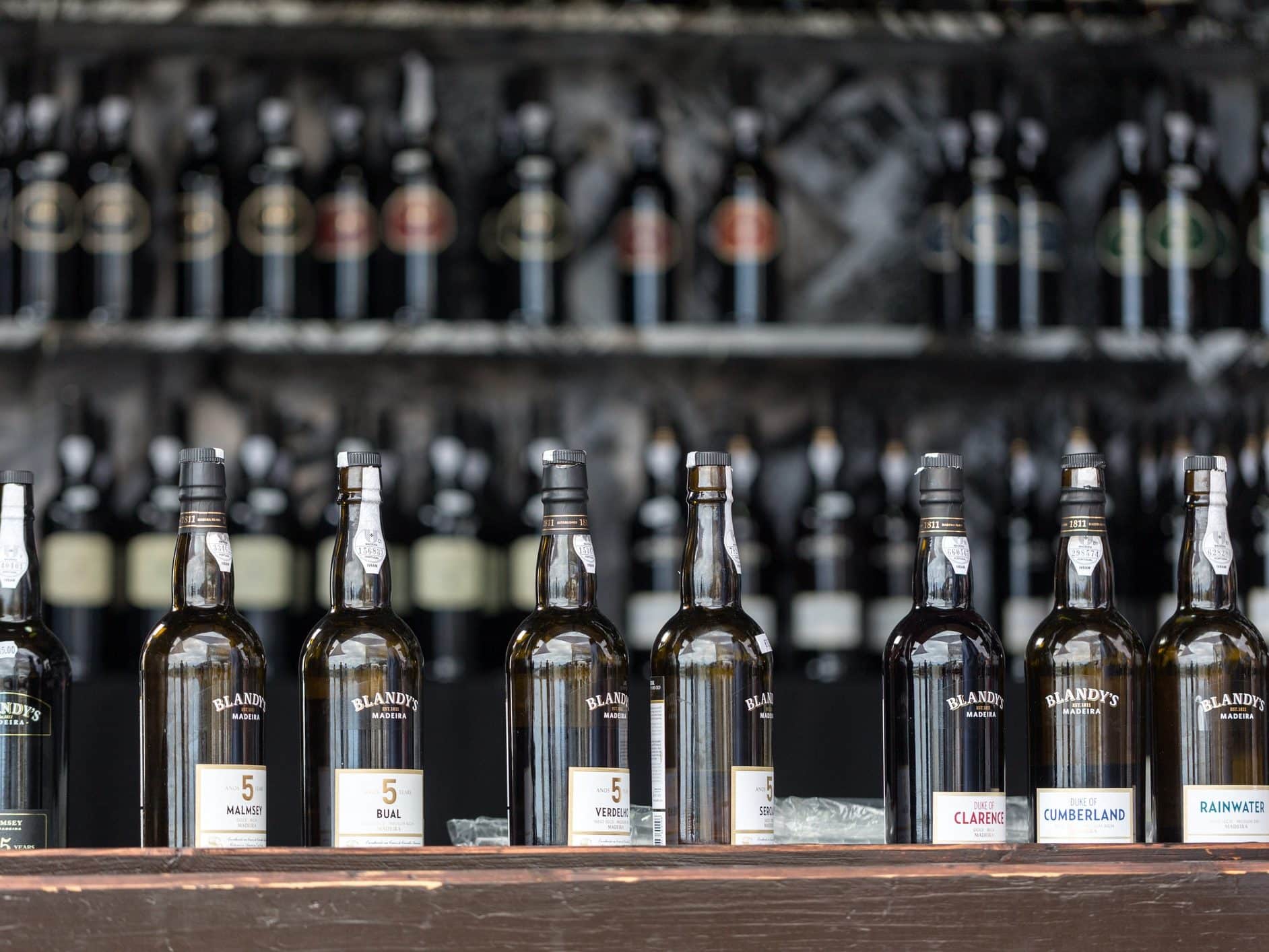
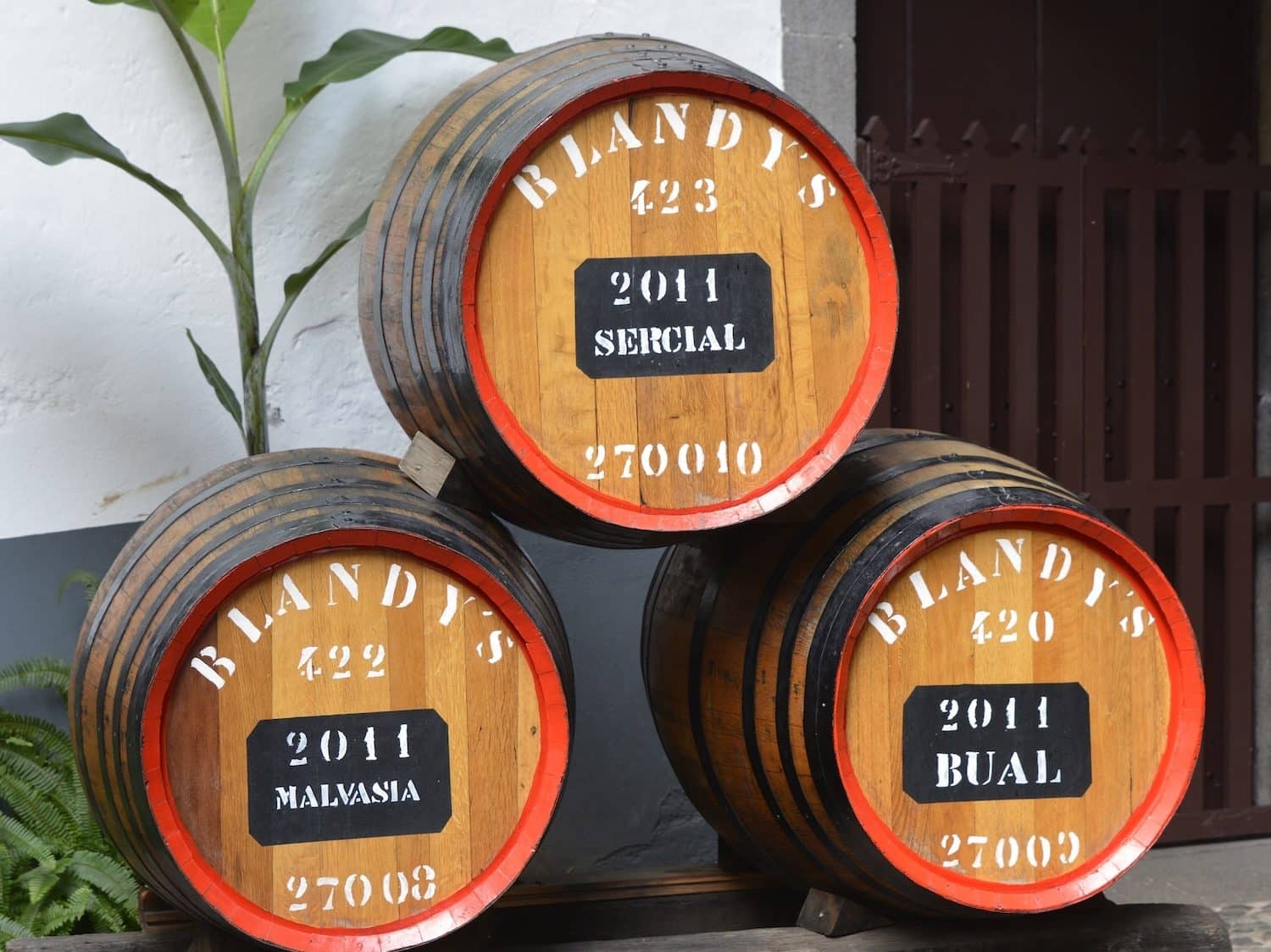
1: Madeira wine, 2: Madeira wine
Rum Agrícola da Madeira
Sugar cane arrived in Madeira with the first settlers in 1425 — the cuttings were brought over from Sicily. For a hundred years the island was Europe’s biggest sugar exporter, until competition from Brazil turned the business upside down. Then vines replaced the cane — and Madeiran rum took a back seat for several centuries. Today it’s a niche spirit with a growing reputation that most tourists have never heard of.
How is it different from the Caribbean rums on the shelf at Lidl? In every way. Rum Agrícola da Madeira is made only from freshly pressed sugar-cane juice — not from molasses, like most mass-market rums. That gives it a flavour in a completely different category: more vegetal, grassy and complex. Fermentation is slow and takes several days, the distilled spirit goes into oak barrels, and it is aged only on the island, in a climate that means the barrel loses as much as 20% after three years. The cane is harvested by hand between March and May.
All of this is protected by the EU Indicação Geográfica Protegida — a protected geographical indication that guarantees what you’re buying really comes from Madeira and was made according to strictly defined rules. Production is overseen by IVBAM, the same institute that certifies Madeira wine and embroidery.
Today there are four distilleries on the island. The biggest is Engenhos do Norte in Porto da Cruz. The second one worth knowing is Engenho da Calheta on the west coast of the island. Both produce rum under their own labels — Branca, Larano and the 970 series come from Engenhos do Norte and are fairly easy to find in shops.
The age on the label (3, 6, 9, 12, 15, 18, 21, 25+ years) tells you how long the rum has been aged.
Where to buy it? At Pingo Doce you’ll find basic bottles at affordable prices. For a better choice — and a chance to talk about what you’re actually buying — try the local-produce shops in central Funchal, the distillery shops and the airport duty-free. Always look for the “Rum Agrícola da Madeira” label with the words “Indicação Geográfica”.
Poncha
Poncha is a Madeiran drink made from Rum Agrícola da Madeira with fresh lemon/orange juice and honey — strong, sweet and sour, and like nothing else. In theory you can buy it ready-made in a bottle, but the problem is simple: without fresh ingredients it loses everything that makes poncha poncha.
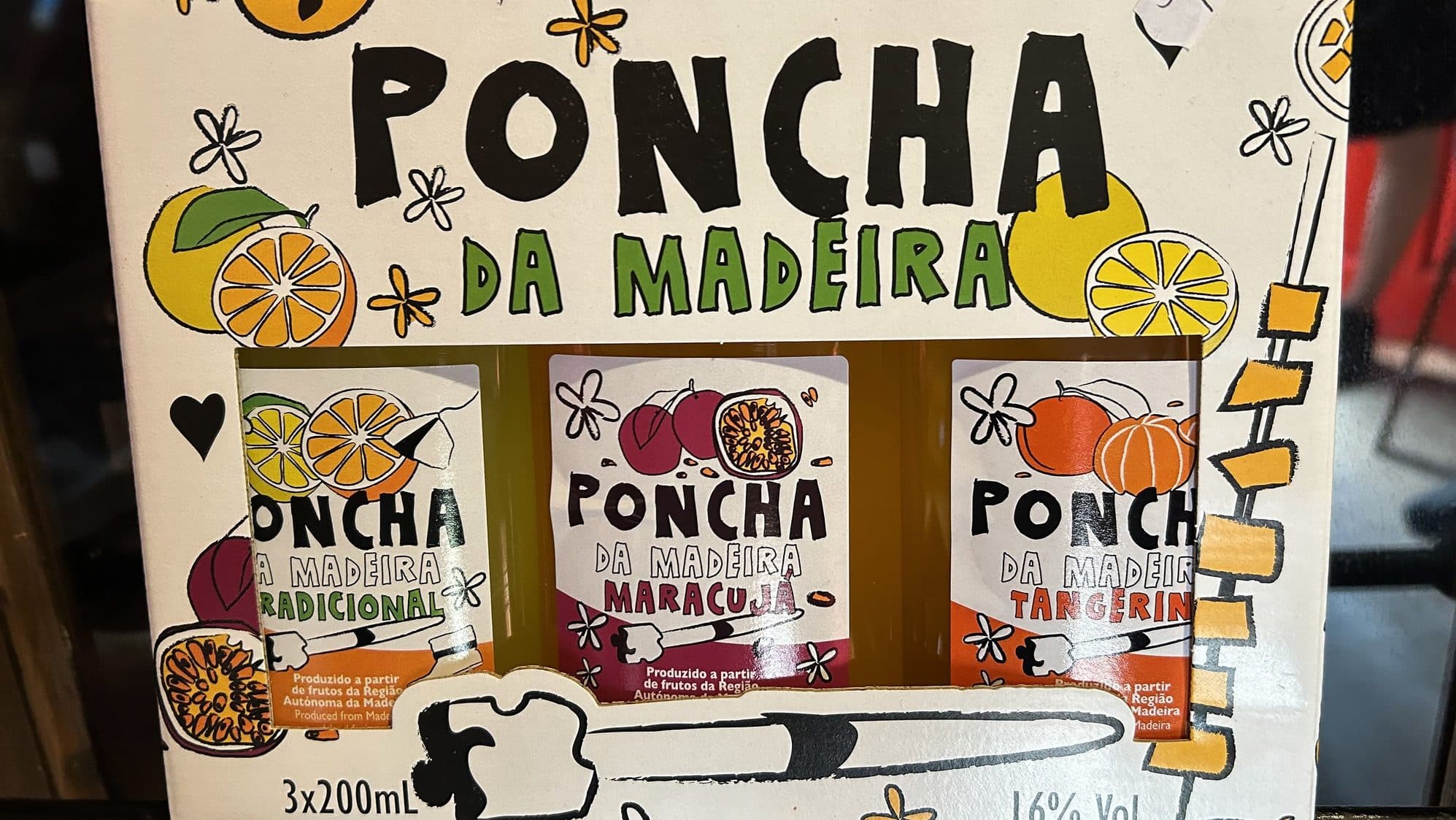
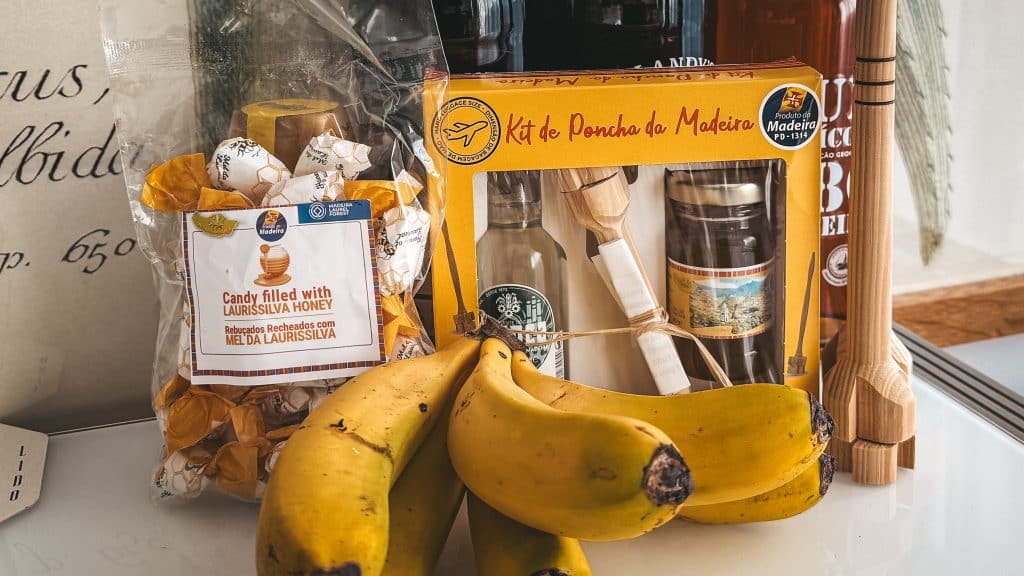
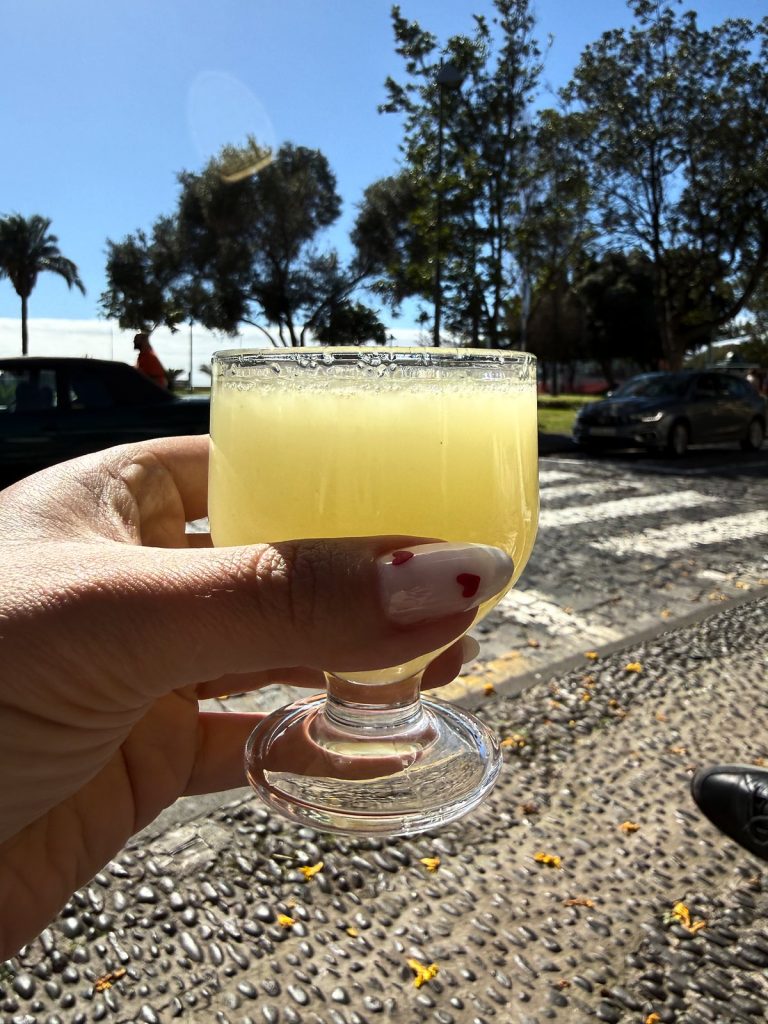
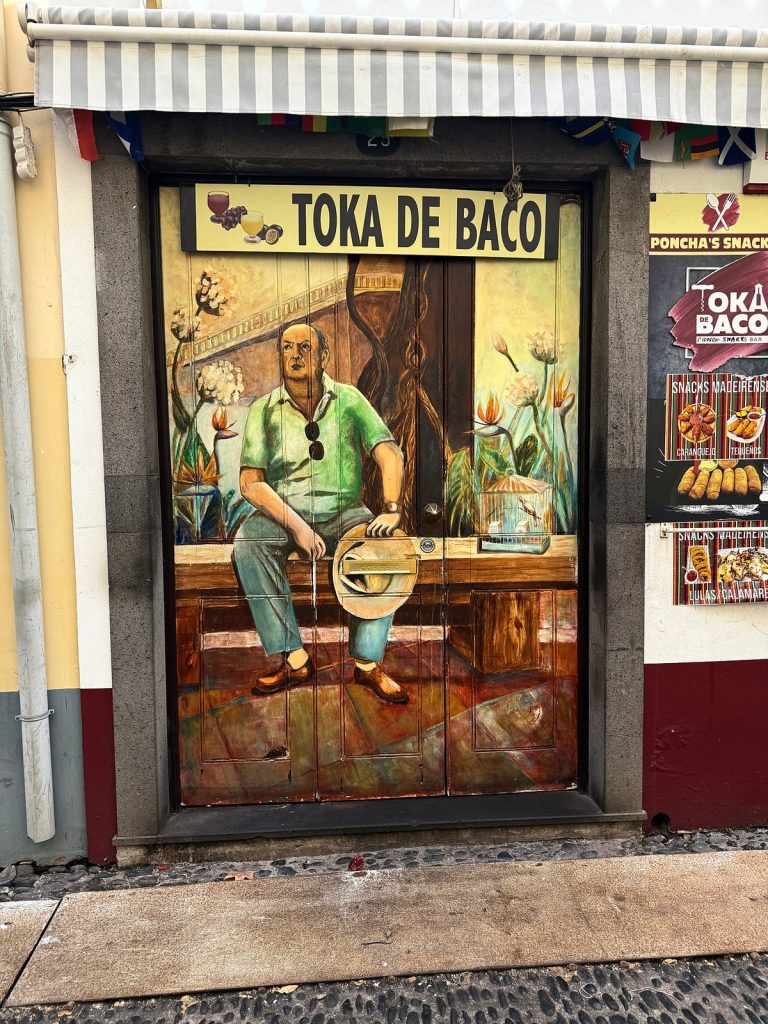
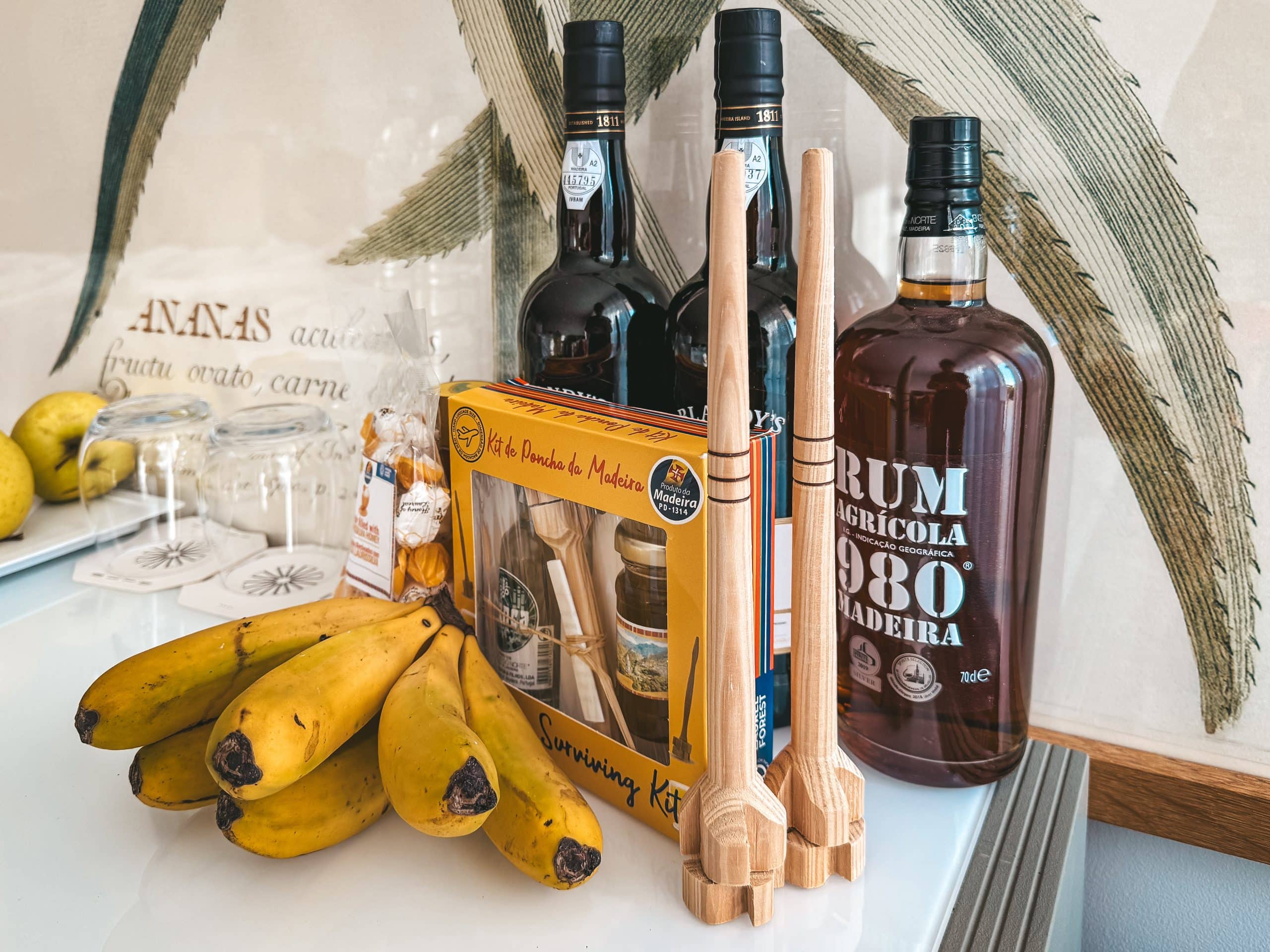
1: An example of ready-made poncha – I DON’T recommend it, 2: Souvenirs from Madeira, including a small poncha kit. Photo: Ewelina Podrez-Siama 2026, 3: Fresh poncha in a glass, February 2026. Photo: Ewelina Podrez-Siama, 4: The painted door of the Toka de Baco bar on Rua de Santa Maria in Funchal, March 2025. Photo: Ewelina Podrez-Siama
So instead of a ready-made bottle, I recommend a Kit de Poncha da Madeira (in the main photo) — a small set with a bottle of rum, glasses and the traditional wooden stirrer called a borracheiro. The taste of poncha, recreated at home.
Flowers and plants
At the Mercado dos Lavradores and in florists all over Funchal you’ll find bird-of-paradise flowers (strelitzias), proteas and orchids at prices that make florists back home look downright depressing. Cut strelitzias and proteas are remarkably hardy — they survive a flight without water for a whole day, so they make a sensible gift.
It is worth knowing the rules, though: Portugal is one of the so-called EU designated zones, from which taking live plants and planting material out is heavily restricted or requires a plant passport confirming the plant’s health. Cut flowers (no roots, no soil) you can take legally — up to 50 cut ornamental stems. With bulbs and seedlings, always ask the seller about a plant passport — a legitimate duty-free shop should sell products with the required documents.
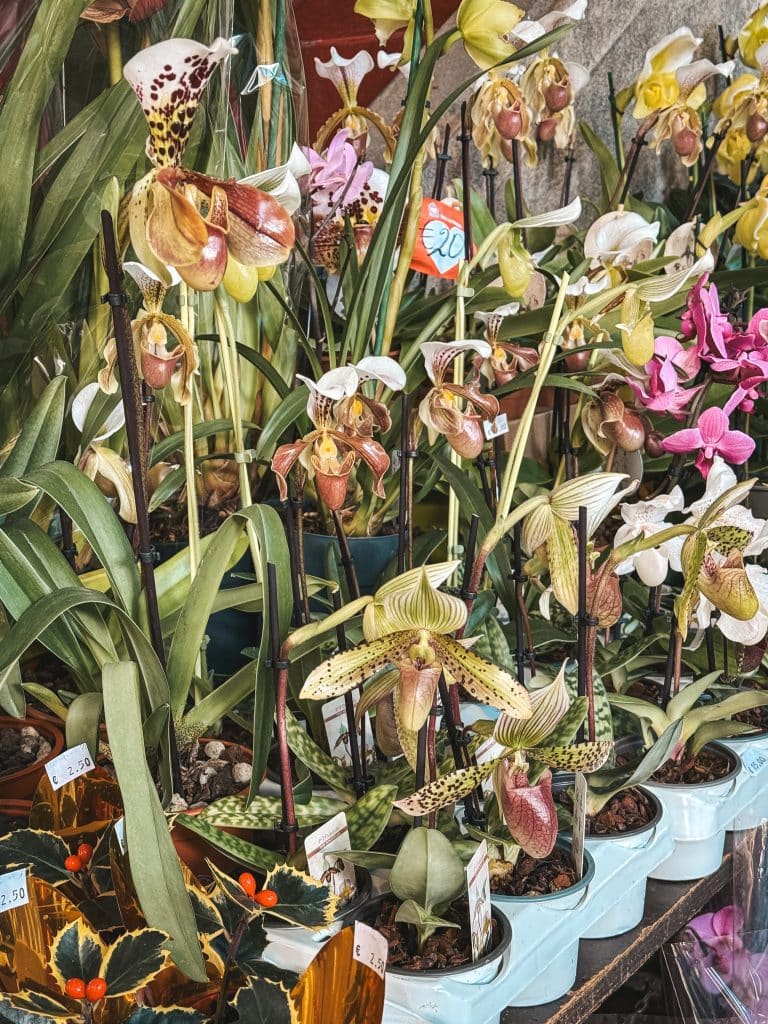
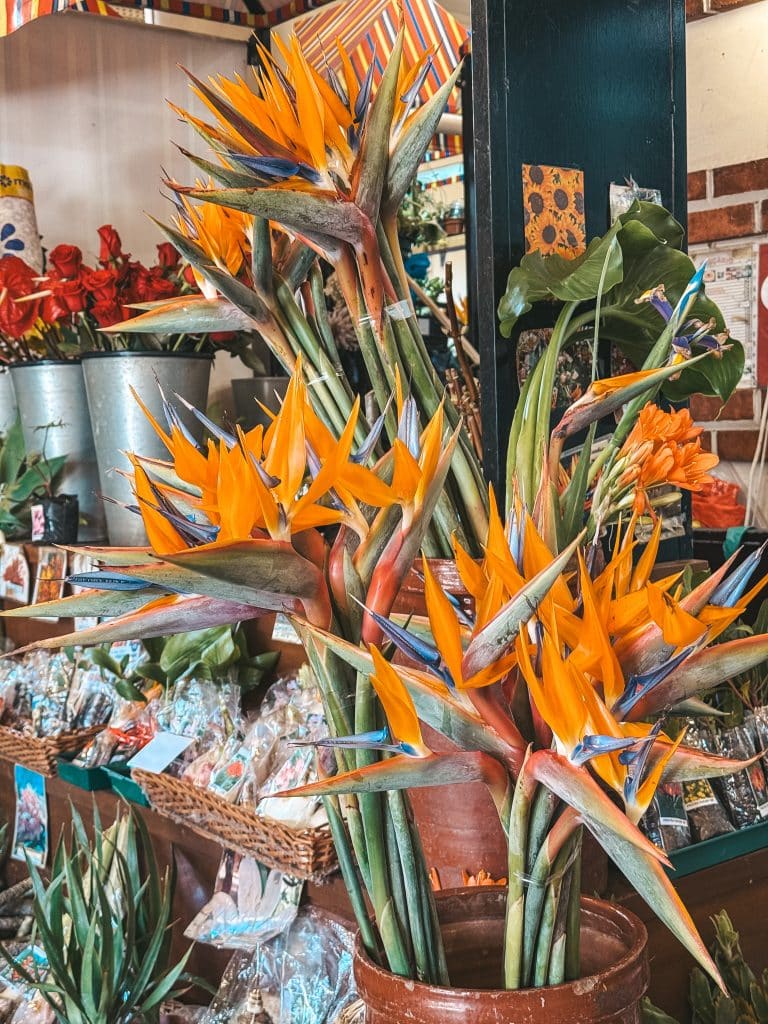
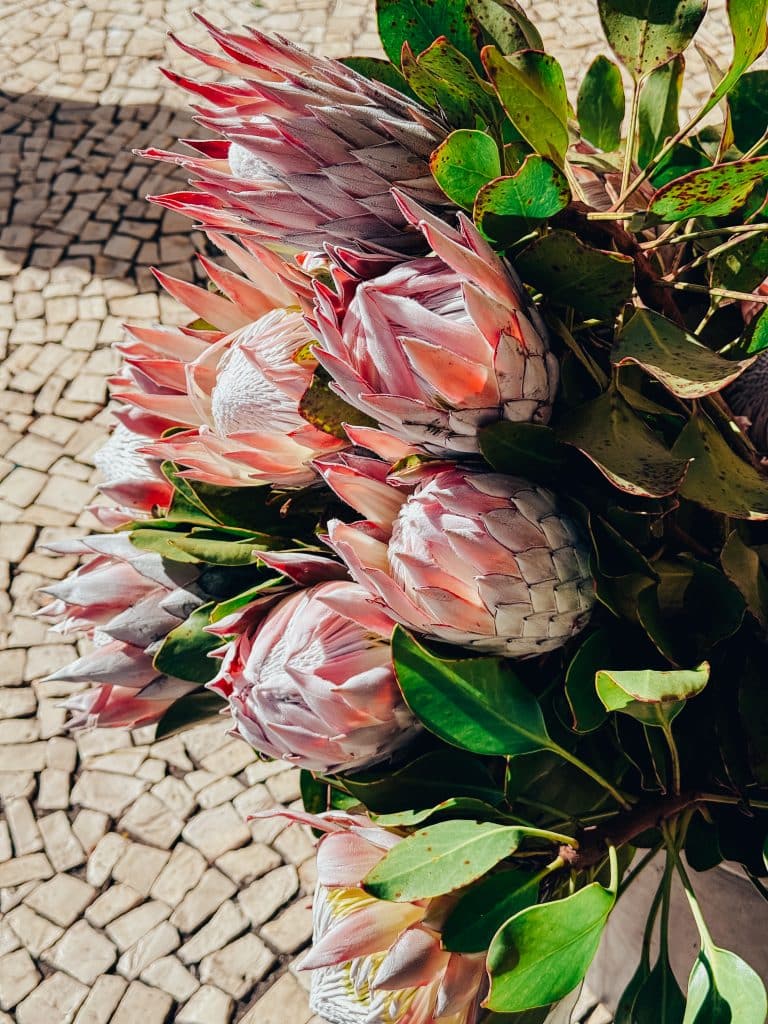
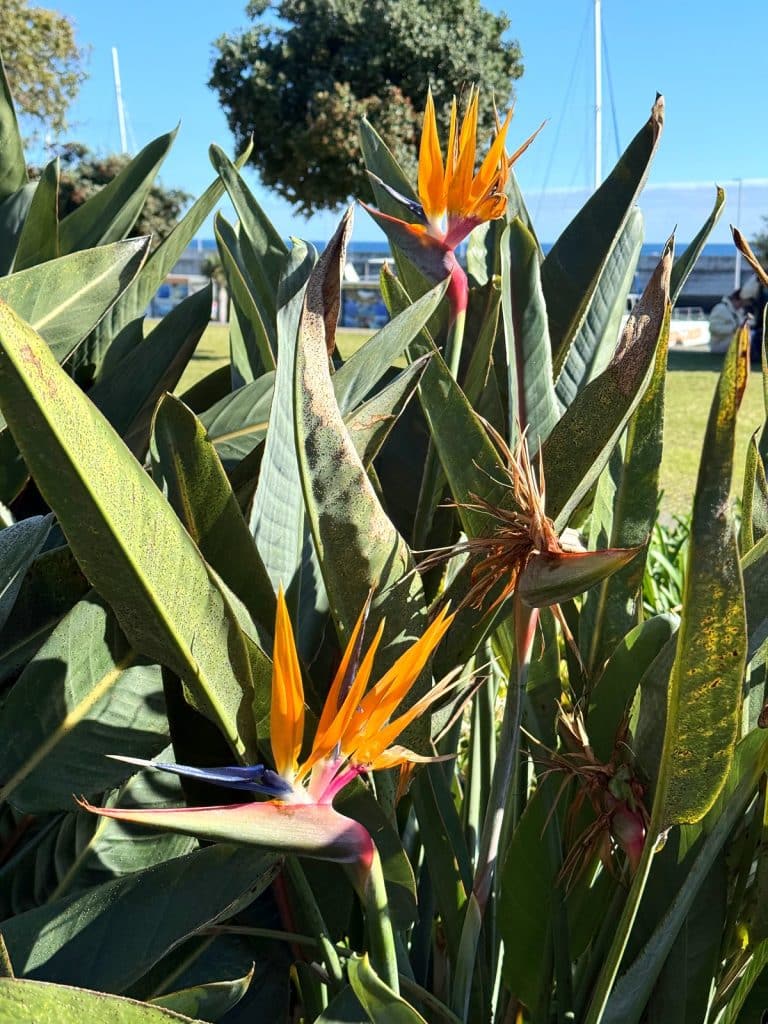
1: An orchid from Madeira (2026), 2: A strelitzia from Madeira (2026), 3: A protea from Madeira (2026), 4: Strelitzias in bloom in Funchal, February 2026. Photos: Ewelina Podrez-Siama
Fruit and treats
Madeira grows fruit you simply won’t find in shops back home — what reaches supermarkets elsewhere in Europe is picked green so it can ripen in transit. Here you get ripe fruit, including kinds that don’t travel well. And if you can find them at home at all, they cost a fortune.
Monstera fruit (monstera deliciosa) is something you won’t forget. It looks like a green corn cob covered in hexagonal scales and tastes like pineapple with vanilla — intense, sweet, tropical. There’s one condition: it has to be fully ripe. Unripe fruit contains calcium oxalate crystals that literally irritate your mouth and throat — not a pleasant experience.
Banana passion fruit (Passiflora mollissima) tastes completely different from the passion fruit you know. It’s sweeter, creamier and less tart — with a hint of banana and tropical sweetness at the same time. Next to it on the stalls you’ll also find regular passion fruit, each with its own character.
Local bananas are a category of their own. Smaller than export bananas, much sweeter, with creamier flesh — once you’re back home, Lidl bananas will taste like a poor imitation for quite a while.
Besides those, stock up on cherimoyas (Annona cherimola, also called custard apple — creamy, very sweet and considered one of the healthiest fruits in the world) and pitanga — a small, bright red berry with a sweet and slightly spicy flavour that’s unlike anything else, though it’s harder to transport (it’s more delicate).
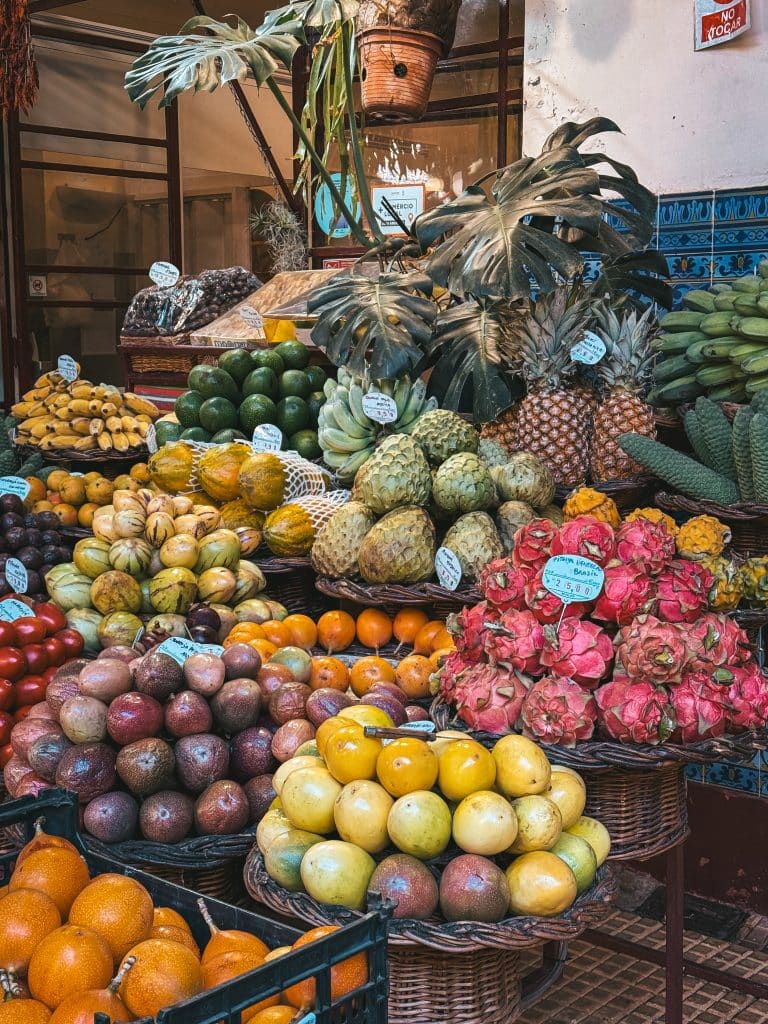
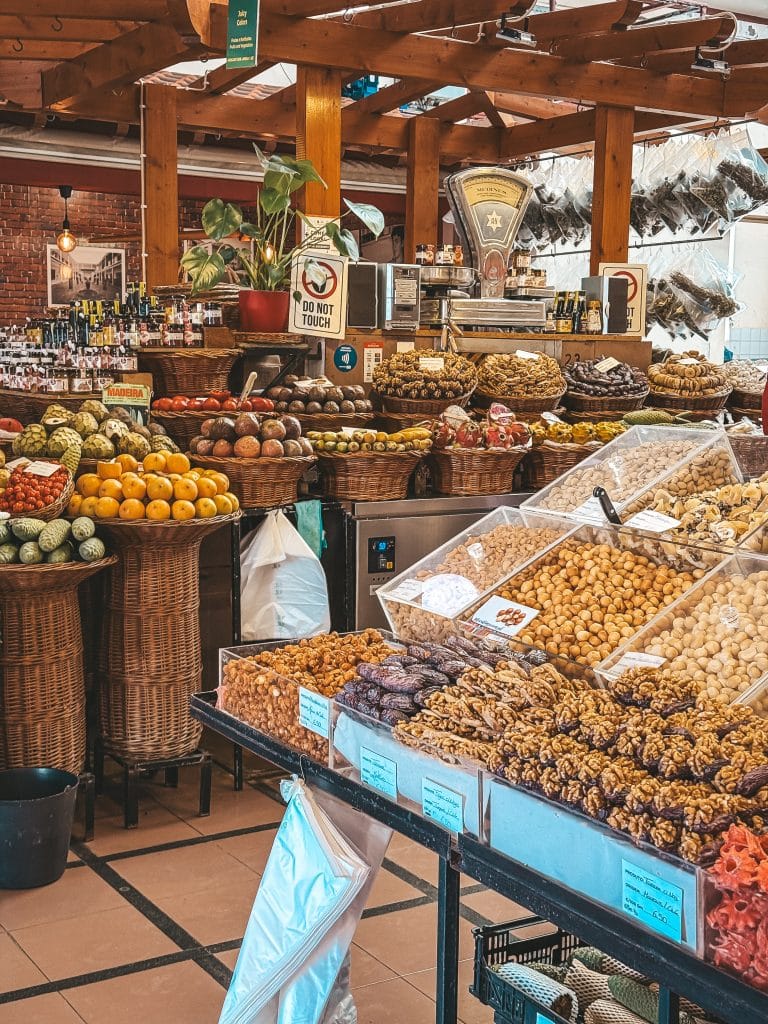
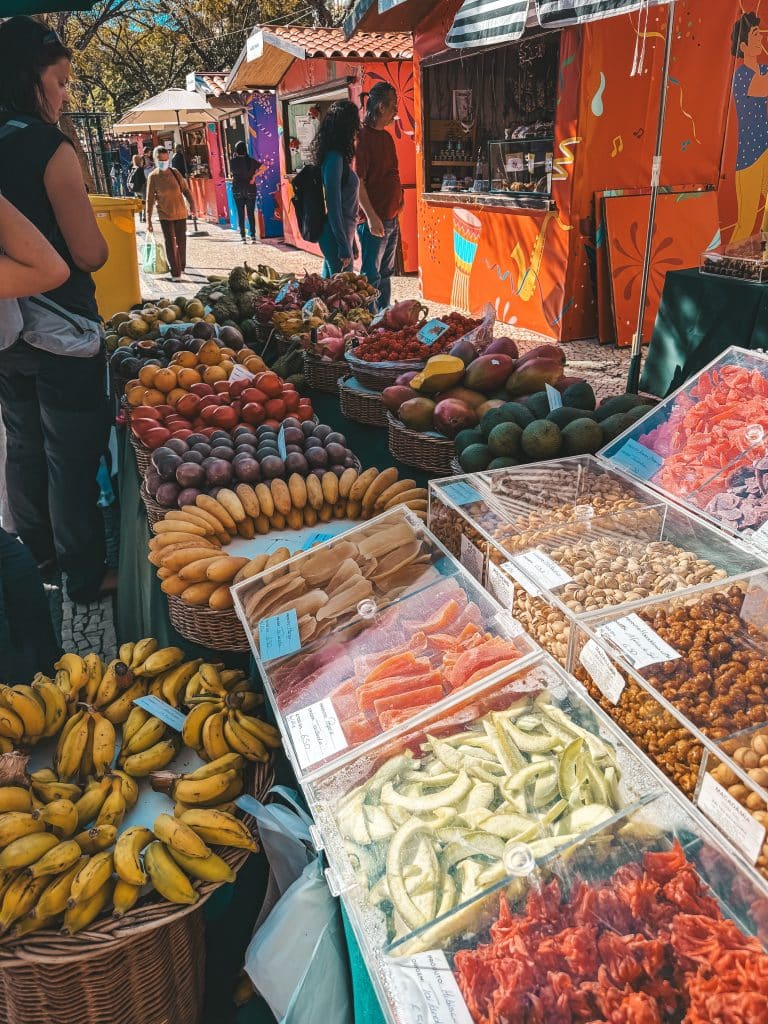
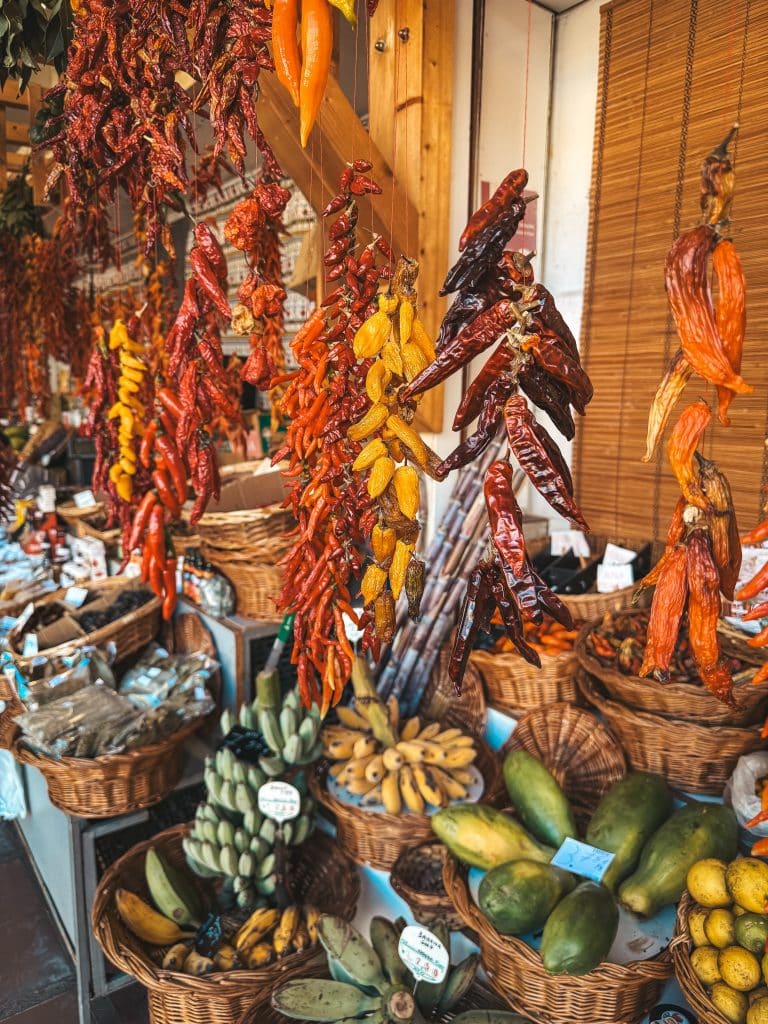
1: Fruit from Madeira, 2: Fruit and snacks from Madeira, 3: Fruit and snacks from Madeira, 4: Fruit and snacks from Madeira. Photos: Ewelina Podrez-Siama 2026
● Bananas and monstera fruit — they travel well. Bought the day before your flight, they’ll easily survive the journey home.
● Bolo do caco (vacuum-packed) — also sold in the airport duty-free, so there’s no need to lug it around for the whole trip.
● Bolo de mel — Madeira’s traditional honey cake. I especially recommend the ones from Fábrica Santo António and Golden Gate Grand Cafe in Funchal. Also available in the duty-free.
● Broas de mel — traditional biscuits made with molasses. A light, compact edible souvenir.
● Madeiran honey — light, long-lasting and it fits in any suitcase. Also available in the duty-free.
● Laurisilva honey sweets — a great gift idea. The best ones I bought were at the small, unassuming Honey Museum in São Vicente.
● Dried fruit from the market stalls — light, compact and completely different from what you know from health-food shops back home.
💡 You’ll also find most of these products (apart from fresh fruit) in the duty-free area at Funchal airport — handy for last-minute shopping.
I came here on a jeep tour of the north of the island — and it’s one of those stops that stay with you longer than many a headline attraction.
The Museu do Mel is in Sítio dos Lameiros on the Estrada da Bica, at about 500 m above sea level — right on the edge of the Laurissilva laurel forest (UNESCO). It’s a private initiative with real soul: you’ll learn all about traditional beekeeping methods and how honey is made — from nectar to jar. The laurisilva honey sweets you can buy here are one of those souvenirs that vanish from your suitcase before you’re even home.
📍 Sítio dos Lameiros, Estrada da Bica, São Vicente
I describe how much a tour like this costs and what’s included in my guide to tours and excursions in Madeira.
Cosmetics from Madeira
Aloe vera grows literally everywhere in Madeira — on walls, along roads, in gardens — and it’s the base of many local cosmetics. If you have sensitive skin, it’s worth a look: aloe gel and face cream made with Madeiran aloe are souvenirs you’ll actually use once you’re home. I still use them today.
A good place to start is the pharmacy in Galeria Plaza in Funchal — a solid choice of cosmetics with local ingredients, without the tourist mark-up. Look for products that clearly state where they were made — part of the range is cosmetics from the mainland that are simply sold in Madeira.
Crafts and souvenirs with character
Madeira has lots of craftspeople, and the souvenirs I buy here rarely end up at the back of a drawer. Paradoxically, though — it’s precisely when you’re looking for these more lasting things that you’re most likely to get “ripped off”.
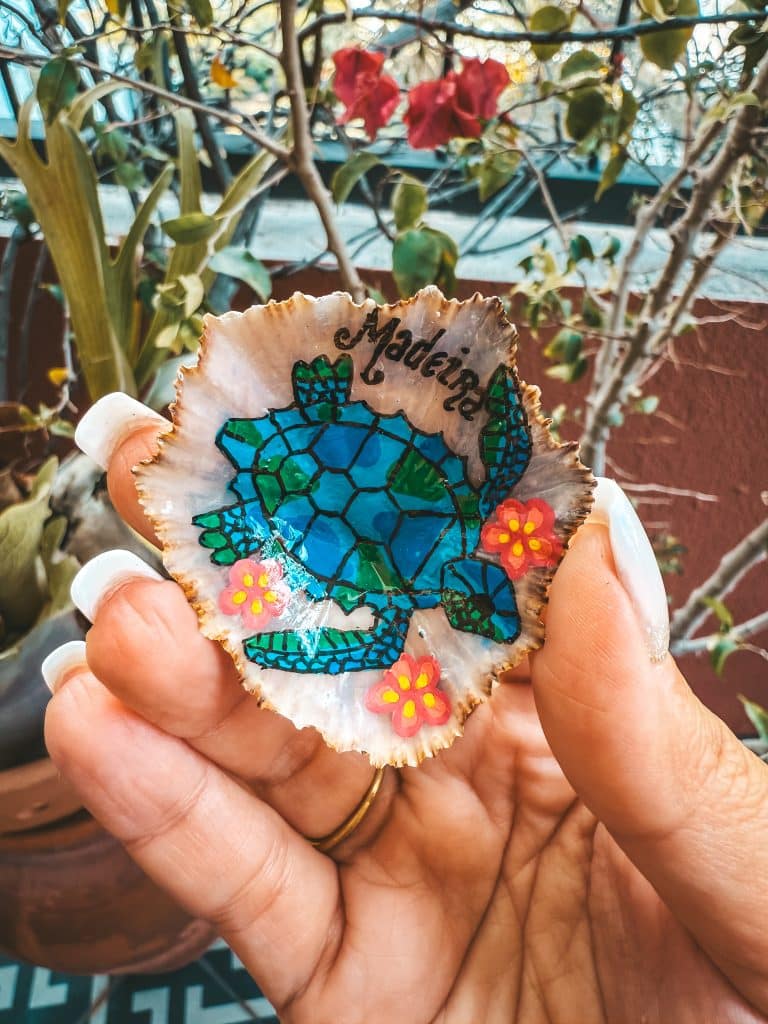
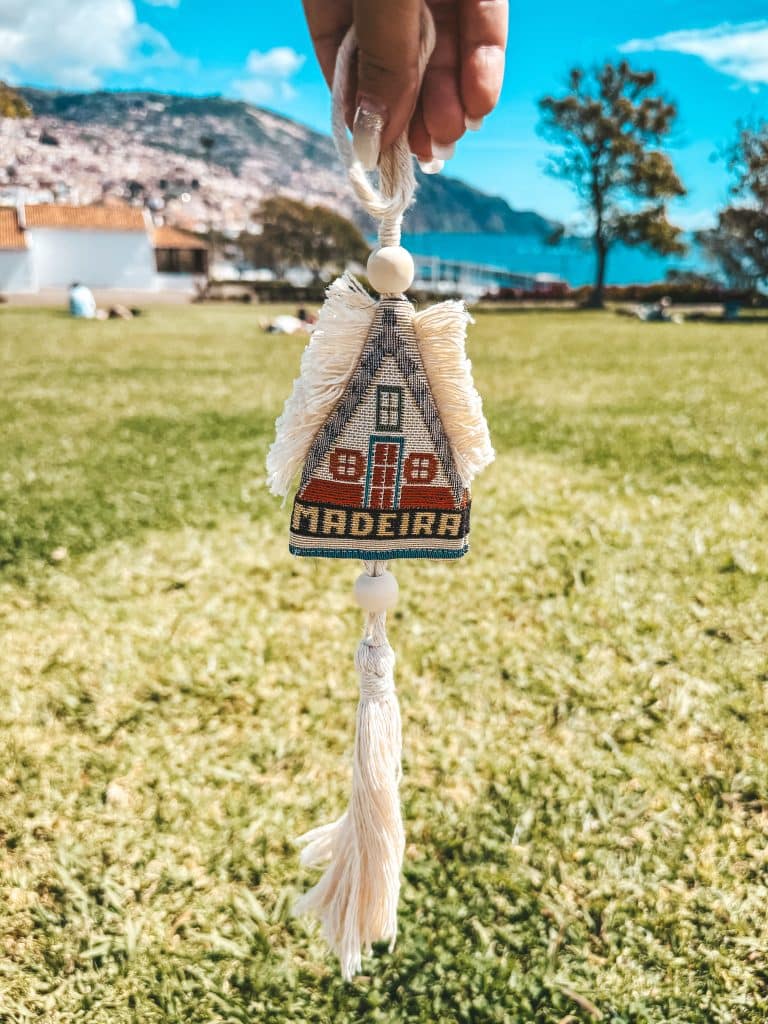
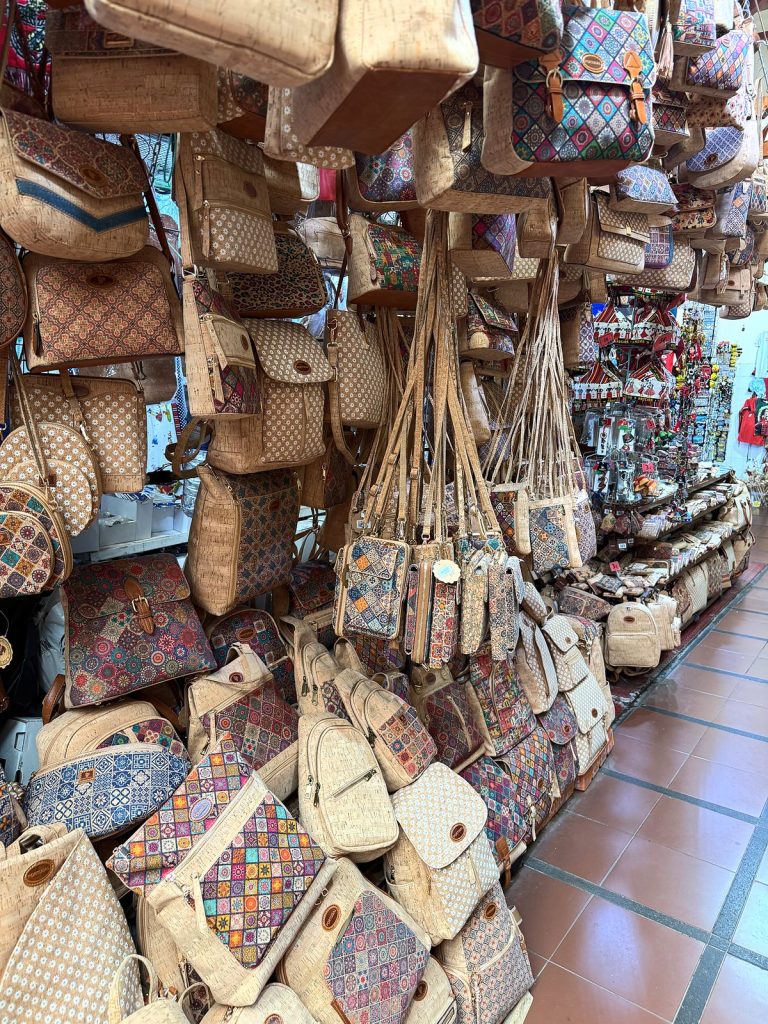
1: Less typical souvenirs from Madeira (2025), 2: Less typical souvenirs from Madeira (2025), 3: Less typical souvenirs from Madeira (2025), 4: Cork handbags and woven bags on a stall in Funchal, February 2026. Photos: Ewelina Podrez-Siama
Madeira embroidery
Bordado da Madeira — hand embroidery on linen, made for more than 150 years — is one of the island’s most recognisable souvenirs. And one of the easiest to fake. Official pieces carry an IVBAM certificate (the regional institute for wine, embroidery and handicrafts, which took over IBTAM’s role in 2006) with a hologram on the label — without it, you’re probably buying mass-produced goods shipped in from far away. If you’d like to see the history and technique of embroidery up close, visit the Embroidery Museum at IVBAM’s headquarters at Rua Visconde do Anadia 44 in Funchal — admission is just €2.
My kind of embroidered souvenir is a hanging ornament with a traditional Madeiran house — light, recognisable and completely different from mass-produced magnets.
Cork products
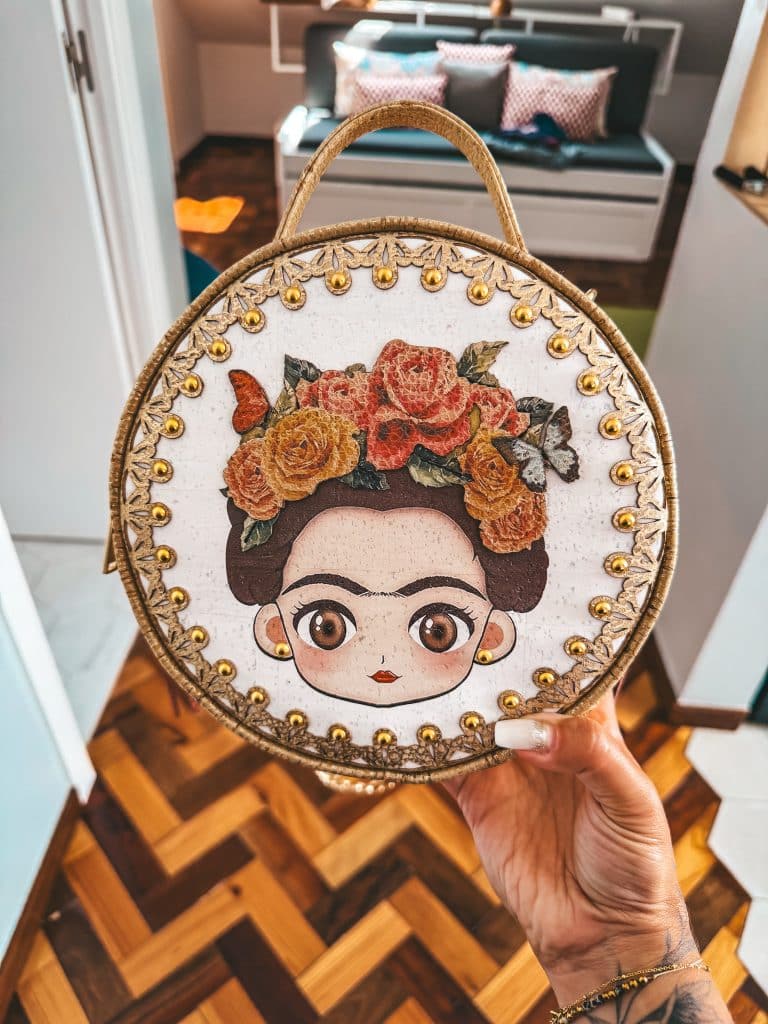
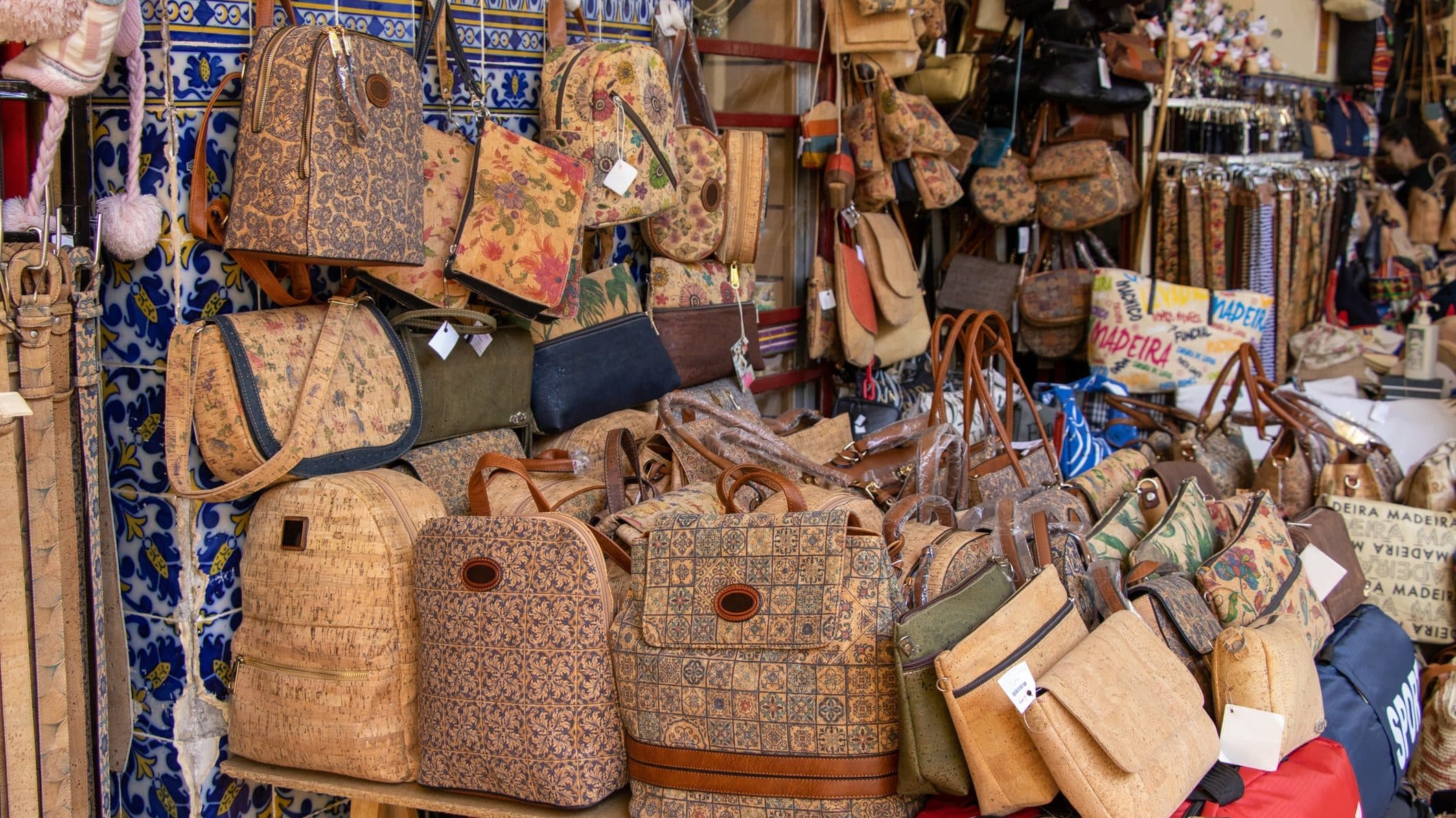
Portugal is the world’s largest cork producer, and you can really tell in the shops. I found my cork handbag with a Frida motif in the narrow streets between the Cathedral and the Mercado dos Lavradores in Funchal. I still carry it today. In Câmara de Lobos it’s also worth popping into the little shops while you’re visiting the fishing village.
One condition: always check the label — look for “cortiça portuguesa”. Some of the goods are imported.
Wickerwork — a Camacha tradition
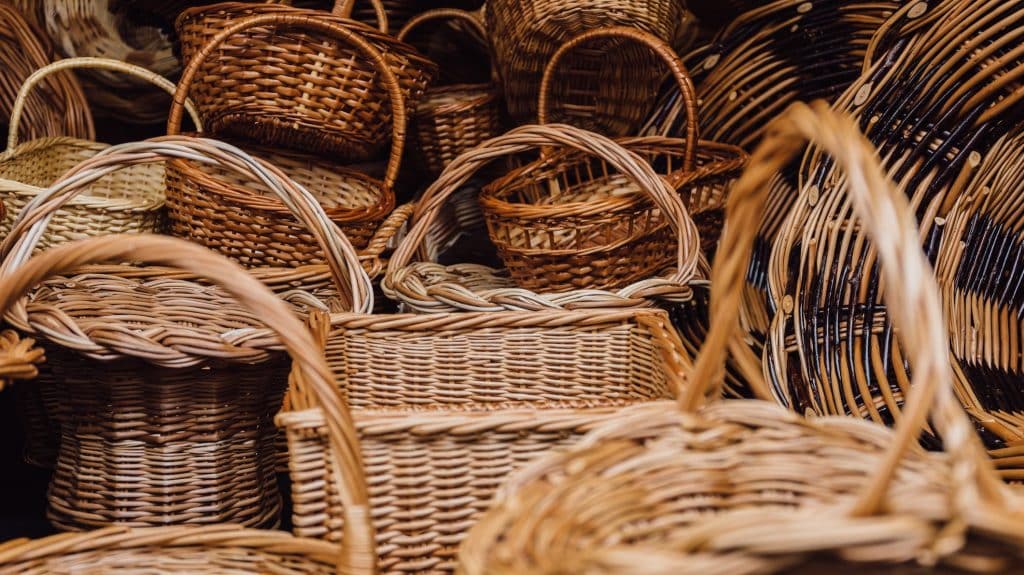
Wicker weaving is one of Madeira’s oldest crafts, and since the 19th century its centre has been the village of Camacha in the east of the island. This is where the baskets, trays, furniture, bags and decorations come from that you’ll see in souvenir shops all over Funchal — and in Camacha itself, where some pieces are still made by hand in small family workshops.
I’ll admit I didn’t buy anything myself — wicker baskets are a lovely tradition, but they’re hard to squeeze into a suitcase for the flight home. Still, if you’re looking for a lasting, genuinely Madeiran souvenir for your home, it’s definitely worth a look. Check the label for where it was made — the best pieces come from Camacha itself.
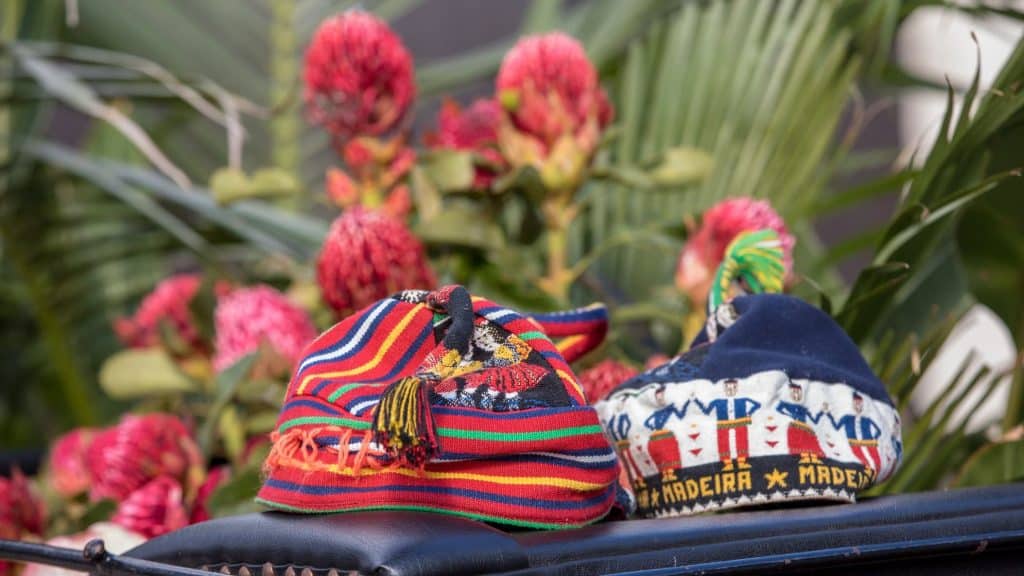
Carapuça — Madeira’s hat with a history
The carapuça is a small, close-fitting cap with a little tail sticking up in the middle — traditionally worn as part of the folk costume at festivals and dances. The first reliable mention dates from the late 18th century. Today it’s one of the island’s most recognisable symbols.
In the shops you’ll find it in dozens of versions — from traditional black wool to colourful tourist versions. I didn’t buy one — I prefer souvenirs that actually find a place in my home — but if you’re looking for a typical Madeiran souvenir with cultural context, it’s a better choice than yet another magnet with “Madeira” on it.
Azulejos — tiles with a history
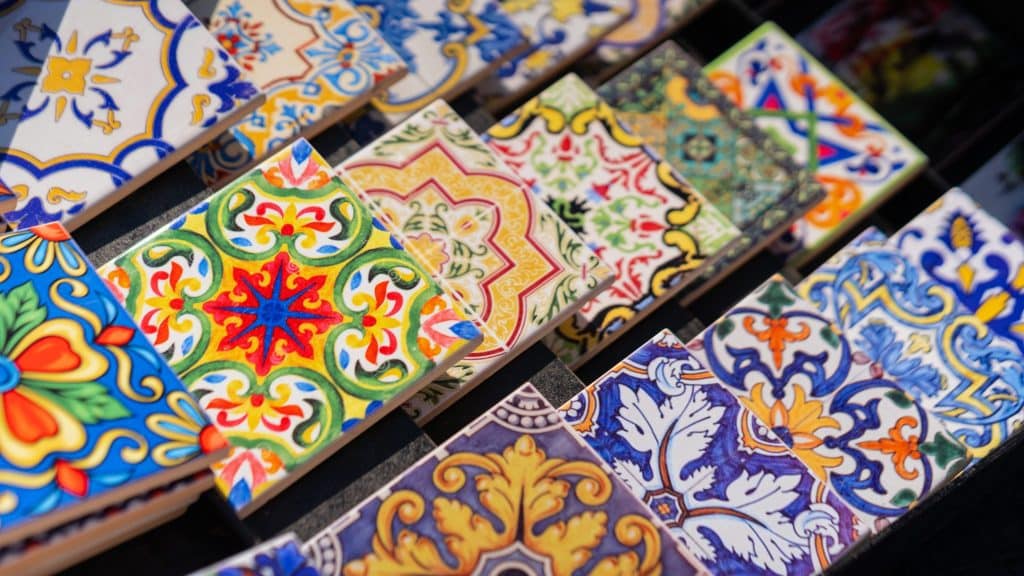
Hand-painted ceramic tiles decorate façades, churches and public spaces all over Portugal — and Madeira is no exception. The Mercado dos Lavradores building itself is decorated with azulejo panels from 1940 designed by the artist João Rodrigues.
The best souvenir is a single tile of 10×10 or 15×15 cm with a hand-painted motif.
Look for craftspeople away from the stalls
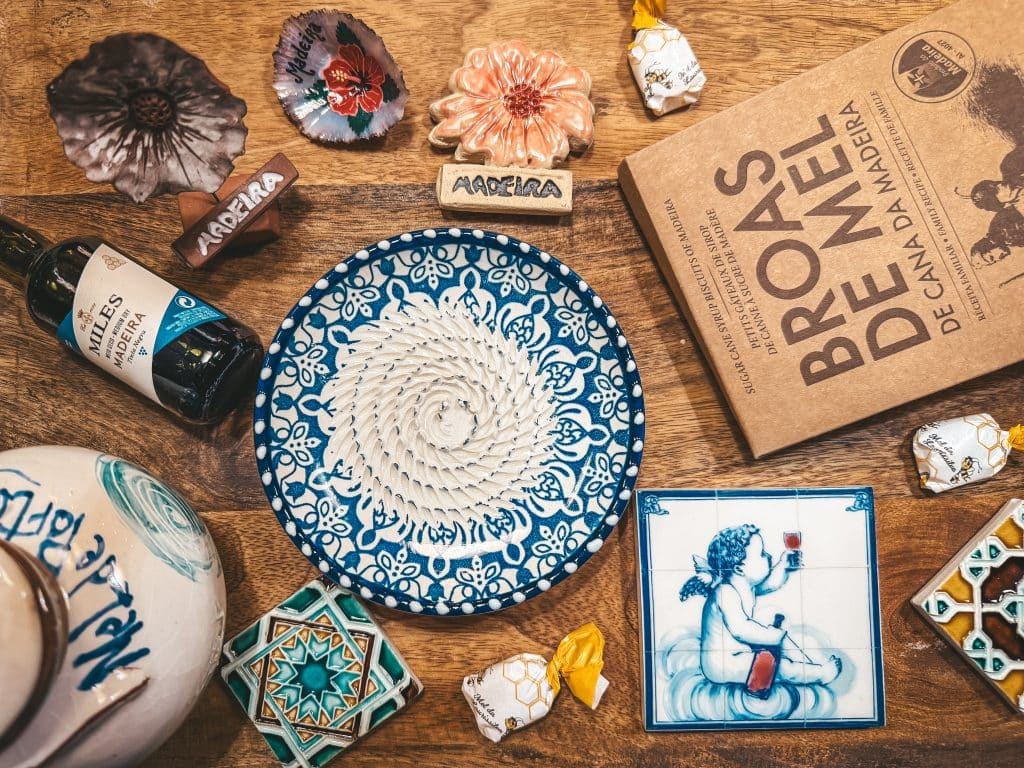
During carnival and festivals, in the municipal park, sometimes by the cable car up to Monte — that’s where local craftspeople bring their work. It’s a completely different league from the tourist stalls on the main streets. A good example: a hand-painted shell made into a magnet — found at a local maker’s stall, one of a kind.
Clothes from Madeira
I always fly to Madeira with a half-empty suitcase. I have a feeling that the cuts and sizes in Portuguese shops simply suit me better — every time I come back with new dresses and jackets.
I rarely leave Tiffosi in the Plaza shopping centre in Funchal empty-handed — everyday clothes with good value for money, definitely worth a look.
Funchal also has Mezka — it was great for years, but in February 2026 I was disappointed: lots of high-street chain brands such as Vero Moda, and the fabrics were noticeably worse than I remembered. Worth a look, but check the labels before you buy.
✗ Magnets, keyrings and T-shirts with “Madeira” on them — they look exactly like the ones from any other tourist spot in Europe. Most are made in China and have nothing to do with the island apart from the print. The exception, of course, is hand-painted ones that you find special.
✗ Embroidery without the IBTAM hologram — if there’s no certificate with a hologram on the label, you’re probably buying imported mass production, not Madeiran handicraft.
✗ Cork products without the “cortiça portuguesa” label — not every handbag or wallet sold in Madeira comes from Portugal. Check the label.
✗ Azulejos with a perfectly even, glossy surface — that’s a sign of printing, not hand painting. The real thing has slight unevenness and visible brushstrokes.
✗ Shopping only on the main tourist streets — on Av. Arriaga and by the entrance to the Mercado, prices are higher and the quality isn’t necessarily better. Try the side streets.
💡 With a little care, unique souvenirs from Madeira will bring you joy for a long time — and cost no more than tourist tat.
Summing up
I always come back from Madeira with a suitcase stuffed to bursting, but I rarely regret a single purchase. The secret is simple: walking a few minutes off the main streets and choosing shops with character makes the difference between yet another mass-produced “Madeira” magnet and something that will actually stay with you for years.
The embroidered ornament hangs in my bedroom. The cork handbag goes everywhere with me. The tile with a little angel hangs in the kitchen. The handmade magnets are on my wall of travel souvenirs. None of these things cost a fortune, and each one has a story I can tell.
Madeira is an island that doesn’t need tacky souvenirs to stay in your memory. But if you want to take home something that truly represents it — you’re spoilt for choice.
Looking for a place to stay in Madeira? Compare hotels, apartments and houses across the island on Booking.com, with reviews and free cancellation on many offers.