- My answer: Madeira – for the greenery, the levadas and the peace and quiet. Tenerife wins on beaches, Teide and the number of flights, Gran Canaria on being a big city with a beach.
- In winter: much the same on the coast, about 20–22°C by day. In January 2026 accommodation on Madeira was about 27% cheaper than on Tenerife.
- In summer: Tenerife is warmer (about 28°C in July against 25°C in Funchal), and Madeira is more expensive (by about 15% in August).
- Rain: Funchal gets about 574 mm a year, Santa Cruz de Tenerife 226 mm, the south of Tenerife 132 mm. That’s why Madeira is so green.
- With a dog: on Funchal’s buses a dog travels in a closed bag (the rules give no weight limit); in Las Palmas only up to 8 kg and in a carrier.
I’ve been coming back to Madeira regularly since 2023. In March 2024 I spent a week on Tenerife, and in March 2026 two weeks in Las Palmas on Gran Canaria with my dog Tesla. That’s where I was finishing my latest book, “Marka osobista w czasach AI i generatywnego wyszukiwania” (in Polish, on personal branding in the age of AI and generative search). Which island? For me, Madeira. But that’s no knock on Tenerife or Gran Canaria: each one wins at something different, and whether it’s the one for you depends on what you’re looking for.
Madeira, Tenerife and Gran Canaria in numbers
| Madeira | Tenerife | Gran Canaria | |
|---|---|---|---|
| Area | approx. 741 km² | 2034 km² | 1562 km² |
| Population | approx. 260,000 | approx. 966,000 | approx. 876,000 |
| Highest peak | Pico Ruivo, 1862 m | Teide, 3715 m | approx. 1950 m |
| January, day / night | 20.0 / 14.3°C | 21.0 / 15.4°C | 20.8 / 15.0°C |
| July, day / night | 25.4 / 19.7°C | 28.7 / 21.2°C | 26.9 / 20.8°C |
| Rainfall per year | 574 mm (Funchal) | 226 mm (Santa Cruz), 132 mm (south) | 151 mm |
| Tourists in 2025 | 2.44 million guests in tourist accommodation | 7.41 million | 4.73 million |
| Average room price, January 2026 | €112.83 | €155.56 | €147.04 |
| Average room price, August 2026 | €166.24 | €144.25 | €135.70 |
| Tourist tax | €2 per night (almost everywhere) | no general tax | no general tax |
Madeira vs Tenerife
Green island vs volcano
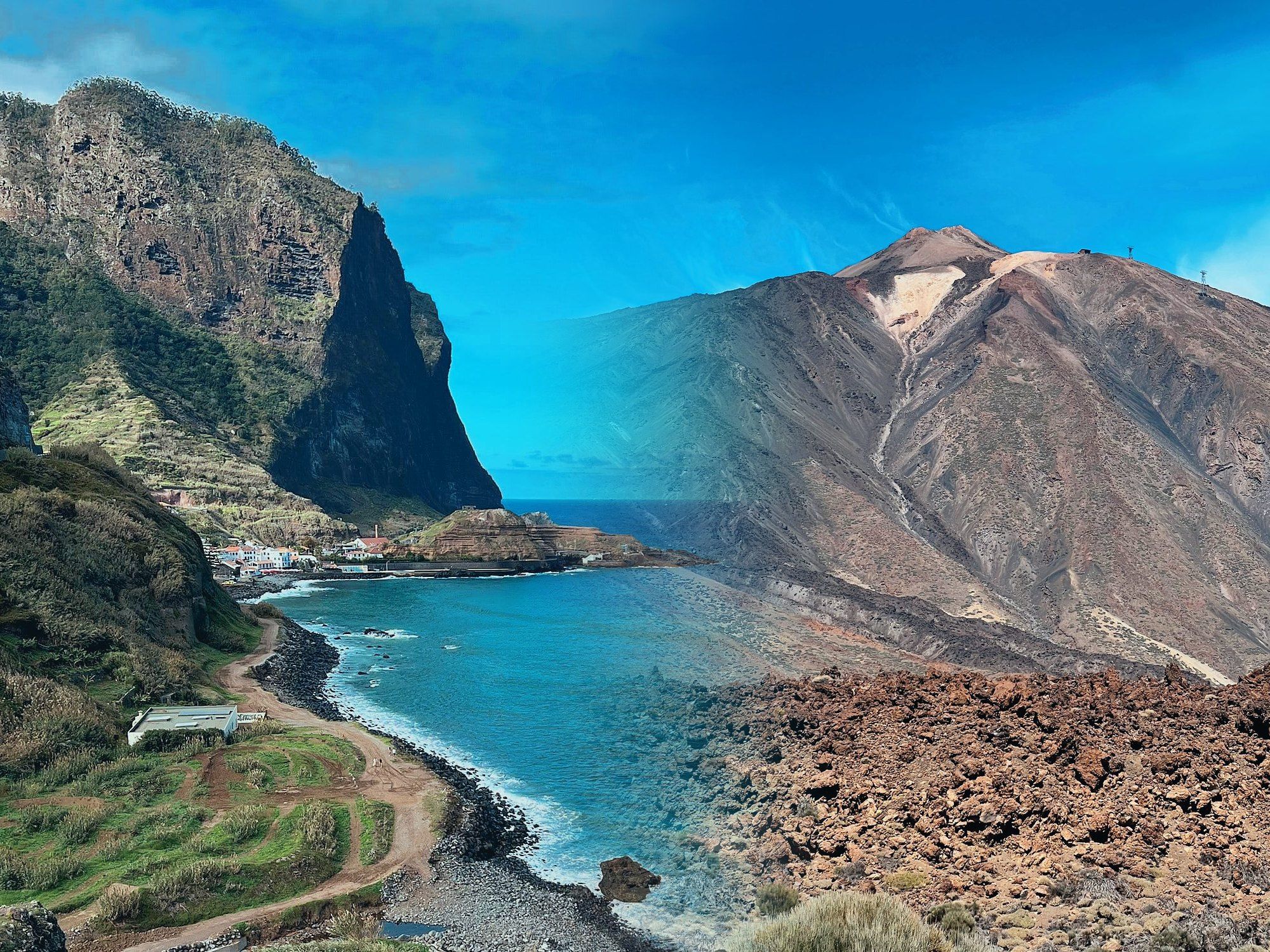
Tenerife is best summed up in the words I used when I got back: beautiful, but… stark. The middle of the island is the volcanic landscape of Teide National Park (a UNESCO World Heritage Site since 2007): red and black lava fields, the rock spires of Roques de García, desert plants. You’ll find greenery mainly in gardens, on banana plantations and in the Anaga mountains in the north-east (a UNESCO Biosphere Reserve since 2015).
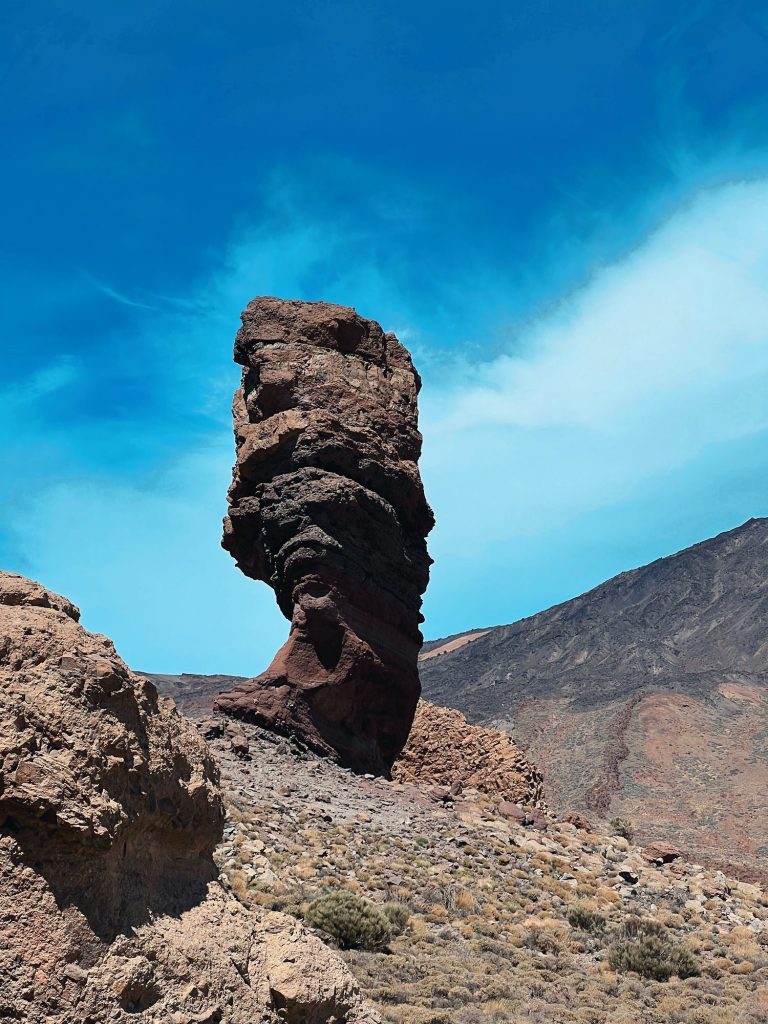
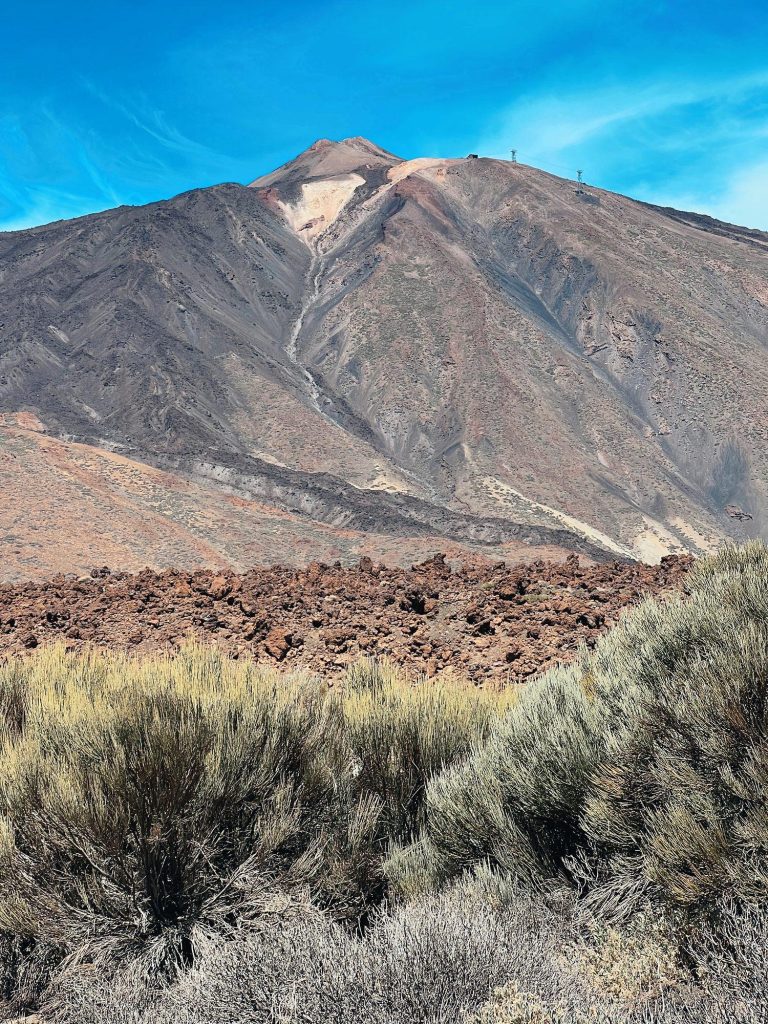
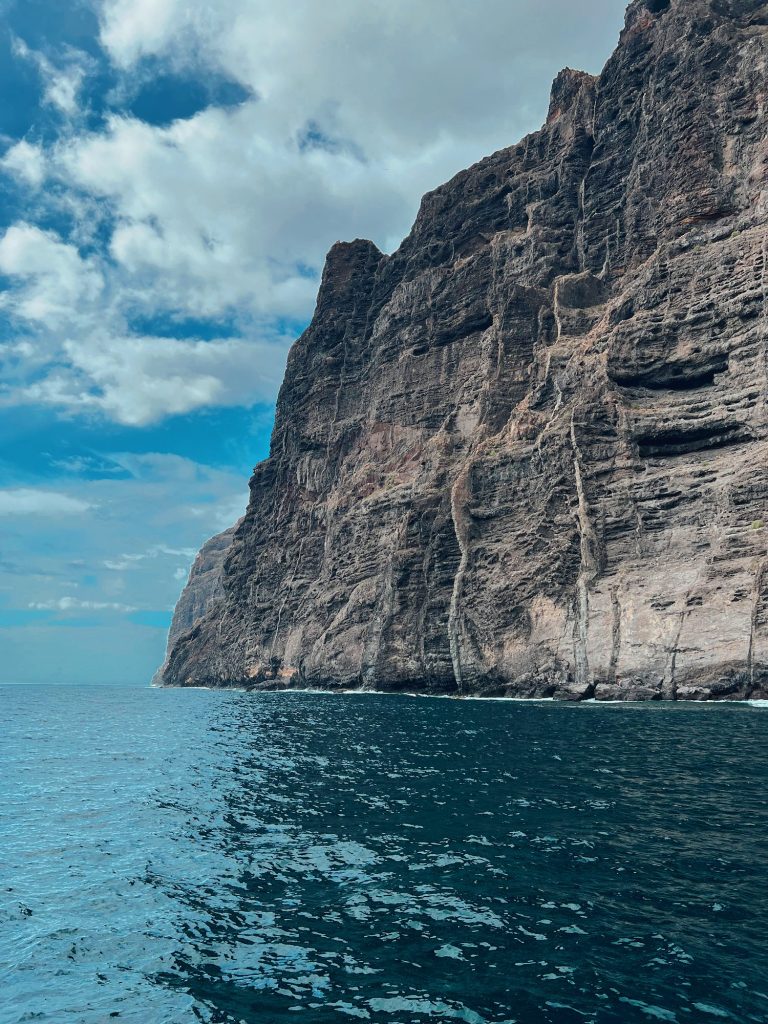
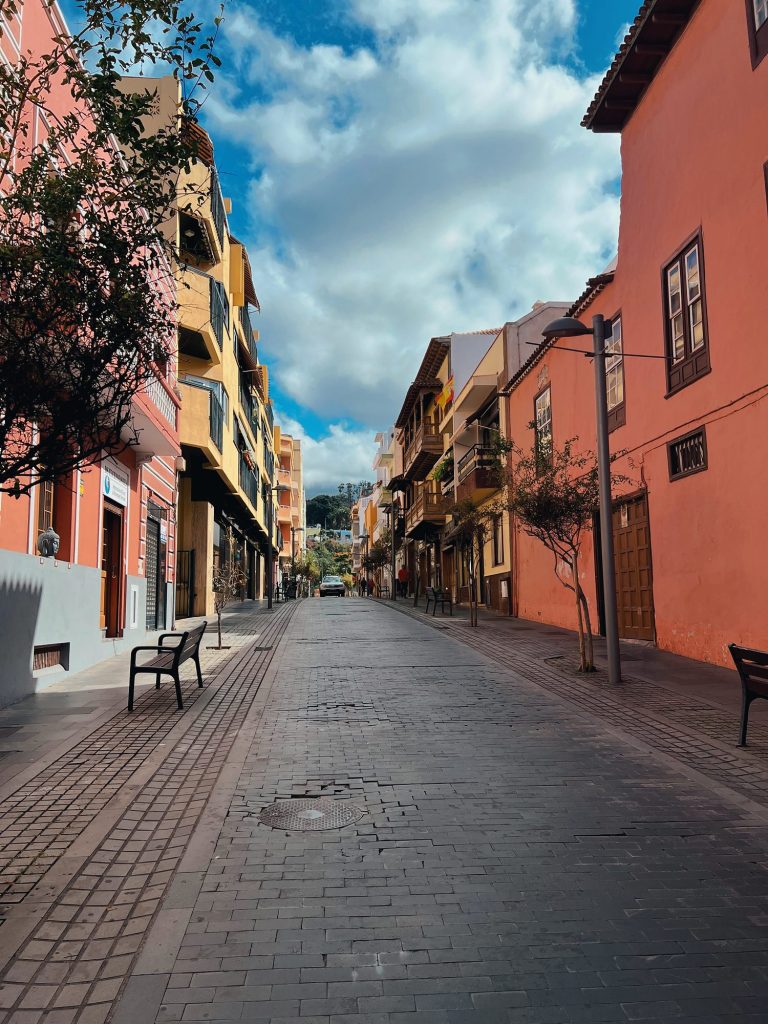
1: Roque Cinchado in Teide National Park, March 2024, 2: Teide and the lava fields, March 2024, 3: The Los Gigantes cliffs from the deck of a boat, March 2024, 4: A street in Puerto de la Cruz, March 2024. Photos: Ewelina Podrez-Siama
Madeira is one of a kind here. The laurel forest, laurisilva, covers about 20% of the island and has been a UNESCO World Heritage Site since 1999. Add steep green valleys, terraces and levadas, which you can follow for hours in the shade of the trees. That greenery comes at a price: Funchal gets about 574 mm of rain a year, Santa Cruz de Tenerife 226 mm and sunny southern Tenerife 132 mm.
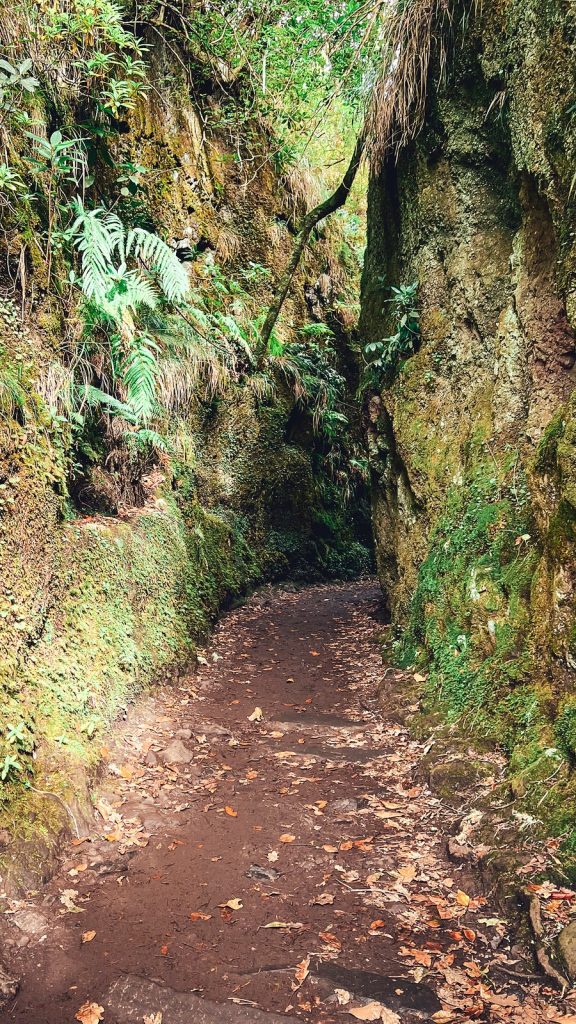
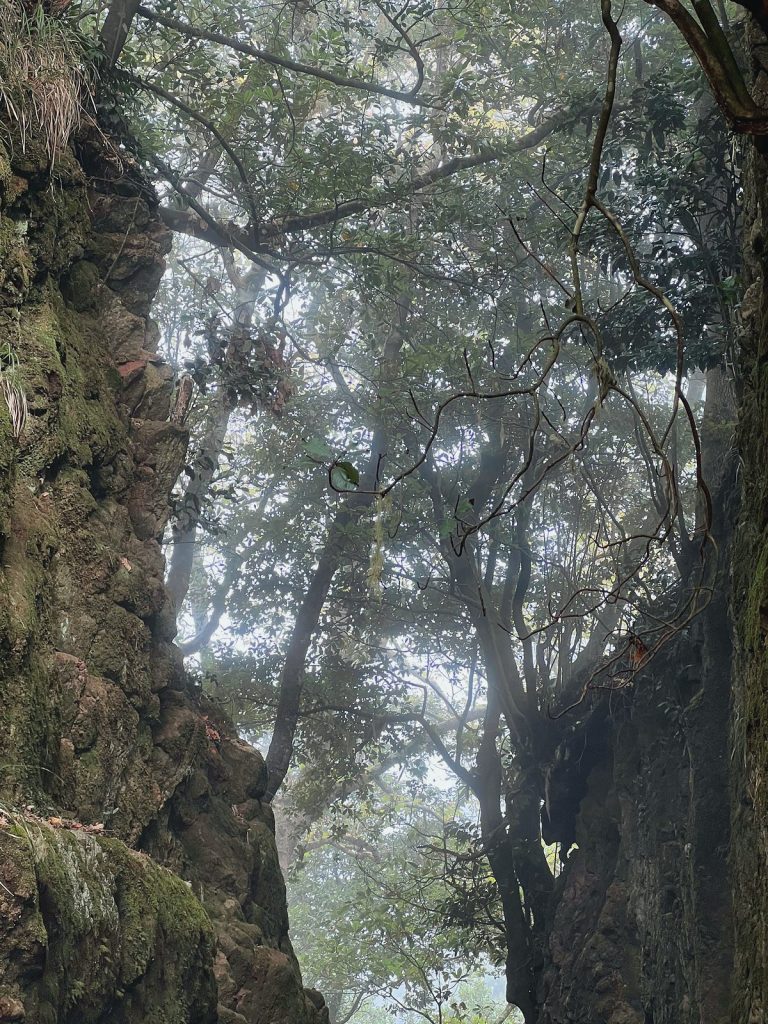
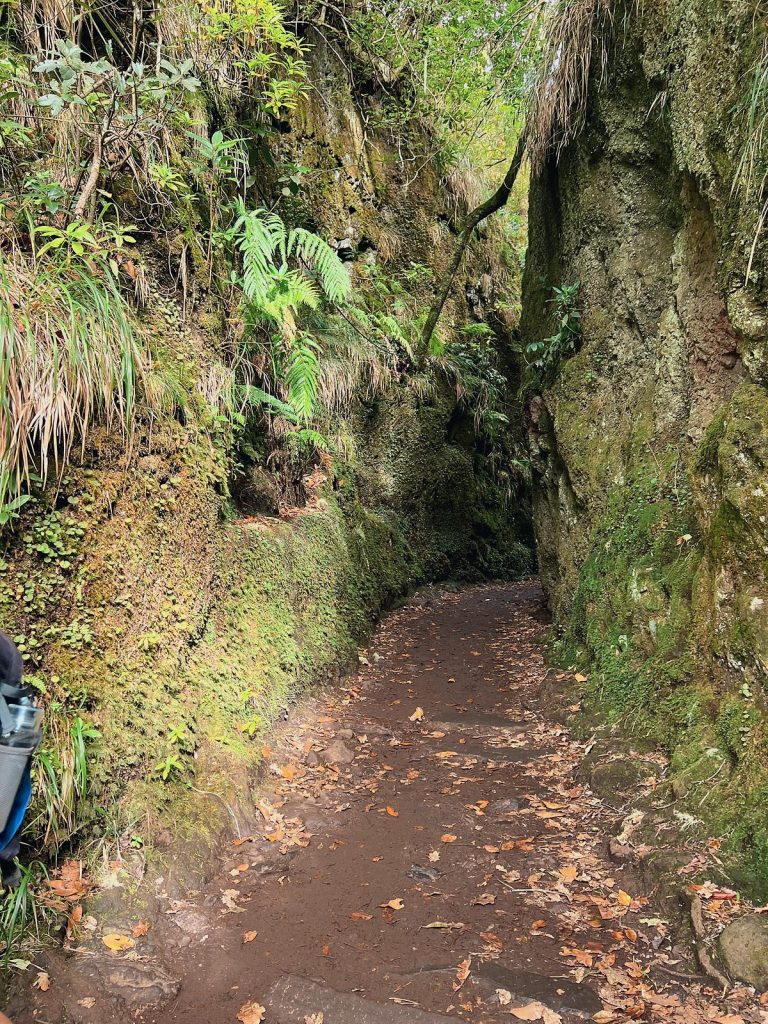
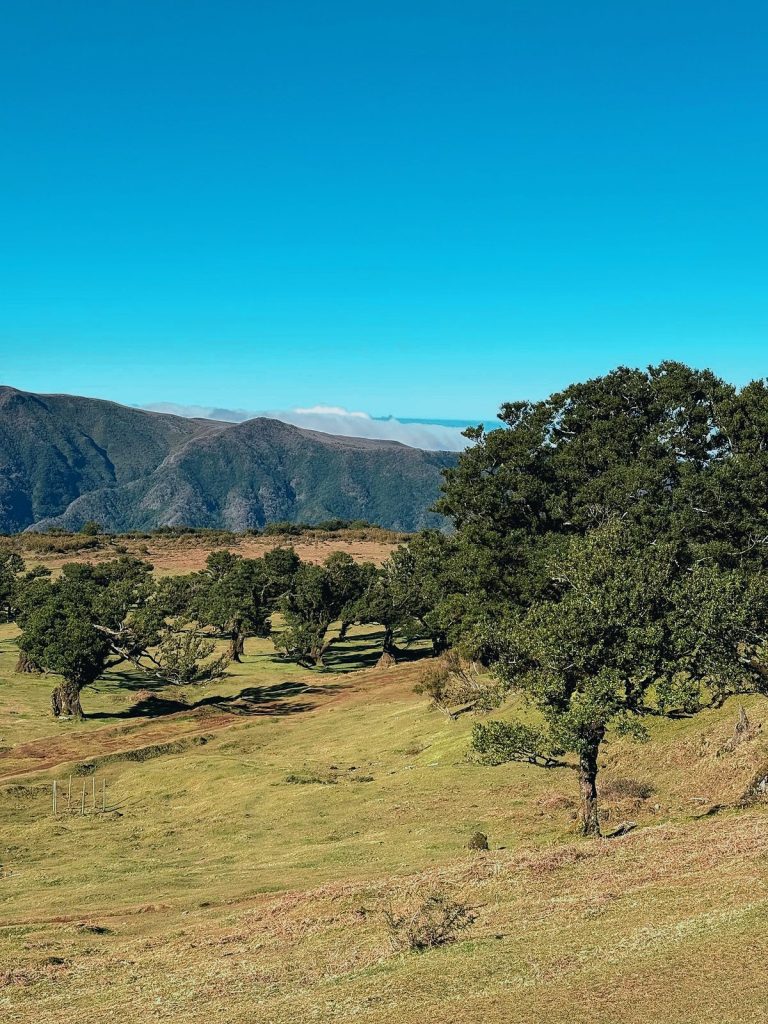
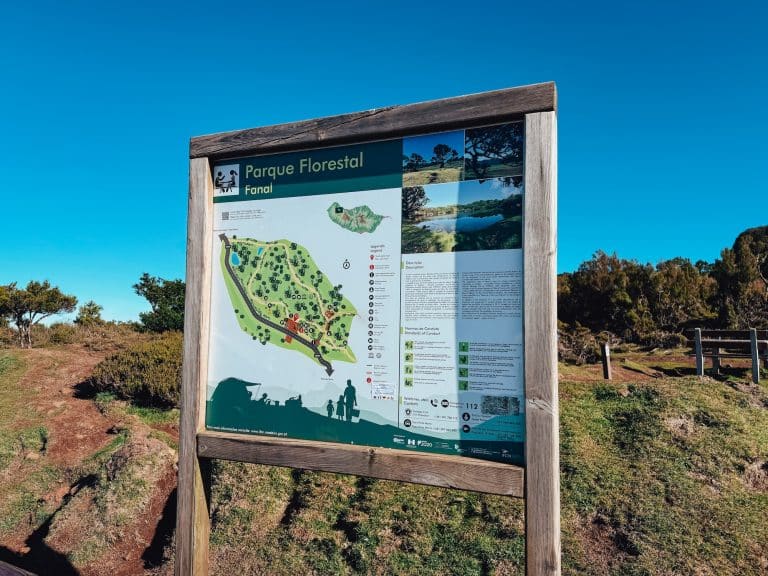
1: A rock cutting on the PR11 Vereda dos Balcões trail, November 2023, 2: Forest in the mist above a levada (2023), 3: A path along a levada through a rock cutting (2023), 4: Til trees in Fanal forest (2026). Photos: Ewelina Podrez-Siama
Weather
In winter you’ll hardly feel any difference on the coast: in January Funchal gets about 20°C by day, Santa Cruz de Tenerife about 21°C and the south of Tenerife almost 22°C. In March 2024 it was sometimes cooler in Puerto de la Cruz in the north of Tenerife, but generally very pleasant. In summer Tenerife is clearly warmer: about 28°C by day in July, against about 25°C in Funchal. The sea is a similar temperature around both islands, about 19–20°C in winter and about 24°C in September. Month-by-month details for Madeira are on the Madeira weather page.
Beaches
If a sandy beach matters most, Tenerife wins. Las Teresitas near Santa Cruz has about 1.3 km of pale sand shipped in from the Sahara in 1973, and in the south there are El Médano and the beaches of Playa de las Américas. Madeira’s beaches are mostly pebbly. Sand was brought in for Calheta and Machico, and the neighbouring island of Porto Santo has a natural golden beach about 9 km long.
Teide and hiking trails
Teide (3715 m) is the highest mountain in Spain and the heart of Tenerife. You can only climb to the summit with a booking: since 19 January 2026 the Telesforo Bravo trail has cost €15 for visitors from outside the Canary Islands. The cable car up to 3555 m is a separate ticket, about €42 return. The famous Masca gorge costs from €40.66, plus a compulsory bus and a boat to Los Gigantes, and the trail is open Wednesday to Saturday.
I saw Teide on a coach tour and I wouldn’t do it that way again. We spent most of the time on the coach, stuck in traffic, just to walk around for a little while. A waste of time. On Madeira the most famous trail, PR1 to Pico Ruivo, costs €10.50 and the other PR routes €4.50 each (how to buy a ticket).
Links marked are affiliate links: if you book something through them, I earn a small commission · why?
Enjoying this guide? I’m really glad. It’s possible because some of the links are affiliate links – I mark them with an arrow. It doesn’t cost you anything extra. How this guide makes money
Boat trips and whales
On Tenerife I took a boat trip from Costa Adeje along the Los Gigantes cliffs, which drop into the sea in a wall about 600 metres high. Since 2021 the stretch of sea between Tenerife and La Gomera has been Europe’s first Whale Heritage Site. Around 200 pilot whales live here all year, so your chances of seeing them are very good. On Madeira, dolphin- and whale-watching trips also run all year round, but the species change with the seasons (Madeira tours).
Dolphins on Madeira: trips from Funchal by catamaran, RIB or traditional wooden boat, usually 2–3 hours. You can compare offers and reviews on GetYourGuide.
Crowds, prices and hotels
Tenerife is far more touristy: in 2025 it welcomed 7.41 million tourists, and Teide National Park alone had 5.11 million visitors. Madeira had 2.44 million guests in tourist accommodation. Tenerife’s high season is winter, Madeira’s is summer: in January 2026 an average room cost €155.56 on Tenerife and €112.83 on Madeira, and in August it was the other way round, €144.25 against €166.24.
I stayed at the Riu Garoe in Puerto de la Cruz, a really nice hotel. We had breakfast and dinner included, which unfortunately meant we barely tried the local food. It was the first and last time I booked dinner at a hotel: it’s not for us. On Madeira I eat out, and I’ve gathered my favourite places in the Funchal guide.
Checked by madeira-planner.com
Riu Garoe, Puerto de la Cruz (Tenerife)
See Riu Garoe on Booking.comaffiliate link
Flights
My flight to Tenerife landed at Tenerife South. Worth knowing: Binter flies direct to Madeira from Tenerife North and from Gran Canaria, so you can combine both islands in a single trip.
Madeira vs Gran Canaria
I know Gran Canaria mainly from the perspective of Las Palmas, where I spent two weeks with Tesla in March 2026. Las Palmas is the largest city in the Canary Islands, with about 384,000 inhabitants – more than three times as many as Funchal. But it has something Funchal doesn’t: Las Canteras, a city beach with about 3.1 km of sand sheltered by a rocky reef, which has flown the Blue Flag every year since 1989.
Outside the city, Gran Canaria has the Maspalomas dunes (a nature reserve of about 400 ha) in the south, and mountains with Roque Nublo, which you can climb for free but only with a booking. It’s very dry: the airport gets an average of 151 mm of rain a year, almost four times less than Funchal. Prices are high in winter: in February 2026 an average room cost €153.66, with 91% occupancy.
Where I stayed in Las Palmas
I stayed in the centre of Las Palmas, in the Las Brisas Penthouse apartment. Really lovely people, a great terrace, and nothing was missing. And Las Palmas itself? Pleasant, but it isn’t “my” place.
Checked by madeira-planner.com
Las Brisas Penthouse, Las Palmas (Gran Canaria)
See Las Brisas on Booking.comaffiliate link
Storm Therese and trips out of town
At first I hopped on the bus to places outside the city, including Arucas. In the second week, though, Storm Therese caught up with me. On 20 March 2026 schools on all the Canary Islands, Las Palmas included, cancelled in-person lessons, and the Cabildo (the island council) closed some mountain roads and advised against trips into the mountains. The same front hit Madeira too: from 19 March IFCN closed all the official trails there. So from Las Palmas I kept the trail status page and the weather guide on my Polish site, madera-online.pl, updated as things changed. Polish media quoted my updates at the time, including the breakfast TV show Dzień Dobry TVN and Wprost’s travel section.
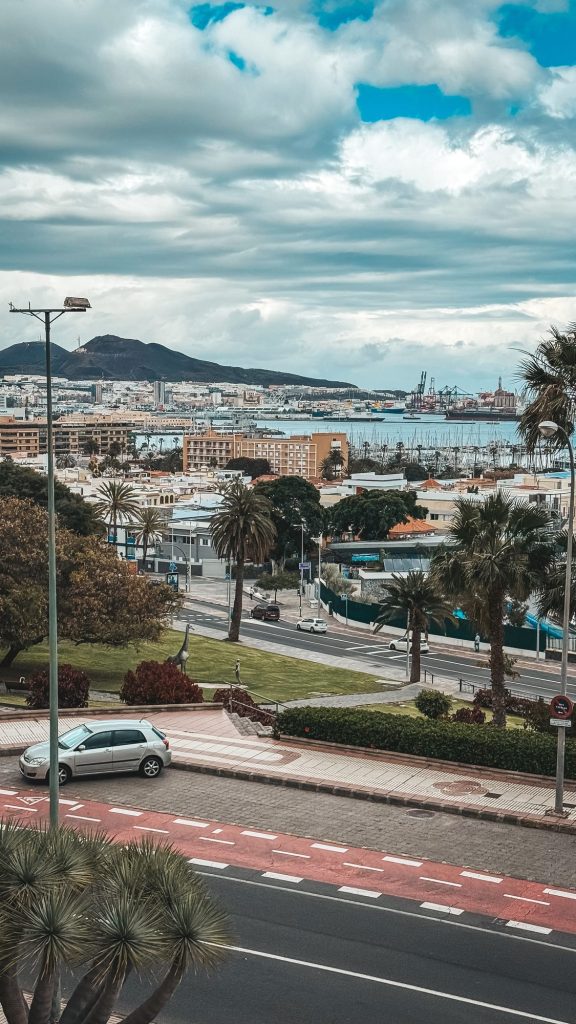
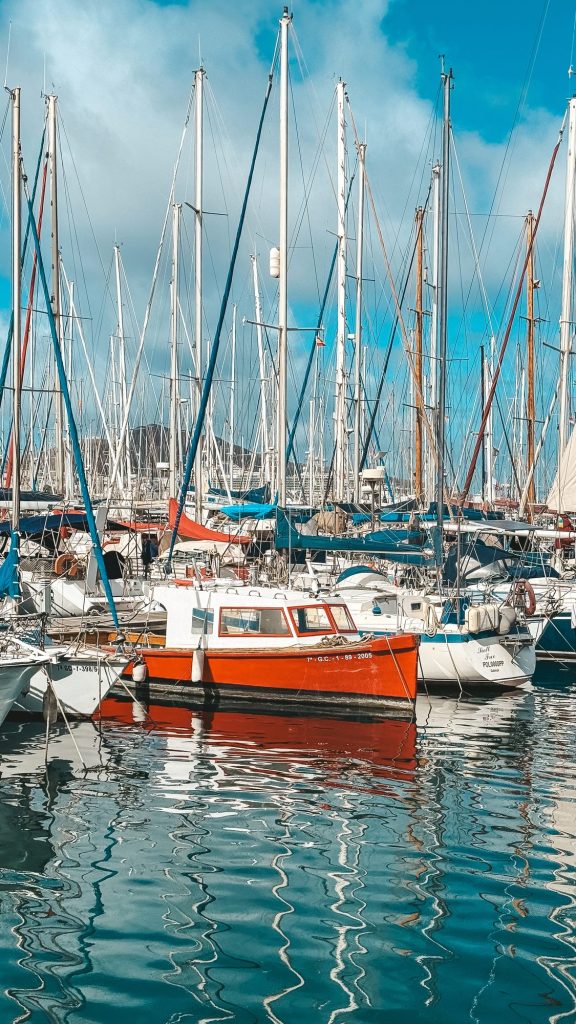
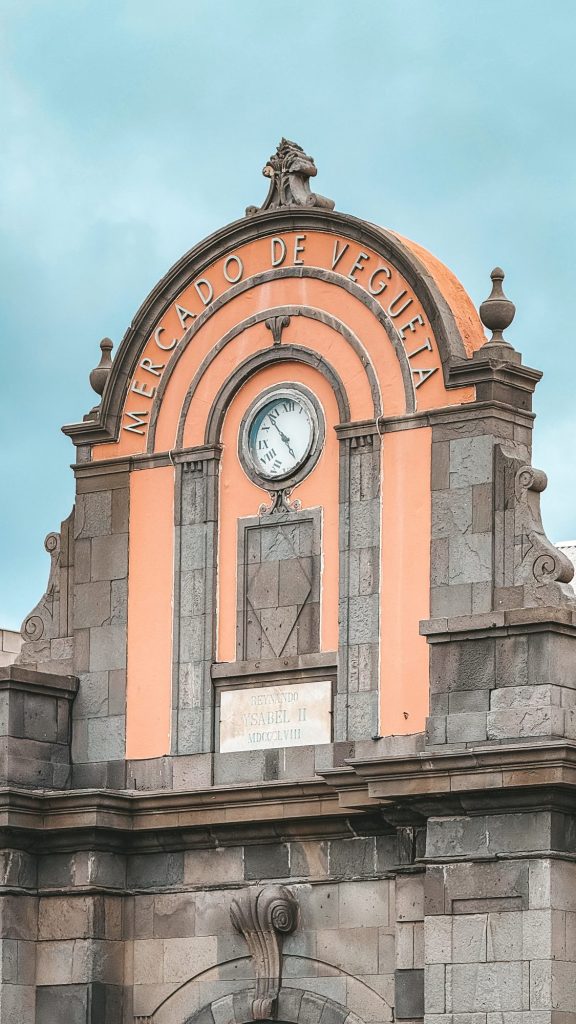
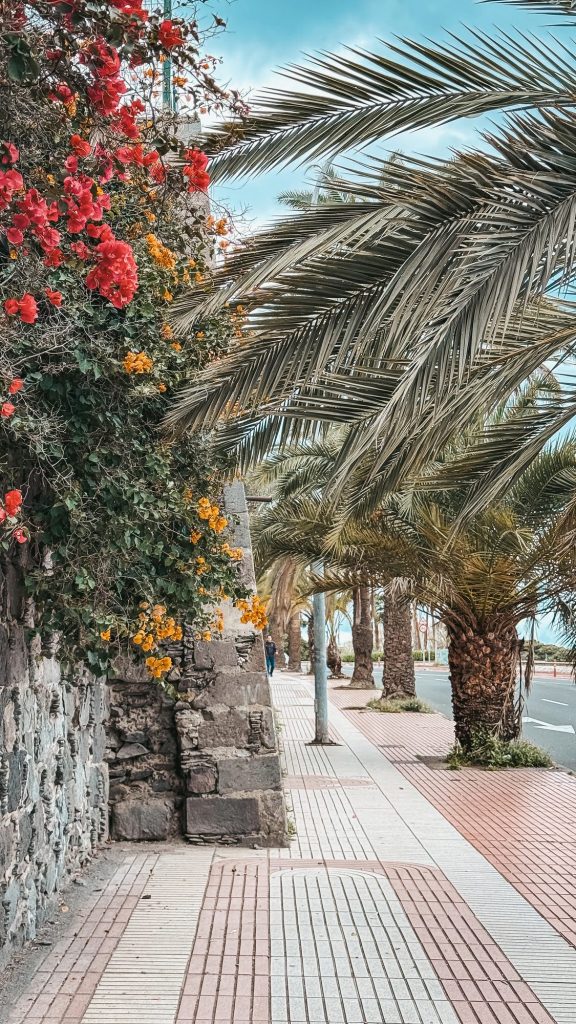
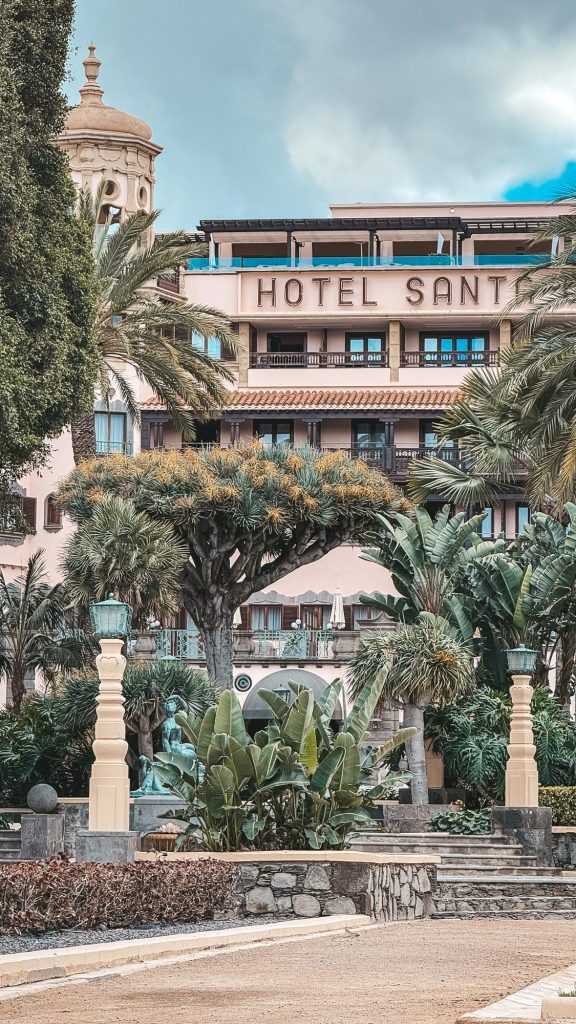
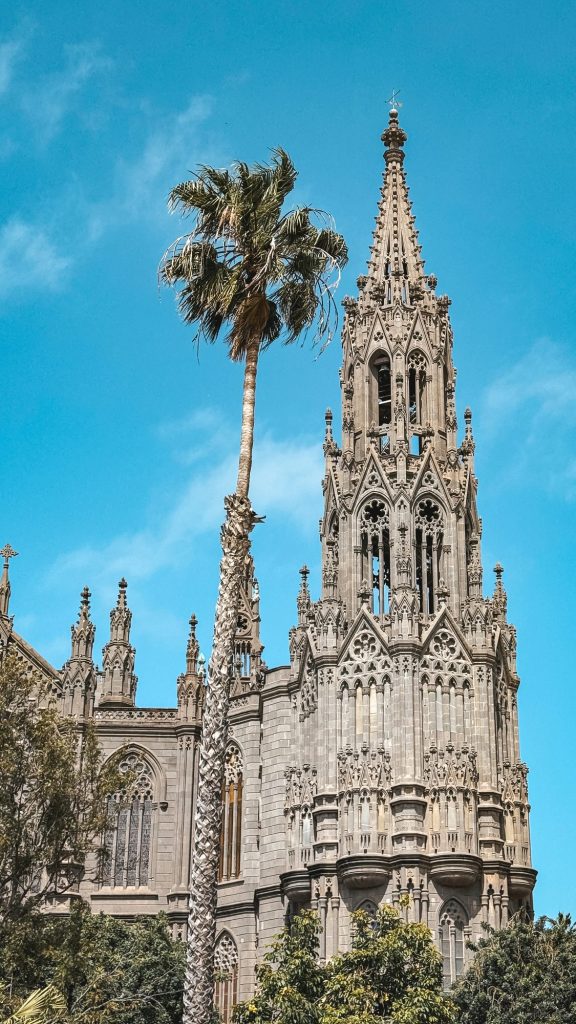
1: The port of Puerto de la Luz and La Isleta, Las Palmas, March 2026, 2: The marina in Las Palmas, March 2026, 3: Mercado de Vegueta in Las Palmas, March 2026, 4: Bougainvillea in Las Palmas, March 2026, 5: Hotel Santa Catalina in Las Palmas, March 2026, 6: The church of San Juan Bautista in Arucas, March 2026. Photos: Ewelina Podrez-Siama
With a dog: Funchal or Las Palmas?
This is where the difference is biggest. In Funchal I took Tesla almost everywhere: she was welcome on restaurant terraces and rode the buses with me in her bag. You quickly feel welcome there, with or without a dog. In Las Palmas you can do the same in theory, but only in theory. Travelling with a dog felt more like an oddity there: comments on the bus, frequent disapproving looks, sometimes at the dog, sometimes at the fact that I was speaking English.
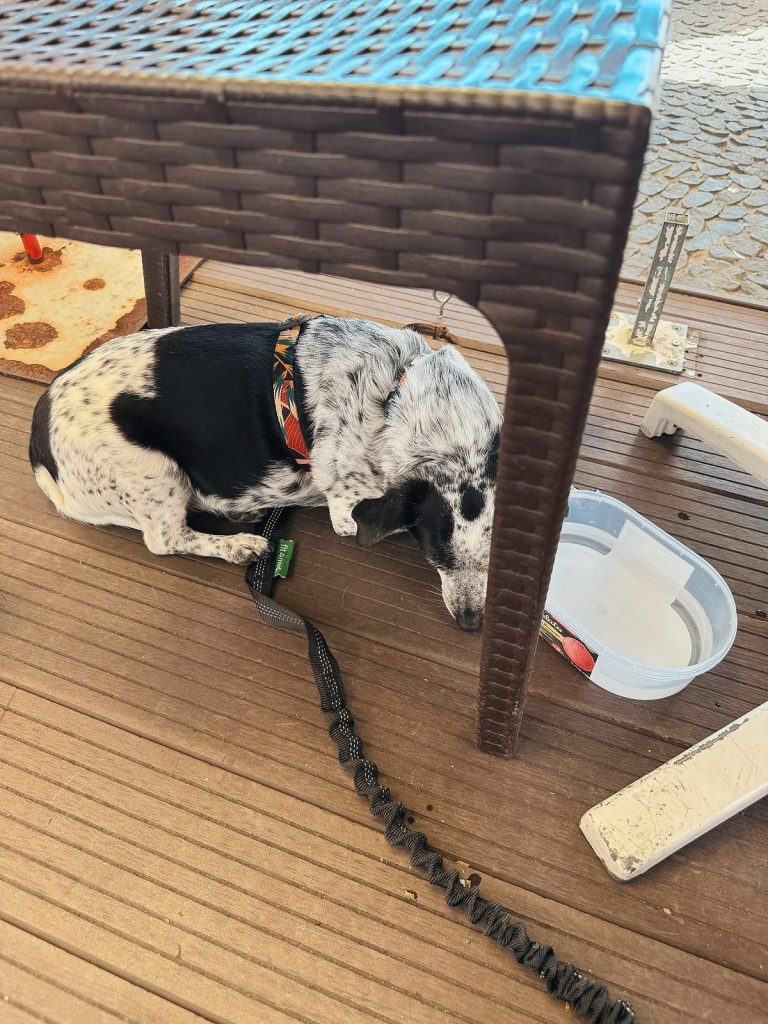
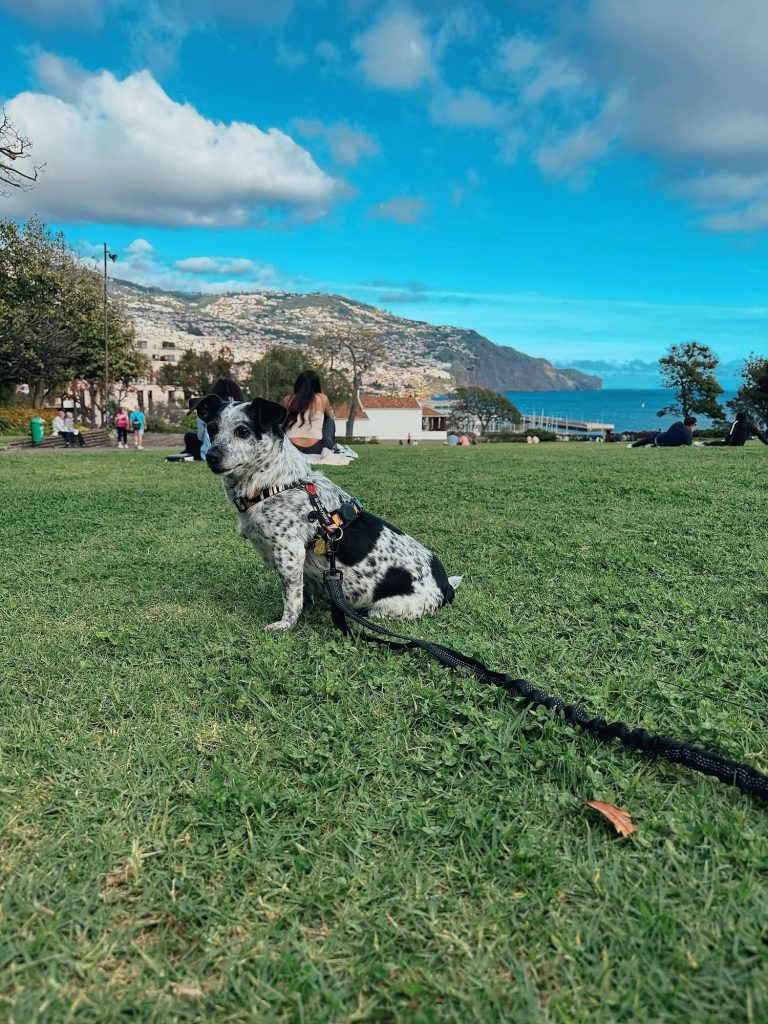
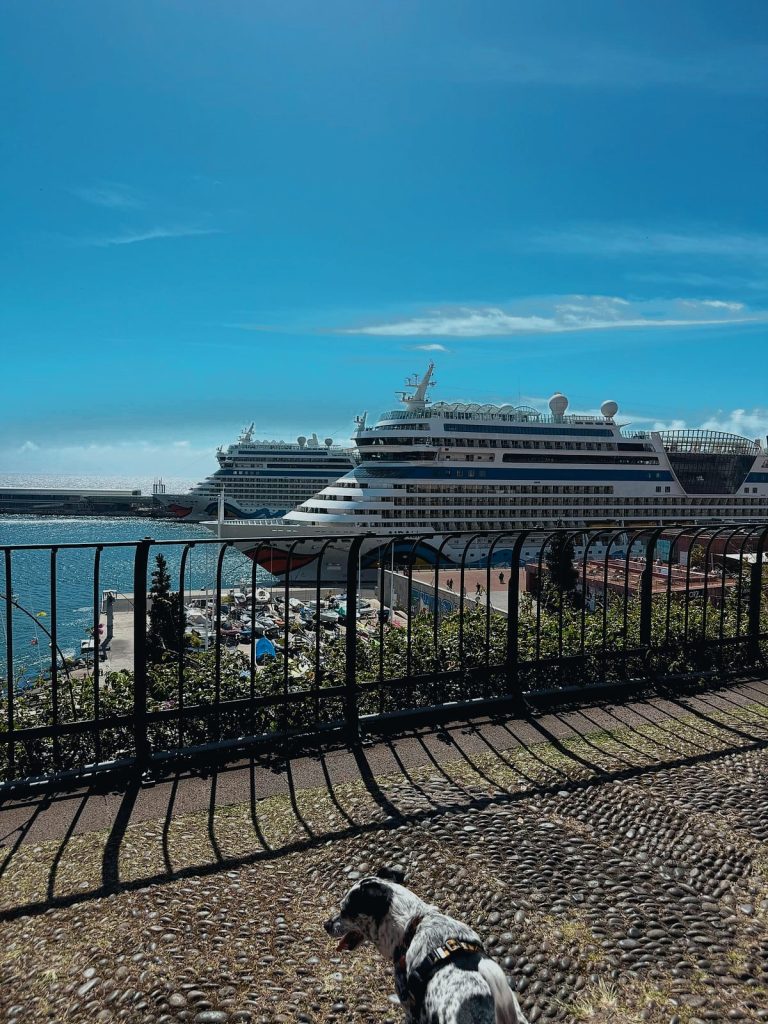
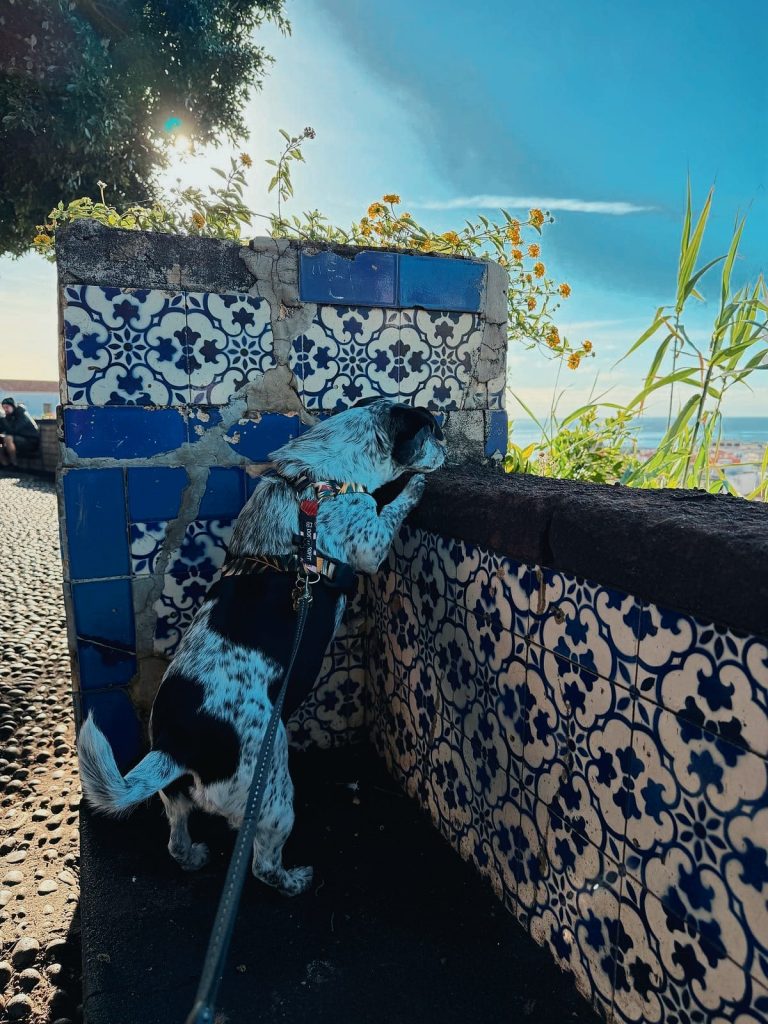
1: Tesla under the table on a restaurant terrace in Câmara de Lobos, March 2025, 2: Tesla above Funchal bay (2025), 3: Tesla by the railing in Santa Catarina Park, with the port below, March 2025, 4: Tesla by the azulejo-tiled wall at Miradouro da Quinta das Cruzes, February 2025. Photos: Ewelina Podrez-Siama
One scene has stuck with me. A bus driver shouted at me because the bag with the dog in it was slightly open. The Spanish passengers next to us stepped in, pointing out that the dog was in the bag, while I tried to explain that I don’t speak Spanish. On the Las Canteras promenade you can still walk with a dog near the Auditorio, but a little further on the ban begins, so we mostly walked in the parks. A big plus for Las Palmas is its dog parks: there are loads of them, and for us that was a brilliant experience.
The rules partly explain these differences:
- Buses: in Funchal (Horários do Funchal) an animal travels free in a closed container that can go as hand luggage, and the rules give no weight limit. On Las Palmas city buses it’s only up to 8 kg and in a 45×35×25 cm carrier. On Global intercity buses on Gran Canaria, dogs over 10 kg travel in the luggage hold.
- Restaurants: in both countries it’s up to the venue, but the sticker means something different. In Portugal a sticker by the entrance means dogs are welcome. In Spain a venue that doesn’t let dogs in has to put up a no-dogs sign.
- Beaches: signs at the entrances to Las Canteras say no animals, and Gran Canaria’s official dog beaches are outside central Las Palmas. In Portugal dogs are usually banned from concession beaches during the bathing season (in Funchal in 2026 mainly 1 June–15 September), and outside it the signs at the entrance decide.
Tesla flew with me in the cabin with Enter Air from Katowice, just as she did when we flew to Madeira. How to get your dog ready for the flight and where on Madeira you can take them without any trouble is in my Madeira with a dog guide.
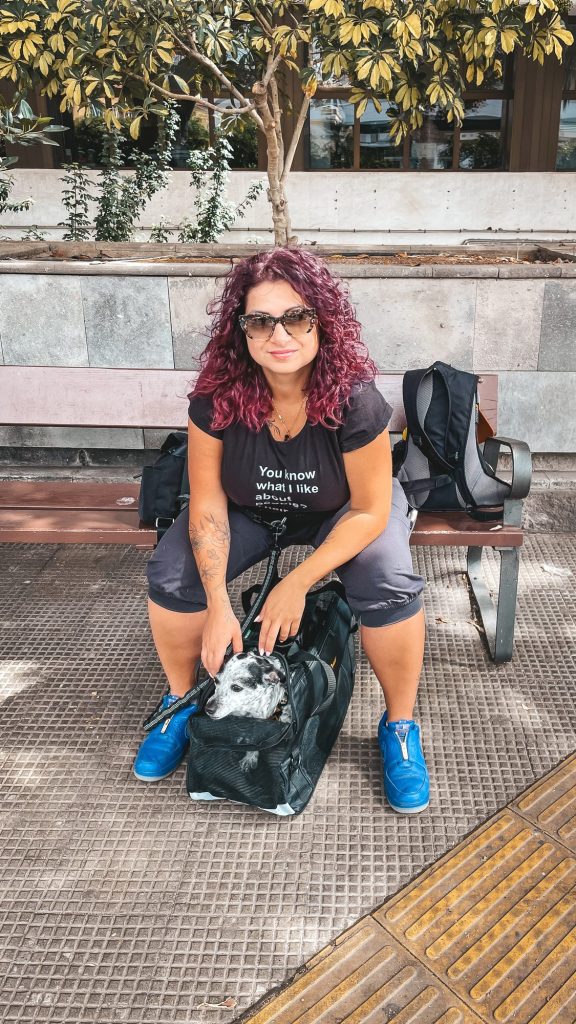
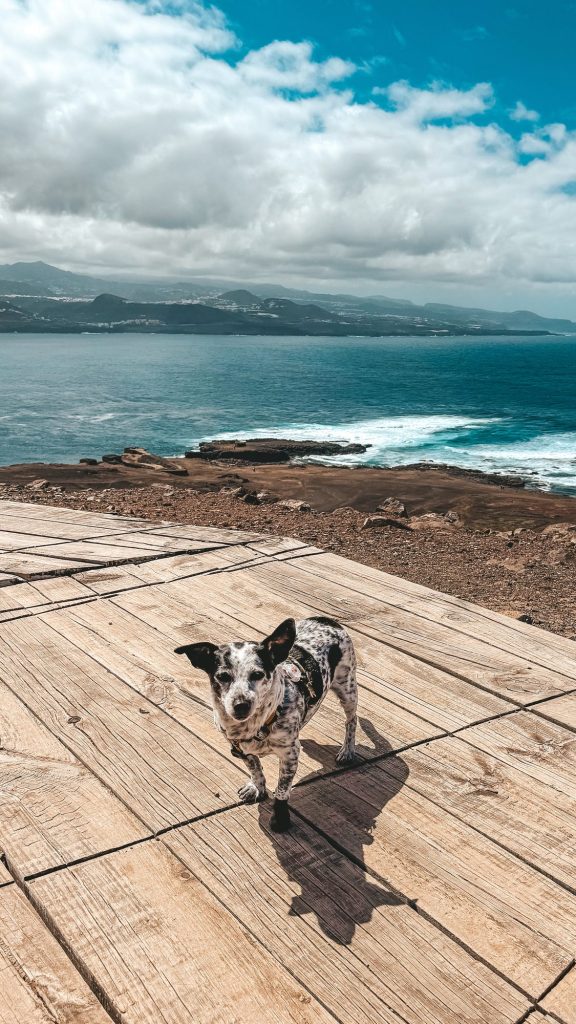
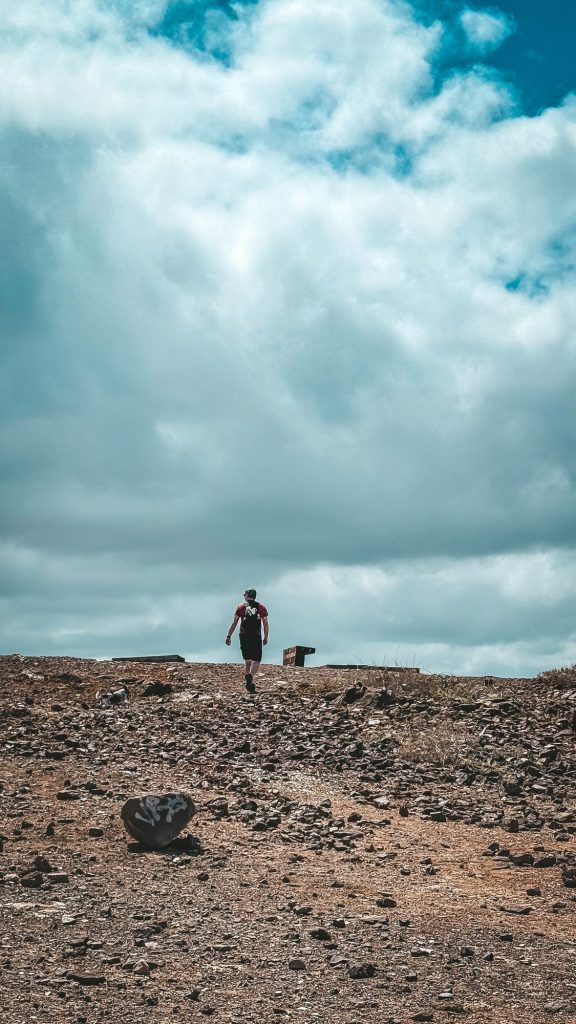
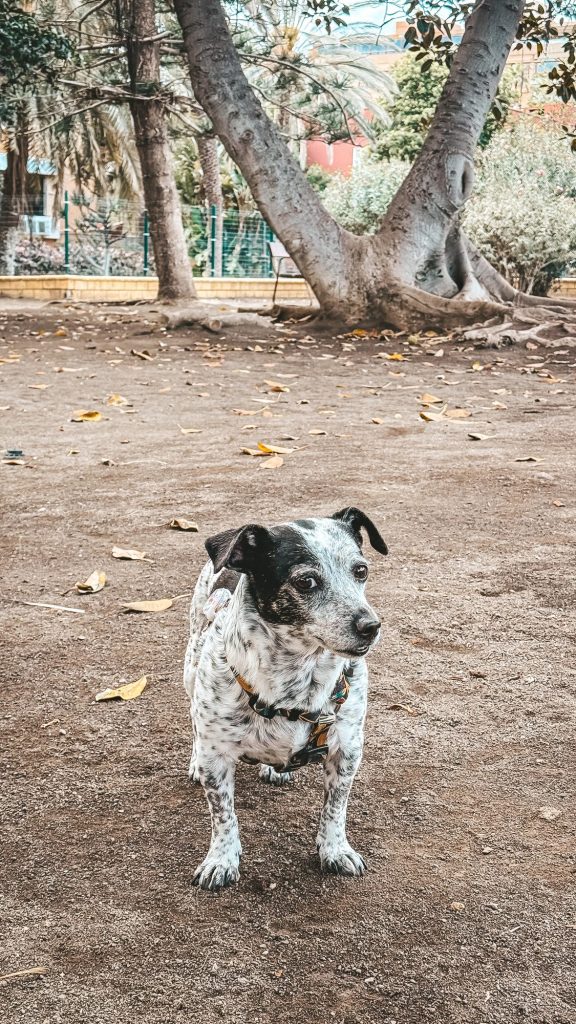
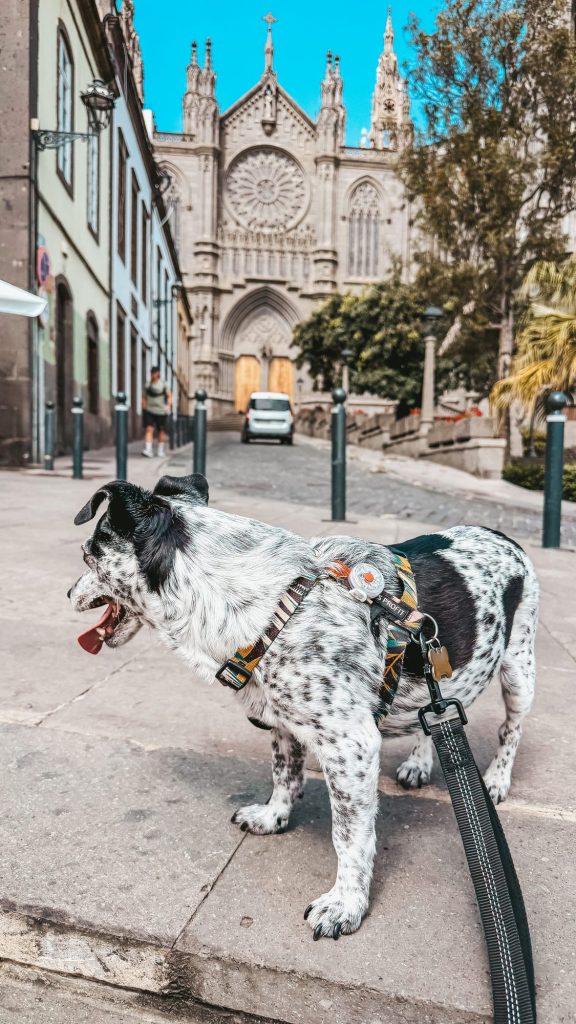
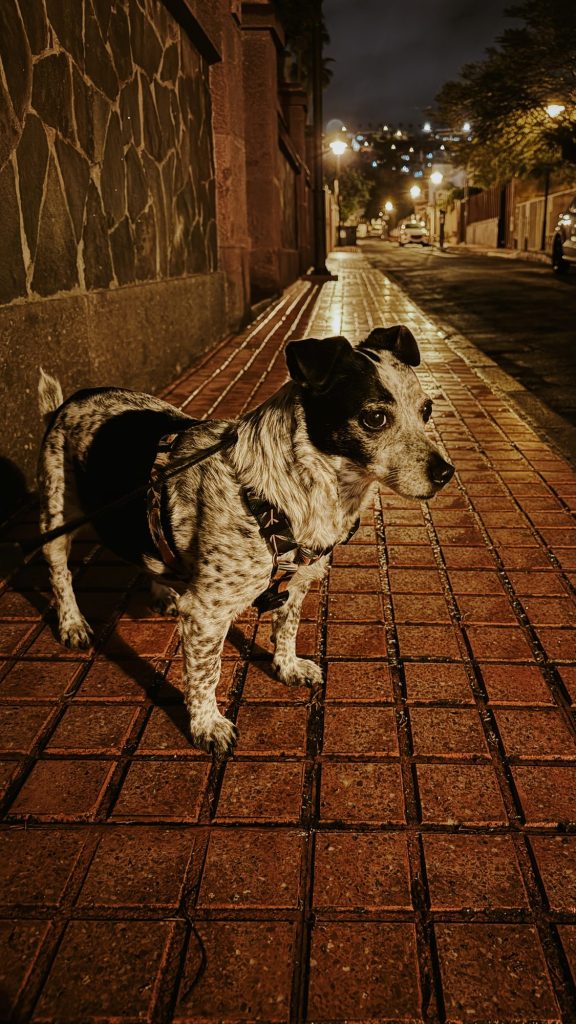
1: With Tesla in her bag at a bus stop in Las Palmas, March 2026, 2: Tesla on a viewing deck above the ocean, Las Palmas, March 2026, photo: Ewelina Podrez-Siama, 3: A walk on volcanic La Isleta, Las Palmas, March 2026, photo: Ewelina Podrez-Siama, 4: Tesla in a dog park in Las Palmas, March 2026, photo: Ewelina Podrez-Siama, 5: Tesla in Arucas, March 2026, photo: Ewelina Podrez-Siama, 6: An evening walk after the rain, Las Palmas, March 2026, photo: Ewelina Podrez-Siama
Checked by madeira-planner.com
ASPA Studios, Funchal
See ASPA Studios on Booking.comaffiliate link
Which island is for whom?
- Tenerife: sandy beaches, families with children (theme parks, the dry south), high mountains and Teide, warm summers, the most flights.
- Gran Canaria: a big city with a city beach, the Maspalomas dunes, sunshine all year round.
- Madeira: greenery, levadas and laurel forest, a slower pace, cheaper accommodation in winter, easier with a dog.
My answer: Madeira
Tenerife is beautiful, I enjoyed my time in Las Palmas, and I understand why millions of people fly there every year. But Madeira is the island I keep going back to, because nowhere else has that greenery, the levadas and the calm, and Tesla was simply welcome there. If you’re torn between the islands, start with what you’re after: beach and sun, or green mountains. If it’s the mountains, have a look at my list of things to do in Madeira.
Going for Madeira? Compare apartments and hotels in Funchal and across the island on Booking.com. In winter, accommodation here is cheaper than on the Canaries.
Madeira or the Canaries: frequently asked questions
Which is better: Madeira or Tenerife?
It depends on what you’re looking for. Tenerife has sandy beaches, Teide and more flights. Madeira is greener, with levadas and laurel forest, quieter and cheaper in winter. For me, Madeira wins.
Where is it warmer in winter: Madeira or Tenerife?
On the coast it’s almost the same: in January about 20°C by day in Funchal and about 21–22°C on Tenerife. Tenerife gets much less rain, though, especially in the south.
Where are the better beaches?
On Tenerife and Gran Canaria: Las Teresitas, El Médano, Las Canteras or the Maspalomas dunes. Madeira’s beaches are mostly pebbly, and the golden sand is on the neighbouring island of Porto Santo.
Do you have to pay to climb Teide?
Yes. Since 19 January 2026 the trail to the summit of Teide has cost €15 for visitors from outside the Canary Islands, and you need to book. The cable car up to 3555 m is a separate ticket, about €42 return.
Can you fly from Tenerife to Madeira?
Yes. Binter flies direct to Madeira from Tenerife North airport and from Gran Canaria, so you can combine both islands in one trip.
Is Madeira more expensive than the Canary Islands?
It depends on the season. In winter Madeira is cheaper: in January 2026 an average room cost €112.83 here, €155.56 on Tenerife and €147.04 on Gran Canaria. In summer it’s the other way round: in August 2026 it was €166.24 on Madeira against €144.25 on Tenerife and €135.70 on Gran Canaria. On Madeira most municipalities also charge a tourist tax of €2 per night.
Madeira or the Canaries for winter?
Coastal temperatures are similar, about 20–21°C by day in January. The Canaries get much less rain, though, especially the south of Tenerife and Gran Canaria, so sunshine is more of a sure thing there. Madeira is cheaper and green in winter, but it rains more often in the mountains, and trails are sometimes closed for a while after downpours.
Where is it easier to travel with a dog: Madeira or Gran Canaria?
In my experience, Madeira. On Funchal’s buses a dog travels free in a closed bag, while in Las Palmas only dogs up to 8 kg in a carrier are allowed. In Portugal a sticker by a venue’s entrance means dogs are welcome.
Want to see my guides more often on Google?
Add madeira-planner.com as a preferred source on GoogleData checked on 25 October 2026.
Sources I used (32)
- Madeira: IPMA – 1991–2020 climate normals for Funchal; DREM – tourism in 2025; Visit Madeira – sandy beaches; Horários do Funchal – conditions of carriage (animals, annex III); Portaria 206/2026 – bathing season; Lei 15/2018 – animals in restaurants and other venues; DECO – dogs on the beach
- Tenerife: AEMET – Santa Cruz de Tenerife; AEMET – Tenerife South; Turismo de Islas Canarias – tourism in 2025; Teide National Park; OAPN – national park visitors in 2025; RTVC – Teide summit fee; Teide cable car – prices; Masca – booking; Webtenerife – Las Teresitas; Webtenerife – Anaga; Diario de Avisos – Whale Heritage Site; AENA – Tenerife South; AENA – Tenerife North
- Gran Canaria and Las Palmas: AEMET – Gran Canaria airport; Las Palmas – beaches; Cabildo – Roque Nublo; AENA – Gran Canaria; Guaguas Municipales – animals on buses; Global – rules of carriage; Las Palmas – municipal animal ordinance; Ley 7/2023, art. 29; RTVC – Las Canteras; RTVC – dog beaches; Diario de Avisos – schools during Storm Therese; RTVC – Gran Canaria after Storm Therese